Tuesday, May 12, 2026
Home Blog Page 3253

WIN LOSE OR DRAW FOR AFRICAN/BLACK ART

Just two years ago Zoma Museum founder, Meskerem Assegued, hosted a gathering of several well-regarded US gallerists, curators, institute directors and more. Amongst the group was African American Naomi Beckwith, Senior Curator for Museum of Contemporary Art Chicago (MOCA); now New York Guggenheim’s fresh pick as Deputy Director and Chief Curator. By the way she was the only Black person in the prestigious delegation of visiting participants at Zoma. For the record, connections between the Guggenheim and Ethiopian artists include the multi-million USD exhibition of Ethiopian born American, Julie Meheretu, and Zoma’s co-founder and ingenious artist, Elias Sime, recently nominated for the Guggenheim’s $100K 2020 Hugo Boss Prize. The Guggenheim is as big as it gets in the art world, thus Naomi’s appointment is an immense win and Black folks in the arts are proud, hopeful and tickled brown. Beckwith stated, “One cannot overstate the iconicity and consequence of the Guggenheim Museum-yet, refusing to rest on its laurels, it readily presents projects that disrupt art history’s mythologies. I’m excited to join the Guggenheim and its passionate team at a pivotal moment. I look forward to merging our shared goals of expanding the story of art, and also working to shape a new reality for arts and culture.”
I have been trying to unpack Naomi’s statement, taking a cautionary cue from Danny Simmons, abstract-expressionist painter extraordinaire, to not racialize this major move for Beckwith. Danny, founder of Rush Philanthropic Arts Foundation – big brother to entertainment mogul Russell Simmons and rapper/TV star “Rev. Run” of Run DMC, said in his Facebook feed: “This is amazing news…a blessing for the field as a whole.” The African American artist and collector of rare African antiquities from Yoruba masks to Ethiopian hand carved chairs, rightly chose not to enter into a diatribe on racial discrimination, yet. That is, even if racism plagues the art industry, including the Guggenheim, recently embroiled in employee complaints of alleged racism. Nonetheless, Naomi’s well-earned post is based on over a decade of extensive accomplishments including curatorial support on “Grief and Grievance: Art and Mourning in America,” conceived by the distinguished Nigerian curator, the late Okwui Enwezor, which received high acclaim from mainstream media.
Exponential attention and demand for African art in the USA and Europe are racking up and the ‘more (of us) the merrier’ is the clarion call. With the caveat that the ‘more’ should make “us” “merry” too. One answer to the call came in 2013 when 1:54 Contemporary African Art Fair was launched, “Striving to promote diverse perspectives…drawing reference to the fifty-four countries that constitute the African continent… a sustainable and dynamic platform … engaged in contemporary dialogue and exchange…we’re about, but ultimately…One continent, 54 countries” declares founder, Moroccan Touria El Glaoui. 1:54 is “… the leading international art fair dedicated to contemporary art from Africa and its diaspora…in London since 2013, New York since 2015 and Marrakech since 2018…” Touria made Forbe’s list of “100 most powerful women in Africa” and NewAfrican’s “one of 100 most influential Africans in business”. Power, Influence and African art…words rarely used in the same sentence. This should be a win, right? Well, the verdict is out for the long-term impact on both the brand and discourse of “1:54” in the future. Why? There are actually 55 member states of the African Union, including Western Sahara aka Sahrawi Arab Democratic Republic (SADR), OAU/AU member since 1982. (Disclaimer: Maybe the Moroccan based her brand “1:54” on the then 54 AU member states in 2013 which didn’t include her home country, Morocco, readmitted to the AU in 2017 following a 34-year absence, making Morocco number 55.)
This is not about the political dispute between ADR and Morocco over sovereignty; nor is it about Trump’s last-ditch divisive opening of a US consulate in the contested region. This is about how we define, recognize and present ourselves to the world. This is about how to establish Africa in the international art industry, using powerful and influential voices that inform and enlighten. Admittedly, it is disconcerting that international media, renowned curators, famous museums, makers and shakers of the international art world and leading art houses, such as Christie’s and Sotheby’s echo El Glaoui menacing mantra “One continent, 54 countries”…which I am constantly correcting.
So, with the AU’s decision to recognize 2021 as “The Year of Arts, Culture and Heritage” let’s see if 1:54, Africa’s exclusive African Art Fair, is taken to task for its title and if such small rumblings even matter to the founder and her followers who bask in the success of her hard work and commitment which is making money and winning the main stream art world. So, let’s “not throw the baby out with the bathwater” as the old Jamaican saying goes. I recall being at the AU Summit when Her Excellency President Ellen Johnson Sirleaf of Liberia, upon Morocco’s readmission to the AU stated, “Africa wants to speak in one voice. We need all African countries to be a part of that voice.” With the African Continental Free Trade Area on the horizon and the possibility for trading art in the largest trade block in the world, building Africa’s art industry, it will be interesting to see the trajectory of the 1:54 brand… a win, lose or draw for African art.

Dr. Desta Meghoo is a Jamaican born
Creative Consultant, Curator and cultural promoter based in Ethiopia since 2005. She also serves as Liaison to the AU for the Ghana based, Diaspora African Forum.

Bereket Hailu

0

Name: Bereket Hailu

Education: Degree in Management

Company name: ‘Maritu Mar’

Title: Co-owner and founder

Founded in: 2017

What it does: Sell honey products

HQ: Hawassa

Number of employees: 7

Startup Capital: 50,000 birr

Current capital: 1 million birr

Reasons for starting the business: To generate income

Biggest perk of ownership: Transparency on our products

Biggest strength: Can simply communicate with others

Biggest challenging: Community awareness on packed items

Plan: To start exporting

First career: None

Most interested in meeting: Elon Musk

Most admired person: Elon Musk

Stress reducer: Singing

Favorite past time: Time with friends

Favorite book: The subtle art of not giving a f*ck

Favorite destination: Paris

Favorite automobile: Tesla

The TPLF cabal and its dynasty

0

The tragic, catastrophic and fantastic end

By The Queen of Sheba

The conflict in the Tigray region has dramatically receded with such a pace that surprised and shocked both friends and foes alike. A transitional government has been installed. Local leaders have been openly and freely chosen. Command posts for security are being established. Electricity, water and communication are now back into service. And more.
It is however true that problems remain, but they are not insurmountable with time, peace and security. The capture of the cabal leaders will most certainly contribute towards that end.
I was on the phone the other day with a relative mourning a recent loss of a close family member. The conversation however quickly descended into the hot political story of the day and I quickly flung a question: “What did you think of the capture of Aboy Sibhet and others?” The grieving relative responded, “First, I did not believe it was true; I thought it was fake. But then when I realized it was true, I cried with tears streaming down my cheeks.” and added “I am sorry, but that is what I felt at the time despite all what he and they had done. I wish he was dead and we did not need to witness this heart-breaking scene of a broken old man dragged out of caves in such a dramatic manner.” As I was listening the response, I got confronted with empathy, compassion, love, hate, and more.
This article attempts to briefly narrate the tragic, catastrophic and fantastic end of the TPLF cabal’s ruthless dynasty of 30 years.
The Tragic Attack
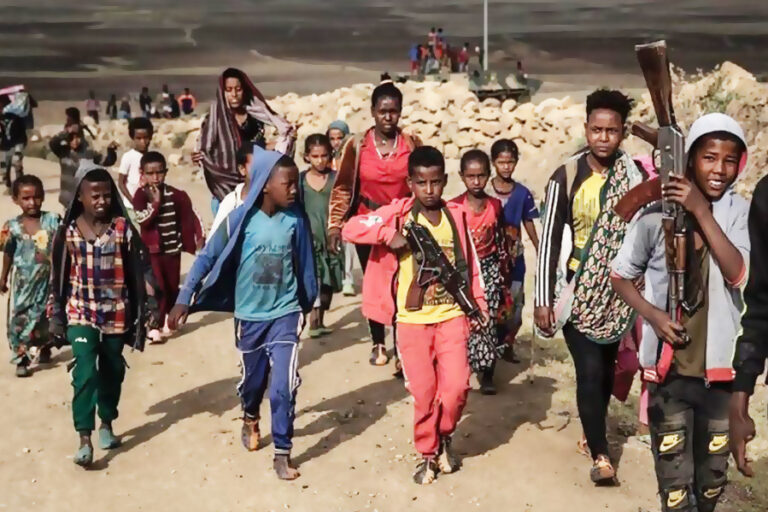
As the late spoke person of the cabal, who was killed during one of the latest operations, triumphantly, but way too prematurely, admitted, the Ethiopian National Defence Forces of the Northern Command was heinously and cowardly attacked with a “thunderous” speed-while asleep. The tragic scene of this conflict involved hundreds of thousands of army personnel, special forces and militia from multiple zonal regions of the country. In this, so called “thunderous” attack, quite a huge number of young and underaged boys and girls were forced into it by the cabal-serving as cannon fodders. The indelible pictures of the-young and aging-who got captured and injured during the conflict will remain as yet another vivid reminder of the ruthlessness of the cabal which violently-and wickedly-ruled the country for nearly 30 years.
The cabal trashed the country without any qualms-or shame. They dominated the government, the army, the intelligence, business, finance, culture, education-and more. To give a better perspective of this absolute domination, I would quote some figures from a report by Prime Minister Abiy Ahmed during his parliamentary appearance on November 30, 2020. He noted “in the federal defense force, 60 percent of officers with rank of full general are from Tigray region, while the remaining 40 percent were drawn from the rest of Ethiopia. If we go one step down to the rank of lieutenant general, the numbers are lower; 50 percent are from Tigray region. If we go one step down to the rank of major general, 45 percent are from the same region. At the rank of brigadier general, 40 percent are from Tigray region. Fifty eight percent of colonels, 66 percent of lieutenant colonels, 53 percent majors are from Tigray region as well.”
With another surprising figures he went on: “At Defense Headquarters, 80 percent of the high-level officers are from Tigray. The numbers I mentioned earlier were relatively less critical because even if there were many Amhara or Oromo generals, the real power remained with this 80 percent. What does this mean? These officers know the kinds of weapons available in the defense force. They know the available training and the communication lines. Everything was in their hands.”
In another shocking account he added “Let us look one step below. Below headquarters, there are commands. Of all the commands in Ethiopia, one hundred percent of their commanders were from Tigray region. One hundred percent of deputy commanders were also from Tigray. Especially in the Northern Command, the commander, the deputy commander, logistics, and administration were in the hands of people from Tigray.”
Reasons abound why the cabal miscalculated the outcome of the conflict-which primarily includes the massively disproportionate composition of Tigrayans in the army and the intelligence. The second one was the hugely lop-sided firepower of the Northern Command hosted in Tigray which they orchestrated its blockage from moving out of Tigray, in anticipation of this treasonous act. The third one was an overreliance on their stooges and operatives across the country and beyond to do their violent bids during the takeover. One could also add that the cabal was blindsided by the action of the Prime Minister in modernizing the army’s capabilities without their knowledge.
In a miscalculation of colossal proportion, absolute confidence of a ‘thunderous’ triumph-and anticipated impunity from the international community through their paid operatives and shenanigans, the cabal forces slaughtered the army-ruthlessly, callously-and cowardly. The climax of the heinous crime reached its peak as the cabal forces mercilessly massacred unarmed civilians in My-Kadra as the they got the first taste of a devastating defeat on the battle field.
The Catastrophic Defeat
The cabal also miscalculated that, once the Northern Command was attacked and dismantled, the entire federal army would simply collapse-along ethnic lines which it has relentlessly and forcefully drawn during its tenure. To the contrary, the entire army stood with resolve and fought with incredible bravery in retribution of their comrade-in-arms who were executed while in their camps-and in their sleep.
The turn of events was so dramatic that the cabal forces were trashed in such a dizzying speed that they fled in a humiliating defeat. Hundreds and thousands of the cabal forces either surrendered or taken prisoners as the entire scheme of the putsch failed catastrophically. The cabal forces were trounced from a highly sophisticated situation room in Addis Ababa coordinating reconnaissance and attack drones which they wrongly attributed to foreign powers.
In an unprecedented media blitz, the perpetrators were presented as victims enabled by well-oiled operatives, shenanigans, and party loyalists. The subversion of diaspora party loyalists and those based in major international organizations and media was obscenely evident.
However, most of these highly coordinated multi-pronged cabal attacks miserably flopped from saving the barbaric cabal from a catastrophic fatality.
The Fantastic End
At the time of this writing, a number of former high-ranking officials led by the founders of the cabal and former presidents of the region, were hoarded and roared back on a plane to Addis Ababa in a very dramatic-and historic-manner.
The pulling of the cabal leader-and his dejected entourage-from extremely treacherous hideouts in caves, ravines, and gorges fantastically culminates the era of a brutish dynasty whose greed and arrogance had been unparalleled. It is, however, hugely tragic to witness the hideous war mongers walking in chains while the bodies of their young foot soldiers-who had a lot to live for-are crumbling in those perilous terrains.
In the demise of the cabal, the Ethiopian government, and particularly the army and the police have exhibited an outstanding discipline not only in conducting the operations, but also handling their staunchest enemies who attacked and slaughtered them. Kudos to the army-and its gallant leaders-who have shown exceptional discipline and professionalism.
In Conclusion
It is extremely agonizing to contemplate the liquidation of a large contingent of the cabal forces by the army before the spiteful leaders were taken to custody in their cowardly hideouts. These wicked killers on their waning days, who survived on the demise of the young, should have known-and done-better than submitting themselves. For sure, they were not worrying about a sin, if they contemplated a suicide. Well, instead of reading from the books of Saddam Hussein and Muammar al-Gaddafi, they should have consulted at home with Emperor Tewodros.
So much for the phony account of bravery and heroism of the cabal which had been incessantly unleashed for 30 years.
In his address to parliament Prime Minister Abiy lamented: “The politics of retribution has never helped us. Every time a new government is installed, we start from scratch and this has left Ethiopia in backward state. So, we opted to take the path of forgiveness and reconciliation.”
Forgiveness and reconciliation are proposals only to those with a heart to tango. But then it needed two to tango.
I would not curse the erstwhile cabal for snubbing the tango.

The Queen of Sheba may be reached at QueenOfSheba2020@outlook.com

Book Review: Sylvia Pankhurst Fought to ‘Make the Future a Place We Want to Visit’

British suffragette Sylvia Pankhurst was a militant campaigner for women’s right to vote. As a socialist, she also refused to uncouple the women’s movement from the fight for equality across all of society.
Sylvia Pankhurst: Natural Born Rebel is an extraordinary work, a vital and necessary intervention, and an urgent read for our times. Rachel Holmes has written the definitive biography of one of the twentieth century’s political giants. Political rebel, human rights champion, and radical feminist ahead of her time, Pankhurst has for too long been pigeonholed as a “British suffragette”.
Though she did work at the very centre of the militant struggle for universal suffrage (and put her own body on the line), her activism spanned beyond that fight, ranging two world wars; fascism, colonialism, and the struggles against them. All of those chapters of Sylvia’s life are given space in this biography, told intimately from the point of view of this unique woman who sought to “make the future a place we want to visit”.
Born in 1882, Estelle Sylvia Pankhurst was the daughter of Britain’s most famous suffragette, Emmeline Pankhurst. Her barrister father, Richard, known as the “Red Doctor”, had drafted the 1870 Married Women’s Property Act with his friend John Stuart Mill. Along with Sylvia’s two sisters and one brother, the Pankhursts became “the first family of British feminism,” helping to create a mass movement which, Holmes claims, was on a scale not known since the Chartists.
The famous maxim of Rosa Luxemburg (who would one day become Pankhurst’s comrade) that the choice is always between socialism or barbarism, was keenly felt by Sylvia too. Her father Richard had taken her to listen to Eleanor Marx speak in 1896, a definitive and inspiring experience for the young Sylvia. (This foremother of socialist-feminism was the subject of Holmes’s previous biography.) Sylvia’s education as a teenage activist in the suffragette movement left her with a lifelong attentiveness to how oppression impacts women differently, later writing on the effects of fascism on women, and how imperialism and colonialism bring further violence to native women.
Throughout her younger years, Sylvia was part of “the family party,” the Women’s Political and Social Union (WPSU), founded in 1903 and mobilised from her family’s front room; its motto was “Deeds, not Words.” But divisions in the family soon emerged. Sylvia’s mother and elder sister Christabel argued for a vanguard of educated, middle-class women to be first in line for the vote, only then tending to the concerns and everyday suffering of working-class women.
They argued that the WPSU should focus on the issue of votes for women exclusively, elevating gender above all other organising categories. Sylvia, by contrast, sustained her father’s socialist ethos in pushing for votes for all women and working-class men, and as a result found herself shunned by her mother and sister for her unstinting insistence on equality and inseparability of all struggles, socialism a red thread of her thinking.
A talented and visionary artist who won two scholarships to the Royal College of Art (at a time when entry for women was rare), Sylvia designed the “Portcullis and Arrow” brooch, which was given to suffragettes who served prison sentences for militant action demanding the vote. She sketched women workers at work, women prisoners, and women on the trail of the suffragette campaign. Inspired by the legacies of the public art of, among others, Walter Crane and William Morris, Sylvia excelled at large-scale public art, including installations and murals. Art and struggle were interleaved for Sylvia, and the struggle for justice led the development of her vocation, as an artist in temperament and calling, Holmes shows.
Sylvia was first imprisoned in 1906 and at the height of the militant campaign, between 1913–14, was in and out of Prison Holloway thirteen times, more than any other suffragette. Militant suffragists were routinely tortured in prison, yet Sylvia was resilient, and her ability to continue organising despite multiple arrests and releases made her at once more dangerous to the British state and at the same time, more aware of the challenges the suffragette campaign was up against.
Natural-born rebel, citizen of the world
In 1912, Sylvia moved to the East End of London and in May 1913, alongside Norah Smyth and American suffragette Zelie Emerson, she founded the London East End WPSU, where she worked on the campaign for suffrage alongside agitating for a welfare system. Holmes notes that the postwar Clement Attlee government drew on her work and writing in its creation of the British National Health Service.
When public opinion was divided among the suffragettes on the issue of the First World War, Sylvia took a principled, internationalist stand, once again parting way with her mother and sister Christabel, who both supported the war. Against them, she argued that:
“this war, like the Boer war and all others we have known, is fought for material gains … it is a huge and shameful loss to humanity.”
It was this participation in antiwar campaigning that brought Sylvia into close contact with some luminary radicals of her time who also opposed the war, among them, Clara Zetkin. Sylvia had entered World War I, Holmes notes, a socialist and reluctant militant reformist and Labour Party supporting suffragist; she emerged from it a left-wing revolutionary communist. Sylvia was a revolutionary in all spheres of her life. Her first great love was Keir Hardie, the first leader of the Labour Party.
As the Bolshevik Revolution erupted in Russia, Sylvia offered her fulsome support. Her newspaper, Workers’ Dreadnought, welcomed the Russian revolution and supported the immediate dissolution of the Constituent Assembly, earning Lenin’s admiration, who praised her for representing “the interests of hundreds of thousands of people”. Indeed, in November 1917 she argued that:
“the Russian problem is our problem: it is simply whether people understand socialism and whether they desire it. Meanwhile, our eager hopes are for the Bolsheviks of Russia: may they open the door which leads to freedom of all lands.”
At the 1918 Labour Party conference in Britain, she argued against intervention in Russia; the Labour Party was making wartime compromises and was hostile in its response to the Bolshevik Revolution. Her 1920 article, “Towards a Communist Party,” published in Workers’ Dreadnought, sparked Lenin’s interest about the prospects of a British Communist Party. Her refusal to unite socialist parties and her call for anti-parliamentarism in the course of revolutionary action had spurred his anger. Lenin wrote “Left wing childishness” as a response to his debate with Sylvia, in which he termed her “ultra-leftism” an “infantile disorder.”
Sylvia never wavered in her commitment to international socialism. In 1921 she was accused of sedition and spoke in her own defense: “I am going to fight capitalism even if it kills me. It is wrong that people like you should be comfortable and well fed while all around you people are starving.”
The 1920s were a revolutionary decade for Sylvia in more than one way; in 1927, at the age of 45, she was unmarried when she had her only child Richard with her Italian anarchist partner, Silvio Corro, leading her mother and sister Christabel to cut all ties with her — though by this stage, their relations were already strained due to their pronounced political differences. Among Pankhurst’s internationalist commitments, she was an early critic of Italy’s aggressions in Ethiopia, and saw the dangers of the rise of fascism before many others had done so.
She wrote, powerfully, in 1933: “fascism denies and destroys all freedom of thought, party, press, association: exploits and enslaves the workers.” Educated in the struggle for democracy, Sylvia saw its dismantling before others had noticed those processes. The resistance, as ever, came from the humanity and resilience of those attacked by fascism.
Sylvia studied Ethiopian art and culture, and her dedication to anti-colonial struggles brought her in close conversation with W.E.B. Du Bois, who commended her for bringing black Ethiopia to white England. During the Second World War, she helped Jewish refugees escape from under Nazi hands.
Sylvia’s internationalist commitments found expression not only in political organising, but in her travels as well. Her travels in the United States in 1912–13, when she visited immigrant communities in New York and Chicago, the racially segregated South and a Native American college left a deep impact on her. After the 1917 revolution, an event that impacted the lives of all revolutionaries around the world, including Sylvia, she went, undercover, to Soviet Russia, a journey she also chronicled.
She traveled throughout Continental Europe and studied the progressive welfare provisions there. Her commitment to anti-racism and anti-imperialism brought her to Eastern Africa where she developed an interest and skill in chronicling the cultural history of Ethiopia, to counter the demeaning, racist narratives of her time. Her later life was spent in Ethiopia. She was invited by Haile Selassie, who had become a close interlocutor during his exile in 1935. Sylvia was bestowed upon with the highest state honours in Ethiopia. When Sylvia died at the age of 78 in Ethiopia, she received a state funeral.
Sylvia was fearless at the face of all challenges which life and history presented her. “When you know you’re right, you can’t be turned aside,” she once said, and her political commitments were matched by an unwavering moral clarity. Her sister Adela noted in 1933 that “in Sylvia’s eyes, to cease being a socialist, if one had ever been one, is a moral crime.”
“Look for me in a whirlwind”
It’s the achievement of Holmes’s biography to bring to life Sylvia’s remarkable life, in all its range. Her attention to detail transposes the reader over the course of this biography from Sylvia’s Manchester living room where her family hosted feminist “at home” gatherings to solitary confinement in Prison Holloway, through the Lower East Side where the bourgeoning American Labor Movement fought capitalism from within its core, a meeting at the Kremlin with Lenin, to the independent Ethiopia which was a bulwark against defeating fascism as Sylvia enjoyed the shadow of Eucalyptus trees.
All the while we gain, from Holmes’s book, a real, human and humane Sylvia, a woman who hated porridge, was a terrible cook and loved Charlie Chaplin’s films. She was a loving partner and mother, a faithful friend, and comrade to many, committed to leaving the world a better place than the one she had entered.
She was a humble woman who lived simply, as she stated in a rare reflection she wrote on herself, “personal ambitions were to her both puny and ephemeral, because she realised that, when in a thousand years, all we who strive and labour in our passing days are dust, mankind will still be working its destiny.” All the while, her inimitable ability to measure reality as it is, while sustaining a visionary idea for a just world not yet here, carry from every path taken by Sylvia Pankhurst. This account is contagious to the twenty-first-century reader.
As the world shifts from one lockdown to another in the midst of a global pandemic, it is striking to read of Sylvia’s robust sense of self, her resilience, courage, and capacity for action. This sense of self, Holmes powerfully shows, was sustained by immersing herself in struggle. The shocking poverty, alienation, and hardships against which she ceaselessly fought never infringed upon her quest to create a new world of collaboration, beauty, justice, and peace.
In our current twenty-first-century zeitgeist in which neoliberal and capitalist dictums tell us to “self-care” and to focus on individuals as a path for well-being, it is an urgent lesson to see how a life lived for the shared world can empower and uplift each and every one of us. Holmes quotes from a deeply evocative tribute from one of the Ethiopian men who knew her in her last years: “She worked day and night without rest, used all her energy and brilliant mind to help people. What makes me sad is that there were so many things she wished to complete.”
Rachel Holmes’s Sylvia Pankhurst: Natural Born Rebel is full of honesty and integrity that shine from every page and reach straight to the reader’s heart. As we busy ourselves in rebuilding the international left, in times of great poverty and strife but also of rising collective action, it is an urgent moment we acknowledge our debt to Sylvia Pankhurst, as we continue her work into a world of justice and equality for all, as she herself once wrote in a visionary essay, ‘What I Am Aiming at: A Chance for the Children of Tomorrow’.

Dana Mills is an author, dancer, and activist. Her most recent book is Rosa Luxemburg (Reaktion Books, 2020).
This article was published in Jacobin.