

The Ethiopian Shipping and Logistics Services Enterprise (ESLSE) announced that it is working to manage the containerized consignment challenges under short and mid term plans. Half a billion birr worth of new containers have been procured.
It said that most of the staked containers at China will be eased by the third week of August.
It had stated that the world does not have enough containers in the right places to handle cargo demand which also imposes pressure on Ethiopian coming cargos.
The logistics giant that is in challenges on the global phenomenon of cargo boxes shortage stated that meanwhile the problem is still not easing on ESLSE, it has enabled to ship 150,000 containerized cargos in the 2020/21 budget year that ended on July 7. The plan was to handle 170,000 boxed cargos in the period.
In relation with the global pandemic, COVID 19, economic slowdown had engulfed the logistics sector. Moreover, containers being stranded in different destination globally fueled to the fire as it created shortage for operators including ESLSE. Similarly container freight rates price spiked by triple.
Spikes of consignment fleets from China to the US and northern Europe following the slowdown of the pandemic was stated as fueling the situation further more.
According to ESLSE, the season mainly July and August is the peak period for global trade that has also impacted the circumstance.
On its announcement the sole multimodal operators, ESLSE disclosed that in connection with the stated challenges boxes including Ethiopian clients have stayed at different Chinese ports for long that affects customers business.
It said at least 13,000 empty boxes should be required for transporting Ethiopian cargos that is stacked in China ports.
ESLSE has now designed a short and medium terms solution to move the cargos within the coming six weeks.
Roba Megersa, CEO of ESLSE, says that his enterprise has negotiated with CMA-CGM and MSC, French and an Italian-Swiss international shipping lines respectively, to clear container backlogs located in China, “the deal includes moving new bookings.”
He told Capital that ESLSE has also repositioned its four vessels to ports in China for fleeting at least 1,000 containers each on a single voyage. “We have made available containers on leasing and procurement arrangement to ease the delay consignment,” he added.
On the other hand, ESLSE is also working to lift the cargos located on South East Asia ports mainly in Thailand and Indonesia via leased spaces on other operators.
“Commodities like edible oil, handbook and other holiday goods will be transported on this arrangement before the end of August. On these strategies we would enable to move totally 15,000 containerized cargos in the stated period,” Roba explained.
New boxes
ESLSE is currently looking to buy more boxes to solve the challenge that is expected tom be prolonged for more years on the mid term strategy.
According to the CEO, chaos in global shortage of shipping container may continue in the coming two years, “Shipping companies will also continue on procuring new boxes since existed containers are not timely positioned.”
“Accessing empty containers from logistics market has become very strange,” he added by explaining that it makes the container freight rate to skyrocket.
He said that for instance the spot market for the fleeting of 40 feet container from China to Europe is now USD 20, 000. However the price of freight spikes and the demand for cargo has never shown reduction.
He justified that because of the continuing cargo demand that is not supported by making available the existed empty containers shipping line would need more boxes that will be filled by procured containers.
“On this spot market rate it could be difficult for the Red Sea to compete with others,” he added.
On the current spot market shipping companies are charging USD 11,000 per container for consignment to the Red Sea from China. “If we buy containers and at the same time transport cargos to our destination it would make us profitable. At the same time, we shall have additional containers,” Roba says, adding, “when it is also compared with the current rates of leasing space on other companies; transporting cargos with our new containers would make us profitable, due to that we are working to buy more containers.”
Under the revised strategy, ESLSE has targeted to own 10,000 containers, “if our boxes are increased we shall assign our vessels to lift cargos that would be congested in different ports.”
He revealed that at least ESLSE may have more voyages on ports to China when the number of owned containers increased like what it is doing now.
Weeks ago the logistics giant has procured 1,000 twenty foot equivalent units (TEUs) and 2,000 forty feet containers on swift approach following the failure of frequent attempt to buy the box for the past over a year on formal bidding processes.
The new procurement expands the number of ESLSE’s owned containers almost to double.
Before the latest, adding ESLSE had about 2,940 containers with two common sizes of TEU or forty feet; of which 2,398 TEUs, 184 forty feet high cube (HCs) and 358 forty feet general purpose (GPs) containers.
Wondimu Dembu, Deputy CEO for Corporate Service at ESLSE, said that as per the feasibility assessment the current swift procurement has been conducted to mitigate the chaos and accelerate the operation and profitability besides owning additional boxes.
“As per the feasibility assessment the procurement cost will be fully covered with a single containerized cargo shipment from the place where new boxes are available to Djibouti,” he told Capital.
“According to our evaluation, rather than using leased containers on the current rate buying and making operational owned containers shall make more profit. Due to that we have taken the fast decision,” the Deputy CEO for Corporate Service elaborated.
He said that from the short listed suppliers’ one of the top three containers manufacturers in the world CXIC Group Containers Co., Ltd of Changzhou based Chinese firm is selected to supply 3,000 containers within a month time. When the deal was sealed 72 TEUs have been already produced, while the company has a capacity to produce one boxes per 90 minutes. “Some of the boxes are getting in to the operation and others will follow the path,” Wondimu added.
China is popular on its container and vessel industry and most of the container manufacturers are located on major port areas like Shenzhen, which is one of the main ports that Ethiopian cargos are lifted.
Different reports indicated that Chinese companies currently top the list of the biggest shipping container manufacturers. They take up 85 percent of the world’s total production of shipping containers.
For the procurement of the stated amount of containers ESLSE has allocated almost half a billion birr.
Wondimu said that the enterprise has also floated a fresh tender to buy another 3,000 containers on the way to attain its previous plan.
“The latest bidding process is for the continuation of failed bid that was on the way for a year time,” he explained.
This time around ESLSE has targeted to buy additional 1,120 TEU and 1,880 forty feet containers.
ESLSE strategizes to lift containers from congested Chinese ports
Ethio-Telecom prepares for competition

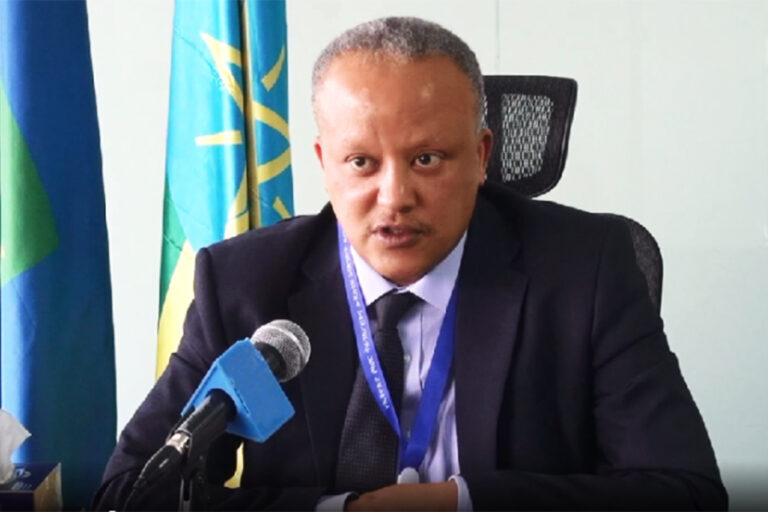
Ethio Telecom, which is underway to be partially privatized, is preparing its five years business strategy to stay as the leading telecom service provider when the new operators start their operation in Ethiopia.
On a press briefing given on July 13, 2021 regarding the overall performance of the company in the completed fiscal year, the CEO, Firehiwot Tamiru explaining the firm’s readiness for the coming telecom competition saying, “As a company, we do not underestimate the competition market, As there are healthy competitions, there will also be challenges that will not be overcome in order to win the market.”
Government has liberalized Ethiopia’s telecommunications sector as part of the country’s ongoing reforms to promote social, political and economic development and on May, 2021 a new telecommunications license had been awarded to the Global Partnership for Ethiopia.
According to Ethio Telecom, a comprehensive study has been carried out by Ethio telecom to protect its market and stay competitive.
“There will be a strategy review to stay competitive when the new operators enter to the economic business zone,” said CEO Firehiwot Tamiru.
As the CEO said, the company has conducted a five year strategic plan which has vast reform activities and advancement to attain its set strategic objectives in preparation for the upcoming competitive market which includes; enhancing customers experience and satisfaction through ensuring operational excellence, deploying new and enhancement of infrastructure and system service availability, quality and affordability, effective resources utilization and enhancing financial capacity.
As part of this ongoing liberalization process, last month Ethio Telecom launched a much-anticipated tender process for the sale of a 40% stake in the government-owned telecom. As the CEO said, the company is working on its business valuation for the next five years which can be important for the process of the privatization and moreover increases the value of the company.
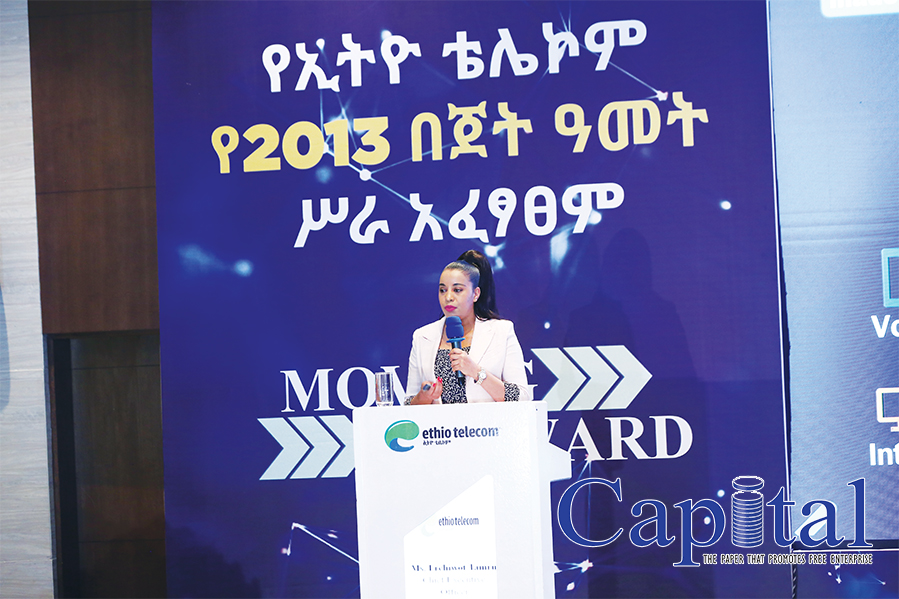
“The company has been undertaking a wide range of projects and operations to expand telecom infrastructure and systems to improve the quality of service and increase the outreach to the community,”Frehiwot pointed out. Moreover, the CEO explained that having an already built and growing infrastructure is an alternative means of generating income since the infrastructure can be leased to the new entrants. As a result, Ethio telecom will use this defensive strategy to protect its market share in the country and will lease the infrastructure based on certain measures.
On related news, the operator reported an 18.4% rise 56.5 billion birr revenue in the completed 2020/21 budget year, in spite of internet shut downs related to civil unrest in the Tigray region and cyber-attack.
Ethio telecom has generated 56.5 billion birr revenue in the just completed year which is 101.7 percent of the target which was 55.5 billion. “It is a big achievement for us in a challenging budget year,” said Firehiwot. When compared with the last budget year, the revenue has shown 18.4 percent increase. Likewise in the year, the telecom operator has generated 166.5 million in dollar foreign currency, which is 106 percent of the plan.
From the stated 56.5 billion birr revenue, 47.5 percent of it is generated from mobile voice, Internet and data shared accounted for 27 percent of the revenue, and international business accounted 11 percent 9 and 5 percent of the revenue went to the value added service.
As the CEO highlighted, at the end of the fiscal year the number of customers for Ethio telecom has reached 56.2 million which is 108 percent of the target that the telecommunication firm had been planning at the beginning of the year showing a 22 percent increase when it is compared to the previous year. The breakdown shows that, 54.3 million of them are mobile voice users while 25 million are internet data customers, 374,000 were fixed broad band customers who increased by 76 percent from the last budget year. Moreover, the telecom density has reached to 54 percent.
Mung bean gains traction on ECX
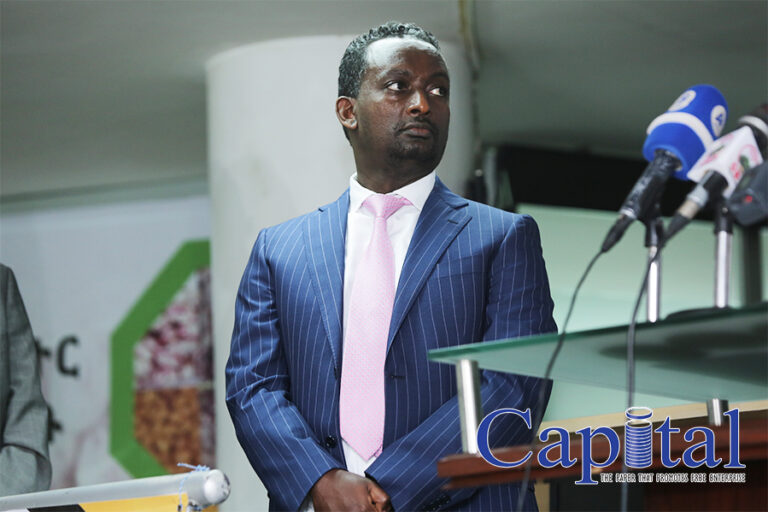
The increasing price of Mung bean becomes the new wave for the Ethiopian Commodities Exchange /ECX/ as local production and international demand and market price increase exceeding the price of sesame.
The Mung bean market is currently being driven by numerous factors which include its numerous health benefits, population growth, changing dietary habits and new market opportunities which have resulted on ECX trading it highly.
Now, the price of Ethiopian Mung bean is fluctuating than before due to normal production and demand factors.
“The reason as to why it has garnered interest is because the Ethiopian production of Mung bean is non GMO which makes it preferable in the global market,” emphasized Wondemagegnehu Negera, CEO of ECX, adding that, “the global growing of the demand for Mung bean is the other factor.”
In 2020/21 trade year, ECX has traded 30,000 metric tons of Mung bean which valued 1.2 billion birr. “One of the big factors for the trade is the international trade competition between China and America, which in perspective increases the Ethiopian trade, in the overall market scene,” stated Wendmagenehu.
In the year 2020/21, The Ethiopian Commodity Exchange (ECX) traded 614,586 metric tons of products at a cost of 39.6 billion birr. According to the commodity exchange platform, the stated number is 96 percent of the target in value while it is 102 percent of the target in cost.
From the stated number, coffee accounted for 35.5 percent of the market while sesame took 31 percent and other grains account for 33.4 percent of the market share.
In terms of financial performance, the GDP earned a total of 775 million birr has been generated from operating and non-operational sources in the 2020/21 budget year, which is up 106 percent from the target. This is an increase of 20 percent compared to the same period last year.
The total expenditure was Birr 517 million, an increase of 14 percent over the same period of last budget year 2019/20. Also the number has shown that the profit is 15 percent higher than expected.
With regards to tax, a Holding Tax of 756 million birr; VAT 847 Million Birr from Domestic Coffee Traders; 60 million birr from VAT was collected by the Commodity Exchange and a total of 1.7 billion birr tax has been collected and transferred to the government.
This year, 68,391 quality certificates were issued by inspecting the quality of the products offered for sale. With ECX’s secure payment and delivery system, more than 10,000 buyers and suppliers’ bank accounts have been successfully connected to 17 banks.
In the just completed year, Ethiopian Commodity Exchange has opened a special marketing window for agro-processing industries also during the fiscal year; pigeon, bean sprouts and pinto bean were added to the trading system.
The problem faced by the commodity market during the last fiscal year was the smuggling and illegal trade, although efforts are being made to prevent it. The trading platform affirmed that it will continue to intensify its efforts to prevent illegal trade, as the products that are traded in the commodity market can still be smuggled to neighboring countries.
For the coming year ECX has signed a memorandum of understanding (MoU) with the Ministry of Mines and Petroleum (MoU) to start trading of opal, safari and emerald minerals in the 2021/22budget year.
Fatigue in health measures leads to COVID-19 rise in Africa
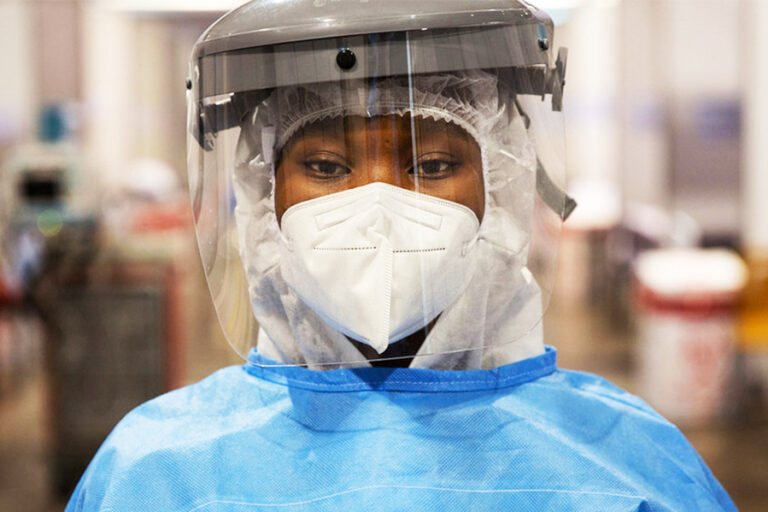
COVID-19 cases in Africa have skyrocketed, with a recorded 43% week-on-week rise in deaths according to the World Health Organization (WHO).
The surge in cases is a result of frustration and fatigue with key health measures, according to the WHO. It’s also possible the three COVID-19 variants, Delta, Alpha, and Beta, are responsible. The Delta variant, the most transmissible strain so far, has been detected in 21 African nations, the Alpha variant in 35 and Beta in 30.
“This is a clear warning sign that hospitals in the most impacted countries are reaching a breaking point,” said Matshidiso Moeti, WHO Regional Director for Africa. “Effective treatment is the last line of defense against COVID-19 and it must not crumble.”
The recent surge is the fastest the continent has seen during the entire pandemic. Over the past month, Africa has recorded 1 million new cases, and is now only 1% away from the weekly fatality peak from January 2021. 6,273 deaths were recorded last week, 83% of them from Namibia, South Africa, Tunisia, Uganda, and Zambia. Currently, an average of 2.6% of COVID-19 cases in Africa become fatal compared to a global average of 2.2%.
Hospitals are suffering extreme oxygen shortages due to disrepair or poor maintenance of production plants, as well as distribution challenges, personnel or technical skills. At least six African nations are experiencing a bed shortage in intensive care. Medical oxygen demand has spiked, hitting 50% higher than at the same time last year, while only 27% of the needed supply is produced.
Additionally, only 18 African nations have confirmed that they are including corticosteroids, a medication recommended by the WHO, in their national treatment guidelines. Nine countries are using non-recommended treatments, including hydroxychloroquine and lopinavir.
“The number one priority for African countries is boosting oxygen production to give critically ill patients a fighting chance,” Moeti said. “Under-resourced health systems in countries are facing dire shortages of the health workers, supplies, equipment and infrastructure needed to provide care to severely ill COVID-19 patients.”
Vaccinations in Africa are also at levels deemed inadequate by the WHO. Africa accounts for only 1.6% of the 3.5 billion people vaccinated worldwide, despite being around 17.21% of the world’s population. Only 18 million Africans, or 1.5% of the continent’s population, are vaccinated. Around 190 million doses are needed to raise the percentage up to 10% by September 2021. 750 million doses are needed to raise it to 30% by the end of the year.
“The double barrier of vaccine scarcity and treatment challenges is seriously undermining effective response to the surging pandemic,” Moeti added.
The WHO is providing guidance on clinical management and support in updating procedure and training health workers in order to improve COVID-19 treatment. It will also work with partners to deliver medical supplies, including oxygen cylinders, and supporting the manufacture and repair of oxygen production plants.
