This year, the prestigious Tusk Conservation Awards will take place virtually on Thursday 3 December. Launched with Prince William in 2013, the Awards celebrate the work of leading conservationists in Africa. In partnership with Ninety One the 2020 event will be broadcast at www.tuskawards.com and on Tusk’s social media channels.
Tusk is announcing a significant increase in the value of the awards thanks to the generous commitment of £1m over 5 years from The Nick Maughan Foundation. Recognised at the virtual ceremony, this funding will more than double the conservation grants given to the winners and finalists dedicated to safeguarding the continent’s wildlife and habitat.
This year has been exceptionally difficult for the extraordinary men and women living on the frontline of African conservation. Drastic cuts in salaries and resources due to the devastating economic impact of Covid-19 threaten to undo their years of conservation work across the continent.
Announcing the shortlist for the 2020 Tusk Award for Conservation in Africa, Charlie Mayhew, CEO of Tusk said, “We are immensely grateful to Ninety One for their continued partnership and thrilled to announce the invaluable additional support from The Nick Maughan Foundation. As the future of the natural world is brought into even sharper focus, it is fantastic that the recipients of our awards can continue their vital work thanks to this much needed boost to grant funding. I am very pleased today to reveal the three exceptional finalists for this year’s Tusk Award.”
The shortlist for the prestigious Tusk Award for Conservation in Africa in partnership with Land Rover are:
• George Owoyesigire (Uganda), Uganda Wildlife Authority – Deputy Director Community Conservation. George has improved relations between local communities and wildlife by promoting benefit sharing; investment in wildlife enterprises, addressing human-wildlife conflict issues and promoting conservation education. He also implemented the bee keeping project, an initiative that uses bees as a deterrent against elephant crop raiding.
• Ian Stevenson (Zambia), Conservation Lower Zambezi (CLZ). Ian is the project manager at CLZ, combatting issues such as poaching, human wildlife conflict and illegal activity. He made CLZ the multi-faceted and holistic organisation it is today, paving the way in law enforcement, environmental education and community engagement.
• John Kamanga (Kenya), South Rift Association of Land Owners (SORALO) – Executive Director. John has dedicated his career to developing a vision for the co-existence of pastoralists and wildlife. In Kenya, where 68% of wildlife resides on community land, supporting the ability of people and wildlife to co-exist is imperative.
The winner of this award will be announced at the virtual ceremony. The event will also broadcast the presentation of the annual Prince William Award for Conservation, sponsored by headline partner Ninety One and the Tusk Wildlife Ranger Award, sponsored by The Nick Maughan Foundation.
Hendrik du Toit, CEO of Ninety One, said: “The awards not only acknowledge the contribution made by exceptional individuals towards conservation in Africa, but also aim to raise global awareness of the significant and immediate challenges faced by the natural world. COVID-19 has only added to the urgency of conservation efforts. We congratulate this year’s finalists and are hugely proud to partner with the Tusk Trust creating a live virtual event that can be accessed in all corners of the world.”
Nick Maughan, founder, said, “The Nick Maughan Foundation is delighted to support the Tusk Conservation Awards. The Foundation is committed to advancing best-in-class conservation initiatives – safeguarding the biodiversity of our precious environment is needed now more than ever. The NMF congratulates the excellent shortlisted finalists and looks forward to the awards ceremony next month.”
The three winners will each receive a trophy specially crafted by Patrick Mavros. Additional support for the 2020 Tusk Conservation Awards has been received from ISPS Handa, Mantis Group, Fortemus Films and Maia Films, EJF Philanthropies and Shelton Fleming.
Tusk announces awards shortlist and a £1m boost to the conservation prize fund
Is Joe Biden a radical Socialist?
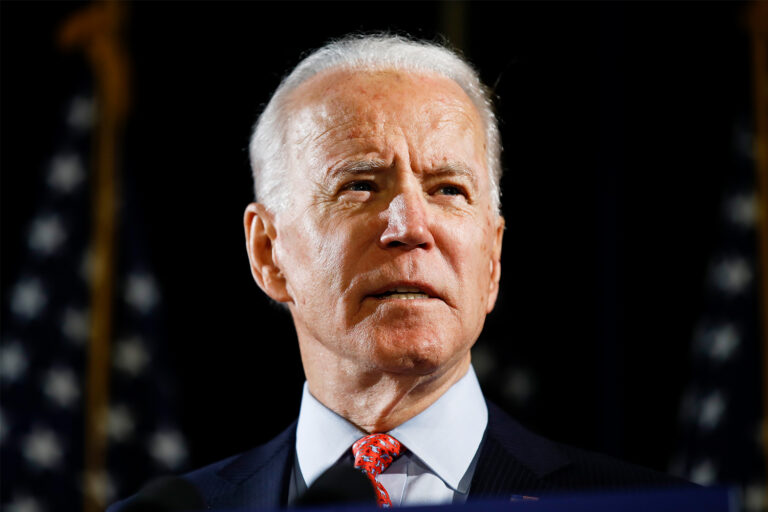
It’s fair to say Joe Biden’s electability has been discussed more than his policies. The former vice president is defined by what he is not – radical or revolutionary – and is seen by many Democrats as the candidate best suited to challenge President Trump in today’s deeply polarized political landscape. He picked up high profile endorsements as soon as he announced he was running for the third time in his career and won the Democratic nomination after Vermont Senator Bernie Sanders suspended his campaign on April 8, 2020.
Deborah D’Souza, an American Investment analyst argued that Joe Biden’s economic agenda is not as detailed as others and does not contain similar sweeping proposals, but his plan for the United States is still ambitious and represents more than a reassuring reset button for Americans rattled by President Trump. He has also shown signs that he’s willing to pivot to the left to win over Sanders supporters. He proposed two new policies to “ease the economic burden on working people” a day after the democratic socialist dropped out of the race.
President Donald Trump loves to thunder that Joe Biden, the Democrats Presidential nominee, is a “socialist,” a puppet of the “radical left.” But, according to Deborah D’Souza, Joe Biden’s tax proposals are generally moderate and pragmatic. Capitalism will remain alive and well, if Joe Biden becomes President, and his spending plans could invigorate the United States economy.
Ryan O’Connell, American lawyer, banker and bond analyst stated that they won’t be installing a statue of Karl Marx in a Biden White House. Joe Biden would use the additional tax revenues to fund crucial, long overdue investments in infrastructure, education and housing. Some measures could benefit the United States economy on a long-term basis, while others tackle important social issues. President Trump’s tax cuts pumped up the stock market for a year. But despite a lot of hype, they did nothing to increase capital investment or stimulate the real economy. Instead, the cuts blew a hole in the government’s finances. They are the main reason the annual deficit jumped 80% to $1.1 trillion on President Trump’s watch and that’s before the impact of COVID 19.
Joe Biden announced that he would not change personal income tax rates for Americans who earn less than $400,000. Their taxes might rise slightly because of indirect effects related to his proposed increase in the corporate tax rate. Still, that means only the top 1.5% of Americans would notice much of a change. The top 1%, those with incomes above $700,000, might see their effective tax rate increase about 4 points, to roughly 38%.
So their after-tax income might decline by 8.5%. That’s based on projections from the Penn Wharton Budget Model group at the University of Pennsylvania, which takes a non-partisan approach in evaluating such proposals. The top 0.1% of Americans would take a major hit. They would bear over 50% of Biden’s tax increases, and their after-tax income might drop 18%, according to Penn Wharton. But it’s a pretty exclusive club: you have to have an income of over $3 million a year.
That’s the same group, of course, which received a huge windfall from President Trump’s tax cuts. Joe Biden would essentially reverse those, and he would also increase the tax rate on capital gains. The effective tax rate for the top 0.1%’s of Americans could jump from 34.6% to 43% in the first year of Biden’s tax program, Penn Wharton estimates. Many members of the top 0.1%, aside from high-minded types like Warren Buffett and Bill Gates, may decide to vote for their pocketbook and support Trump. But they should realize that the 2017 tax cuts were fiscally irresponsible and not sustainable. The ultra-rich should also think hard about the benefits of living in a democracy and under a competent government, rather than being ruled by corrupt, bumbling autocrats. Some things in life are priceless.
Jeff Faux, Distinguished Fellow of the Economic Policy Institute stated that Joe Biden would increase corporate tax rates to 28%, up from 21%. That change would crimp companies’ profits somewhat, but bear in mind that the federal corporate tax rate was 35% before President Trump’s tax cuts. That was too high relative to tax regimes in other countries. But a 28% levy is a reasonable compromise that would allow United States firms to remain competitive on a global level. This change would be Biden’s largest single tax increase, and it would help to trim the government’s structural budget gap.
Jeff Faux further noted that private equity firms would pay regular tax rates on profits on their investments, rather than the ridiculously low 20% based on the so-called “carried interest” loophole. Real estate investors would incur taxes when they sold properties. Under current law, they can defer taxes by exchanging “like” properties…repeatedly. One can understand why Donald Trump might consider that last proposal “socialist”. The President has bragged that he has not paid taxes for many years.
Ryan O’Connell stressed that Joe Biden has proposed several tax increases for individuals with incomes over $400,000: restoring the top tax rate on ordinary income above that amount, from 37% to 39.6% (the rate before the Trump tax cuts); applying the Social Security payroll tax on income above that amount; and limiting tax deductions to 28% of their value. But Americans living in high-tax (and Democratic) states like New York or California might get some offset to these increases. Joe Biden has not talked about removing the $10,000 cap on deductions for state and local taxes, which the Trump tax code revisions imposed for the first time ever, in a punitive move aimed at Blue states.
In another sharp contrast with some progressives, Joe Biden’s aim is not to impose higher taxes to punish the rich or redistribute wealth, Biden would use the money to fund most of the costs for new spending programs. Unlike President Trump, Joe Biden’s plans would not cause a massive spike in the deficit. Some investments could improve the United States economy’s relative competitiveness, and others would address important social problems. Joe Biden has proposed to invest in four key areas over the next 10 years: education-$1.9 trillion; infrastructure and research and development-$1.6 trillion; housing-$650 billion; and healthcare, a net $352 billion
Biden’s education program includes universal pre-K, two years of free college for all students, and free public college for low-income students. The former Vice President would invest in water infrastructure, high-speed rail, green infrastructure and clean-energy projects, as well as artificial intelligence. The overarching goals would be a better-educated workforce and an economy more equipped to compete with China and other nations. The infrastructure and energy projects should generate a lot of jobs, too.
The former Vice President’s programs would also seek to alleviate severe shortages in public and affordable housing. As for health care, Biden won the Democratic Primary partly because he refused to back Bernie Sanders’ sweeping Medicare for All proposal. Joe Biden prefers to follow an incremental approach, which is based on expanding the reach of the Affordable Care Act and has a much lower price tag. Joe Biden would reduce the cost of medical insurance under the Affordable Care Act and lower the Medicare eligibility age from 65 to 60 years. To paraphrase Joe Biden, “Do these proposals look like radical socialism to you?”
Africa No Filter
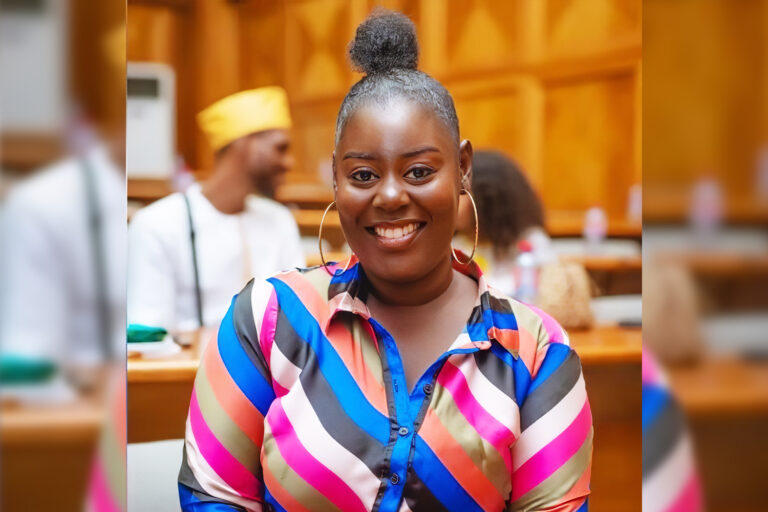
Jessica Hagan is Africa No Filter’s Program Officer and leads on programs and grantmaking within the Arts & Culture and media space.
Jessica has firm knowledge on Africa’s booming creative industries and has over the years developed a database of creative practitioners, organizations and funders who contribute to this ecosystem. Through her previous role as Arts Project Manager for British Council Ghana & West Africa, Jessica is able use her on the ground Grant & Funding experience to develop and expand on ANF’s grantmaking strategy to ensure we are supporting and propelling groundbreaking narrative changemakers on the continent. She is also responsible for finding and connecting with new creative stakeholders to add our community. Jessica is also a multiple award-winning playwright and screenwriter. She talked to Capital about Africa No Filter’s grant awards to writers and medias is Africa. Excerpts;
Capital: You are a grant-making organization. Who are your focus group and why?
Jessica Hagan: Africa No Filter focuses on supporting storytellers within the Arts, Culture and Media Sector. Storytellers are the orchestraters of narratives; an influx of storytellers supporting one core narrative is what leads to a narrative change or shift. At Africa No Filter, we recognise that the continent is inundated with artists and creatives who, over the years, have taken ownerships of the lens they want Africa and Africans to be seen through and are using artistic mediums to achieve this. At Africa No Filter we acknowledge that the voice of these individuals and organisations within the Arts & Culture ecosystem is vibrant, contemporary and transcends beyond borders. For this reason, we actively seek to support these storytellers who are shifting narratives in alignment with our mission of leaving an empowered narrative on the continent.
Capital: You work to change the stereotypes of conflict, disease, poverty and poor leadership in Africa, How long do you think it will take to make real changes?
Jessica Hagan: I think we must be conscious about what we classify as ‘real change’ and what we dismiss as ‘not enough of a change’. Real change happens bit by bit, whether that’s in one person, one organisation or one country. We believe that with every individual or organisation we support to deliver and develop new work, change is made, and we are keen to continue to support storytellers in this manner. Narrative change work is on-going – even after we meet our goal of leaving an empowered narrative in Africa, work needs to be done to maintain it.
Capital: You are supported by different organisations that are not based in Africa and some are also involved in the stereotypes. Don’t you think this will affect you work?
Jessica Hagan: We are supported by organisations who are continually developing and evolving their business and social practices, which is important to recognise. Our funders and partners are passionate about Africa No Filter and our mission, which is why they have made it a priority to support us. We are glad to work with partners who understand that sometimes the best way to rectify the harm or damage caused is to support the on-the-ground organisations and experts already doing the work.
Capital: What are the grant types and how do you select the winners?
Jessica Hagan: We currently have two types of grants available:
Operational support grants – Our Operational support grants (up to $50,000) are awarded to organisations within the Arts, Culture and Media sector who are supporting contemporary and empowering narratives of Africa through programme delivery, job creation, residences, networking opportunities and training and capacity building for creatives, artists, journalists on the continent.
Project-Support Grants – Our project grants (up to $30,000) support the delivery of creative projects on the continent led by storytellers who are using art, innovation, tech and creativity to challenge stereotypical narratives about Africa.
We score and award our grants using a decision matrix system that looks at factors such as impact, vision, previous work, sustainability, project delivery and more. We also have the Africa No Filter Emerging Scholars Fellowship program to explore African narratives across a range of storytelling mediums across Africa. The research, which is co-funded by Facebook, will be conducted across mainstream media, social media, popular culture, the arts, donor publications, and educational materials. The program will unpack the prevailing Western narratives about the continent which depict Africans as lacking agency, dependent on wealthy countries and in need of fixing.
Capital: Can you tell us one of your successful projects you funded in the past?
Jessica Hagan: One of the most successful projects to come from Africa No Filter is our Fellows Programme which awarded 12 creatives from across the continent with a grant of $30,000 to deliver new work. Multiple award-winning photographer Mutua Matheka was able to develop and expand on his project ‘Unscrambling Africa’ which uncovers how to use, define and relate with our spaces in Africa. He travelled across the continent to explore how different or similar the cultures of urbanity are in different African cities, and shared this through photography. He has gone on to win multiple awards and has contributed greatly to how Africa is seen by both Africans and those outside of Africa.