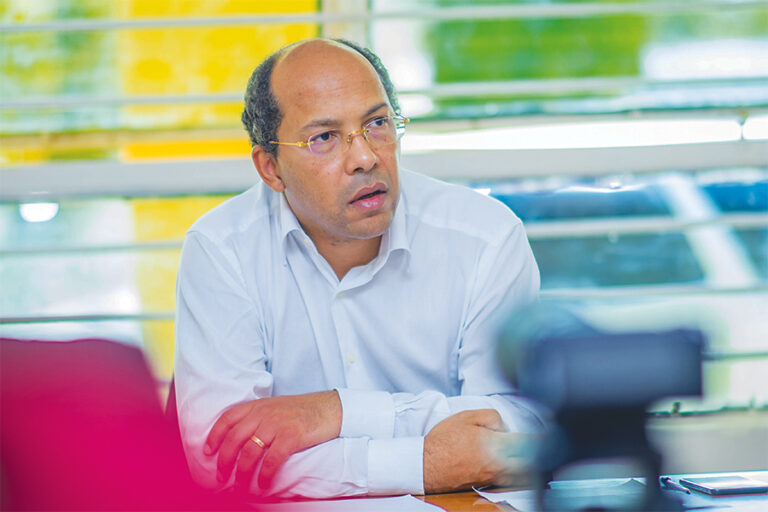
Nicolas Pompigne-Mognard is the Founder, chairman and owner of APO Group, the leading media relations consultancy firm and press release distribution service in Africa and the Middle East. APO Group is working with more than 300 clients, ranging from governments to international institutions, prominent personalities and companies. Clients include Facebook, Uber, GE, Orange, DHL, Philips, the NBA, Standard Chartered Bank, Siemens, Canon, PwC, EY, McKinsey & Company, flydubai, DP World, just to name a few. While APO Group’s Advisory division also serve clients like Aliko Dangote, the International Criminal Court and many more. Recently APO Group is exclusively partnering with Getty Images, an esteemed source of visual content provider. The deal marks the first time Getty Images has opened up its one million-strong subscriber network to content from a press release distribution service. Nicolas discussed how APO Group in partnership with Getty Images can help the international media see the real Africa, break the cycle of negative news, and show the world the bigger picture. Excerpts;
Capital: What does the APO Group partnership with Getty Images entail?
Nicolas Pompigne-Mognard: Getty Images has opened its amazing network of global media subscribers to press releases and images distributed by APO Group. What makes the partnership unique, is that these subscribers will be able to access the press release text – as well as the images that accompany them. This means tens of thousands of major media organizations – including over a million journalists worldwide – will be able to see the rich diversity of African business, culture and sport. It marks the first time that such a prominent international audience has been exposed to a comprehensive feed of quality African content. We are extremely grateful to Getty Images for opening their network to us in this way.
Capital: How does this help change the narrative about Africa?
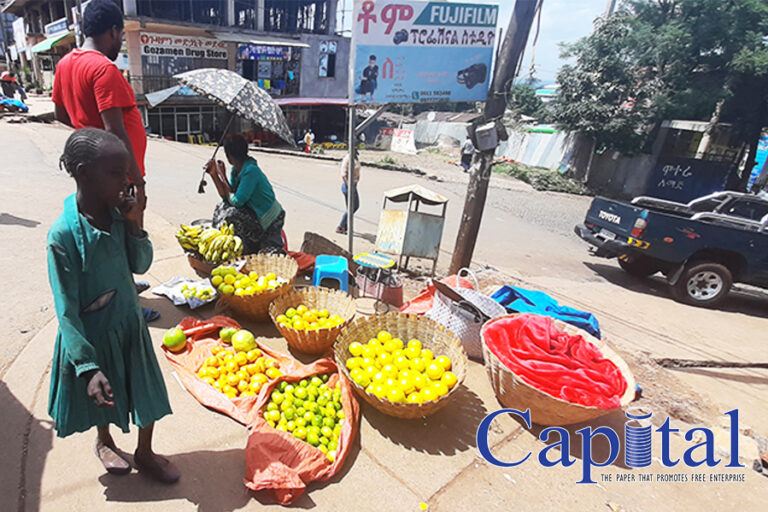
Nicolas Pompigne-Mognard: International perceptions of life in Africa have been shaped by negativity for far too long. Since APO Group was founded in 2007, one of our main missions has been to change this narrative, and show the world the ‘real’ Africa. Every day, our clients are creating content that has the potential to challenge perceptions one press release and one image at a time. These stories come from diverse sources: African companies that are developing and innovating across every industry; multinational organizations who are investing long-term in Africa and building operations on the continent; and major events showing the unique skill and passion African sport has to offer. If all of this content can be packaged up and delivered to journalists all over the world, I truly believe the narrative will shift, and a more positive picture will emerge. That is the power of the partnership we now have with Getty Images.
Capital: How does the partnership work specifically?
Nicolas Pompigne-Mognard: Any client of APO Group with a quality editorial image will now reach Getty Images as part of our Pan African press release distribution service. There will be no extra cost to the client – it will simply be an additional feature of the press release distribution. We have never charged our clients for the additional features of their press release distribution. Images have always been free to add, and they always will be. The great thing about this partnership is that it is extremely valuable to both parties. We are reaching this fantastic international media audience, and, for Getty Images, they are receiving content that is showing their subscribers what Africa is really all about. Some of the images we provide have never been shared on a global scale before.
For example, through APO Group’s partnership with World Rugby’s African association, Rugby Africa, we are able to provide Getty Images subscribers with images from major sporting events like the Africa Gold Cup and Rugby Sevens Olympic African qualifiers. These events have never had international prominence before, but now we can give them the audience they deserve.
Capital: How are the operations of APO Group in Ethiopia?
Nicolas Pompigne-Mognard: As with all countries in Africa, we recognise the value of local knowledge and expertise. Our team in Ethiopia is led by a vastly experienced communications expert who has worked with Ethiopian media all his career. This means we have the best people ‘on the ground’, building relationships with journalists and helping our clients get the best results – not just in Ethiopia, but across all 54 countries on the African continent. Early on, we realised that if we wanted to have a truly Pan-African operation, we would need the right team, with the right skills and the best networks. With a media landscape as diverse as Africa’s, you can’t do PR remotely. Our commitment to putting local people in local roles has enabled our clients to get closer to the media wherever their target market happens to be.
Capital: What other partnerships do you have in the pipeline?
Nicolas Pompigne-Mognard: We recently announced a partnership with the African Union of Broadcasting (AUB), the professional body representing national broadcasters from almost every African state. The deal has made all video B-roll and soundbites produced or distributed by APO Group and related to Africa available for use by AUB members free of charge and without restriction. Crucially for us, we are not just reaching African broadcasters, but also members of AUB’s partner organizations around the world, including the Asia-Pacific Broadcasting Union (ABU), the Arab States Broadcasting Union (ASBU), and the European Broadcasting Union (EBU). For our partners and clients it represents an unprecedented opportunity to showcase their African activities to new audiences. But, as with Getty Images, it is also a fantastic chance to show the rest of the world what Africa has to offer.
We have also partnered with Olympique de Marseille (OM), one of the most famous football clubs in Europe. That relationship is about raising the profile of the OM Africa football programme, which is bringing development opportunities to African players and fans.
Finally (for now!), we have an exciting announcement coming soon about another partnership with a hugely prominent and influential sporting organization. Stay tuned for that one!
Capital: The world has gone through challenging times brought on by the pandemic, which has required a total reset of the way we work, interact with each other and do business. Did the pandemic affect APO Group? If so, how?
Nicolas Pompigne-Mognard: Thankfully, the pandemic has not affected us badly at all. We have actually seen major growth in both the Public Relations and press release distribution arms of our business. In 2020, we distributed 30% more press releases than the previous year. I think this is partly due to an ongoing shift in the way companies communicate. Increasingly, they are investing more in PR and less in advertising. Partly, this is due to trust, with consumers placing more value on credible, truthful content in a world that is becoming more unpredictable. With misinformation and ‘fake news’ at an all-time high, and now a global pandemic creating even more uncertainty, there is a greater demand for quality journalism. We are in the unique position of bridging the gap between businesses and media, so our services can help connect multinational organizations with the best journalists in Africa. That is now more important than it has ever been.
Capital: As a Pan-African communication consultancy in Africa, what competitive advantages do you have?
Nicolas Pompigne-Mognard: No other communications consultancy or PR agency operating in Africa has the depth of experience in African media relations as APO Group. This can be traced back to when we were known as the African Press Organization, and were predominantly a press release distribution company. We built up a network of more than 400.000 journalists either working in Africa or reporting on Africa. That gave us a huge advantage when it came to the provision of PR services. Put simply, the African media knows APO Group. We have been a trusted provider of news to them for more than a decade. Not even the biggest and most renowned global PR agencies can say that. As I mentioned earlier, we are also operating at the heart of African media. Our team of local specialists have built reputations in their native countries and can bring that experience to bear when helping our clients. Global agencies tend to spread themselves more thinly when it comes to Africa. They might have a headquarters in South Africa and operate remotely across the rest of the continent. We are the leaders in the market because we are African. It is our passion, and our sole area of focus.