Tuesday, May 12, 2026
Home Blog Page 3372

ART ACTIVISM One For All and All For One

“Our act aimed to erase the acts of indignity and disrespect of those who plundered our homes.”

Artist Mwazulu Diyabanza

Often European museums position themselves as preservers and protectors of art, culture and history, particularly as it relates to Africa. If you’re a betting person, you can bet your bottom dollar, as the old adage goes, that 99.9999% of these artifacts were not gifted to these museums, instead were looted from Africa, centuries ago, with no regard for the impact on the peoples or progeniture. Under recent fire is the Musee Du Quai Branly Jacques Chirac Africa Collections boasting 70,000 objects from “Sub-Sahara Africa…the first voyages of exploration to Africa, for example to the Congo…(where) the development of ethnography was accompanied from the 1930’s by field collection expeditions, one of the most well-known of which was the Dakar-Djibouti expedition. Also, from this period onwards, colonial administrators as well as collectors and merchants became major actors in the enrichment of the museum collections,” reads the Museum’s website. Really? The museum website further explains about the “democratization of the collection” emphasizing “one of the most important priorities of the museum” is ensuring access to the museum through “true collaboration” highlighting outreach to even people in hospitals and retirement homes. There is no mention of reaching out to Africans, from whom the items were stolen, even the millions of African migrants in France enduring racism. Seriously? You can steal OUR people’s artifacts then say you are committed to democratizing it for YOUR people, with a straight face?
Well Les Marrons Unis Dignes et Courageux, loosely translated in English meaning Unity, Dignity and Courage of the Browns, has no longer left this return of looted artifacts to the slow boat known as diplomacy. They are committed to African Nationalism emphasizing the recovery and re-appropriation for liberation and restoration of African wealth; and African Socialism towards the construction of African society based on African power and values. Their unapologetic mandate fuels the organization’s determination to get back Africa’s artifacts, by any means necessary. Mid-June, amidst Black Lives Matter protests, a real-life Black Panther type opening scene was played out by artist/activist from the Congo, Mwazulu Diyabanza, who tried to retrieve a looted 19th century African funeral pole. Obviously Diyabanza and fellow protestors arrested for the act knew they would not be able to walk out of the museum with their historic treasure, but risked arrest to make a point. They wanted to bring attention to one of the long list of heinous offences against Africans by the French and other European powers for that matter.
During the trial held in France on September 29th five arrested from the group remained defiant in the face of a charge of attempted theft. But it was not just five defiant defendants on trial but the horrible history of France, accused of looting a large collection of well over 90,000 ceremonial and artistic artifacts. Dubbed a “failed repatriation attempt” in the Smithsonian magazine, the prestigious US entity has also seen its fair share of protests including initial opposition to a RasTafari exhibition led by yours truly in early 2000’s. But that’s another story. Artist Diyabanza said, “Our act aimed to erase the acts of indignity and disrespect of those who plundered our homes.” It’s personal! Too often we treat these issues with diplomacy and decorum but after decades of discussions, met with vitriolic and condescending remarks from the French, often defending the “hosting” of these items, enough is enough.
It is high time for not only repatriation of Africa’s artifacts but reparations to help build state of the art museums and programs in Africa with enough funding and resources to “democratize”, ensuring access for all Africans especially in rural areas where many of these items have immense significance and purpose. While England holds many of Ethiopia’s treasures, France also has a few, which is an understatement and Ethiopians should remain vigilant for the return of the many treasures, holding these partner/donor countries accountable, without fear. There comes a time when the axiom, “stand for something or fall for anything” must be applied. This is about heritage as much as it is about the future. In a time when we grapple with manufactured discourse on identity rather than the celebration of diversity, the day will come when generations from now will ask what meant the most to us in the 21st century and what were we willing to sacrifice life and limb for. Future historians should be able to find a society led by vigilant and committed leaders who would not sit by instead they stood with artists, activist and academicians working unceasingly to retrieve our most precious historical items for posterity. Let us see if post Covid era Ethiopia and all African states will join arms to act as one voice to retrieve, protect and preserve our heritage and hence our dignity. Lights, camera, action…

Dr. Desta Meghoo is a Jamaican born
Creative Consultant, Curator and cultural promoter based in Ethiopia since 2005. She also serves as Liaison to the AU for the Ghana based, Diaspora African Forum.

How many of our beloved ones we lost to irregular migration? … Identified in just a number with their graves left unnamed

By Kenaw Gebreselassie

For Lampedusa, the small Italian island city at the Mediterranean Sea with a charming scenery, the memory of the 3rd October 2013 tragedy that claimed the lives of 368 African migrants, the vast majority of them Eritreans, is still fresh. Apparently, there has been nothing different that could have erased this misery. The city is still experiencing an incessant flow of migrants to its coast and news of death associated with this is almost an everyday incidence.
Even this year as the world, Europe in particular, is heavily hit and shaken by the COVID-19 pandemic, desperate migrants do keep on making a deadly journey to the coast of Italy, crossing the Mediterranean Sea by shaky boats, departing mainly from Libya and Tunisia. Aljazeera has recently reported nearly 8000 Tunisians arrived in Sicily up to August 31, 2020 a number almost six times higher than the same period last year. On August 31, more than 360 people were rescued at sea and brought to Lampedusa. The pandemic couldn’t even curve it as the people and politicians in host and transit countries may have expected.
A year ago in October, invited by Europe based ‘Snap Shots from the Boarders’ project through Amref Health Africa-Italy, I grabbed the opportunity to attend events that marked the 6thyear’s anniversary of, the symbolic Mediterranean tragedy in Lampedusa. During my two days in one of the smallest cities in Italy, I could see in the daily conversation, be it formal or informal, of the elites and the public at large, in their art works, paintings and photography, that the 2013 shipwreck was still fresh in their mind. The stories and figures I happened to hear; the images (photos and video) I happened to watch, the discussions I showed up were all highlighting the endless dramatic incidents in the Mediterranean Sea, making it the ‘sea of death’ as much as the ‘sea of life’.
“The Mediterranean Sea was a sea of life, not a sea of death,” Toto Marello, the Mayor of Lampedusa remarked as he spoke to the gathering in one of the events. I witnessed both. A short walk by the sea in the island of Lampedusa would give you a glimpse of stirring images of life – people at the beach enjoying; fishers fishing for their daily meal and sell; some just sailing their boats for fun and others on their bikes riding by the sea, and many more. Again, a short talk with someone would, on the other hand, bring you stories of plights of impoverished migrants mainly from Africa, which I could hardly be eager to hear. To my shock and grief, it was reported nearly 18,000 migrants perished trying to cross the Mediterranean Sea between October 2013 and 2019.
More than the figures, what left me in a deeper grief was the Memorial inauguration where we had a night gathering around 3pm to tribute those drowned in the dark blue sea of the Mediterranean six years ago, and thereby pronounce “Never Again”, a cliché that is put forth again and again everywhere a similar crisis occurs.
Standing there close to the Memorial in silence, and struggling to stifle my tears as I scanned through a long list of names of young brothers and sisters from Eritrea and Ethiopia was a distressing experience. It was even more aching to see survivors walking round the monument and looking on names of fallen compatriots. Some of them may have come from the same village, fled together and died together.
I was particularly touched by one of the young men, who, screwing up his eyes, stared right at his brother’s name; the name he would fondly call as brothers grown up together under the same roof. He could make it to Europe, but his brother couldn’t, which tells loud about the fate of most of irregular migrants.
The compelling stories shared at the night gathering of the memorial inauguration by Eritrean survivors, the commemorative march to the ‘Gate of Europe’; the voyaging to the site where the shipwreck happened and the flower placing ceremony on the stretch of water were all heart breaking and alarming.
These our brothers and sisters rested in various cemeteries in Lampedusa as unidentified migrants as if they never had a home country, families, and names. They were identified only with a number as an unknown human beings, with their graves unnamed. “I wanted to give a name to these human beings, men, women and children that after their death have been buried in various cemeteries and identified only with a number, the indifference of that night has made that dawn never come for them,” Vito Fiorino, the designer of the statue, put a note near the Memorial.
I wonder what our leaders could have felt had they been standing there at the Memorial, with their eyes walking through the names of the deceased (names collected later). I honestly wonder how they could have reacted had they been on board in one of the boats surfing towards the stretch of water where the flower putting ceremony conducted in honor of the lives lost, those nationals fleeing the countries they rule. Any regrets? Could they have blamed themselves for their indifference to the fates of their youth as Vito may have blamed the Italian authorities for their indifference to the migrants’ lives regrettably lost, as rescuing was possible as many still argue? Could they have accused themselves of not being able to create an enabling environment for their young people to live in freedom and peace, to work and thrive?
When will this misfortune end?
The sad truth is even now our people, young men, women and children are dying trying to cross the Mediterranean Sea; suffering at detention centers in Saudi Arabia, Yemen and in several other corners of the world. From the many unending sequence of migration crisis, and the suffering of African migrants’, the latest has come from Saudi Arabia, where thousands of Ethiopian migrants are detained in a hellish center, as echoed by several international media.
With the recent inhuman treatment of the Ethiopian migrant workers in this oil-rich Arab nation, the lives lost during migration has again hit headlines of the world’s media, and become the concern of many. For several months, the migrants have been locked in small detention centers, leading some of them to choose to die by taking their own lives. The incident has been concealed from the eyes of the world until the migrants managed to smuggle out photos and videos they shot and share with the media. As soon as the stories and images were published, they went viral, causing anger and outrage among human rights activities and even authorities of the countries from which the migrants have come. These human beings are again the lives we are failing to protect and save.
As we condemn such a dehumanizing action by those who lack compassion and any sense of humanity, at home it is also important to question our governments’ stance and challenge their indifference to the rights of their nationals abroad. Most important of all is, however, holding the governments accountable for failing to make their own countries better places for citizens to live and work.
Migration is not a crisis and its drivers are manifold. It has now increasingly been seen as a triple win solution, bringing benefits to destination countries, origin countries and the migrants themselves. In this regard, the initiative made by partners of the ‘Snap Shots from the Boarders’ (www.snapshotsfromtheborders.eu) project looks encouraging, if not promising, to alter the migration narrative towards this new shift. The project, which brings together several actors in European countries, has been campaigning for a shift on the migration narrative that could give rise to a platform towards human rights-based approach to migration and development, fostering strong linkages among communities; and migrants as a new human development actors. Under the ‘No More Bricks in the Wall’ banner, the project makes efforts to reframe the way many perceive migration and migrants and bring about positive changes in the European policy and decision makers, opinion leaders and citizens’ attitudes.
It is interesting that at the 6th year’s anniversary of the 2013 disaster at the Italian coast, the project came up with a new petition that called for EU institutions to proclaim the 3rd of October as “European Day of Memory and Welcome”, which can be weighted as a milestone to get the change in the migration narrative off the ground. I believe the change will come about with awareness and understanding of European policy and decision makers, opinion leaders and every EU citizen about global migration and pushing factors that determine migration flows although there are several reasons for me to believe otherwise.
I have also high hopes in Saudi Arabia and several other Arab nations where hundreds of thousands migrant workers are exploited and heartlessly abused, positive voices on migration and migrants will come out to help stop the violations once and for all. What follows, which I am longing for, could be a ‘Day of Memory and Welcome’ and stories of change in these countries as well. What might make more sense, of course, is urging government and non-government actors at the home country to work towards curving irregular migration flows of any sort to other countries and protecting the rights of their citizens working and living overseas, and then setting our hopes on the realization of these meaningful move.

Time for enhanced cooperation

0

By GERT GROBLER
China and Africa are consolidating, promoting and embracing broader prospects for common development
China and Africa share strong, fraternal and comprehensive relations and cooperation that are going from strength to strength. The constructive China-Africa Summit on Solidarity against the novel coronavirus on June 17 reaffirmed the friendship and growing cooperation between China and Africa and the need to advance their friendship in a pragmatic, efficient and results-oriented manner.
The next phase of their cooperation is taking place against the backdrop of the pandemic and a rapidly evolving political and economic international landscape, shifting global balances of power and a great deal of uncertainty and new challenges on multiple fronts, necessitating closer strategic coordination at both bilateral as well as multilateral levels.
Africa is also in the process of realizing its dream by implementing its strategic vision of the African Union’s Agenda 2063, which encapsulates Africa’s future growth and its development path to become an integrated, prosperous and peaceful Africa, driven by its own citizens, representing a dynamic force in the international arena.
This goal is closely linked to eliminating poverty, one of the goals of the UN 2030 Agenda for Sustainable Development. Extreme poverty is declining globally except in Africa. In fact, Africa is likely to miss this primary goal of the Agenda by a huge margin.
The spread of the novel coronavirus has not only put great pressure on the health systems of African countries, but also slowed the commendable political, economic and social progress Africa has made over the past few decades.
Africa now faces disrupted revenues, reduced trade and less foreign investment, and the challenging task of creating jobs for millions of young people at a time when the implementation of the African Continental Free Trade Area, the strategic framework for delivering on Africa’s goal for inclusive and sustainable development, has slowed and the tourism industry is struggling, not to mention the growing challenges from the effects of climate change.
It is critical for Africa to have the ability to make its own decisions and follow its own development path. Africa must ultimately take responsibility for its own destiny. China accepts this because it “listens to Africa’s voice”.
Africa’s major concern is economic recovery in the post-pandemic era and pressing issues such as debt, industrialization, trade and investment. It therefore welcomed President Xi Jinping’s statement during the China-Africa Summit that China took Africa’s debt concerns seriously.
These challenging developments come at a time when Africa cannot depend on the West and many other international partners for support. The West, for instance, is politically divided, facing political uncertainties and domestic issues such as weak leadership and experiencing distracting matters such as the US election, the Brexit saga and others. China is also facing alarming “bullying tactics” and provocations from the United States and others in trade and technology and border and sovereignty issues, representing the rise of right wing and populist politics, which are not only highly regrettable but also dangerous, constituting a serious threat to regional and global peace and stability.
It is against the backdrop of growing cooperation and exchanges between China and Africa, that the latter developed deep respect and admiration for China’s development experience. Africa has witnessed the progress China has made over the past 70 years, based on its “people first” approach, hard work, innovation, reform and opening-up under the leadership of the Communist Party of China. Embarking on a path of socialism with Chinese characteristics, China has created a moderately prosperous society, which is generally regarded as a miracle of development unmatched worldwide.
Africa wants to continue drawing on China’s development experiences in many areas. It appreciates that China stands ready to share its development experiences and there is already active collaboration on “the many lessons that could be learned from China”.
China, as a “friend in need” remains a much better prospect for Africa as regards cooperation given the fragile global political and economic situation, and division and leadership challenges in the West.
China-Africa cooperation will be stepped up in the months to come, with new and exciting opportunities arising for broader bilateral and multilateral cooperation. The Forum on China-Africa Cooperation (FOCAC) and the Belt and Road Initiative are important platforms for Africa and China to accelerate cooperation in the following priority areas.
First, work toward the continued alignment of the AU’s Agenda 2063 with the Belt and Road Initiative and FOCAC action plans, with a stepped-up focus on practical outcomes for sustainable economic growth, industrialization and diversification. Cooperation should be expanded on infrastructure to effect an agricultural revolution on the continent and promote the digital economy in preparation for the Fourth Industrial Revolution. The two sides should cooperate to develop more special economic zones in Africa, and work together to develop the green energy industry and the marine economy. They should also seek to establish effective health systems in African countries and address the debt issue. Creating alternative, innovative global and continental financial support and institutions with sound transparent fiscal policies; harnessing the demographic dividend through cooperation on education, science and technology, research and innovation and human resource skills training with a strong focus on youth; enhancing Africa’s peace and security architecture in support of the continent’s initiative to “silence the guns”, along with continued humanitarian support would all help the continent unleash its potential.
Second, projects in Africa, based on Chinese financing and support, need to be increasingly linked to concrete benefits for Africans such as concern for and enhancement of local human resources, local procurement and the environment.
Third, both sides should increasingly strive toward a sound debt management framework as well as transparent fiscal policies for sustainable development.
Fourth, they should continue to jointly pursue good governance and institutional capacity support, combat corruption, tax evasion and illicit financial outflows.
The next FOCAC meeting due to be held in Senegal in 2021 comes at a critically important juncture for China and Africa, and it represents the next important building block in their increasingly vital strategic cooperation.
It is more necessary than ever before for enhanced China-Africa strategic cooperation. China and Africa are, in fact, standing at a new historical point in consolidating, promoting and embracing broader prospects for common development.

The author is a former senior diplomat in the South African Department of International Relations and Cooperation, and a senior research fellow with the Institute of African Studies at Zhejiang Normal University. The author contributed this article to China Watch, a think tank powered by China Daily.

Digital Ethiopia

0

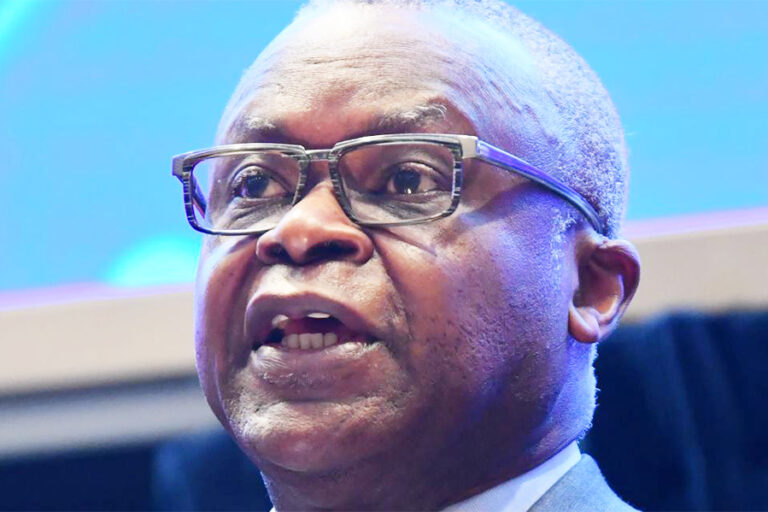
A Fintech and business turnaround veteran, as Mastercard’s Division President for Sub-Saharan Africa, Raghav Prasad is responsible for overseeing all of the company’s activities across thirty two countries, driving business strategy, sales & business development, product management and marketing and public policy. He is responsible for driving Mastercard’s strategy of inclusive growth, deploying innovative payment solutions and partnering with issuers, merchants, acquirers, fintechs, governments and market regulators. Prior to this he undertook the roles of President Payment Gateway Services and General Manager (Gulf Countries).
Recently his company signed MoU with Ministry of Innovation and Technology. He talked to Capital about the agreement and their future plan in Ethiopia. Excerpts;

Capital: Why is Ethiopia a priority for you as Mastercard and how committed are you to this market?
Raghav Prasad: Ethiopia, with her vibrant business and technology sector and her focus on driving inclusive economic growth for her hundred million population, is a very exciting market for Mastercard. We have committed to leveraging our technology platforms, our experience of working with over seventy governments, and our expertise in digitisation and financial inclusion in supporting markets like Ethiopia to reach their full potential as a regional and global leader. Ethiopia today sits at the crest of digital evolution, and we believe that the greatest opportunity in Ethiopia today lies in its ability to harness these advances for inclusive growth.
Mastercard is uniquely positioned to help advance inclusive growth in Ethiopia. As the “digital economy” increasingly becomes “the economy”, it is both our business strategy and our social responsibility to ensure that people and organizations have access to the networks, tools, and solutions they need to prosper. Of course, everyone has a role to play, from the smallest businesses to the biggest corporations, from governments to NGOs and as a trusted network, we partner with all of them. Our focus is on developing, incubating and scaling simple and locally relevant digital solutions that deliver strong payment platforms and ecosystems, improve financial literacy and extend acceptance infrastructure to even the smallest businesses in the smallest corner of the country.

Capital: Tell us a little about the partnership agreement you recently signed with the Ministry of Innovation and Technology (MINT)?
Raghav Prasad: The Ethiopian Government’s ‘Digital Ethiopia 2025’ strategy and Mastercard’s vision of bringing 1 billion people across the world into the digital economy by 2025 have a very strong consonance. We are therefore delighted to have signed an MOU with the Ministry of Innovation & Technology to support the government’s charge towards a digital economy that benefits everyone in Ethiopia. Our partnership with MINT will drive the development and implementation of strategic solutions and policies that will help drive the right outcomes as per the ‘Digital Ethiopia 2025’ strategy.
Under the MOU agreement, Mastercard will bring to bear our entire armory of capabilities – from our global technology platforms to our world-leading consulting and delivery capabilities in supporting Ethiopia to achieve its digital transformation objectives. These activities will directly support efforts towards driving financial inclusion, creating safe and accessible digitized payment solutions for small businesses, and implementing digital identity projects.
We owe this partnership largely to the meeting between President Sahle-Work Zewde and our Executive Vice Chairman Anne Cairns last year. A little over a year later and we are very excited about the progress we have made in our engagements with the Government of Ethiopia and believe that this is just the beginning as we will be working very closely with MINT to extend this partnership across several sectors of the economy.

Capital: You speak quite a bit about supporting the MINT in achieving the Digital Ethiopia 2025 strategy, why should the Ethiopian Government make a digitized economy a priority?
Raghav Prasad: The digitization of transactions is a key enabler of inclusive growth. It allows for transactions to be undertaken at low cost and digitized transaction records allow all kinds of services to be offered to citizens in the most far-flung parts of the country, putting the economy to work for everyone. It also supports the Government’s agenda to reducing the inefficiencies in the distribution of services for citizens and to reduce the leakage of taxes and levies. Critically, the digitization of transactions reduces the hidden cost of cash in an economy. Mastercard’s research across multiple markets around the world indicates that the cost of cash – from simply printing it, storing and transporting it safely and the government revenue leakage it causes – can be as much as 1.5% of the GDP of a country. That is a very significant sum of money that could be put to much better use for the benefit of citizens.
Mastercard has committed itself to the agenda of inclusive growth. We firmly believe that developing economies thrive, and that growth becomes sustainable, only when it is widely spread. The digitization of transactions makes it possible to scale this at low cost. And, as more people join the formal economy and begin to earn, spend and save, they collectively drive economic growth. It also ensures Governments can generate higher tax revenues which can deployed to generate economic growth. And, of course, when the economy grows, everyone prospers.

Capital: In Ethiopia what do you intend to achieve in the short term and what could we expect to see from you in the long term?
Raghav Prasad: Like I mentioned earlier, Mastercard is committed to Ethiopia and with the Ministry of Innovation and Technology we intend to:
Help define the frameworks and plans to drive the digitization of the payment ecosystem
Enable micro and small merchants to gain access to digital payment products, so they can make and receive payments digitally, allowing them to reduce costs. More importantly, digital transaction records allow banks to evaluate small and micro businesses for credit, offering working capital loans that help them grow. This growth generates employment and incremental tax revenues.
Leverage our technology, digital assets, and services to drive financial inclusion, by promoting low cost electronic payments
Support the Government of Ethiopia in reducing the “cost of cash” and the leakage of revenue into the shadow economy, and,
Support Ethiopia in driving digital transformation by strengthening existing infrastructure, developing enabling systems (Digital ID) and facilitating digital interactions between government, private sector, and citizens (Digital Payment).
In the long term, we are looking to be part and parcel of the development journey of Ethiopia. We will partner with all parts of the Ethiopian government as well as the Public & Private sector to drive the development of robust, safe and secure payments infrastructure that will extend the dividends of digitization to all sectors of the economy.

Capital: How is Mastercard demonstrating its commitment to women empowerment, youth employment, and diversity in Africa?
Raghav Prasad: Back in 2015, Mastercard pledged to bring 500 Million financially excluded people into the financial ecosystem, by 2020. We are delighted to say that we have achieved that goal! We have therefore pledged to extend that to bringing a total of 1 billion people and 50 million micro and small businesses into the digital economy by 2025. As part of this effort, we have also set ourselves the goal of providing 25 million women entrepreneurs with solutions that can help them grow their businesses.
Our commitment to supporting micro-businesses is a way of directly addressing high youth unemployment. In many parts of Africa, starting a small business is the only way to earn a living. These Micro and Small businesses have the potential to make a genuine difference in their communities. All they need to succeed are the right tools to run and scale their businesses. Mastercard is committed to powering small businesses through our resilient network, insights, technology, products and services, and our philanthropic support – including a pledge of $250M to be spent globally to support such businesses.
We’re committed to leading the charge in reshaping the way our world is designed, coded, and constructed by bringing diverse perspectives to the table to unlock powerful ideas that open up our industry and the world’s possibilities to women. We’re pushing our networks further, forging ambitious partnerships, and championing the people, businesses, and innovations that are transforming the way our world works. Because a world that works better for women creates limitless possibilities for us all. It’s a world that gives everyone the chance to unleash their potential, pursue their passions, and make extraordinary things happen.

Capital: What are some of the projects you want to implement in Ethiopia to help it achieve its digital strategy by 2025?
Raghav Prasad: We have started working with the Ministry to determine what these projects will be, once these are fully developed, we will share these with you. Our joint objectives though are very clear – to create a digital economy that works for everyone everywhere.