

The new initiative that will change the relation of Ethiopian Petroleum Supply Enterprise (EPSE) and petroleum companies is expected to commence in the coming week.
The recently formed Petroleum and Petroleum Products Supply and Distribution Regulatory Authority, which is under the Ministry of Trade and Industry, had conducted different studies under the initiative to improve the petroleum business in general and improve the distribution without fraud.
One of the initiatives was to improve the relationship between the oil companies and EPSE, which is the sole oil supplier for companies, and payment modality for the supply of oil.
In this regard, the authority had disclosed that the companies will start buying the fuel on cash basis which will be fully implemented in one year’s time.
Ahmed Tusa, the first head of Petroleum and Petroleum Products Supply and Distribution Regulatory Authority, told Capital that the companies and EPSE will sign the new contract arrangement in the coming few days, may be up to Tuesday March 16, to introduce the cash base supply.
He said in the first phase that may stay for a month, companies will have to pay the 10 percent of the total amount of the supply and the rate will gradually become 100 percent in a year time.
The existed experience was that companies receive the product on a one month credit scheme, while it has affected the state owned enterprises because of default mainly from new entrants.
Tadesse Hailemariam, CEO of EPSE, recently told Capital that the new arrangement will improve the enterprise’s cash flow and working capital.
Ahmed said that the new scheme will not have any effect on dealers, while the minor cost incur on a liter of oil will be revised by the government to keep the companies and enterprise benefit.
“Any business has a cost like the bank charge or interest that will be revised,” he explained for the case that the new scheme will have additional charge on oil companies which may come with different instruments to settle their bill on the cash base trade with the enterprise.
“The relation with dealers to companies will continue as usual that does not have any correlation with the latest decision that the government has taken,” he added.
Initially the government had announced that the new scheme will be commenced as of March 10. “While some paper works have delayed the process I hope the two parties will sign the new contract in these few days,” he strongly underlined.
Fuel cash base supply to start this week

EHPEA & EARCS partner to bolster horticulture
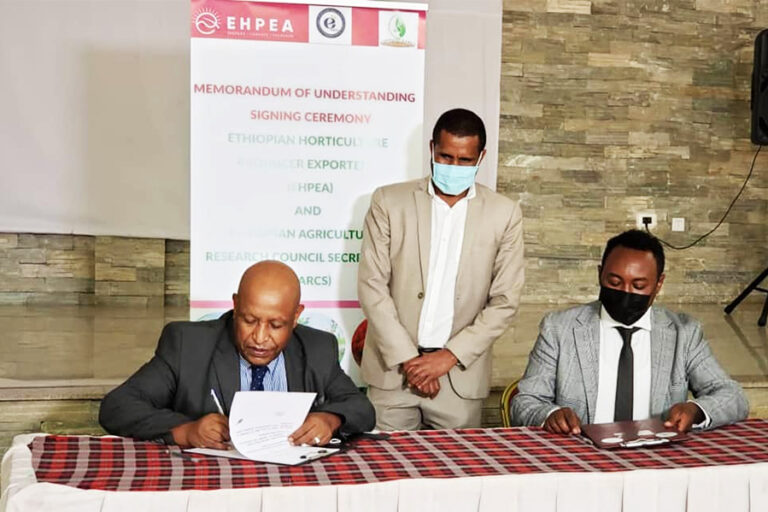
The Ethiopian Horticulture Producer Exporters Association (EHPEA) TVET Training Center and Ethiopian Agricultural Research Council Secretariat (EARCS) signed an MoU on Thursday, March 11 for a partnership to collaborate for sustainable engagements on skills development, knowledge, and technology transfer in the horticulture sector, and to further strengthen the public-private partnership and research – industry linkage.
Since 2007, EHPEA TVET Training Center has been offering trainings to its members, supporting the practice and promotion of socially responsible and environmentally friendly operation, as well as building the capacity of members and pertinent stakeholders in the horticulture industry.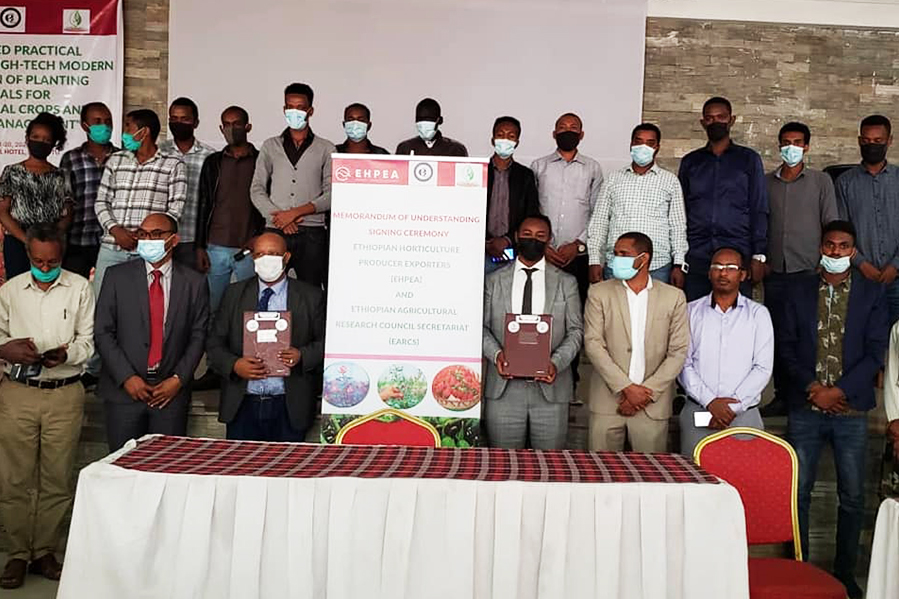
The newly signed partnership is the first of its kind, since the launching of the accredited EHPEA TVET Training Center to cater its services for government institutions.
On wards of the program, EHPEA & EARCS jointly will provide a skill based – hands on training to horticulture researchers and university lecturers selected from the national agricultural research system on “High tech/modern production of planting materials (seeds and other planting materials), horticultural crops and nursery management.”
COVID vaccine launched nationally

On its one year mark of the COVID-19 outbreak in the country, the Ministry of Health has launched the vaccination on Saturday, March 13, 2021 across the country. This comes in the nick of time as the spread of the pandemic has reached to 20 percent contamination which is worse than ever.
However, more than seven European countries and recently Thailand have suspended the vaccination over the fear of thrombosis /blood clots/ and some countries have also banned the AstraZeneca vaccination for people aged 65 and plus.
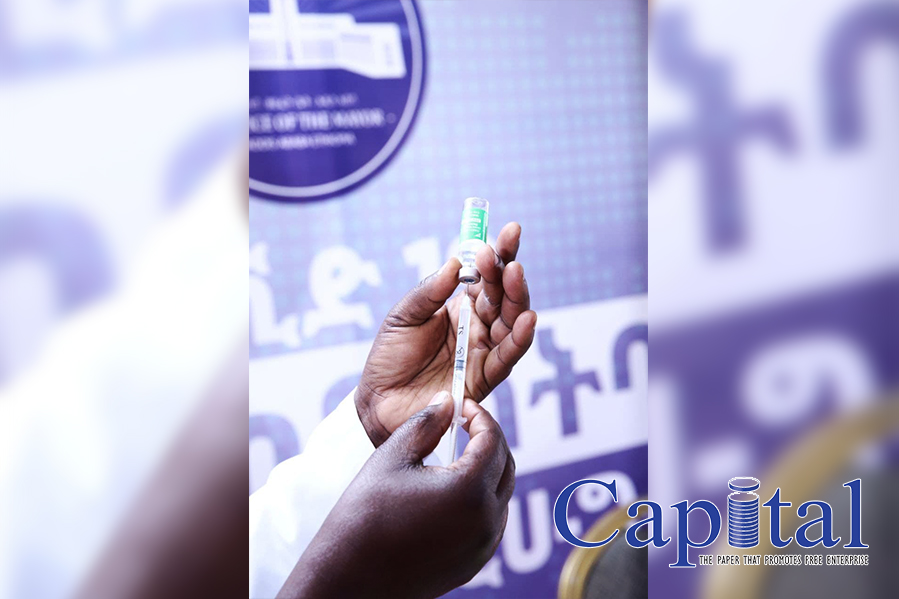
To this regard, Dr. Boureima Hama Ethiopian representative of WHO highlighted that, “reports of blood clots received so far are not greater than the number that would have occurred naturally in the vaccinated population” adding that, “every vaccine has its own side effect, even those we use on simple diseases. The WHO has not yet released the so called side effects in relation to taking the vaccine.”
Dereje Duguma, State Minister of Ministry of Health expressed that so far there are no plans of suspending the vaccination as it is not clear that the vaccine was responsible for the so called side effects. “The safety of the vaccine has been studied in certain clinical trials and confirmed well-tolerated,” said Dereje adding that, “the vaccination will play an integral part to end the serious stage of the pandemic and to that end will continue to give the vaccine.”
However as he said, the ministry is fully organized to following up the whole process and condition of vaccinated population to readily combat any side effects that could come.
To maximize the public health benefit, the national COVID vaccine development plan prioritizes the first doses of the vaccine for health and essential workers and other at risk groups. From the first batch of the vaccine, the ministry has planned to give the priority for more than 300,000 health workers and supporters in the country including interns.
On Sunday, March 7, 2021, the Ministry Of Health had received its 2.2 million doses of the first international deliveries of COVID-19 vaccine through the COVAX Facility from the 7.6 million doses of vaccine shipped by Ethiopian airlines. The Ministry Of Health is preparing to receive its entire first quota of 7.6 million doses until the end of April. Even though the quota was said to be nine million doses as reports shows, the number has decreased to 7.6 million doses. According to Dereje, the rest of the doses of the vaccine will be brought in to the country in one month’s time.
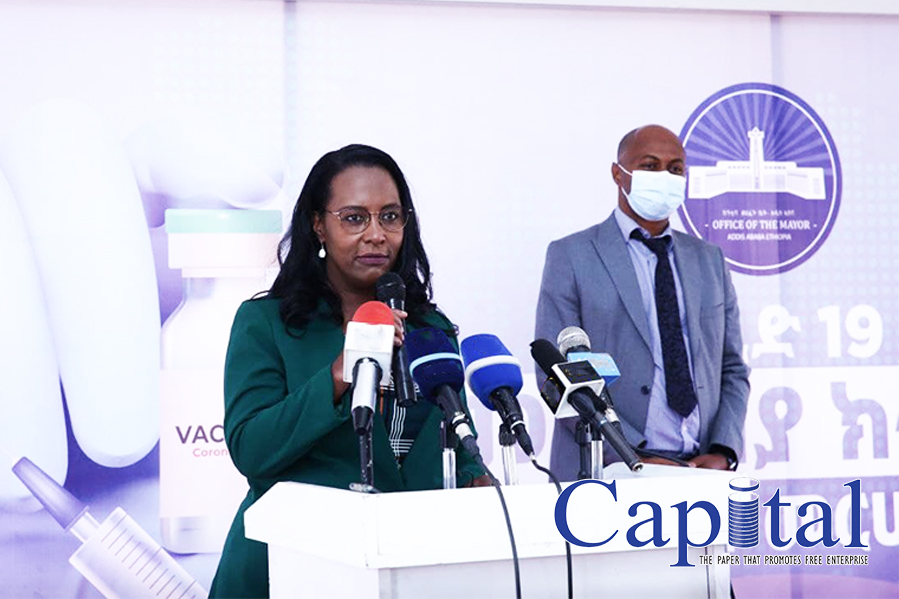
During the launching ceremony, Yared Agdiew (MD) head of Eka Kotebe general hospital highlighted that not only have the cases been increasing but also critical patients’ cases have also been rising as well. Similarly, Dereje echoed the same sentiments and told Capital that with 20 percent contamination rate, it is increasingly becoming difficult for hospitals to handle patients with the virus. He expressed that strict measures are being taken to control the spread as the country awaits the better days to come.
“COVID has affected all aspects of our lives. Today, I would like to call upon all of you to spread the message, to create a strong demand for and acceptance of the COVID-19 vaccine and be role models for proven COVID-19 prevention measures. It is my firm belief that through our collective efforts, we will be able to beat COVID-19,” remarked Dr Boureima adding that the arrival of the first batch of the vaccine through COVAX provides an effective tool to ends the acute phase of the pandemic.
Government officials have also received the vaccine to be role models to the public. In Somalia region, Mustefe Mohammed head of the region, Mulu Nega head of Tigray region are some notable mentions.
Ethiopia, Africa’s second most populous nation, has the fifth largest number of COVID-19 cases on the continent, after South Africa, Morocco, Tunisia and Egypt.
Shemu Industries’ eyes expansion to magnify capacity
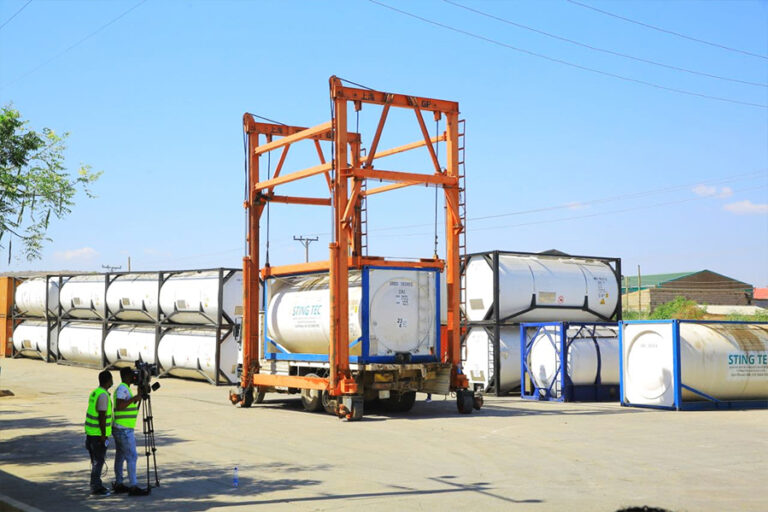
The pioneer factory of palm oil refinery in Ethiopia, Shemu Management, which has a capacity of saving one third of the hard currency that the government uses to import on oil, says it is looking for land to further expand its industrial complex that currently has six factories.
The industry located at Dire Dawa, 500 km east of Addis Ababa disclosed that it is in good condition to cover the edible oil demand in the eastern part of Ethiopia.
The company started with 120 tons in 2017 and steadied increase to 220 tons of products before its massive expansion. “The factory has now installed a capacity to produce 950 tons of oil per day and already commenced the production few months ago,” Firezer Debela, General Manager of Shemu Management explained.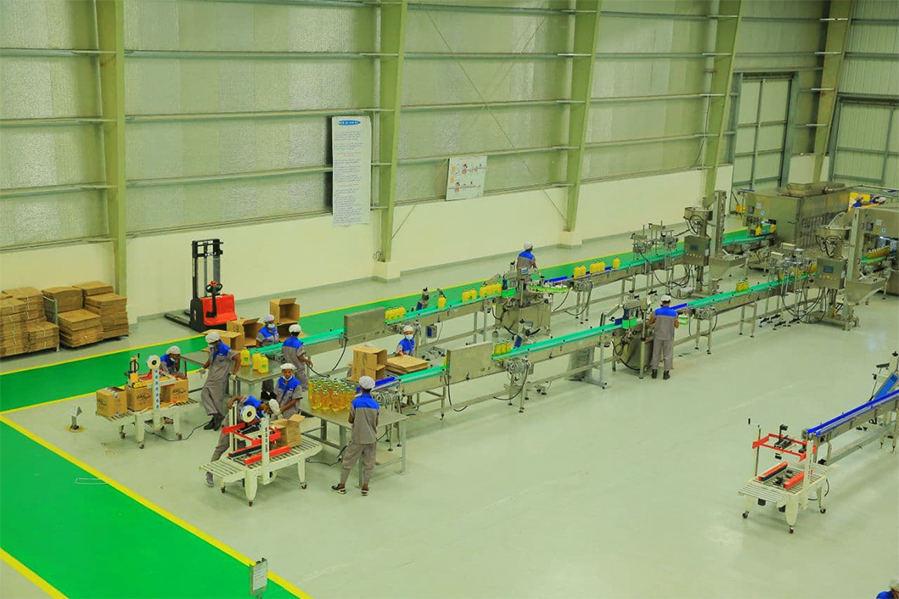
The latest expansion was built with a budget of 1.6 billion birr.
As per the government assignment, which is now closely following the edible oil distribution, the factory is expected to satisfy the demands of 5 regions in the eastern part of the country and Oromia in part.
“So far we have produced 3 million liters of oil that will be distributed for the public as per the guideline of Ministry of Trade and Industry via different assigned companies and the production will continue since we secured foreign currency under government’s support,” Firezer told Capital.
In its industry complex at Dire Dawa the company produces raw material that is known as noodles for soap and supplies 108 soap factories as well.
The company owns a soap factory under the well-known brand of Shemu Soap and Detergent in addition to this. Moreover, it produces 5 tons of liquid soap per hour.
Other byproducts of the oil refinery include shortening and vegetable gee or margarine.
“The factory produces shortening in mass, specifically in 16 kg packages and supplies food processing factories like cake and biscuit industries for their mass production. It is planned to produce in smaller packages of 750 and 950ml for householder use,” the General Manager explained.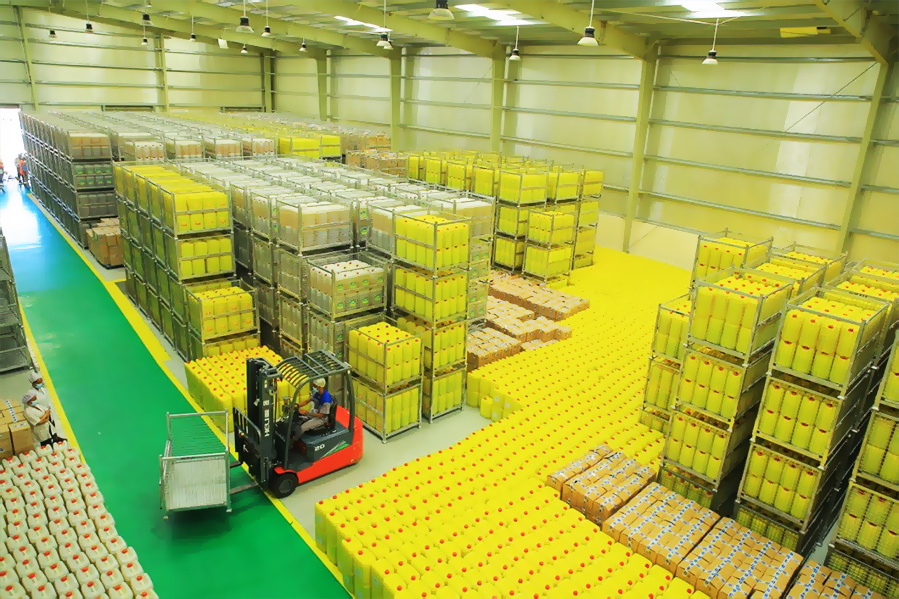
The factory resides on 7500 square meters of land and management believes it requires a larger plot of land since it’s congested by different industrial complex facilities located at the north western outskirts of Dire Dawa, which is 300km from the Ports in Djibouti which provides advantageous access to input easily from overseas.
The head of Shemu Management mentions that the company has been requesting for more land to the Dire Dawa City Administration on different occasion but the government hasn’t been able to give a proper response.
Capital learnt that the factory had recently requested the city administration to get at least 22 hectare of land for its production process and expected further massive expansion.
Besides importing crude for its oil and other production, the company had conducted to access oilseeds from the surroundings of Dire Dawa that are very rich in the oil production.
“The factory focuses on lessening the raw material import trend thus is looking for supplies within the Hararge area farmers,” Firezer says, “we want to use the product of farmers on our production line which also attracts international partners to support the scheme.”
The factory imports 90 percent of its raw materials and foreign exchange has proved to be a challenge. To this end, the National Bank of Ethiopia and the Trade and Industry Ministry have been offering support to oil refineries that require large scale of raw material as imports which led to the company secure USD 8.5 million in support. However, the company consumes 20 million dollars per month to operate under full capacity, which shall probably saves one-third of the foreign currency that the government uses to import oil every month, if it operates fully.
Different studies indicated that government alone allocated about USD 52 million per month for refined edible oil import.
“Hararge area is well known for its peanut production. We want to use it for our oil production to reduce the demand of the scarce foreign currency which will be a further benefit to farmers who will get affordable payments,” he added.
“Farmers as out grower will benefit from providing technical support to final purchasing of the product at a good price. Furthermore, international organizations like the International Financial Corporation (IFC), the private wing of the World Bank, have interest to support the scheme,” he explained.
The discussion with IFC is under pipeline and may provide about USD 8.5 million if talks bear fruit. IFC will also offer technical support in different mechanism.
The company used to import raw material for soap manufacturing from Malaysia, Indonesia, and other far-east countries. However it was noted that it was lucrative in the long term to produce the materials in its factory, as a result the oil factory pivoted to support the soap manufacturing industry.
Shemu Management manages Shemu Industries and was founded about three decades ago. It’s been a leader in merchandise sales for over 30 years at Dire Dawa area. The company started manufacturing soap in 1999. Since soap is a byproduct of edible oil, they eventually went into the palm oil refinery business in 2017.
