

Ethiopian Airlines Group signed its second agreement with Cooperative Bank of Oromia to provide a staff consumer loan scheme and Banking Services additional to the Commercial Bank of Ethiopia.
On Tuesday February 9, 2020 Ethiopian Airlines Group (ETG), Ethiopian Airlines Group Primary Basic Trade Union (EAGPBTU) and Cooperative Bank of Oromia S.C. (COOPBANK) signed a Memorandum of Understanding (MoU) to provide the loan scheme.
Speaking during the signing ceremony, Tewolde Gebremariam, Group CEO of Ethiopian Airlines Group, said, “today, we have signed the 2nd MoU with the 2nd Bank to benefit our employees and to strengthen our mutual cooperation and partnership with both COOP Bank and EAGPBTU.”
Tewolde Gebremariam, Telila Deressa, President of EAGPBTU and Deribie Asfaw, President of COOP Bank signed the MoU on behalf of their respective Organizations.
The MoU is initiated and facilitated by EAGPB as a part of its effort to maximize employee benefit packages which will enable ETG to enhance its effective employee retention strategy and promote EAGPBTU’s commitment of benefiting its members and ETG employees in general.
Per this MoU, ETG employees will benefit from loan services from COOP Bank at the rate of a prevailing saving interest rate which is 7% currently, for purchase or construction of houses, for procurement of automobile and to cover personnel commitments such as education loan, medical expense, for purchase of household equipment.
The agreement is also said to benefit Ethiopian Airlines and EAGPBTU from fast and quality banking and other financial services of COOP Bank.
“Partnering with the largest and leading aviation Conglomerate in Africa and one of the top Airlines is just the start or a tip of the iceberg,” said Deribie Asfaw, president of COOP bank.
According to TeIiIa Deressa, President of EAGPBTU, EAGPBTU has invited all private banks in writing for this staff loan arrangement in addition to making efforts to re-negotiate on the existing MoU with CBE for a better and beneficial loan
package to our employees. “COOP Bank happened to be the only bank which officially responded to our demands to benefit our members and employees in general. This arrangement is an additional and better option to our employees to get Bank consumer loan services. The terms of the loan offered by COOP Bank shows that COOP Bank is not only a profit based business organization but also an organization committed to economic transformation of citizens for which we are grateful both as
EAGPBTU and citizens,” the president elaborated.
COOPBANK cooperates to facilitate staff loan to ETG

The Chinese IVY Hotel inaugurated
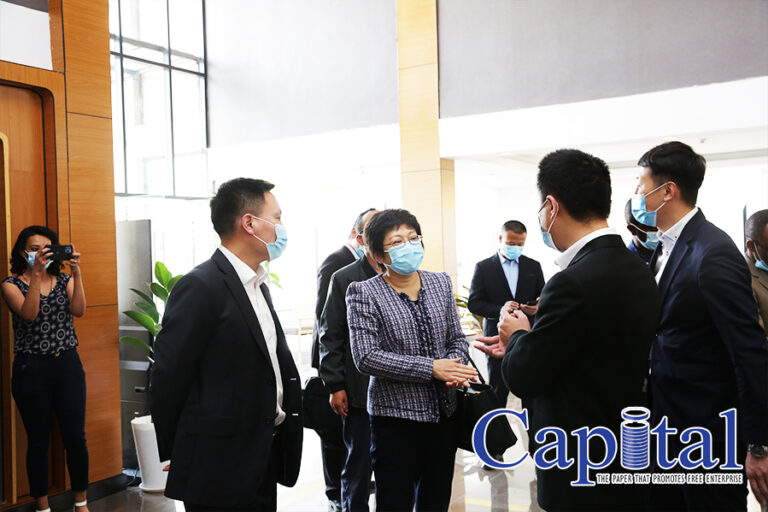
Yimei Group has inaugurated its Chinese famous brand hotel IVY Hotel located around Haya Hulet area. The company has opened the chain of four-star hotels in Ethiopia which has 54 rooms, restaurants and GYM.
The company is planning to open eight more hotels with the chain of four star and five star hotels within the coming years targeting business people at affordable prices that are economical and redefine the middle-class hotels.
On Friday February 5 2021, managements of IVY hotel and officials from the China Embassy have officially inaugurated the hotel with the presence of Ambassador Zhao Zhiyuan.
IVY HOTEL Management (Shenzhen) Co., Ltd., founded by SUNMEI Group an internationally leading hotel chain brand operator, is aimed to create a high cost-effective economy hotel chain – IVY Hotel – for the African market.
Taking its world-class brand advantages, management advantages and channel advantages of the two companies, the IVY HOTEL aims to introduce the concept and model of standardized chain operation in the African region according to local conditions and provide powerful investment management services for the land and property owners, so as to create rich economic benefits and social values out of those idle resources and work together with the locals to build a fashionable, comfortable and affordable modern economy hotel.




Ethiopia, Djibouti collaborate to promote tourism

A four-day high-level Ethio-Djibouti tourism forum which targeted to strengthen strategic partnership between the two countries was held in Addis Ababa from 9th to 12th of February 2021.
Ethiopian and Djiboutian Ministers of tourism as well as other officials and experts from the respective countries participated in the forum.
In her opening remarks, Ethiopian Minister of Culture and Tourism, Hirut Kassaw said Ethiopia and Djibouti have a long-standing people-to-people relationship on the top of a multifaceted cooperation including culture and tourism.
Hirut affirmed Ethiopia’s commitment to strengthen the strategic collaboration for mutual benefits, adding that the countries need to work closely to harmonize the tour operations and information exchanges.
Ethiopia and Djibouti have abundant natural, cultural and historical resources to attract international tourists with the fully electrified railway which connects Addis Ababa and Djibouti that would facilitate tourism development between the two countries.
“Tourism cannot be accomplished by a single county rather it needs coordinated efforts, so organizing such forums are critical to use opportunities and to fighting challenges together,” she stated.
Minister of Urban Planning, Environment and Tourism of Djibouti, Mohamed Abdoulkader said for his part that Djibouti remains optimistic about the future of tourism development between the two neighboring countries.
He further said that the existing partnership between Ethiopia and Djibouti will allow the countries to combine their expertise in terms of tourism development.
“Ethiopia is a great civilization which has historical and diversified culture and has plenty of UNESCO registered heritages,” the minister stated.
Djibouti has also a wonderful tourism sites, the Minister said, adding that the partnership between the two nations will further unlock the sector since tourism now established itself as the key economic element.

Securing the vote
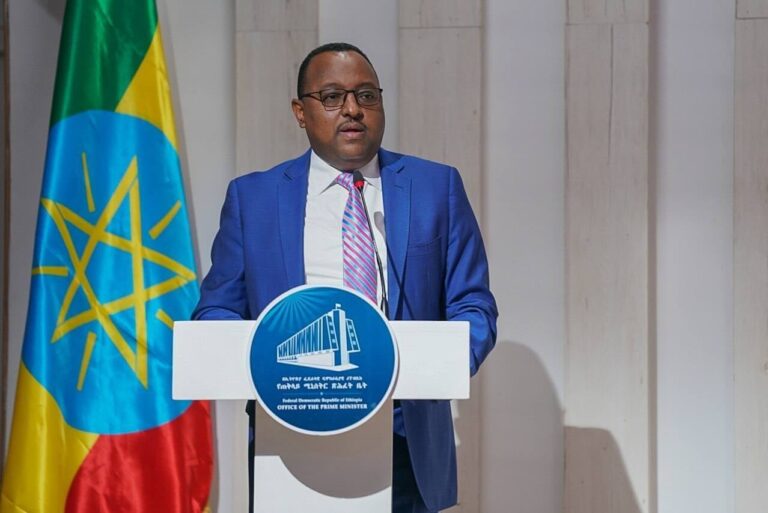
The Federal Police Commission has announced that an internationally accepted election fraud investigation will be in use for the upcoming 6th national election.
For the coming national election to be concluded without any security problem, the government has formed a taskforce chaired by Gedu Andargachew, Security Advisor at the Office of the Prime Minister (OPM), and included all security entities including regional institutions, Capital learnt.
Zelalem Mengiste, Deputy Commissioner General of Federal Police Commission, said that Federal Police Commission have established exclusive investigation desk for the coming election, “Similar desks have also been formed under regional polices,” he explained.
“Internationally accepted election fraud investigation standard has been developed and investigators will be trained in the coming weeks,” he added.
It has been reported that exclusive court and Attorney General have been formed to conduct any election frauds.
Zelalem said that security would be a priority for the upcoming election that the reformist government promised to be unique compared with the previous experience.
“The security apparatuses has similar stand with the government to make the coming election process peaceful, fair and democratic,” he said at the discussion held at the OPM’s ‘Addis Wog’, a dialogue focused on election and communication.
“The security force should commit without any involvement and favor of any groups or parties,” he said.
Three discussions that include all stakeholders from federal and regional governments have been conducted until now regarding the preparedness and strong discipline on the upcoming event.
Now, the security force is under training is up to the lower government administration to conduct the operation under code of conduct to undertake free election.
No one apart from the security apparatus that was trained will be allowed to come close to the 55,220 ballot drop-off locations. The security apparatus will receive election security training, under the Ethiopian National Electoral Board election code of conduct.
The Deputy Commissioner General said that pre and post election security package have been developed to make the coming election as per the expectation to be prudent.
“The areas that are identified as security zones and those that would present a threat have already been mapped,” he explained.
The security forcewill be involved in the peacekeeping at the election stations and the areas would have exclusive identification cards and uniform, which was not applied in the previous elections.
The security official promised that the upcoming political event would be conducted without harassment arrest. Furthermore, he emphasized that they will try their level best to make it historical as per the demand of the government.
