

The upward trend in African countries liberalizing their visa regimes and welcoming African travelers continues, according to the 2020 Africa Visa Openness Index published by the on Thursday, December 10.
This fifth edition of the Index highlights the negative impact of the COVID-19 pandemic, which threatens to reverse Africa’s economic gains of recent years, affecting sectors from tourism through to investment. As travel restrictions ease and safety measures are put in place to contain the pandemic, sustaining progress and momentum on more comfortable continent-wide travel is vital.
The 2020 Index shows that a record 54% of the continent is accessible for African visitors, who no longer need visas to travel or can get one on arrival, up by 9% since 2016. In 2020, The Gambia joins Seychelles and Benin in allowing visa-free access for all African travelers. In addition, 20 countries moved upwards in rank on the Index, while 50 countries improved or maintained their scores. The report shows a significant rise in e-Visas, offered by 24 countries in Africa.
Notwithstanding the gains made, findings show that African citizens still need visas to travel to 46% of African countries. Countries in East and West Africa rank highest among the top performers, worthy of emulation by countries in the other regions.
The Index’s findings reinforce the benefits of prioritizing visa openness solutions in large and small economies, with the biggest gains accruing to business, investment, innovation and tourism. Further facilitating the free movement of people, goods and services, becomes even more important with the start of trading under the African Continental Free Trade Area (AfCFTA) on 1 January 2021.
African Development Bank Vice-President, Regional Development, Integration and Business Delivery, Khaled F. Sherif said, “as the evolving fallout of the COVID-19 pandemic has shown, countries increasingly need to look beyond domestic frontiers to boost their economic prospects. Visa openness will support Africa to reposition its future growth.”
As close to half of African destinations ease travel restrictions in line with plans to manage the pandemic, travel safety and security remain foremost in policymakers’ and people’s minds as it concerns opening up of borders, and as governments update measures for permitting travel.
“As the time has come to safely reopen and revive economies across Africa, it is imperative to institute measures that propel the continent and all its citizens forward. Liberalizing a country’s visa regime is a policy tool that can be quickly adopted to do this,” said Amb. Kwesi Quartey, Deputy Chairperson, African Union Commission.
The Africa Visa Openness Index measures the extent to which African countries are open to travelers from other African countries when it comes to visas by looking at what they ask of the citizens when they travel into their countries.
Visa openness solutions can boost Africa’s economic recovery: 2020 Africa Visa Openness Index
Africa ready for potential new COVID-19 wave
Africa is better equipped to deal with a potential second wave of COVID-19, leveraging on measures adopted in tackling the pandemic’s initial adverse health effects, experts affirmed during a special session on the second day of the 2020 Africa Economic Conference.
“The continent is much more prepared to deal with the second wave than we were 11 months ago,” Dr. John Nkengasong, Director of Africa Centers for Disease Control and Prevention (Africa CDC), said during the session on “Post COVID-19 implications for strategic human capital development in Africa.”
About 2.3 million people in Africa have contracted COVID-19 to date, of which around 54,500 have died from the disease. However, much has been done to mitigate the pandemic’s adverse effects, including increasing laboratory testing capacity, beefing up primary healthcare defence mechanisms, and leveraging technology to reduce human contact.
As the world gears up for new COVID-19 vaccines, the World Bank has unveiled a $12-billion financing package to help developing countries procure the vaccines. Dr. Feng Zhao, Practice Manager of Strategy, Operations and Global Engagement at the World Bank, said Ethiopia is leading Africa’s vaccine initiative.
Besides the financing, the World Bank, in partnership with the World Health Organisation and COVAX, will also provide technical support to countries to deploy vaccines at scale.
While noting that Africa lags behind other regions in developing COVID-19 vaccines, which some developed countries have begun administering to their citizens, the experts lauded African governments for speedily adopting diagnostic measures against the outbreak.
Within a year, at least six countries – Nigeria, Kenya, South Africa, Senegal and Morocco- have developed diagnostics for the disease.
Clare Omatseye, President of the West African Health Federation, emphasized the need for a strategic partnership between the public and private sectors to deal with the pandemic effectively. One such area of collaboration is in bringing about behavioral change, especially about misconceptions around the disease.
Public-private partnerships could also help increase testing, data collection and capacity building, she said, urging governments to create an enabling environment to allow the private sector to manufacture protective equipment.
MoF issues massive new customs levy

Ministry of Finance has issued massive new customs levy on different items that has become effective as of December 2.
The tariff revision targets to boost the government revenue. Experts on the sector told Capital that the revision is imposed on selected products that would not have effect on the market or inflation.
The revised tariff duty that is to be applied by Customs Commission has been issued on December 1 to be effective as of the next day.
The duty revision included a wide range of products that include building materials, consumer goods and other products in the manufacturing industry and parts for vehicles and others.
In its cover letter with the revised table that MoF wrote to the Ministry of Revenue and the commission has per the regulation of the Council of Minister given to MoF in 2008 it has revised the tariff on selected items.
It added that the revision is taken under the aim to get additional revenue on selected items.
As per the evaluation of Capital at the revised table most of the commodities that are included on the revision are either processed and luxury products.
Senior tariff expert at Ministry of Revenue told Capital that the revision selects the product that would not have the general public and will boost the government revenue.
He expressed his expectation that it would not have any effect on the inflation, which shows increment in the past few months.
Several organizations like the World Bank and International Monetary Fund recommended the government to expand its revenue from tax and duty. The country revenue secured from tax and duty is very low compared with the regional average in comparison with GDP tax ratio.
The government has been conducting several studies including supporting of the stated international organization and others to improve its revenue and expand the tax base.
According to the latest revision it has upped to the maximum of 35 percent. Most of the revision is five percent increment that is from 30 percent to 35 percent, but there are some items that have risen up to 25 percent from the previous 10 percent rate to 35 percent.
Luxury consumers goods like sweets and coffee products , human hair, gum, prepared meat or fish or of crustaceans, molasses or other aquatic invertebrates, cocoa and cocoa products, candles and on other related products the tariff has climbed to 35 percent that was 30 and below in the previous rate.
Some products from vegetables, fruit, nuts and other edible parts of plants prepared or preserved by vinegar or acetic acid have also been included in the revision list of up to 30 percent but some specific products duty has rose to 35 percent.
Other products like cement products, photographic papers, toilet papers and other facial tissues and towels, some fabrics and selected home appliance and house furnishing materials, iron sheets, vehicles engines with different cylinder capacity , primary cells and primary batteries, parts and accessories of the motor vehicles of headings, different type of watches, different furniture are the products that are included on the revision, while industrial inputs have also been included on the revision.
Capital’s effort to get further information from Debele Kebeta, Commissioner of Customs Commission was unfruitful, while on the letter he wrote for different divisions at the commission stated that the MoF revision has come as per the macroeconomic direction and ordered to be effective for products that are arrived at customs as of Wednesday December 2.
Privatization of industrial parks in the horizon
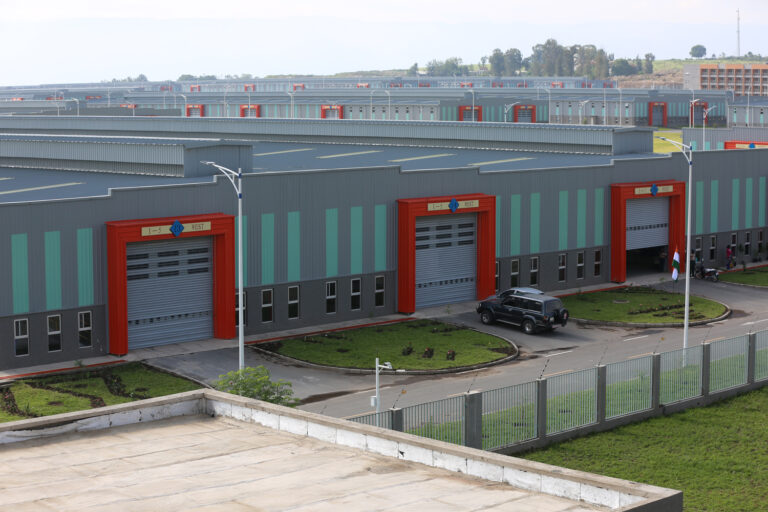
As part of the economic reform and privatization scheme the government is preparing to privatize governmental industrial parks as Ministry of Finance starts to study financial viability.
Regarding the revised economic reform the government of Ethiopia has announced its intention to privatize various government owned entities including sugar factories, airlines, logistics and the telecom sectors. In addition, the government has started to pursue a policy to encourage the participation of the private sector in the economic growth.
Similarly the Ministry of Finance has started to assess financial viability and profitability of privatizing the parks along with the development of market strategies.
According to Sandokan Debebe, CEO of Industrial Park Development Corporation, the Ministry of Finance is taking the lead on the initiative and a further task force has been launched from different stakeholders to study the viability and the profitability regarding the market policy, “The goal is to privatize some of the industrial parks to increase the income of the government and in that regards the valuation might be finalized in two months’ time,” he said.
In Ethiopia, industrial parks and special export zones have been actively constructed since 2017. There are more than 59,000 employees working in industrial parks.
Currently there are 13 governmental industrial parks of which 10 are fully operational including Jimma, Bahirdar, Bole Lemi 1, Adama, Diredewa, Hawassa, Jijiga Kombolcha, Debrebirhan, Mekelle, and two industrial parks Kilinto and Bole Lemi 2 are pre operational. Moreover Semera Industrial Park is under construction and the government is also planning to build Adama Huna Industrial Park in Adama.
According to the CEO, the plan is to privatize some selected industry parks accordingly which could help the government to get finance to build other new industrial parks.
Even if the privatization scheme in industrial park is in the process of study, as one part of its administration modalities, Jimma has been sold to the Chinese company Huajin, which operates a large-scale footwear factory in Ethiopia, after completion of construction. Huajin manages the industrial park and solicits other Chinese companies as tenants. Bahir Dar Industry Park was sold to a Hong Kong company and is expected to be occupied by a Hong Kong swing factory but still is administered under the IPDC.
Ever since the Hawassa Industrial Park, Chinese companies have dominated the entire share of contracted construction companies.
“The rapid pace of development of industrial parks is extremely critical to various political priorities, such as supporting the economic development of the manufacturing and export sectors, balancing international incomes and expenditures, and acquiring foreign currency, as well as directing the resulting revenue streams to local governments.”
Also in related news, the Public Enterprise Holding and Administration Agency /PEHAA/ is preparing to hire a transaction advisory firm to consult the privatization of eight of the thirteen state owned sugar factories as the Ministry of Finance has done the valuation process and all the technicalities to the privatization of the sugar factories.
The Ministry has carried out all the necessary work that are pertinent for a successful privatization transaction of the factories which are Welkayit, Tendaho, Kesem, Omo Kuraz-1, 2 and 3, Arjo-Dedesa, and Tana Belese.
As the document of the of expression interest shows, the transaction advisor is expected to prepare a comprehensive plan and recommendation for a successful privatization transaction, undertake the necessary market research and carry out a detailed analysis of alternative transaction approaches.
The advisory is also expected to assist the client in any activities subsequent to bringing a strategic investor on board.
Although Ethiopia disclosed plans to privatize sugar factories two years ago, no sugar factory has yet been privatized. So far, thirty companies have submitted their expression of interest to take part in the privatization process.
10 of the 13 sugar factories with the exception of the old sugar factories Metehara, Fincha, and Wonji, will be privatized.
