

Bunna insurance has shown a performance decline contrary to the past seven years.
During 2019/20 budget year bottom line result of the company shows a profit of Birr 20.05 million which is only 68% of the planned Birr 29.62 million and it is 28.21% below last year profit of Birr 27.92 million. This under target profit is registered mainly because of under target underwriting result achievement and high interest expense paid because of interest paid for loan taken to acquire head quarter building.
However surplus and profit shows continuous growth for four consecutive years from 2015/16 to 2018/19 and decreases on 2019/20 budget year.
During the budget year the Company has underwritten a Gross Written Premium (GWP) of Birr 249.35 million which is 8% above the targeted Birr 230.52 million GWP and it shows 22% growth from last year 204.08 million birr.
While looking at our twelve months performance in terms of classes of businesses, over target achievement is registered on Political Violence and Terrorism (PVT), Liability, fire and Lightning, Engineering, Marine and Motor classes of businesses by performing 131%, 36%, 21%, 14%, 11%, and 3% over the target, respectively. On the other hand under target achievement is registered by Pecuniary, W/C, GPA and Travel classes of businesses by performing 6%, 16%, 22% and 27% below the target respectively due to slow economic performance, travel restriction due to Covid-19, failure of clients to renew their policies, etc.
While looking at Portfolio mix of annual production, motor class of business takes the lion share with 56.31% contribution followed by Liability (11.34%) and Pecuniary (9.48%). The remaining classes of business together contribute 22.87% of the Annual production.
During 2019/20 budget year the Company has paid a gross of Birr 127.64 million claims which is 7% over the planned Birr 119.42 million claims payment. As at June 30, 2020, outstanding claims of the company reached Birr 90.93 million which is 73% over the planned Birr 57.76 million outstanding claims. At the end of the budgeted year, actual gross claim incurred was Birr 142.83 million which is 8% over the planned incurred claim of Birr 131.70 million.
The company has utilized 100% of its budget held for general and administration expense during 2019/20 budget year. Total incurred expense is Birr 65.72 million while the budget is Birr 65.61 million.
Underwriting surplus of Birr 27.85 million is registered during 2019/20 budgeted year which is only 66% of the targeted Birr 41.83 million surpluses.
During 2019/20 budget year, Birr 34.48 million has been collected as other Income which is 22% over the planned Birr 28.30 million. Main sources of other income are Interest income on time deposit and government bond, interest on saving deposit, dividend income, rent income, and other miscellaneous incomes.
However, for emphasis, surplus and profit shows continuous growth for four consecutive years from 2015/16 to 2018/19 and decreases on 2019/20 budget year.
As at June 30, 2020 total assets and total liability of the Company reached to Birr 562.72 million and Birr 393.21 million, respectively. Total liability of the company primarily includes outstanding claims, provision for unearned premium, payables due to re-insurers, reserves for unexpired risk and other Technical Reserves.
The company’s paid up capital has increased to Birr 145.14 million as at June 30, 2020 from last year’s paid up capital of Birr 112.61 million. The company has in-vested additional short term investment of Birr 63.3 million on time deposit and investment on share of Birr 32.53 million during the budget year which makes total time deposit balance of the company Birr 167 million and total investment on share of Birr 94.90 million.
The company as per plan has opened three branches One in Addis Ababa [Aratkilo] and Two in regional cities of Jimma and Debirebirhan- which brings the total branch network of the company to twenty four and two contact offices.
Bunna Insurance still strong despite slip in profit

Consoling Konso EHRC sends independent investigation group
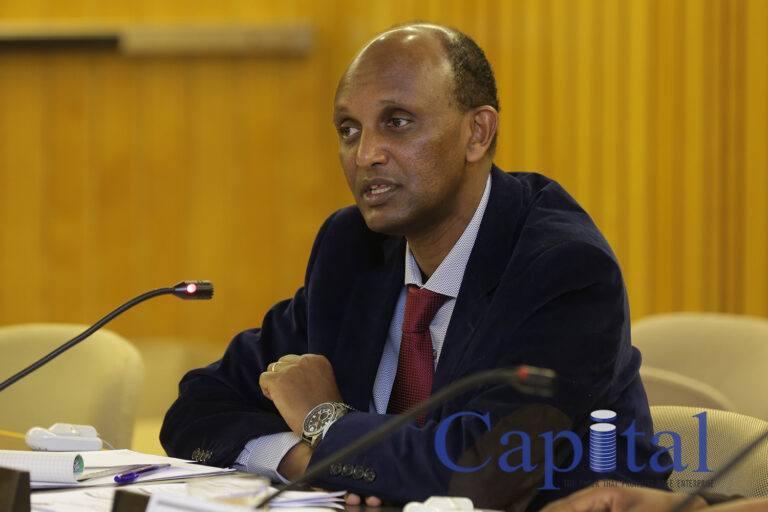
Ethiopian Human Rights Commission has sent an investigation group to Konso in the Southern Nations, Nationalities and Peoples Region (SNNPR) to investigate the situation that occurred in the region regarding killing of civilians and human rights crisis.
Daniel Bekele Commissioner of the Ethiopian Human Rights Commission confirmed to Capital that the commission has sent an independent investigation group to the area to investigate the situation, “the team is doing its investigation work and monitoring all situations in the area,” said Daniel.
Starting from the last two week dozens of civilians have been killed with more than thousands of peoples being displaced. The number of people killed in the recent violence in Konso reached 102 whilst 32 people sustained injuries and more than 83,131 people become internally displaced. The dispute is a result of clashes between Segen Woreda, Karat Woreda and Kolme Cluster areas of the Southern Nations, Nationalities and People’s Region, according to the Konso Zone Government Communication Affairs Bureau.
The head of the bureau said that the cause of the clash was a dispute between the petitioners who wanted to be a special woreda after the proclamation was repealed. The Segen Area People’s Zone of the SNNPRS had underwent a restructuring in November 2018, after nearly four years of protest by the Konso community, resulting in the split of the Konso zone from Segen Area People’s Zone, where Konso wereda, along with Derashe, Amaro, and Burji made up the Segen Area People Zone since 2011.
Escalation of ethnic motivated violence in Ethiopia has resulted to deaths of dozens and thousands of displacement in different parts of the country. As ethnic tensions are rising in the country, the government is struggling to provide its citizens with safety and protection.
Weeks-long attacks carried out by yet undisclosed, heavily armed militiamen in various localities of Metekel zone, Benishangul Gumuz regional state, have also left unknown numbers of civilian causalities and destruction of properties.
Also on Sunday November 1st, armed soldiers in west of Ethiopia opened fire and killed dozens of men, women and children in a cruel attack that was claimed to be executed by the Oromo Liberation Army, a group that has been active in the area for a long period of time. The victims belonged to the Amhara ethnic group.
The total number of deaths remains unknown; however, Amnesty International stated that at least 54 people have been killed. The event took place in Gawa Qanqa village in Guliso District of West Wellega Zone, reportedly a day after government forces withdrew from the region with no explanation.
As part of its investigation into human rights violations, preliminary findings of the commission has stated at least 600 civilians were killed in an ethnically-driven massacre earlier this month in the town of Mai Kadra in Ethiopia’s Tigray region.
Similarly Gunmen killed at least 34 people in a “horrific” bus attack in the Benishangul-Gumuz region of western Ethiopia, the scene of recent deadly violence against civilians, the national human rights agency reported on Sunday November 15.
On November 4, Ethiopia launched an operation against Tigray People’s Liberation Front (TPLF), claiming the group has attacked troops stationed in the northernmost region of Tigray.
As the commission described, EHRC is monitoring closely and is in consultation with the relevant authorities regarding the risk of multidimensional human rights violations arising from the ongoing war in Tigray Region.
In a statement, the Ethiopian Human Rights Commission (EHRC) called for humanitarian access to the region, as well as telecommunications to be restored and the resumption of health, water, electricity and other services.
Urging the government to facilitate efforts to reconnect separated families and relocate and return displaced people and refugees, the body called on officials to allow access to an “independent and transparent” investigation into possible “grave human rights violations.”
After three weeks of intense fighting Prime Minister Abiy Ahmed declared that the third and final phase of the operation was largely over.
‘Be humble’ Abiy advises the people who over celebrate
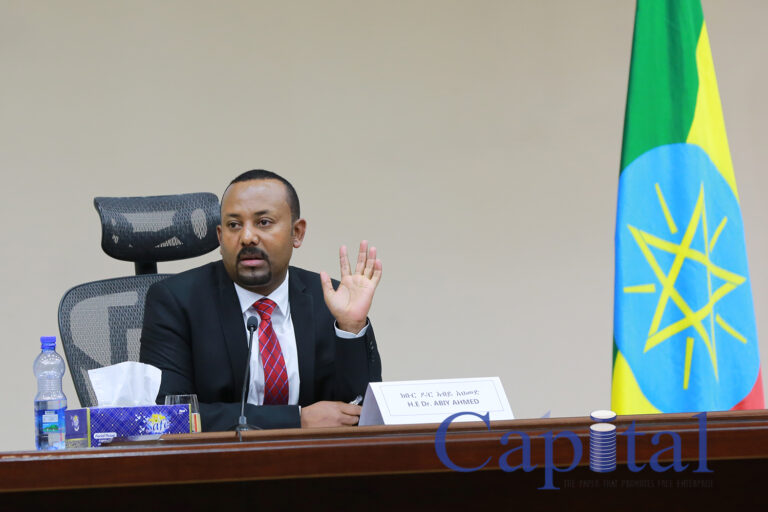
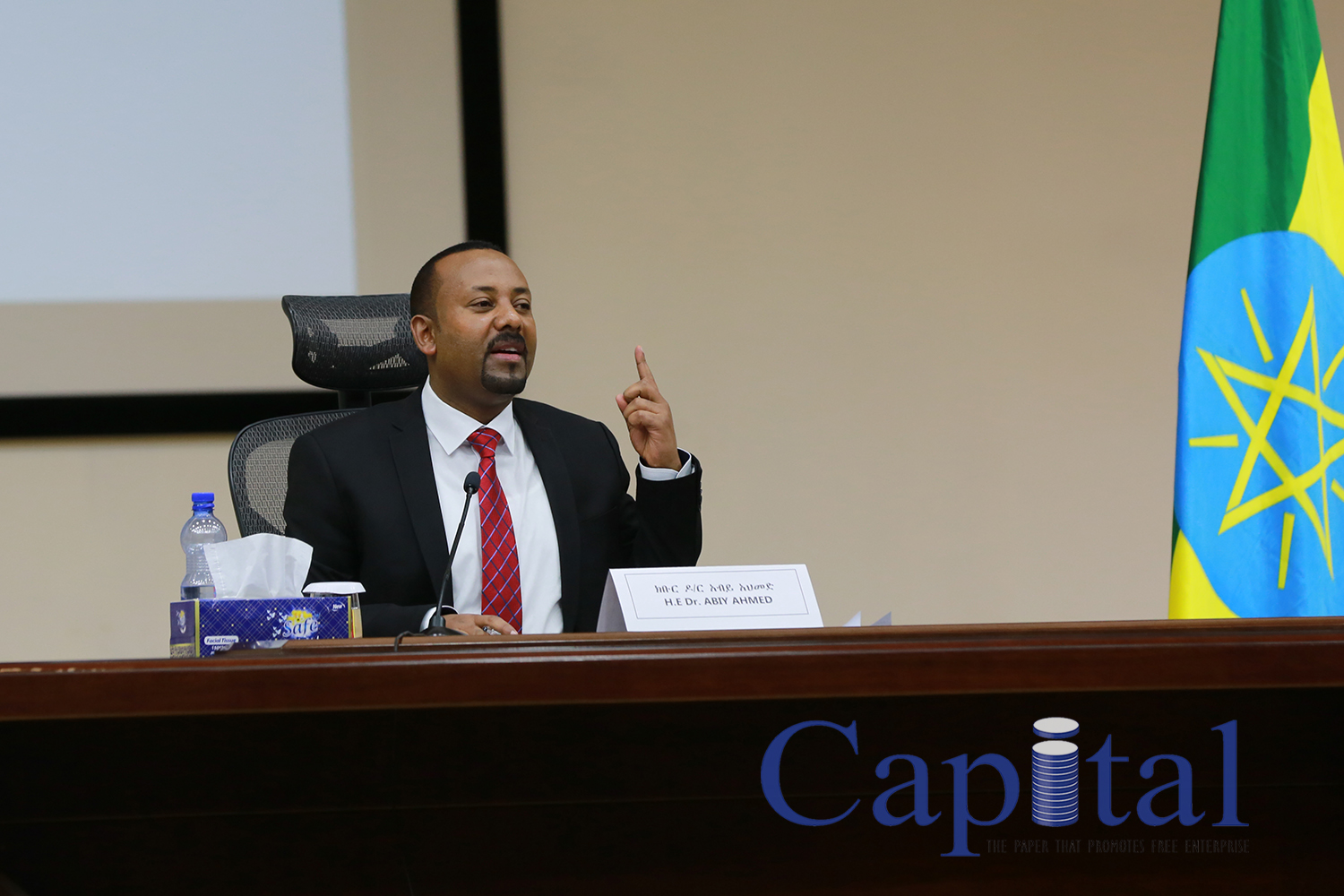
After three weeks of military offense in Tigray region to enforce law and bring in the so called criminal group of Tigray Peoples Liberation Front /TPLF/ leaders on the evening of Saturday, November 28 government has said, “The third and final phase of the battle came to an end.”
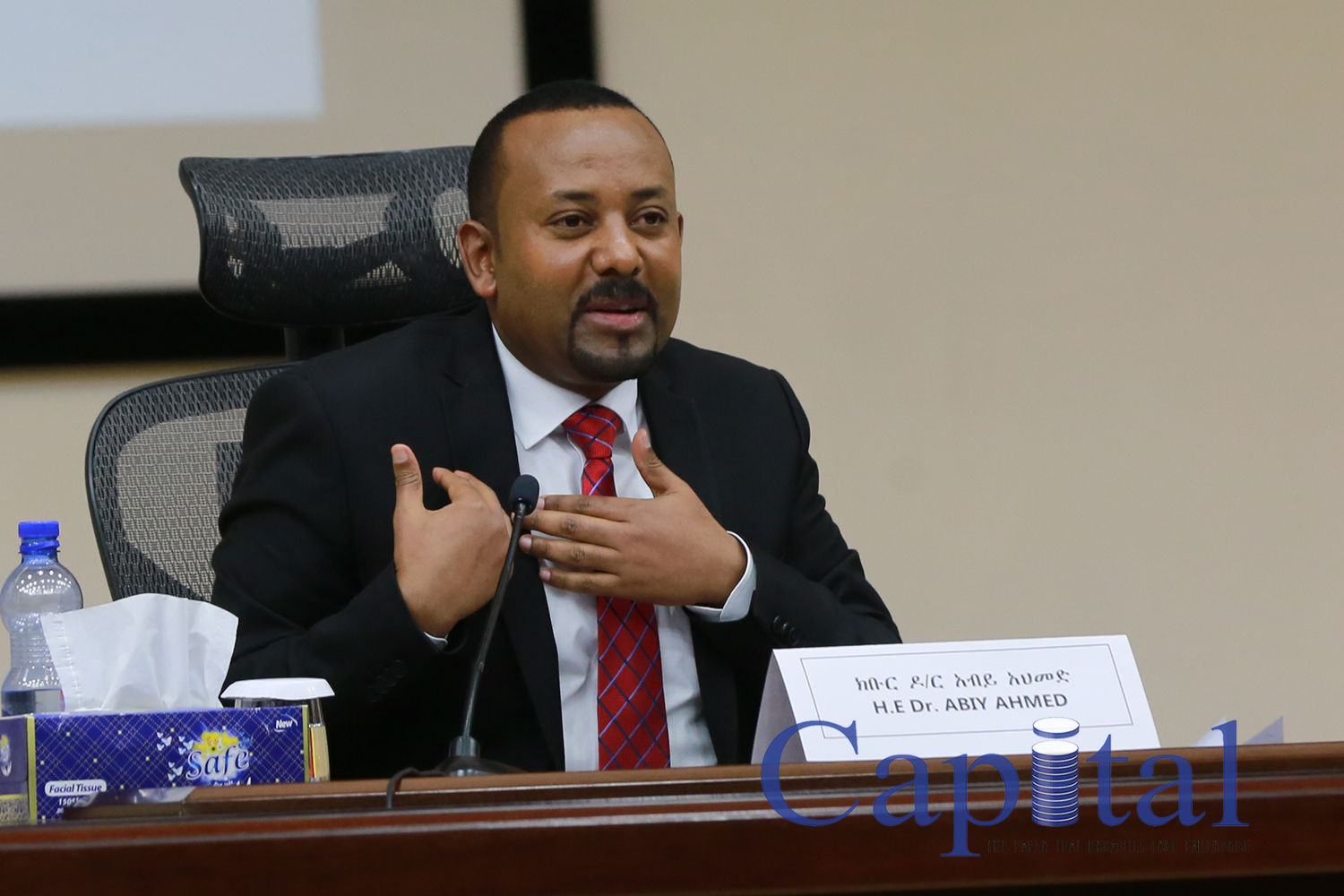
On Monday, November 30, a day after announcing the end of military operations in the northern part of the country Prime Minister Abiy Ahmed told parliament, “The victory is Ethiopia’s, truth has won and the prayers and tears of Ethiopian mothers have-not gone in vain.” The Prime Minister also emphasized that people need to be humble and should not celebrate the win because the major battle is in front us, ‘poverty’, which must also be tackled.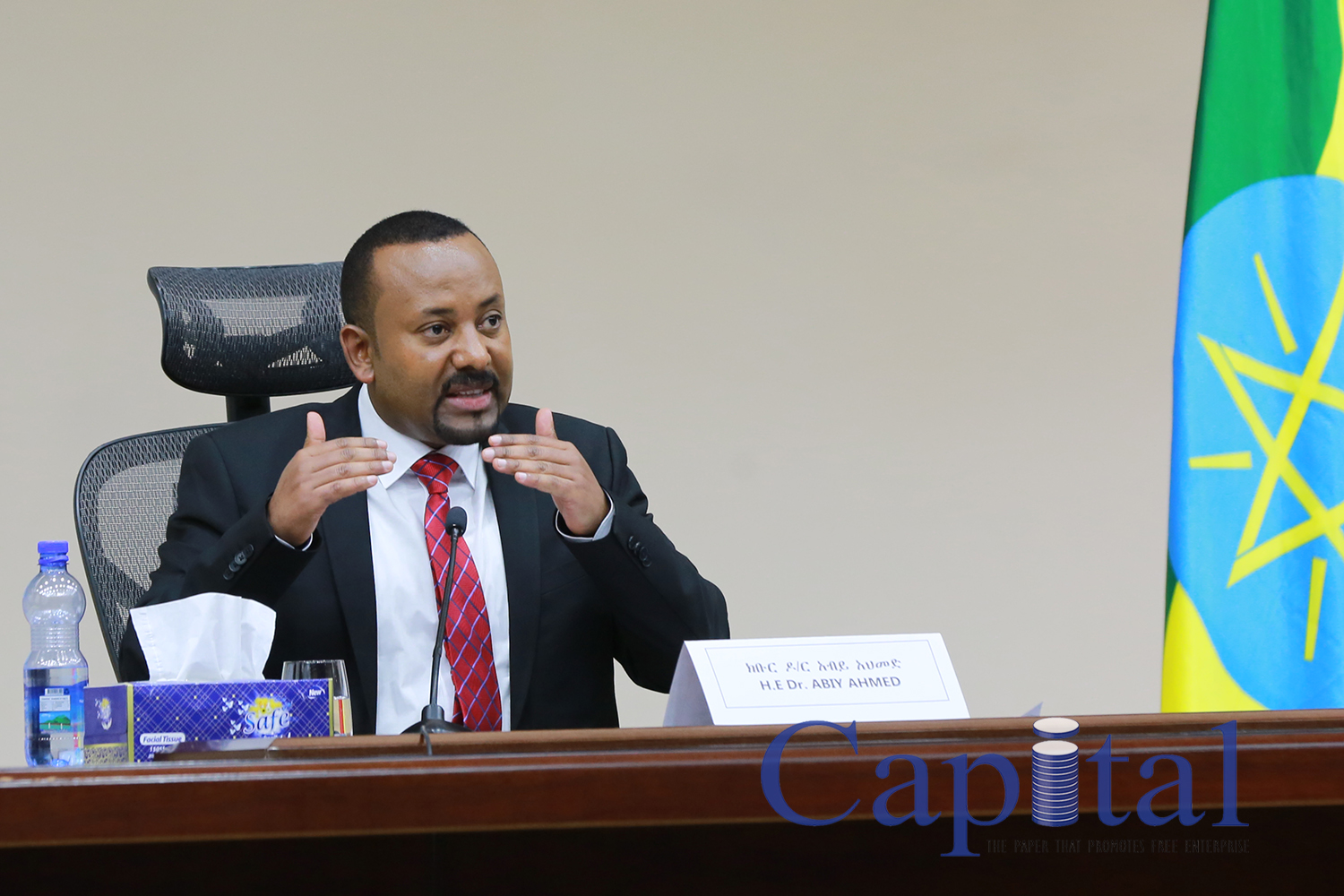
Also to foreign countries the Prime minister emphasized through saying, “We don’t want to look like others. We want to look like ourselves. If you want to be friends with us, please understand us first. We have many years of experience, even more than most countries. We may be poor but we are not a country that will negotiate our sovereignty. Threatening Ethiopia for coins will not work.”
As Prime Minister Abiy said that national forces did not kill any civilians in Tigray, in what could be the latest accusation of mass murder on the part of TPLF fighters, Ethiopian National Defence Forces (ENDF) avoided civilian installations, including towns.
“Why would we strike Mekele? Mekele is ours. It’s Ethiopia’s. ENDF operate with utmost discipline and care for civilians,” the Prime Minister said.
The TPLF had already been accused of a massacre of civilians after Amnesty International and the Ethiopian Human Rights Commission separately said unarmed civilians were killed in the Tigray town of Mai Kadra.
“There is no way to explain the Mai Kadra massacre perpetrated by TPLF. It is the epitome of moral degeneration,” Abiy said.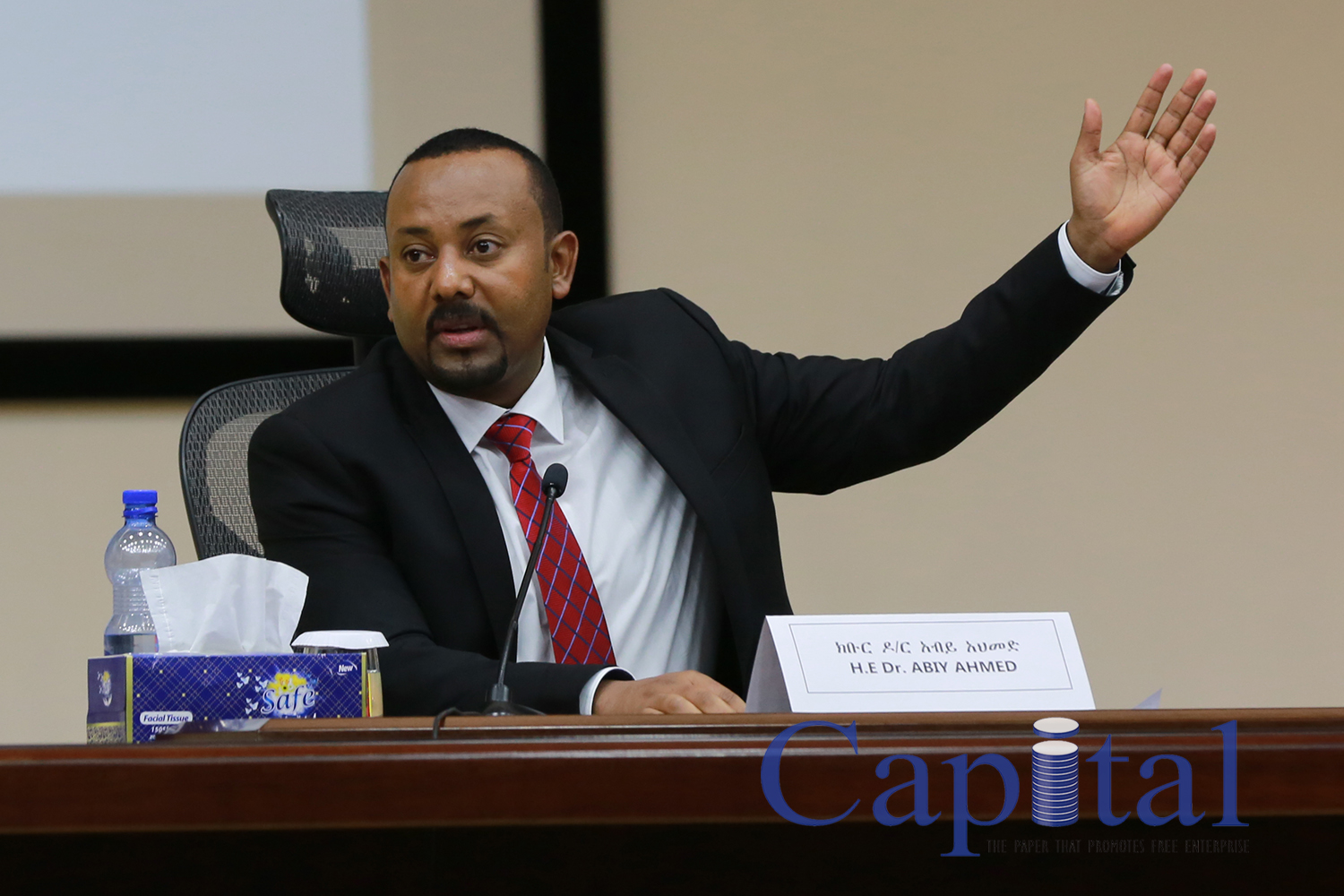
He told the audience that the ENDF opted not to destroy all tanks owned by the TPLF because they had stationed them in civilian quarters, endangering life.
The fact that we didn’t sit down with the criminals for dialogue doesn’t mean we weren’t interested in dialogue. “We love to discuss, we hate wars. We begged, we are known for peace,” he said, Ethiopia has one government, a government that respects the law, and can be asked according to the law, even in the time of the war we were having dialogues but it was with the legal interim government lead by Mulu Nega,” he added.
The TPLF once ruled Ethiopia for three decades, mostly as part of a coalition known as the Ethiopian People’s Revolutionary Democratic Front (EPRDF). When Abiy came to power in 2018, he sought to dismantle their grasp on power.
In Parliament, he said the TPLF wanted to manipulate everything in their favour and went as far as pretending to be on his side.
“The impression that TPLF left when EPRDF decided to merge is a false narrative,” Abiy said referring to the merger of EPRDF parties into the Prosperity Party last December.
“TPLF itself endorsed the merger. TPLF itself had also voted for the decision to adopt the Algiers decision and forge peace with Eritrea. But they went public to say they didn’t,” Abiy explained.
Cainiao partners with Ethiopian Airlines to launch cold chain air freight for vaccine transportation
Cainiao Smart Logistics Network, the logistics arms of Alibaba Group Holdings Limited, announced its partnership with Ethiopian Airlines to launch a special cold chain air freight for the transportation of temperature-controlled medicines from Shenzhen Airport, China’s first medical cross-border cold chain facility. Temperature-controlled medicines will be distributed twice a week from Shenzhen to Africa, and to the rest of the world via Dubai and Addis Ababa.
This is China’s first cross-border medical cold chain route to be operated regularly and is certified to transport temperature-controlled medicines including COVID-19 vaccines.
The end-to-end transportation process requires a highly effective cold chain management. During air freight, the entire cold chain cabin is equipped with a temperature control system that monitors the cabin’s temperature in real-time.
As the fourth airport in Mainland China that obtained International Air Transport Association (IATA)’s Centre of Excellence for Independent Validators (CEIV) certification for pharmaceutical logistics, Shenzhen Airport is also well-equipped to handle biotechnology products. The cargo terminal in Ethiopia is outfitted with compartmentalized cold storage facilities with temperature between -23°C to 25°C. It occupies an area of 54,000 square metres, with dedicated cool dollies and pharma team, as well as real-time temperature monitoring system to ensure a safe and seamless cold chain logistics for handling temperature sensitive healthcare products.
“Cainiao’s global logistics network spans over 200 countries and regions, providing end-to-end integrated logistics services, including digital customs clearance capabilities,” said James Zhao, General Manager of Cainiao International Supply Chain. “The launch of the cold chain air freight has further bolstered our global logistics capabilities, and allow us to offer a one-stop solution for the global distribution of medical products such as the Covid-19 vaccines.”
Tewolde GebreMariam, Ethiopian Group CEO said “Ethiopian Airlines will repeat its remarkable and globally recognized success in leading the fast delivery of PPEs few months ago with similar delivery speed, professional handling and maintaining the cold chain during the forthcoming global distribution of the Covid-19 vaccine. In anticipation of the Covid-19 vaccine release, we will be at the forefront to further discharge our responsibility in the distribution of the vaccine across the globe.”
Cainiao’s launch of the “Green Channel” Initiative this year to fight the pandemic has helped in the distribution of 250 million pieces of PPEs, including Covid-19 test kits, to medical suppliers in over 150 countries and regions. In collaboration with its partners, Cainiao has also helped to transport medical relief items for international organizations during the pandemic outbreak.
