

Many economic analysts strongly criticized the leadership of President Donald Trump as reckless. Richard Phillips, a New York-based international Financial Analyst is bold enough to say that for all of his bombast, under the leadership of President Donald Trump the United States has actually grown more and more to resemble a developing nation. As it happens, the onset of the pandemic tore the mask off all of the rot that had been festering just below the surface of United States politics and society. President Donald Trump, backed by his Republican Party, is the very face of this decline. To assert his claim, Richard Phillips outlined six epic failures.
According to Richard Phillips, the first reason that the United States is rapidly transforming itself into a developing nation is that its President has made one particularly well-calculated move: He has been able to harness the rapacious greed that is at the heart of Republican politics and simultaneously trample on the tepid moderation that is inherent in Democratic politics. This had already fully manifested itself prior to the extraordinary fiscal interventions related to the COVID 19 pandemic. Soon after President Trump took office in 2017, the United States already embarked on a course of fiscal profligacy.
It successfully enacted tax cuts that baked trillion-dollar deficits into the United States economy for as far as the eye can see. As a consequence, United States federal debt has become unsustainable without the Fed’s printing press, which has pushed past the limits of rational monetary policy. More and more, the United States’ fiscal and monetary accounts have come to resemble those of poorly managed developing nations. Instead of following long-accepted socio-economic practices, President Trump uses lies and illusion to create a febrile web of illicitness – part oligarchy, part plutocracy and part kleptocracy – that is characteristic of so many developing nations.
George Tyler, an economist and the author of “What Went Wrong” and “Billionaire Democracy: The Hijacking of the American Political System” stated that this has manifested itself more and more in income disparities that leave the vast majority of Americans barely able to hang on from paycheck to paycheck, while a privileged few reap the rewards of a system rigged in their favor, again a characteristic of developing nations. In fact, if the United States were a developing nation and did not play a central role in the governance of the world’s multilateral institutions, it surely would have come under scrutiny by the International Monetary Fund for pursuing policies and practices that have in the past forced intervention.
The second failure in which Richard Phillips stated is that this past summer, the United States was literally torn apart by racial strife that often resulted in rioting. The root cause of this strife was the pervasive level of systemic poverty that besets so many Americans living in inner cities. But if poverty was the cause, an out-of-control police force, facile in the use of strongarm tactics, was the spark.
George Tyler stressed that simply, the United States’ inner-city police forces often stop just short of the tactics used by police in many developing countries. Forget for a moment that African Americans are 2.8 times more likely to be killed by a policeman than an American of European lineage. The reality is that American cities are being subjected to a form of policing that cannot be found in any other developed country in the world.
And, here’s the kicker. President Trump, with broad support from his Republican party, comes down squarely on the side of police brutality. More importantly, Trump has managed to cadge together an extra-legal police force from units connected to the Department of Homeland Security, which for various reasons seems doggedly loyal to the President. Under his “law and order” mantra, the most lawless of United States Presidents mimics the actions of tinpot dictators cracking down on civil unrest in places like Azerbaijan or Cambodia.
The third failure Richard Phillips stated is a failing United States healthcare system particularly the Trump Administration’s handling of COVID 19. Suffice to say that President Trump presides over a nation reeling from the physical, emotional and economic trauma of a raging pandemic by virtue of promoting snake oil, in this case hydroxychloroquine. But aside from President Trump’s mindless antics, the coronavirus has unmasked a new reality for all Americans to see. The so-called “greatest health care system in the world” is proving to be every bit as inefficient and ineffective as health care systems in the world’s poorest countries. Despite all the vast amounts of money spent, the United States health care system leaves millions of Americans unserved or underserved.
One need only look at the substantially higher COVID 19 death rates among people of color in the United States’ largest cities. It constitutes a callous disregard for human life that aligns more closely with Kinshasa than with Berlin, Paris or even Beijing. President Trump has not only failed utterly to take the steps necessary to repair the system, which he had so stridently promised in the last Presidential election, he has use the office of the President to chip away at key elements of the existing system.
Uwe Bott, Chief Economist of The Global Research Center argued that amazingly, President Trump is in the courts trying to eliminate coverage for pre-existing conditions, a popular facet of the Affordable Care Act that he promised to protect. Again and again, while doing nothing to improve the plight of the United States’ disenfranchised, the President callously focused on tearing the system further apart. Meanwhile, as in so many developing nations, wealthy Americans are completely unfazed. They have access to some of the world’s best research hospitals.
To be continued ……..
President Donald Trump and the decline of the United States
Digital inclusion: What does equal access to education mean in the digital age?
By Zohra Yermeche, Program Director for Connect To Learn at Ericsson
The COVID-19 crisis, and the impact which it has had on learning across the world, has highlighted many of the digital disparities which exist in today’s world. At a time when many of the world’s students shifted from physical to digital, we were also faced with the hard truth that today there are still 3.6 billion people in the world who are unconnected.
For students in the connected half of the world, the story is much different. While 1.2 billion children were affected by school closures across much of the world, our recent Consumer COVID-19 report found that students were able to substitute physical learning by spending 230 percent more time on digital learning tools such as Google Class, Epic! and Seesaw Class.
This of course is a significant rise, but it is also an acceleration of a trend which we have steadily been tracking since our first Connect To Learn program exactly ten years ago.
The State of Broadband 2020 report estimates that there are twice as many people today who use the Internet compared to 2010. This rise in digital literacy, together with the imminent period of rapid digitalization of the economy, means that ensuring fair and equal access to both education and future job markets will rest on the extent of digital inclusion within our societies.
What is digital inclusion and why is it so important today?
Today, technology plays a much bigger role in the quality and scope of how we learn, such as new digital learning platforms which are estimated to reach 350 billion USD by 2025; what we learn, with a growing emphasis on programming, robotics, AI and automation; and how we can use it in the job market, with digital skillsets increasingly becoming a prerequisite of tomorrow’s workforce.
The changes which are happening today show the disparity between the developed and undeveloped world. If you are not connected, that shows you the leap which you have to make between the connectivity aspect, access to education and benefits which are derived from that.
Closing this digital divide, with those who are not connected or not considered to be digitally literate, is imperative to ensuring a fair distribution of digital opportunities across countries, locations, gender, socioeconomic status, and age.
Impact of digital inclusion on GDP and the job market
Ten years ago, geopolitical discussions largely focused on competence development for teachers, with little priority given to digital policy beyond essential connectivity requirements.
Today, the policy landscape is beginning to look very different and the emergence of the digital economy is driving this change. For example, when we look at digital inclusion in the context of the job market, it is predicted that the 5G digital economy alone will create 22.3 million jobs worldwide in the coming decade. This has repercussions on GDP too, as having a workforce that is not digitally skilled is of course not compatible with a digitized economy.
As such, we already see today how governments are prioritizing digital inclusion in their policy agendas, notably at this year’s G20 summit. There seems to be more emphasis and regulation to support digital education, and the impact that has on an awakening of the rest of the economy.
While governments first priority in digitalizing their societies is on setting up the tools, providing connectivity to enable tomorrow’s digital services, it’s also important that people know how to use them and how to use them responsibly. Digital literacy and capacity building are some key elements that governments and private enterprises should continue to work on in the next few years. These efforts must be well coordinated, scaled up and based on evidence-based policymaking, as laid out in the UN Roadmap for Digital Cooperation (page 8).
Access to education in the digital age
In 2010, we co-founded the Connect To Learn initiative with the Earth Institute at Columbia University and Millennium Promise, with a focus on delivering connectivity and ICT tools to enhance teaching and learning in unconnected, underprivileged and largely unrepresented communities.
Since our first projects in the Millennium Villages, we’ve helped to connect and increase the digital inclusion of more than 200,000 students worldwide. As the program has evolved, we have increased our efforts to close the digital divide not just in terms of connectivity, but from a content, syllabus and platform side which is fundamental.
As a technology company, we quickly discovered that we can offer so much more than connectivity, but furthermore can help improve learning processes and methodologies so learning can become more impactful. For example, through partnerships with like-minded organizations, we have helped to digitalize and disseminate content through digital learning tools such as mobile apps.
One of the biggest differences from ten years ago is also that the nature of technology in an educational context, both as a medium and a means to enter the job market was still relatively immature as the landscape has evolved, we’ve come to understand the need to personalize and individualize learning so that we can improve learning outcomes in a meaningful way.
Giving people access to the right type of content is one aspect, another equally critical aspect is the human element. On top of the digital layer, students will still always need the engagement, inspiration and activation that comes from teachers and trainers who know about the topic. I believe that, even in the digital age, technology will never be able to replace this interaction, but rather can serve as an increasingly innovative medium for those critical learner-instructor interactions, such as through the Internet of Skills.
Digital inclusion through public-private partnerships
Today, there is a significant need for digital skills courses. Key technology areas such as AI, robotics and app development are advancing at such a rapid pace, which can make it difficult to ensure an effective transfer of competence to emerging workforces.
Such is the pace of change for topics such as these, public academic institutions will invariably struggle to take learning beyond a basic theoretical level. Public-private partnerships will therefore be key to addressing this, by developing advanced curriculums and delivering the necessary quality and scale of access.
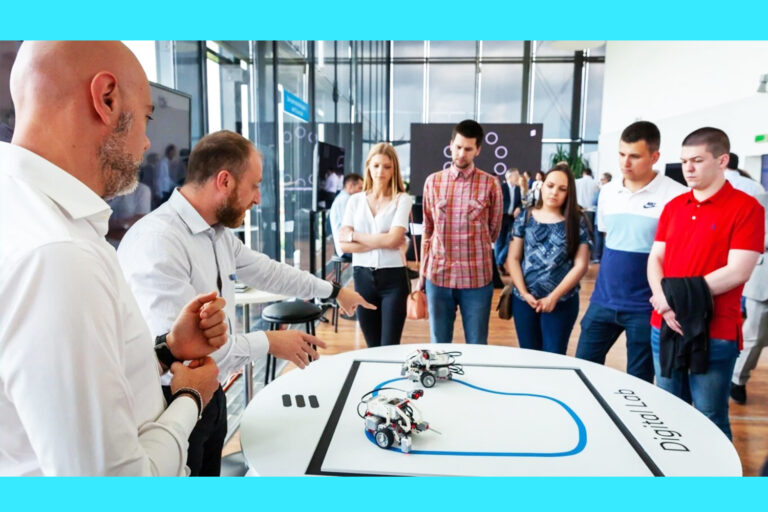
As a sustainability pioneer in the private sector, we’ve understood the power of partnership, which is why we’re investing heavily in building out those partnerships with like-minded entities to create sustainable solutions in order to address the issues which the education sector faces today. A good example of this is the Ericsson Digital Lab program which is now live in several countries in partnership with local schools and community learning centers. The aim here is to share those competences that we have in-house on a much broader scale, addressing those critical skillset demands which are needed in tomorrow’s workforce.
This year, in response to the impact which COVID-19 has had on learning, we continuing these efforts by joining the UNESCO-led Global Education Coalition, launching Ericsson Educate and partnering with UNICEF to map school connectivity as part of the Giga project.
Through digital methodologies, and with a focus on improving digital skills for students across all communities, our commitment is to ensure that future generations continue to have the skills and knowledge to find opportunity in a changing digital world. This was what we set out to do when we launched Connect To Learn ten years ago, and this will continue to be our priority in this next critical decade of action.
Learn more
In 2020, Ericsson’s Connect to Learn program celebrates ten years of bridging the global digital divide. To find out more about our various programs, visit our Connect To Learn page.
Ericsson again selected for inclusion in the Dow Jones Sustainability Indices (DJSI)

- Ericsson is one of the top-ranked companies within its industry group in the highly respected evaluation of sustainability-driven, publicly listed companies
The results of the annual Dow Jones Sustainability Indices (DJSI) were announced on November 13, 2020 and showed Ericsson as one of the top-ranked companies within its industry group: technology, hardware and equipment. The DJSI evaluation also showed Ericsson with continued strong performance in the environmental dimension.
Launched in 1999, the DJSI was one of the first global indices to track the largest and leading sustainability-driven, publicly listed companies. The DJSI represents the top 10% of the largest 2,500 companies in the S&P Global Broad Market Index based on long-term economic and ESG factors.
Heather Johnson, Vice President, Sustainability and Corporate Responsibility: “Ericsson is delighted to once again be selected for inclusion in the Dow Jones Sustainability Indices. We are again ranked as one of the most sustainable companies in our industry which is proof that our long-term commitment to sustainability and corporate responsibility is having real impact and is being recognized by our stakeholders. Our sustainability journey continues, and we look forward to continuing strong collaborations with our business partners, customers and of course our fantastic employees, all of which are critical for our success.”
In September 2020, Ericsson was ranked #12 on The Wall Street Journal’s list of the 100 Most Sustainably Managed Companies in the World. That ranking was based on an assessment of more than 5,500 publicly traded businesses in areas such as business models and innovation, external social and product-related factors, employee and workplace aspects, and the environment
You can read more about the DJSI/Corporate Sustainability Assessment here.
More than 1 billion people will have access to 5G coverage by the end of 2020
- Pace of introducing new 5G functionality has increased in 2020 in both the network and device domains, despite uncertainties caused by the COVID-19 pandemic
- 220 million global 5G subscriptions forecast by end of 2020, with China accounting for 175 million of those – or almost 80 percent
- Fixed wireless access (FWA) is now offered by nearly two thirds of service providers globally. FWA connections are forecast to grow more than threefold, reaching more than 180 million by the end of 2026 and accounting for a quarter of all mobile network data traffic
- 5 billion 5G subscriptions forecast by the end of 2026 – estimated to account for more than 50 percent of mobile data traffic at that time
Ericsson (NASDAQ: ERIC) projects that four out of every ten mobile subscriptions in 2026 will be 5G. This forecast is included in the latest edition of the Ericsson Mobility Report. Current 5G uptake in subscriptions and population coverage confirms the technology as deploying the fastest of any generation of mobile connectivity.
The report estimates that by the end of 2020, more than 1 billion people – 15 percent of the world’s population – will live in an area that has 5G coverage rolled out. In 2026, 60 percent of the world’s population will have access to 5G coverage, with 5G subscriptions forecast to reach 3.5 billion.
Ericsson has raised its year-end 2020 estimate for global 5G subscriptions to 220 million, as service providers continue to build out their networks. The increase is largely due to fast uptake in China, reaching 11 percent of its mobile subscription base. This is driven by a national strategic focus, intense competition between service providers, as well as increasingly affordable 5G smartphones from several vendors.
North America is expected to end the year with around 4 percent of its mobile subscriptions being 5G. Commercialization is now moving at a rapid pace and by 2026, Ericsson forecasts that 80 percent of North American mobile subscriptions will be 5G, the highest level of any region in the world.
Europe will end the year with around 1 percent 5G subscriptions in the region. During the year, a number of countries have delayed their auctions of the radio spectrum needed to support 5G deployment.
Fredrik Jejdling, Executive Vice President and Head of Networks, Ericsson, says: “This year has seen society take a big leap towards digitalization. The pandemic has highlighted the impact connectivity has on our lives and has acted as a catalyst for rapid change, which is also clearly visible in this latest edition of the Ericsson Mobility Report.
“5G is entering the next phase, when new devices and applications make the most out of the benefits it provides, while service providers continue to build out 5G. Mobile networks are a critical infrastructure for many aspects of everyday life, and 5G will be key to future economic prosperity.”
The report also highlights why 5G success will not be limited to coverage or subscription numbers alone. Its value will also be determined by new use cases and applications, the first of which have already started to emerge.
Critical IoT, intended for time-critical applications that demand data delivery within a specified time duration, will be introduced in 5G networks. This will enable a wide range of time-critical services for consumers, enterprises and public institutions across various sectors, with 5G public and dedicated networks.
Cloud gaming is another emerging application category. The combined capabilities provided by 5G networks and edge compute technologies will enable game streaming services on smartphones to compete with a quality of experience (QoE) that is on par with PC or console counterparts, opening up for innovative, immersive games based on mobility.
5G functionality grows in both the network and device domains
The rate of introducing 5G New Radio (NR) functionality is increasing, with more than 150 5G device models launched commercially. Many devices support 5G frequency division duplex (FDD) and dynamic spectrum sharing (DSS). The first 5G standalone (SA) networks have been launched in Asia and North America, as well as the first devices capable of NR carrier aggregation.
FWA offered by more service providers
With the COVID-19 pandemic accelerating digitalization as well as increasing the importance and need for fast and reliable home broadband connectivity, the number of service providers offering fixed wireless access (FWA) is on the rise. Almost two thirds of service providers now have an FWA offering. FWA connections are forecast to grow more than threefold and reach more than 180 million by the end of 2026, accounting for about a quarter of total mobile network data traffic.
This edition of Ericsson Mobility Report includes four feature articles:
- 2020: the ultimate stress test for FirstNet. Co-written with AT&T
- Service providers face three alternative paths to success
- Mobile cloud gaming – an evolving business opportunity
- The networked industrial enterprise
Download the November 2020 edition of the Ericsson Mobility Report.
