Wednesday, April 1, 2026
Home Blog Page 352

Addis Ababa’s historic post office transformed into vibrant creative hub for youth

0

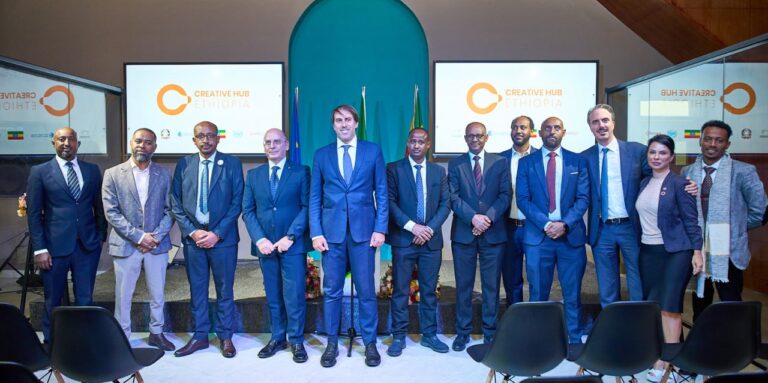
The iconic Ethio Post building, famously known as the “Arada Post Office” and situated in the bustling downtown Piazza area, has been repurposed into a dynamic creative hub aimed at fostering youth engagement and nurturing innovation. This transformation represents a meaningful fusion of the city’s rich historical heritage with aspirations for modern economic growth.

Dating back to 1900, this historic building was home to Ethiopia’s first modern post office. Now, responding to urban development needs and the search for a fresh venue, Creative Hub Ethiopia—hailing from Mexico—has taken over management of the space for the next five years to promote creative industries and activities.

The initiative is designed to boost the country’s economy by providing a dedicated platform for Ethiopia’s burgeoning youth-driven creative sector. It is the result of a collaborative effort involving several international and domestic partners, with key financial and technical support from the United Nations Industrial Development Organization (UNIDO) and the Italian Development Cooperation.

Forming part of UNIDO’s Global Creative Industries Program, and with additional backing from the Italian Development Cooperation, the project was officially inaugurated amid great optimism. Government officials highlighted the importance of not only creating jobs for the youth but also enabling them to establish new industries themselves. They emphasized that creative industries hold significant promise for economic diversification, job creation, and earning foreign exchange.

Representatives from the Italian Development Cooperation underscored the center as a manifestation of the shared vision between Ethiopia and Italy for sustainable development centered on young people. They described the innovation center as a vital platform enabling youth to transform ideas into actionable projects while connecting with both local and international markets.


PACCI and IOM Pledge Closer Cooperation to Boost Migrant Reintegration and Private Sector Engagement in East Africa

0

In a significant step toward enhancing regional cooperation on migration and economic development, the Pan African Chamber of Commerce and Industry (PACCI) and the International Organization for Migration (IOM) have pledged to work together on strategies that engage the private sector in supporting migrant reintegration and employment across East Africa.

The commitment was made during a meeting between Kebour Ghenna, Executive Director of PACCI, and Yuko Hamada, Senior Regional MRP Coordinator at IOM’s Regional Office for East, Horn, and Southern Africa. The discussion, held at PACCI’s headquarters in Addis Ababa, addressed the urgent need to align migration policies with economic opportunities and private sector participation.

Hamada presented up-to-date data on migration trends in the East African region, highlighting key challenges and the socio-economic impact of migration on both origin and destination countries. She provided an overview of regional migration frameworks and the issues faced by migrants themselves – including barriers to legal mobility, reintegration, and access to services.

For his part, Kebour Ghenna stressed PACCI’s interest in supporting migrants through reintegration initiatives that capitalize on the skills they acquire abroad. “Migrants return with valuable knowledge and experience. We must ensure they have access to financial services, improved financial literacy, and opportunities to contribute to their communities and economies,” he noted.

The conversation also covered the simplification of legal pathways for migration, the social costs borne by both sending and receiving countries, and the critical role of partnerships in addressing these multi-dimensional issues. Both sides agreed to jointly explore funding opportunities and collaborate on initiatives that align with their respective mandates.

PACCI, as the apex body representing national chambers of commerce and private sector institutions across Africa, is well-positioned to convene businesses and promote trade-led growth. The IOM Regional Office for East, Horn, and Southern Africa – based in Nairobi – supports 16 countries and works to promote safe, orderly, and humane migration.

The meeting marked a positive step toward deeper collaboration between the development and business communities in support of human mobility and inclusive economic development across the continent.

Ethiopia Ranks last globally in mining investment attractiveness, report shows

0

Ethiopia has been ranked as the least attractive country for mining investment in the world, according to the “2024 Annual Mining Companies Survey” released on July 29, 2025, by the Canada-based Fraser Institute. The comprehensive report, which evaluated 82 jurisdictions globally, placed Ethiopia at the very bottom in terms of mineral exploration and investment appeal, highlighting critical challenges related to policy stability and transparency.

The Fraser Institute’s ranking is based primarily on the Investment Attractiveness Index, a composite score that combines geological potential with government policy frameworks. While Ethiopia is rich in mineral resources, the survey reveals that its poor policy environment overshadows its natural wealth, deterring investors. Ethiopia ranked below Suriname and Niger, the two countries just above it, while Finland, Nevada, and Alaska ranked as the most attractive destinations for mining investments. Notably, Finland climbed from 17th to first place in 2023, underscoring the impact of improving policies.

The survey also includes a Policy Perception Index (PPI), described as a “report card for governments,” which assesses factors such as taxation, environmental regulations, legal systems, and political stability — all key influences on mining companies’ investment decisions. Ethiopia was among the bottom 10 countries in this category, reflecting low scores for policy clarity and stability. Other countries with poor policy outlooks include Bolivia, Madagascar, Russia, and Mozambique, suggesting that the dominant deterrent for mining companies in Ethiopia is an unfavorable policy climate rather than lack of mineral resources.

Respondents to the survey emphasized that while mineral endowments are fundamental, roughly 40% of their investment decisions hinge on the policy environment. This underscores the importance of transparent regulations, political stability, and fair legal frameworks in attracting exploration investment.

The survey, conducted annually since 1997, gathered data from 350 responses out of 2,289 mining companies worldwide engaged in exploration and related activities. Its findings are widely regarded as influential tools for governments seeking to improve their investment climates.

Despite Ethiopia’s wealth of natural resources, the report warns that without addressing crucial policy gaps, exploration investments will likely be diverted to countries with clearer and more investor-friendly frameworks. The Fraser Institute stresses that mineral riches alone do not guarantee investment unless accompanied by strong governance and regulatory environments.

The report’s insights have particular relevance for African nations. For example, Botswana, Africa’s highest-ranking country in the survey, slipped from 15th to 20th place overall, with a significant drop in its policy perception score. Concerns about regulatory duplication, security issues, and legal uncertainties have dented investor confidence even in this traditionally well-regarded mining jurisdiction. This development serves as a cautionary example that maintaining a positive policy reputation demands continuous effort.

NBE rejects forex bureaus’ request to provide transaction services

0

The National Bank of Ethiopia (NBE) has declined a request from newly established forex bureaus seeking permission to provide transaction services aimed at easing the stringent deposit requirements imposed on the business community for obtaining Letters of Credit (LCs) from private banks.

At the Ethiopian Finance Summit 2025 held on July 22, “Ethio Forex,” a notable forex bureau, highlighted the difficulties faced by businesses in accessing LCs legally. They pointed out that some traders are being forced to deposit up to 200% of the LC value with banks, a requirement that has compelled certain businesses to resort to the illegal black market for foreign exchange.

Representatives from the forex bureaus expressed concerns that, despite operating legally, the limited accessibility to authorized foreign exchange services might inadvertently drive companies toward illicit channels, potentially destabilizing the market and fueling inflationary pressures.

Responding to these issues, Mamo Mihretu, Governor of the NBE, stressed that banks should not demand excessive deposits such as 200% for issuing LCs and urged businesses to report any such cases. He emphasized, “In our regular meetings with banks, we consistently call for efficient and transparent foreign exchange service delivery to private sector clients.”

The Governor reiterated the NBE’s commitment to fostering a uniform foreign exchange market in Ethiopia, in which commercial banks would act as the principal intermediaries. He firmly rejected the proposal for forex bureaus to engage in bank-like foreign exchange transactions, clarifying that forex bureaus serve distinct functions primarily targeting small remittances and travelers rather than complex trade finance operations.

Currently, approximately 10 new forex bureaus have been authorized, focusing mainly on handling cash foreign exchange demands from private individuals and business travelers, according to the National Bank.

The announcement comes as the National Bank celebrates the completion of the first year of sweeping macroeconomic reforms across monetary policy, the foreign economy, and financial sectors. The reforms have been marked by significant achievements, including a 33% increase in foreign exchange inflows, which hit a historic high of $32 billion.

This inflow comprises $8.3 billion from commodity exports, $8.5 billion from service exports, $7.1 billion from private promissory notes, $1.9 billion from government aid, $2.7 billion in new foreign loans (excluding IMF funds), $3.9 billion from foreign direct investment, and $0.2 billion from indirect foreign private capital flows.

Consequently, the country’s foreign exchange reserves have significantly improved, with the National Bank’s reserves tripling and commercial banks’ forex reserves doubling. The increased availability has allowed banks to raise the average daily foreign exchange allocated to businesses from $11 million at the reform’s start to $25 million currently.

Monthly foreign exchange supply to the private sector also surged from $258 million last year to $500 million this year. Additionally, businesses secured around $445 million in new foreign credit and supplier credits over the past year.