

The government has announced that it will take decisive measure on those who may try to engage on trade sabotage in relation with the current situation in the country.
Ministry of Trade and Industry (MoTI) has disclosed that a taskforce has been established in every region up to Wereda level to control and evaluate the market activity.
Eshete Asfaw, State Minister of MoTI, disclosed that every evening the regions are reporting their daily report on the overview of the market activity in every corner of the country.
He recalled that since COVID 19 occurred in the country the government has been taking strong measures to stabilize the market. The government has taken different level of measures on more than 72,000 traders.
Similarly, in the first quarter of the budget year, different administrational and other strong measures including revoking a license and filed cases to the court have been endowed on more than 13,000 illegal actors.
He said that in the latest development there is a trend on hording products mostly basic needs, ganging up for price increment by group and dropping productivity. “We have taken different measures on this acts and some of the matters have been solved amicably,” he told Capital.
“In these regard there are water bottlers and other factories involved in underproduction and price increment on their production that is controlled by the government,” he remanded the latest attempt occurred in the market.
He added that in collaboration with illegal middlemen there were attempt to increase price on cereals that the government enabled to tackle.
Different market sources including those that evaluate the situation at Merkato, the biggest market center in the country, informed Capital that due to the latest situation artificial price hike has been observed not only at the market places but at industries.
One of the sources that Capital interviewed witnessed that since the government commenced offensive attack at the northern part of the country, that is, immediately after the TPLF forces surprise attack on Ethiopian Defense Force, some industries like food processing plants were found to deliberately slow down their daily sales and preferred to hoard the product at their warehouse.
“On one of the industry, who produce soybean products, that I know and located at Lege Tafo the company preferred to sale very limited amount of product on its daily basis,” one of the sources said.
He argued that the product has huge demand and there is scarcity in the market, while the company has huge stoke at its warehouse.
“Besides slow downing the daily sales the company has increased its price in this past week without any reason,” he added.
Some sources said that some are the traders may have relation with the illegal group of gangs that the government labeled as ‘Junta’ under TPLF.
Eshete said that there are attempts to use the opportunity from some traders but the government is closely following the situation in every region and the capital.
“We are also taking measures on those who tried to abuse the circumstance for instance today (Friday November 13) the Addis Ababa City have taken measures on those who tried to go illegally,” he added.
“We prefer to create awareness and now we do that but if anyone attempts to sabotage on the market the government will never forgive,” the State Minister added.
The government stands its ground on trade sabotage

Ekos Steel Mill’s donation to farmers

Ekos Steel Mill, located in Dukem, has donated five manual threshing machines to the local community in the form of donations. Ekos Steel Mill PLC in collaboration with Yam workshop has developed multi crop threshers. The thresher will mainly be used in the shelling of teff, wheat, rice, sorghum, barley, millet and different types of crops.
The CEO said the machines had compact features in its structure, that is, good shape and reliable operation, featured by its high threshing rate, great performance and few losses of crop type.
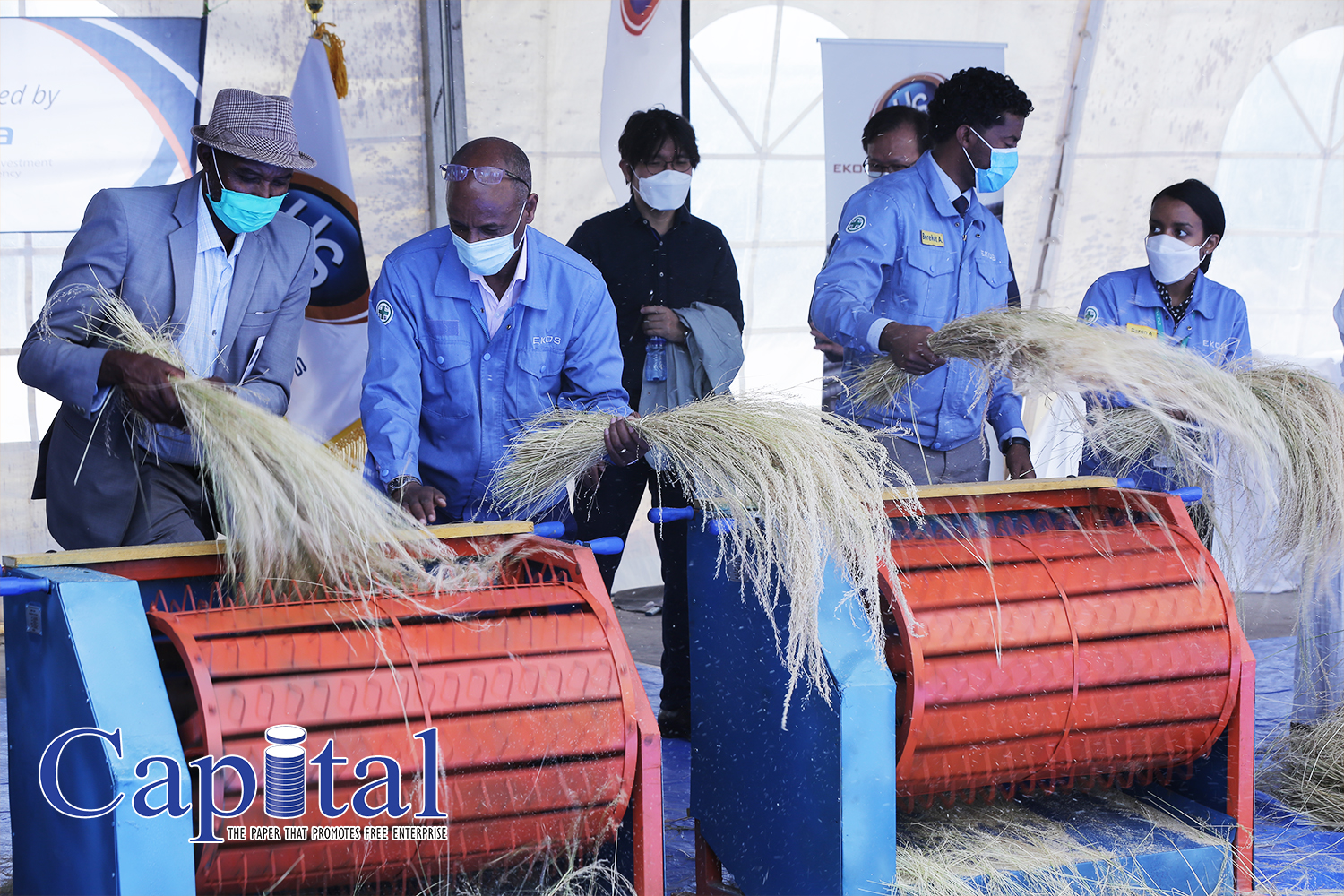
As stated on the ceremony, the loss of grain during threshing is estimated to be from 15-25 percent depending on the crop type.
The ceremony was attended by State Minister of Foreign Affairs Tsion Tekle, State Minister of Trade Yohannes Dinkiayahu and other government officials.
Further in the future the company is planning to start producing these threshing machines for the local market.
UNIC uniquely soars despite global pandemic and national instability

The United Insurance Company (UNIC) in its gross written premium that includes both Life and general Insurance sector has registered massive improvement despite the effect of instability and the surge of the pandemic to the economy in the concluded budget year.
According to the report of UNIC, as from the concluded budget year of the 30th of June 2020, the gross written premium of both life and non-life stood at 597 million birr, a raise from 533 million birr with respect to the previous year.
Of the total premium, the non life or general insurance sector contributed to over 551 million birr whilst the life sector share was about 46 million birr. “The combined gross written premium grew by about 12 percent in the stated period,” the annual report explained.

The report indicated that on all the non life insurance businesses, the premium had climbed excluding the marine cargo/ inland transport business that dropped by 13 percent. This drop was attributed to foreign currency shortage that importers should access for importation.
As the sector tradition, the motor class business retained its top spot in terms of premium portfolio with 62 percent share but it has decreased from 63 percent of the preceding year.
Fire and general accident and engineering followed by 11 and 7 percent respectively.
Net claim incurred for both sector had shown an increment of 6 percent and reached 241 million birr. However, the corporate loss ratio has shrunk for the second consecutive year. This financial year, the loss ratio stood at 55 percent, the previous two years the percentages were 58 and 68.
The loss ratio for the non life sector has dropped to 56 percent in the reviewed year from 60 percent of the previous year. The motor sector loss ratio has continued at the upper with 66 percent share.
The life sector loss ratio was 22 percent that is far below from the industry average of 58 percent.
The corporate underwriting profit that includes life and general sectors has massive grown with more than one fifth of the preceding year.
The report indicated that the underwriting profit for both sectors is 210 million birr in the 2019/20 budget year. This is a 21 percent growth in comparison with the 2018/19 performance that was 173.5 million birr.
The non life sector underwriting profit was boosted by 27 percent and currently stands at 188 million birr. Meanwhile the motor sector took the lion share for claim and loss ratio since it contributed 43 percent for the year surplus.
In the reported year, the gross profit of UNIC has also climbed by 22 percent, while the net profit after tax has registered a 17 percent increment compare with the performance of a year ago.
According to the annual report of UNIC, the profit before tax for 2019/20 budget year stood at 148 million birr from 121 million birr of the preceding year.
At the same time the company after tax profit has surged to 124 million birr, up from 106.6 million birr in 2018/19 budget year.
Due to the company’s decision to climb the paid up capital that reached at 436 million birr as of June 30, 2020 the earning per share has shown decrement in the reported year compared with the preceding year. In accordance, the earning per share stood at 29.9 percent that was 33.8 percent in the 2018/19 year.
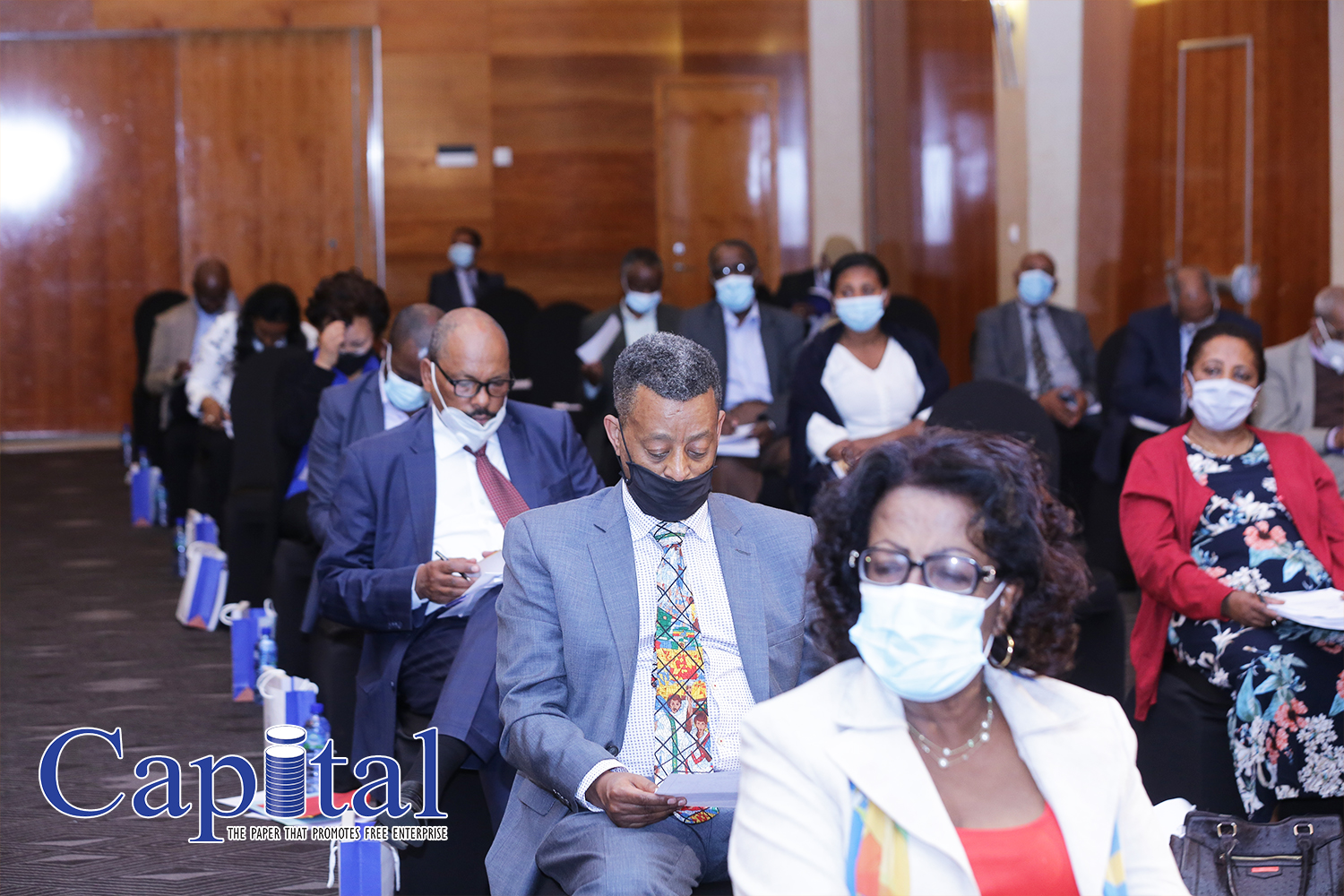
According to the decision of the extraordinary meeting that was held in November 2018, the paid up capital is expected to reach half a billion birr by November 2022.
The company asset has also risen to 1.6 billion birr up from 1.5 billion birr.
The insurer has 51 branches including 12 contact offices. It has four buildings including the new head quarter inaugurated in the past budget year that contributed to amass huge amount of revenue from rent. The company said that besides generating huge amount form rent income it also saved significant amounts from rent expense.
Ayka Addis Textile From depths of bankruptcy to comeback

A once projected thriving textile company that became bankrupt is set to make a comeback. The company, Ayka Addis Textile and Investment Group was established in May 2012 with a total capital of 1 billion and a paid up capital of 679 million birr by Turkish investment groups. The factory has been out of business for more than a year and has been paying its 4500 staff for free work due to lack of operation.
According to Melaku Alebel, Minister of Trade and Industry, the Development Bank of Ethiopia is taking over the factory in accordance with the banking system.
Due to the inability of the company to repay the 3.2 billion birr loan that was provided by the Development Bank of Ethiopia, the development bank had made attempts to auction it. The loan was provided at the onset of 2008 with the expected loan repayment time provided till 2013, which of course was unsuccessful. Ayka Addis Textile & Investment Group is the first company to be auctioned, and it failed to attract bidders who can offer 1.8 billion birr. The company failed to attract bidders primarily because of the high price set by the development bank as well as its competitiveness with regards to its marketing.
As from the last fiscal year, the state owned bank had ratified the annual budget to manage some companies that failed to attract buyers, including the Turkish company, Ayka Addis group since there are thousands of employees under the company.
However as Melaku said, the reason for this is the failure of the concerned parties to resolve their problems and the failure of the entire Development Bank of Ethiopia to take responsibility for the factory.
“In the future, short, medium and long term plans will be prepared and the workers will be able to return to work and the factory will be operational in a short period of time,” he stated.
Ayka Addis Textile Factory is located on a 20.1 hectares piece of land with 4,500 workers and it is said to have the capacity to employ more than 10,000 workers.
On Friday, Officials from the Ministry of Trade and Industry, including Melaku Alebel, officials from the Development Bank of Ethiopia and the Confederation of Trade Unions visited the factory to discuss issues that will enable it to start operations soon.
Ayka Addis was once considered to be an anchor investment that Ethiopia succeeded to attract. However, it did not take long for the company to face the dreadful realities of shortages in raw materials mostly cotton, lack of skilled labor and power outages. The political crisis also contributed to the malfunctioning of Ayka Addis. At first, Ayka Addis seemed to be doing well but failed to sustain the momentum and since 2014, it was operating on a loss until it declared bankruptcy in 2017. The company is believed to have created 7,000 jobs at the time.
