

The U.S. Embassy launched nationwide media trainings to empower journalist for accurate reporting in connection to the upcoming elections scheduled for August 2020.
The initiative implemented by the Johns Hopkins Center for Communication Programs (CCP) in partnership with Addis Ababa University School of Journalism and Communications and a support from the US embassy in Addis is launched on Wednesday March 4, 2020 at Sapphire Hotel.
The embassy earmarked 450,000 USD for the project which seeks to help the media provide accurate, balanced, and verified information to the public during the election process.
According to the organizers, a total of 25 training sessions are planned throughout the country in which 20 to 30 members of the media and social media influencers are expected to participate that ultimately reaching 625 Ethiopian media professionals.
“This project aims to enhance the skill sets of journalists and strengthen the institutional capacity of Ethiopian media organizations with the overarching goal of improving the quality of information available to the Ethiopian public in the lead up to the 2020 elections in Ethiopia” said Amanda Jacobsen, Public Affairs Officer of US Embassy.
“These media trainings are part of the U.S. Embassy’s efforts to improve media capacity as part of our seven pillars of engagement in support of the incredible reform effort underway here in Ethiopia,” she adds.
“The Media training helps journalist to inform the public by facilitating forums for open debate, and educate the public about the election process and discharge their responsibilities,” said Wondwossen Andualem Deputy Director of Ethiopian Broadcasting Authority.
The Training manual is prepared by the Addis Ababa School of journalism after a comprehensive needs assessment and findings was conducted.
A week-long intensive facilitators’ training was provided to 24 trainers who will be deployed nationwide for the trainings. As part of the overall media capacity initiative, up to six American media professionals will be embedded in Ethiopian newsrooms to reinforce best practices and conduct need assessments.
“The goal of the program is to enhance the skill sets of journalists and strengthen the institutional capacity of Ethiopian media organizations to produce objective, fact-based reporting on the elections process, which will in turn improve the quality of information available to the Ethiopian public in the lead up to the 2020 national elections.”
US Embassy launches media training initiatives

Ethiopia thrashes US statement on Nile

Fundraising launched colorfully to support GERD
Ethiopia has said U.S. Treasury Secretary Steven Mnuchin’s advise to Ethiopia not to fill the dam before an agreement was “undiplomatic”.
Foreign Minister Gedu Andargachew made the remark in a press conference with Water Minister Seleshi Bekele at the Prime Minister’s office on Tuesday amid escalating tension between Ethiopia and Egypt since last Friday.
On Feb. 28, a week after the latest round of talks on Grand Ethiopian Renaissance Dam (GERD), Mnuchin issued a statement that Ethiopia should not start filling its dam as planned in July before all three countries — Sudan, Egypt and Ethiopia — sign the agreement.
“Consistent with the principles set out in the DOP [Declaration of Principles], and in particular the principles of not causing significant harm to downstream countries, final testing and filling should not take place without an agreement,” the statement said.
A document by the U.S. during recent meetings in Washington, D.C. — which Ethiopia skipped — was initialed by Egypt, while Ethiopia and Sudan refrained from doing so.
“It is a big, big country in its diplomatic and other influence and we do not expect from them such an undiplomatic statement,” Gedu said, adding that it was “unacceptable”.
“We hope and expect that the U.S. would revise the statement,” he stressed.
Mnuchin’s statement was followed by a verbal tit-for-tat between Egypt and Ethiopia, with the former threatening to explore all necessary means to “safeguard the interests of Egypt.”
Gedu said the threat by Egypt to employ “all means necessary to safeguard Egyptian interests on the Nile” was not useful to all parties involved, including Egypt itself.
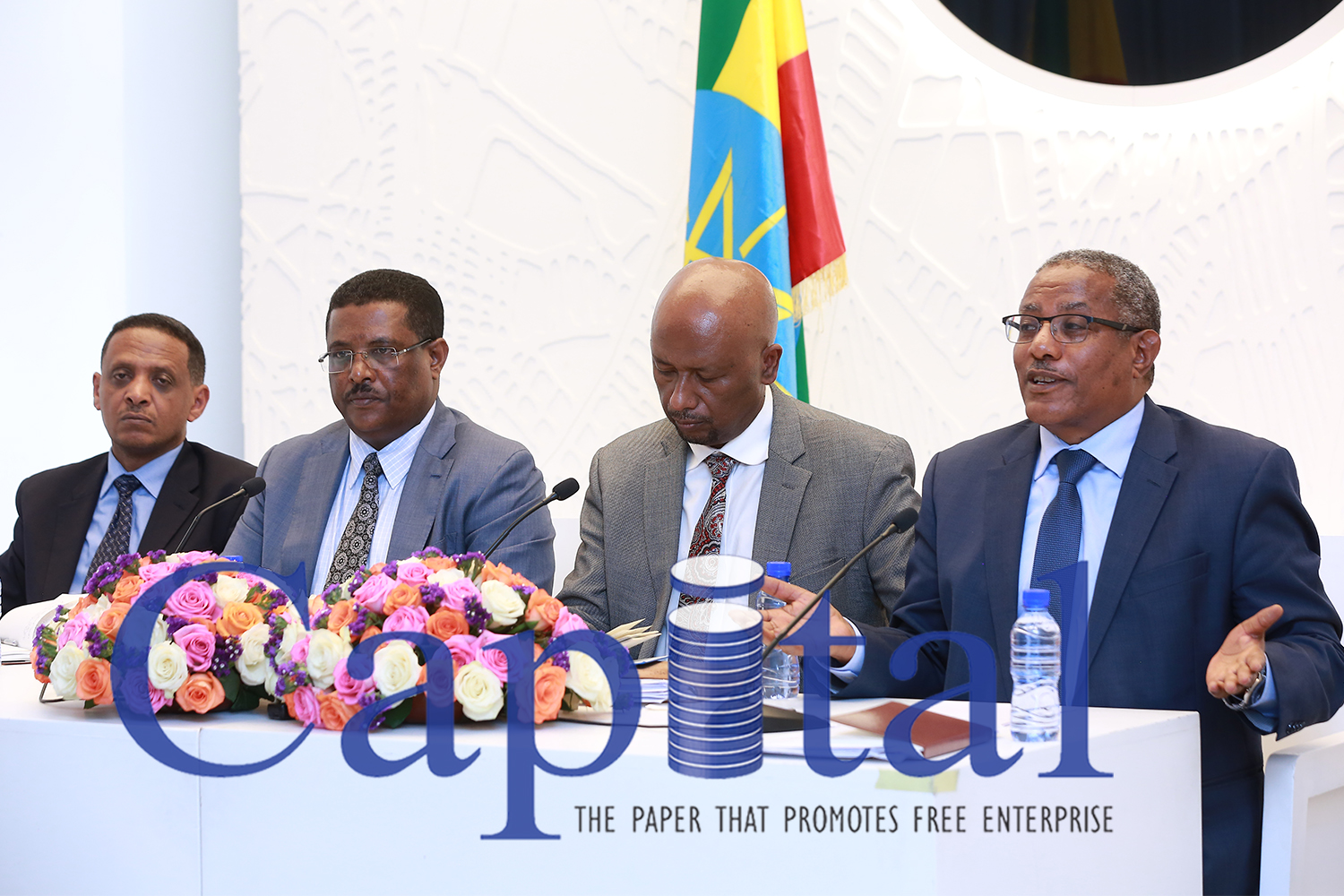
Meanwhile, Seleshi said Ethiopia has not gone out of the talks.
“Ethiopia has called for a prolongation of time in the talks in view of unresolved issues in the talks. There are still numerous points of difference. And Ethiopia is developing a document based on the outcomes of negotiations so far,” Seleshi said.
“Ethiopia has never said it would go out of the U.S.-sponsored talks, and dialogue would continue,” he said, adding there were still sticking points in terms of the filling and operations of the dam with regards to extended drought periods.
“What Ethiopia opposes is the shifting roles of the U.S. as facilitator or mediator. We only agreed to the U.S. and World Bank to be observers, and we want them only stick to that,” he said.
“Ethiopia does not want the process of negotiation to be rushed in spite of the unresolved outstanding issues that are still on the table,” Seleshi said.
Seleshi also reaffirmed that Ethiopia would stick to its plan of starting to fill the dam as of July and testing the turbines sometime next year, and the first filling.
In related development, the government on Wednesday launched another round of fundraising to complete the construction of GERD, which has the capacity to generate 5,275 megawatts of electricity.
In her address at the fund raising launching ceremony, president of Ethiopia, Sahle-Work Zewde indicated that the water of the Nile should not be cause of conflict but should be used as tool of cooperation and development by Nile riparian countries.
When completed the about $5 billion Dam will be the biggest in Africa. So far all the money invested on the Dam, which is about 100 billion birr (close to $3.13 billion), is generated from domestic source.
Aviation Africa 2020 aims high despite coronavirus outbreak

The 5th Aviation Africa Summit & Exhibition 2020, an event organized by Times Aero space in association with Ethiopian Airlines and the Ministry of Transport attracted more than 600 participants from 75 countries and 32 representatives of Africa on the aerospace and defense industry.
The event was a two day summit and exhibition that include Speakers from African airlines leaders, civil aviation authorities, business aviation & support industries. It calls stake holders to cooperate on achieving a sustainable African aviation future and for more open Africa air transport market, and present debate on the current existing challenge Corona virus.
In December 2019, The international air lines associations forecasted 3.8% African RPK growth for 2020, but this has been narrowed to 3.4% following the outbreak and the travel limitation resulting from the corona virus threat.
“Previous disease outbreaks have peaked after one to three months and recovered to pre-outbreak levels in six to seven months,” said Raphael Kuuchi, special envoy to Africa at the IATA.
The outbreak of the virus demonstrates the resilience of the industry, and its members, in times of adversity. even if the air line did not stop its flight to china according to Tewolde GebreMariam, CEO of Ethiopian Airlines, the air line is seeing a 20% decline in demand “The corona virus is a huge challenge” however “we have certain other experiences helps us to minimize the outcome, it is temporary problem we have a capacity to recover”
Also the organizers share the challenge of the virus, “we were expecting more than 800 participants on the event, but because of the virus the number shows decrease” said Mark Brown managing director of the times aerospace.
The forum calls on governments to relax taxes and charges through this crisis and called for air traffic control slot retention rules to be moderated. Addressing the key theme of sustainability a panel of experts working across Africa’s aviation sector underlined the call for multilateral engagement to achieve the goal.
Abderahmane Berth Secretary General African Airlines Association stated that “The implementation of single Africa air transport market SAATM will result in enhanced connectivity and reduced journey times as well as lower airfares more efficient use of airspace.”
“African aviation has many opportunities, but also faces challenges that the sector must face together to ensure a sustainable aviation future,” said Tewolde. “Our main challenges include the attitude to aviation by African governments. We need support from governments, taxes need to be reduced and infrastructure needs to improve.”
Lack of human resources, the poor level of connectivity, low traffic demand and restrictive regulations, High fares and costs Heterogeneous levels of aviation safety and security Infrastructure capacity and operational limitations Limited access to finance are some ongoing challenges to the sector in the continent. Currently African aviations only command 20% of the global market share.
Different international organizations including Boeing and Airbus participated in the event and next year the 2021 African aviation will be held in Kigali, Rwanda.
A month ago African aviation host the 29th annual African aviation MRO Africa and the 8th African aviation training conference and exhibition in Addis Ababa, which gathered more than 40 African airlines.
‘We are witnessing a paradigm shift in Africa’s aviation sector’

National Aviation Services (NAS) is the fastest growing aviation services provider in emerging markets. In the following interview, Group CEO Hassan El-Houry shares his views on the state of the aviation industry in Africa and outlines the company’s plans for growth on the continent.
African Business: How was 2019 for you as a group in Africa, and where are you seeing growth and opportunities across the continent?
Hassan El-Houry: The world-renowned Economist magazine once dubbed Africa the “hopeless continent”. In 2019, in a stark contrast, they published a cover that read “The new scramble for Africa”. National Aviation Services (NAS) was fortunate to have discovered the opportunity in Africa’s aviation sector about 10 years ago and since then we have been heavily investing across the continent. Some markets are more immediate whilst others are investments for medium to long term.
In 2019, we are proud to have broken ground in Liberia, acquired a full ground handling licence in Nigeria, launched operations in Mozambique, and opened new lounges in Morocco and Egypt. Of course, our existing operations in Uganda, Côte d’Ivoire, Tanzania and others continually benefit from investments in technology, training and new equipment.
We are only present in about 13 countries in Africa. There are 54 countries in the continent and so we truly believe that we have a long way to go. While there is room for growth geographically, we are also looking more at airport technologies and training. These are two key sub-sectors of aviation where we see opportunity to partner with governments and service providers to improve the state of the industry.
We’ve just seen the South African government bail out SAA. At the same time Tanzania, Uganda and Ghana are talking about launching national airlines. How is the aviation sector faring, and what can be done to accelerate growth?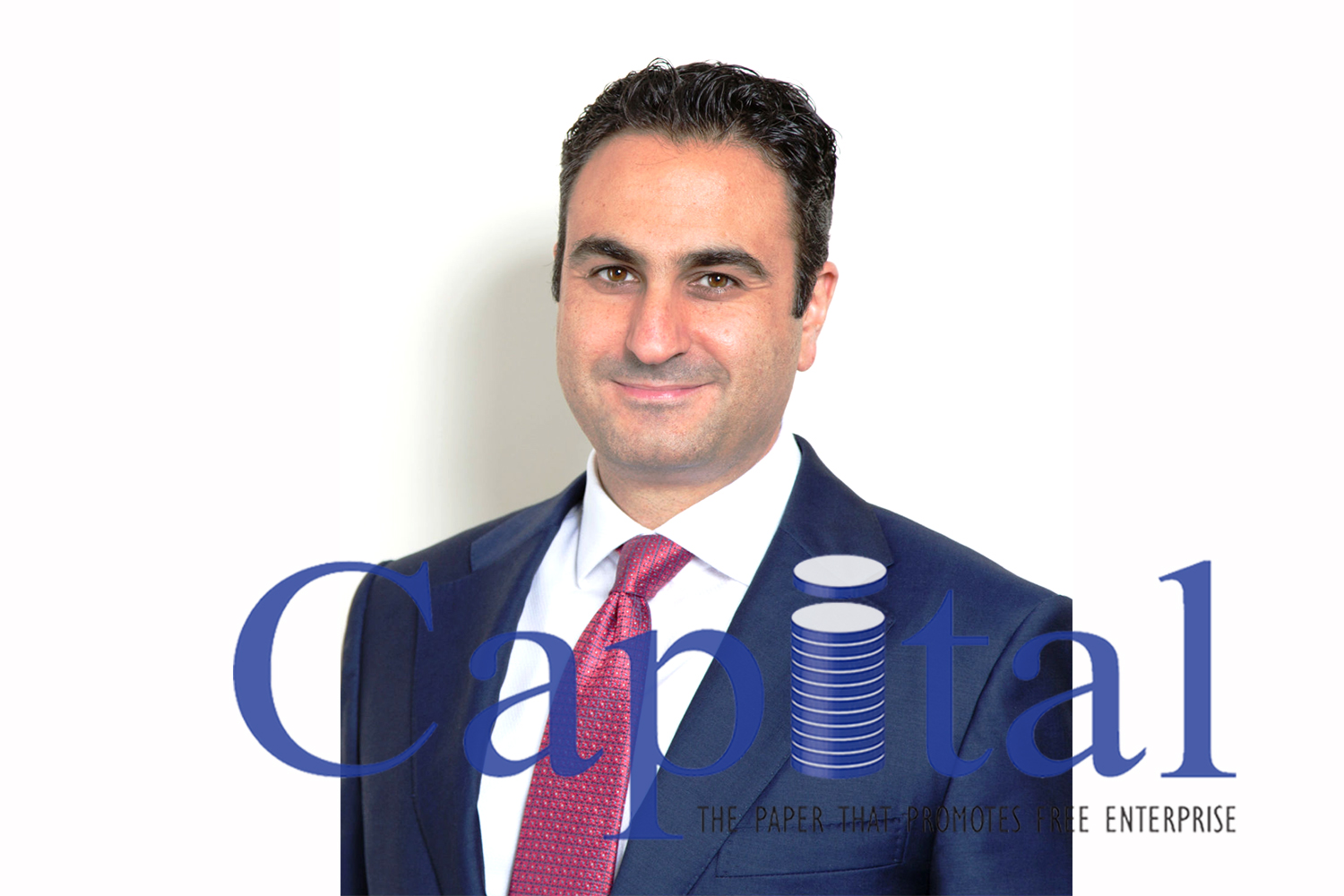
We are witnessing a paradigm shift in Africa’s aviation sector. A decade ago, most governments viewed aviation as a luxury through which to tax the wealthy. Today, decision makers and the populace at large accept that aviation is an engine of economic growth and prosperity throughout the continent as it supports many sectors, including tourism, agriculture, education, healthcare and so on. Aviation in Africa has created 7m jobs and $80bn in economic activity.
The demand for air travel is expected to double in the next two decades and the potential of the aviation sector in Africa is immense. The International Air Transport Association (IATA) projects that the African continent will become one of the fastest growing aviation regions within the next 20 years, with an average annual expansion rate of almost 5%. Broadly speaking, aviation in Africa is doing quite well.
As a result, many governments including Uganda and Tanzania, have launched national carriers. In my view, a national carrier is not a necessary prerequisite for a thriving aviation sector. Ghana, Uganda, and Tanzania (to name a few) had very dynamic aviation sectors before launching a national carrier.
My view is that such an undertaking requires careful review and the government in question should ask itself three questions:
First, what are we trying to achieve? Make sure the goals are clearly defined.
Secondly, has the business plan been prepared by professionals and have we reviewed it thoroughly? Have we done a proper sensitivity analysis and various scenario reviews?
Finally, and perhaps most importantly, it is essential to ensure that launching a national carrier does not detract from the dynamism and growth of the existing market. Will any benefits be given to the national carrier that may discourage other airlines from flying to the country’s airports?
In order to accelerate growth, I would propose three actions: proper governance, deregulation to encourage open skies and reduced taxes.
You’ve called for more deregulation to encourage greater investment. Can you elaborate on this?
When we talk about deregulation, we are specifically referring to laws that do not serve the safety and security of the aviation sector, but rather are archaic and outdated laws that were once viewed as essential but are no longer relevant in today’s environment. Such laws hinder foreign investment. For example, in Malawi it is illegal for a foreign airline or private investor to own more than 49% of the national airline. This prevented Ethiopian from purchasing more than a 49% stake in Malawian airlines.
We believe that greater investment and growth will come if all countries in Africa sign the Single African Air Transport Market (SAATM) agreement, more commonly referred to as the Open Skies treaty for a more single, unified air transport market in Africa. Until today, only 28 have signed on with some continental heavyweights like Senegal and Tanzania missing.
Regulators are responsible to enforce civil aviation policy, while operators are meant to handle the running of airports. Each has an important role to play, and these should not become confused or intertwined. In too many cases, these functions are merged, hampering economic development and negatively impacting quality.
According to the IATA, cross-border deregulation between just 12 African countries would create 5m new passengers, an annual GDP in excess of $1.3bn and 155,000 jobs.
The African Continental Free Trade Agreement (AfCFTA) may be the perfect catalyst to harmonise regulation across Africa. We’ve seen the launch of the Single African Air Transport Market with the ultimate objective of an open skies policy on the continent. Are you confident that discussions are moving quickly enough and how do you see this evolving?
The African Continental Free Trade Agreement (AfCFTA) is a great achievement and a historical step to create a free trade area that covers more than a billion people and a collective GDP of over $2 trillion, including most of Africa’s largest economies. By way of comparison, NAFTA and the EU-Japan free trade agreement each cover a collective GDP of around $22 trillion. According to the UN, AfCFTA could boost intra-African trade by 52.3%.
I believe that there is always room for improvement and expedited discussions. I would also like to applaud the respective governments for taking the courageous step forward and hope that the governments that have reservations are able to take into account the long-term benefits of a single market.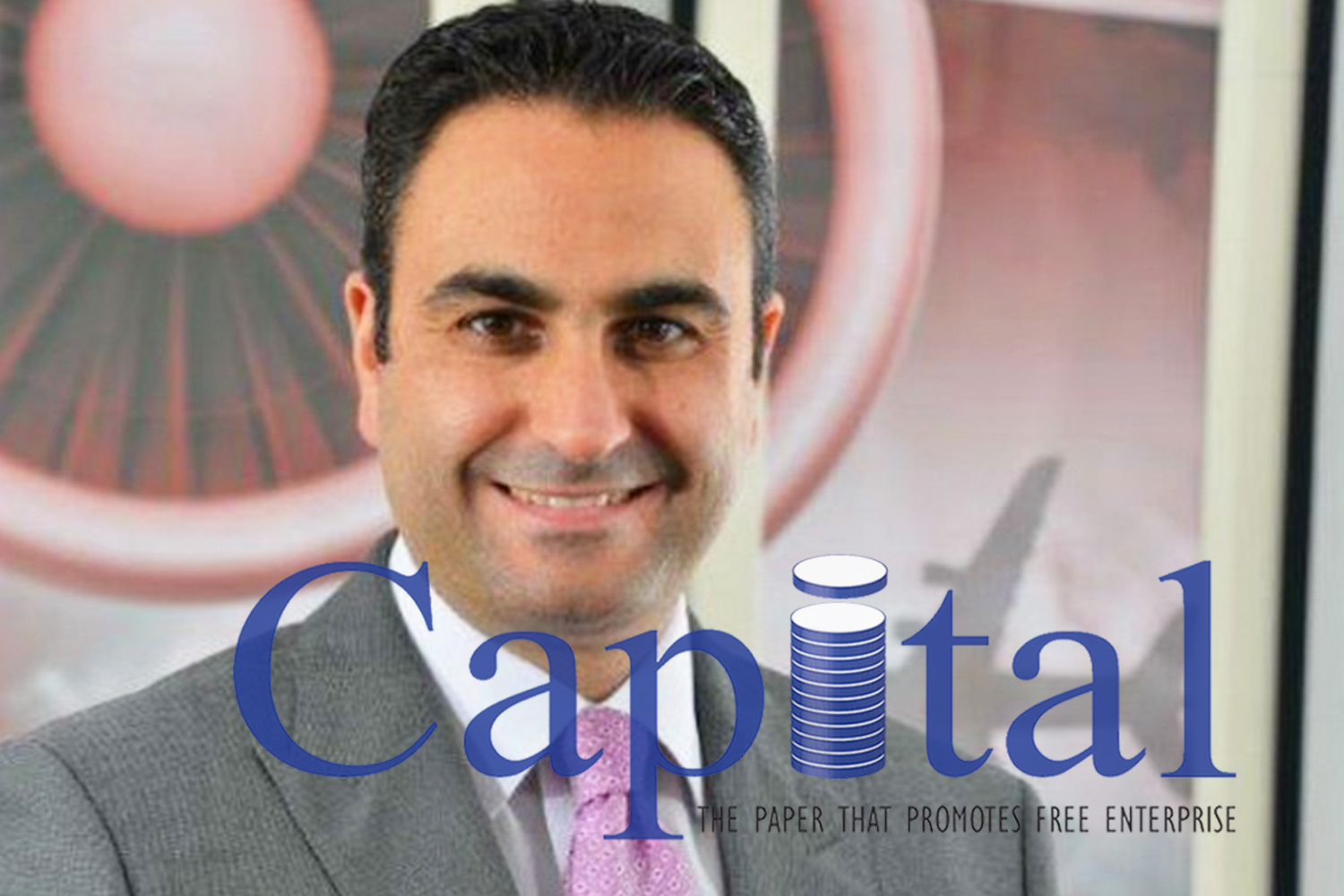
You are working closely with airports to develop their offering – be it lounge management, ground handling services, maintenance… Can you talk us through this strategy?
Our vision is to to become the service provider of choice for the aviation sector in emerging markets. This is not limited to ground handling, but also includes lounges management, cargo services, line maintenance, airport technologies, training and others.
We also believe that even if we start in an airport or a country with a relatively small service offering, once they experience the value that NAS can bring, we can use that as a platform to grow further.
In Rwanda, for example, we started 10 years ago with a Pearl Lounge of 540 square metres. Today, we have three lounges and a partnership with Rwandair that spans Africa and South Asia.
What about capacity building? Are you finding the necessary skills to help develop your business and for airports to become globally competitive?
Capacity building is one of the challenges in the region. Take Côte d’Ivoire for example. When we launched operations less than four years ago, the Abidjan International Airport served less than a million passengers. Today it is more than 2m passengers with direct flights to the US and an A380 to Paris. This could not be possible without world class airport services that are underpinned by a well-trained staff and management team.
How did we do it? More than 99% of our staff in Africa are African, and this includes our blue-collar staff as well as our management teams, spanning important functions like safety, security, quality, management information systems and others. As part of our staff’s career progression, we are also trying to encourage more people to rotate across countries. For example, our cargo head in Abidjan is now heading up our operation in Liberia. There are many such examples.
Through our training centre in Kuwait, we offer IATA certified training courses to both new and existing employees. Train-the-trainer programmes ensure we pass on the required skills to local teams for a more sustainable approach to training. On-the-job training and online courses ensure constant development for both our employees as well as those of partner airlines.
(African Business)
