Friday, October 9, 2026
Home Blog Page 3547

Entoto Park, the capital’s recreational paradise

0

Often called the lung of Addis Ababa, as a result of many long distance runners using the forest for training, Entoto Park was not a particular flocking area for thousands of people a day. This is quite a different story now that the area has benefited from the ‘beautification of Sheger initiative.’
The ‘beautification of Sheger initiative’ was a project launched by the prime minister to clean river steams and under developed areas to tourist attraction spaces. This factor has led to the building and construction of the park that started a little over a year ago with an aim of transforming the Ethiopian tourism sector.
The residents of Addis Ababa had hugely anticipated the inauguration of the park and their longing came to an end on the 30th of September 2020 when PM Abiy officially inaugurated the park in a colorful ceremony in the presence of government officials, members of the diplomatic corps and charismatic citizens.

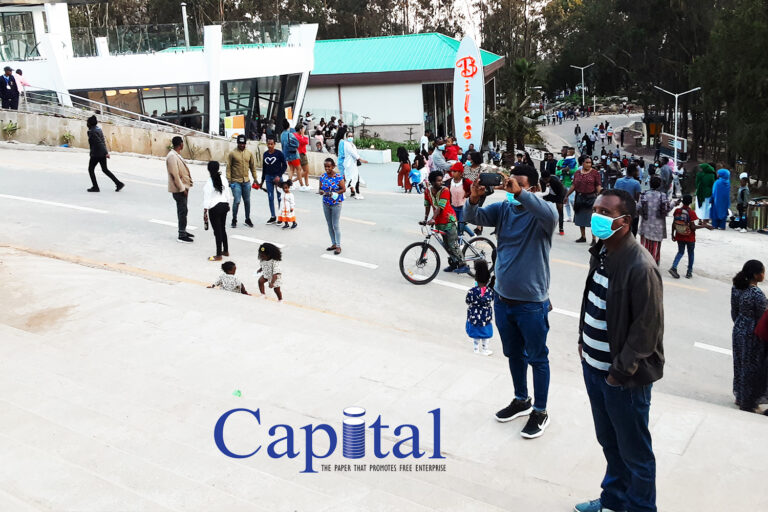
(Photo: Anteneh Aklilu)

Prior to this, Addis Ababa residents often went to nearby cities for reaction and fun memorable times with their family, friends and loved ones. Now the destination has shifted to the park in their home city. This includes, Kidst Alemneh who was at the park on Sunday, with her two older sisters, and their four kids. “There is no place I would rather be than here, especially with my kids. It is unbelievable to see the constructional transformation within one year,” she happily uttered.
Even though there were people who were lamenting over the construction amidst the time of state collapse and ethnic violence, millions of other citizens have been amazed by the rapid implementation of the construction. Some officials during the inauguration expressed that the park was a representation of how fast some projects might be completed on order for them to be delivered to the public for utilization.
The park, which took about one year to complete, is equipped with various facilities, including sport centers, restaurants, horseback riding, artificial lake as well as sports centers. There are about 12 service providers, including Kuriftu resort and spa. Visitors can have a taste of authentic Ethiopian coffee at the park served by major brands in the country such as Kaldis’ and Tomoca. Art galleries and children playing grounds are also available.
Fuad Ahmmed, human resource manager at Kuriftu resort and spa at Entoto park stated that Kuriftu had a café, restaurant, spa and rooms available within the premise.
“A sprawling complex in the Addis Ababa hills complete with a spa, tents, stables and a go kart track, along with restaurants and jogging and cycling trails.
We have all of these world class standard services at affordable price,” says Fuad.
Faud also informed capital that thousands of people come to the park especially on weekends where tens of thousands of people come to the area.
Apart from serving as a tourist attraction, the park has become an income generator for nearby residents including Amanuel balcha and his friends.
For Amanuel, found in his early 20s, explains that the park has given him and friends a new source of income.
“I reside in Shiromeda, which is close to the park. I used to work at a pool house until the pandemic which resulted in the shutting down of the house. For the past five to six weeks the park has given me a chance to rent my bicycle. I rent it 5 birr per minute and if I rent it to at least ten people a day per minute for ten minutes, it will generate 500 birr per day, which is really huge amount of money for me,” he enthusiastically expressed.
Hibret Mengstu is also one of the nearby residents who call Shiromeda, home. She was working in the park for the past 10 months during the construction phase earning about 150 birr per day. Now she is one of the Kuriftu’s employees. “I now receive a monthly wage of 4500 birr,” she stated.
Some 400 women who used to make a living by collecting fire woods in the forest have been trained to work for the restaurants and cafes in Entoto Park. Also Kuriftu has about 230 employees currently and Fuad, the human resource manager at Kuriftu has said that when the park starts its full operation the number will grow to more than 400.
Many hoped that the Entoto natural park will create employment opportunities for thousands of locals, when it eventually operates at full capacity.
Speaking at the inauguration of the new legislative year at the parliamentary house, Prime Minister Abiy said that the park will create 10,000 new jobs.
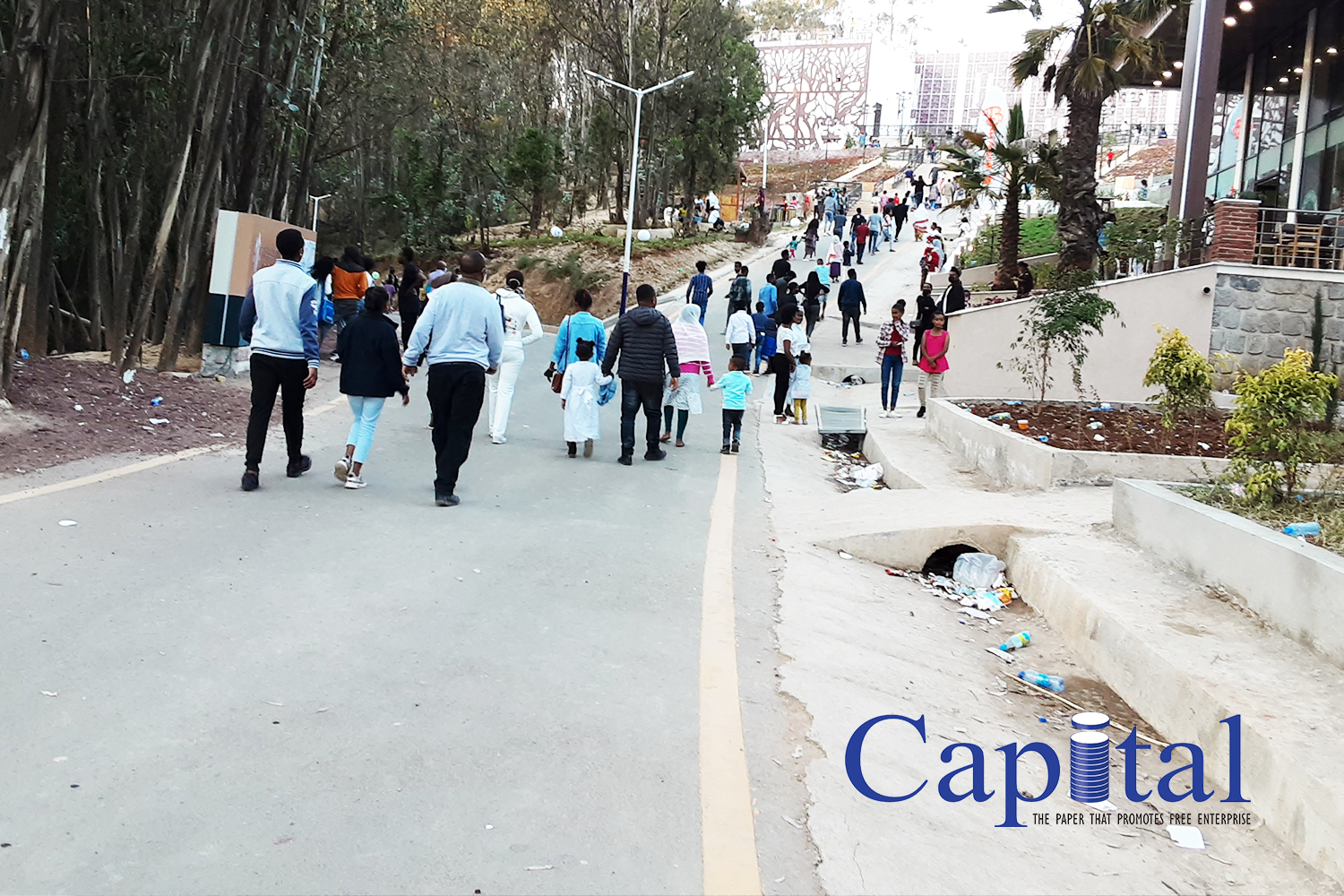
(Photo: Anteneh Aklilu)

“The park will greatly boost both the country’s image and, together with other schemes, its incomes too,” he said, adding that he had personally raised funds for its construction.
Abiy said that the multi-purpose park would contain indoor and outdoor facilities built mostly with local materials, including centers for physical activities, a library, restaurants and coffee shops, fountains, walkways and bicycle and scooter lanes.
He underlined that the park would serve as a major tourist attraction in Addis Ababa. “We can build 30 to 40 such parks in the city of Addis Ababa alone.”
“We possess a naturally endowed country with astounding beautiful places. If we cooperate with each other, we can build spectacular places like this every year which can be used for various purposes including for recreation,” said the PM.
“We’ve shown you don’t need extraordinary efforts to build landmark structures. Ethiopia has naturally endowed areas beyond what many of us have guessed,” he further said.
Earlier this year, the Ethiopian PM unveiled plans to transform several natural wonders across Ethiopia into modern tourist hotspots.
Entoto park inauguration came a little over a month after the inauguration of the Sheger Park which is also part of the riverside development project.
Amid the turbulence, Abiy has paid careful attention to Friendship Square, often visiting the site late at night to take stock of progress, according to aides.
The decision-making around these urban projects has been reminiscent of past administrations and foreign tourists are an obvious target for the projects in Addis Ababa. However, officials say all Ethiopians stand to benefit, while pointing to additional projects planned outside the capital.

Acute food insecurity reaching new highs in 20 countries including Ethiopia

0

Hotspots in four countries on brink of famine

A joint FAO-WFP report raised the alarm on 20 countries including Ethiopia, saying that acute food insecurity levels appear to be reaching new highs globally as a result of the socio-economic fallout of measures imposed to contain the spread of COVID-19.
The report aims to raise an early warning on 20 countries and situations – called hotspots – that, starting from already significant levels of acute food insecurity in early 2020, are facing the risk of a further rapid deterioration over the next months.
Hotspots in four countries – Burkina Faso, Yemen, South Sudan and Nigeria – are on the brink of severe levels of food insecurity and could potentially fall into famine within three to six months as the coronavirus pandemic erodes people’s ability to access food the report warned.
The Early Warning Analysis of Acute Food Insecurity Hotspots report conducted by the Food and Agriculture Organization (FAO) and the World Food Programme (WFP) found that millions of people who were already facing hunger are on the brink of famine as the pandemic plunders employment, disrupts agricultural activities, slashes remittances and sends crude prices spiralling.
“We are at a catastrophic turning point. Once again, we face the risk of famine in four different parts of the world at the same time,” said Margot van der Velden, WFP director of emergencies.
Burkina Faso, Yemen, Nigeria and South Sudan were already facing a dangerous combination of conflict, mass displacement, economic crisis and climate and agricultural calamity. COVID-19 and subsequent restrictions and lockdowns that followed have only exacerbated the pain.
Up to 80 percent of the people experiencing acute food insecurity are farmers, herders, fishers and foresters.
Already in 2019, 135 million people were facing a food crisis or emergency in 55 countries and territories, while an additional 183 million were classified in Stress conditions across 47 countries, with a risk of further deterioration.
How conflicts play out, whether humanitarian agencies have access to populations in need, what the pandemic does to food prices, and how governments deal with the currently burgeoning COVID-19 pandemic will continue to affect food systems.
Rainfall and harvest outcomes are also an important factor.
According to the 2020 Global Report on Food Crises – September 2020 update, the COVID-19 pandemic has exacerbated these pre-existing and on-going drivers, mainly by causing economic activities to decline, which in turn led to income loss and reduced household purchasing power, and a multitude of food-system wide shocks.
In the next three to six months, 20 countries and situations shown on the map are likely to face potential spikes in high acute food insecurity, driven by multiple overlapping drivers, and require urgent attention. Yemen, South Sudan, northeastern Nigeria and Burkina Faso have areas of extreme concern whose populations, partially or completely cut off from humanitarian assistance, have reached a critical hunger situation following years of conflict and other shocks.
In these areas, any further deterioration over the coming months could lead to a risk of famine.

Ministry sets operational time limits in Gas Stations

0

Following the strict monitoring and control over the transfer, distribution and marketing of petroleum products government has outlined a time limit for trading petroleum products.
Due to the current situation in our country, man-made damages may occur, and to that effect the Ministry of Trade and Industry has set the given time limits in order to curb the situation. This will allow the Ministry to control existing and improper inflation and to avoid shortages by creating undue stockpiles.
“We are working harder than ever to prevent any damages,” read the Ministry of Trade and Industry statement.
To closely monitor and control the transfer, distribution and marketing of petroleum products all gas stations in Addis Ababa starting from November 6, 2020 will be operational from 6AM- 8PM and for other regions the operational time limit will be 6AM- 7PM.
In addition, the monthly quota for sugar supply and distribution of basic commodities stood at 426,000 quintal, which on this month’s performance accounts for 87 percent. The monthly oil quota stood at 40,000,000 and its monthly performance is said to account for 30 percent. According to the Ministry it currently has 74 million liters in stock.

Government assures use of the BRP report in its policy development

0

The government assured that it will use the Blue Ribbon Panel (BRP) report that shows what the country should consider in its socio economic development in the coming 30 years.
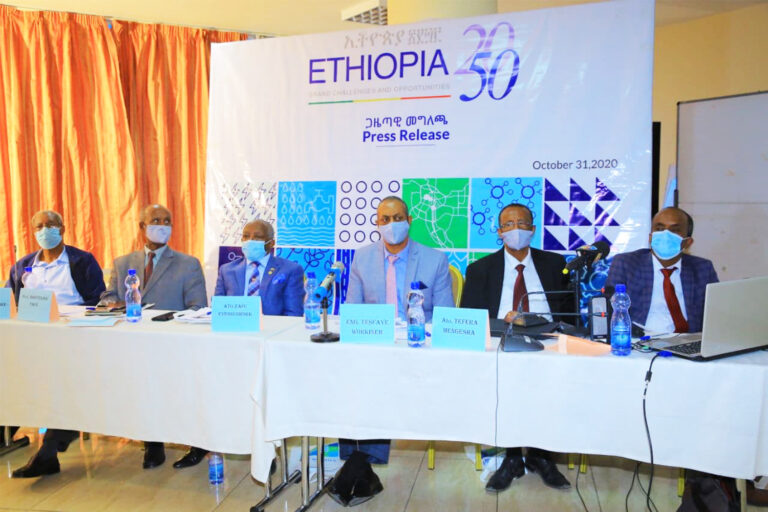
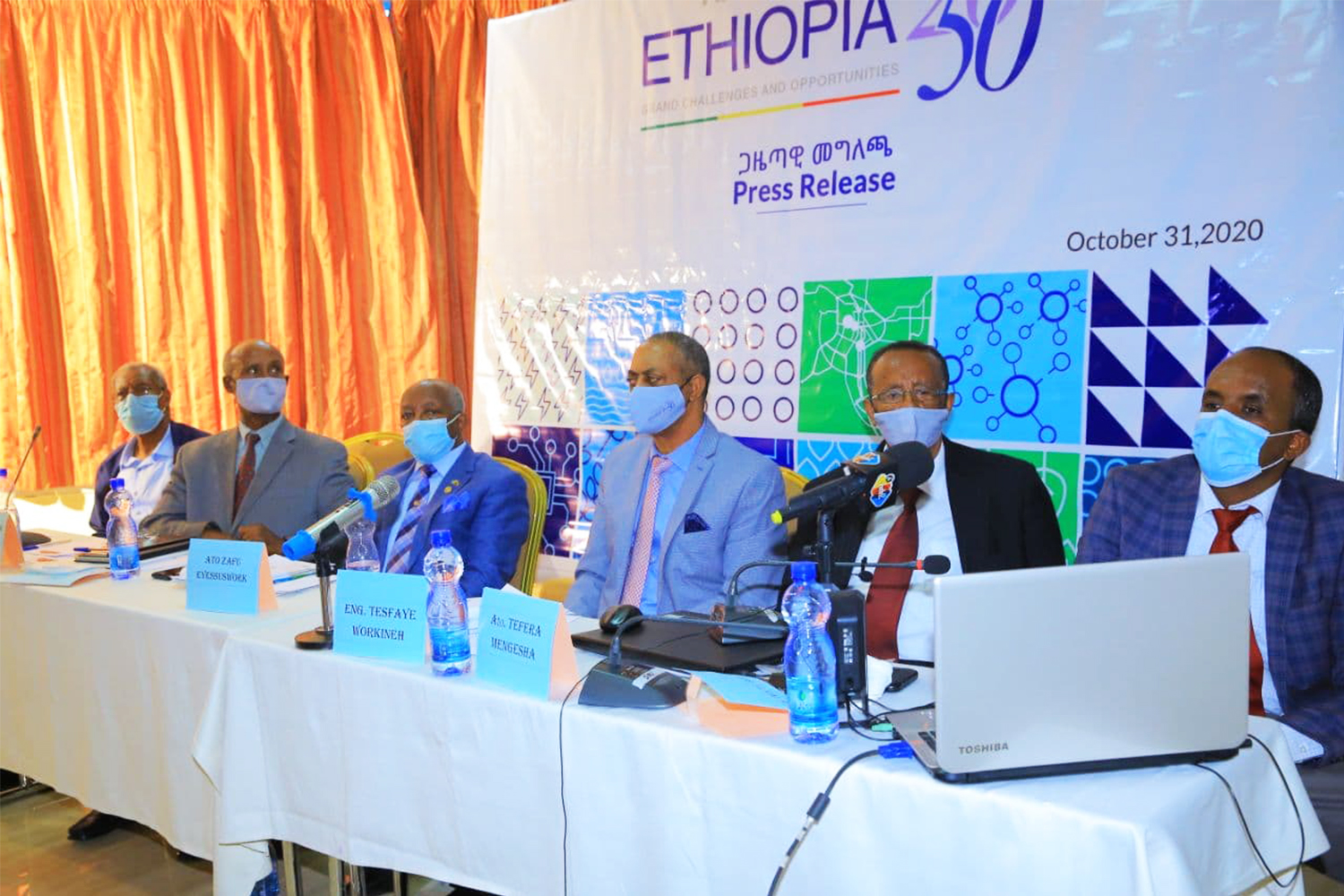
On the official report launching ceremony that was held on Saturday October 31, Eyob Tekalegn, State Minister of Finance appreciated the document that was developed by a group of experts comprised from different fields and from local and international expertise.
He said that the government will consider the document on its policy development to for the country economic and social sectors that will be attained in the coming years.
Debrework Zewdie, distinguished Scholar and Visiting Professor at the City University of New York and Chair of the Blue Ribbon Panel, who also led the report launching and press conference, said that the panel had sent its document initially for the government to consider it on its ten year economic development plan that it recently introduced.
The report is the output of the discussion and presentation that was presented on the two days event held in December last year.
The document includes a report outlining strategies to transform the Ethiopian economy by the year 2050.
On the development of the strategies, an independent panel of Ethiopian and Ethiopian-origin experts that have diverse professional backgrounds and deep expertise across fields as varied as economics, public health, statistics, education, population dynamics, technology, and urban planning had been involved.
The BRP, established in December 2019 during the Ethiopia2050 Grand Challenges and Opportunities Conference held in Addis Ababa, aims to capitalize on opportunities provided by the unprecedented demographic transformation population dynamics to deliver economic prosperity, food security, transportation infrastructure, and gender equity to the Ethiopian people. The Ethiopia2050 International Steering Committee launched the BRP to write a report summarizing the conference findings.
Focusing on the projected exponential population growth over the next 30 years, the 11 Ethiopian and Ethiopian-origin BRP members and 45 other experts in their own fields outline what Ethiopia must do to proactively address 10 major challenges and opportunities associated with the expected historical demographic shift.
With population dynamics as the central issue, the report focuses on actions policymakers can take now with broad support from the public. Highlighting issues such as rapid urbanization, the water-food-health-energy nexus, economic growth, transportation and rural development, institutional and civic development, and gender equality the experts advocate for forward-looking solutions, funding mechanisms and a detailed implementation plan. The report complements the government’s Ten Year Plan with the aim of becoming a middle-income country in the near future and a leader in Africa.
“When we started the Ethiopia2050 Initiative, our main goal was to create a forum for technical experts to contribute to Ethiopia’s development in their own fields. We could not be happier with this report, which addresses critical issues and offers solutions,” Tesfaye Workineh, Co-Chair of the Ethiopia2050 Steering Committee, said.
“It was a privilege to lead a group of like-minded experts whose singular aim is to bring attention to the projected doubling of the population by 2050 and instead capitalize on the opportunity for development by taking action now. While action taken now, as laid out in the report, will ensure Ethiopia’s development to a middle-income country, non-action or delay will create a huge challenge and a lost opportunity,” Debrework said.
“We hope the report will inform and inspire the initiatives of all stakeholders, including the government of Ethiopia, all political parties, the private sector, as well as non-governmental organizations, and development partners. We consider this document to be a living document that will continue to inspire conversations and help generate ideas thus setting the stage for improving the chances of even newer ideas, strategies and recommendations,” he added.