

The human world is currently wallowing in a reality, which is fragile as well as suicidal. The mode of collective human existence that obtains all over the world assumes many things that are not real, i.e. unreal. For a start, the system behaves as if the planetary resources that have made existence tolerable, if not comfortable to the dominant species will still be available for posterity. Obviously, this is a very unrealistic assumption and it is such faulty models that are at the heart of the current global problematic. On the other hand, the parasitic ruling elites of the global order (instead of being creative), it seems, would like to pursue the same old path that only leads to planetary destruction, not excluding human lives itself!
Who is to defend planetary life and life support systems against these well armed, in more ways than one, vicious destroyers? Why do they want to destroy non-replaceable species and the ecosystems that sustain them? These are questions that are not as profound as the followings. What is life all about? What is the very purpose of human society? Enduring and intractable as these queries are, any healthy human being, without trying to be unduly philosophical, still has some inkling about the worth of life. To the majority of humans these inquiries are part of the human spirit and the essence of life, whether one believes in creation or evolution. As a result, the large majority of humanity considers life as sacrosanct, but there are very few individuals who think life is only a means, a mere tool and not an end onto itself! Crass idiots from the ruling elites are increasingly inclined to think that life is something that can potentially be borne of capital and its cohort-the technosphere! Therefore, it is very difficult to debate/discuss spiritual, philosophical, etc., issues with these pathetically demented souls. Therein lies one of the thorny problems of the prevailing world order!
Organized by these callous manipulators and their self-destructive ideology, late modernity is spiraling towards its demise. We admit, life has always been a challenge, since time immemorial. Those concerned with the well being of humanity have always exerted their energy to acquire knowledge and wisdom to help pacify the struggle for survival. Once this was achieved, (at least to a large extent) the parasites/psychopaths moved in to dismantle long established human communities based on shared values that allowed healthy societies to emerge and flourish. The immense achievements that were made possible by the sweats, tears and blood of humane souls have been undermined and hijacked by the selfish breathing beasts of capital! This incursion is more pronounced in the sphere of social existence. Unless the ambition of capital and its wagging tail that goes by the name technosphere is severely constrained, there won’t be much hope about harmonious collective existence. Luckily, some anti-systemic articulators, without the usual mind cluttering biases of the establishment, are coming to the fore. Brian Davey is one of those anti-systemic sensitive souls with formidable analytical prowess who has been diligently deconstructing; we might say rather successfully, the inner workings of the existing predatorily inclined global order. See his articles on page 36 & 37. We have tried to serialize a portion of his revealing book ‘Credo: Economic Beliefs in a World in Crisis’ in the recent past.
In our modern world system, systemic thinking is discouraged in favor of ‘specialist’s tinkering’. After all, when someone is initiated to think holistically/universally, one is bound to put things together in a realistic manner. The proverbial phrase ‘connecting the dots’, is used to reveal what is made intentionally obscure and fragmented. Since clarity reveals the 500 lbs. gorilla in the room, with all its glories or shall we say with all its goriest, the unreal narratives that used to dominate discourse eventually give way to the hidden gem- reality! Consequently, reflections and critical introspections about general human predicament end up becoming daily routines of the initiated. Of course, the institutions of the status quo (universities, etc.,) are there to produce capable specialists in the various vocations, so that these individuals will become, once again, cogs in the wheel, so to speak. By and large, these individual are absolute morons when it comes to most things outside of their narrow expertise/preoccupation. Reality is; our planet, water, air, viruses, iron, mountains, women, monkeys, trees, airplanes, tables, bombs, races, beers,…. We hope you got the point. Reality is the amalgam of everything, with no exception! It is not as circumscribed by capital and its human caricatures! Hence, all life and non-life forms need to be respected for what they are, period, nothing more nothing less! The hubris of psychopathic elements is to encourage fragmentation and disassociation within the human family and the reason is quite clear. Once a person’s psyche is closed to reasoning and enlightenment, on the account of systemic disassociation/alienation, he/she becomes a mere pawn in the hands of the powerful!
Morally bankrupt system that is only interested in the now and now, continues to promote a culture of gangsterism rather than a creed of communal renewal, i.e., community based problem solving. One of the nightmare scenarios for the world system rulers is when individuals come together to articulate problems with a view to finding potential solutions within the framework of essential humanity, i.e. addressing everything under the sky; racism, inequality, sustainability, etc. It is not for idle reason ‘surveillance capitalism’ is now all the rage in the circle of global dominant interests. Note; it is not ‘physical distancing’ but social distancing, with all its insinuations that is asked of the global sheeple (human mass) on the account of the declared pandemic. Take notice; tech is now put on a pedestal higher than the almighty!
“They will also tell you how far along we are along the depletion curve; the optimists among them will even claim that there is nothing to worry about, because we have two or three decades of production left at the current level. It is to be expected that we will run out of fossil fuels before we run out of optimists, who are, along with fools and madmen, a renewable resource.” Dmitry Orlov. Good Day!
UNREAL TO REAL

World Food Day

Nega Wubeneh joined Alliance for a Green Revolution (AGRA) in 2009 as a policy Program Officer responsible for Market and Regional Trade Policies. He has 25 years of professional experience in Program Management, Monitoring and Evaluation, Quantitative Policy Analysis, and Policy Advocacy. Nega is currently Country Manager for Ethiopia of AGRA.
Nega served as a Senior Director and as member of the Senior Management team and previously Director of Input and Output Markets Program at the Ethiopian Agricultural Transformation Agency (ATA) on a secondment from AGRA. He managed eight systems programs (Markets, Cooperatives, Seeds, Soil Fertility, Household Irrigation, Mechanization, Research and Extension and Rural Finance) responsible for developing solutions for systemic problems in the agricultural sector and managed more than two-third of the Agricultural Transformation Agenda of the ATA. He led the design and implementation of a number of innovative solutions to tackle systemic bottlenecks in the agricultural system. A farm input credit program Nega has developed in Ethiopia has enabled over 5 million farmers have access to input credit. In 2018/19 farmers were able to buy $340 million worth of agricultural inputs through the input voucher system.
Prior to joining AGRA he was Agricultural Research Officer at the CGIAR Science Council Secretariat at United Nations Food and Agriculture Organization (FAO), working on ex-post impact assessment and monitoring and evaluation of international agricultural research. He also served as a Senior Research Assistant in the Livestock Policy Analysis Program of the International Livestock Research Institute (ILRI) and as Junior and Senior Statistician in the Ministry Industry and Addis Ababa Region Industry and Trade Bureau. Nega talked to Capital about the alloiances works on food security. Excerpts;
Capital: You said the COVID-19 pandemic has exacerbated underlying challenges in food systems globally and especially in sub-Saharan Africa. Can you elaborate this?
Nega Wubeneh: Even before the COVID 19 pandemic hundreds of millions of people in Sub-Saharan Africa were facing food insecurity. However the COVID pandemic has exacerbated the situation. The restrictions on movements to contain the spread of the pandemic and the disruption of demand due to the closure of some business such as hotels and restaurants and loss of export demand, some farmers were not able to sell their produce. The shortage of transport vehicles and laborers for loading and unloading meant that fertilizer, seed and other key agricultural inputs could not be distributed in time. The shortage of transport vehicles and labor also led to hikes in the cost of transport and logistics, which were passed on to consumer in terms of higher prices. The closure of businesses, particularly in the service sector, forced many wage workers to lose their source of livelihood and hence access to food. In Ethiopia, businesses in the flower and poultry industry had been forced to dump their produce and furlough their workers because of lack of demand.
In the early stages of the pandemic panic buying of commodities has also contributed to prices hikes in some urban centres in the continent. Some countries have also moved to restrict export of key agricultural commodities to protect thie own consumers from price hikes impacting importing countries. All these series of issues have exposed the underlying weakness of the agricultural and food system and exacerbated the food insecurity problem.
Capital: Farmers in Africa were facing surges of droughts and floods and a stunning attack of desert locusts-all linked to climate change, How are you planning to help these farmers?
Nega: AGRA places economic and environmental sustainability at the heart of its interventions. AGRA realizes that agricultural transformation, as narrowly defined by increased production and productivity, should not be achieved at the expense of destroying the habitat. Hence all AGRA interventions are internally evaluated for their potential social and environmental impacts. AGRA has been promoting environmentally sustainable agricultural practices such as integrated soil fertility management practices and technologies that enable farmers to mitigate the impacts of climate change such as moisture stress by promoting locally bred and drought tolerant seed varieties. It has also been supporting smallholder farmers to be integrated into profitable value chains so that they increase their profitability and build assets improving their chances of withstanding future shocks. In Ethiopia AGRA, in partnership with the Ministry of Agriculture and IFAD has supported the development of a conservation agriculture manual that is going to mainstreamed in the extension training curriculum.
AGRA, in its strategy new 2030 that is being developed has put strategies that enable the agricultural system to absorb shocks such as climate change, diseases, pests and adapt and build transformative capacity.
Capital: A recent report by Oxfam listed Ethiopia as among the ten most extreme hunger hotspots, what are the outcomes if this warning is neglected?
Nega: Ethiopia is one of the few African countries that have made significant progress in the process of agricultural transformation. The Government of Ethiopia has prioritized the sector and recognizes that agriculture is the major driver of economic growth and industrialization. Ethiopia is one of a handful of countries that has consistently met or exceeded the CAADP target for budget allocation to the sector. It has also trained and deployed over 65,000 public extension workers to help farmers adopt productivity enhancing inputs and improved agronomic practices. As a result, smallholder productivity has shown remarkable improvement. Farmers are able to withstand shocks much better than twenty years ago.
Yet, despite the impressive progress that has been made and the achievement of food security at the national level, there are still communities, particularly in the lowland pastoralist areas , that face persistent food insecurity. Their plight has increasingly worsened with climate change as more frequent droughts have affected the availability of water and grazing land. When disasters such as the flooding, locust invasion happen they exacerbate the already precarious food security situation for these vulnerable communities.
The government of Ethiopia, in addition to the programs designed to grow the agriculture sector, has a safety net program that is aimed at protecting the vulnerable segments of the population including communities that live in marginal agricultural areas. Learning from the experience of the 1980s recurrent droughts and famines, Ethiopia has built a robust early warning and disaster and emergency management system including an emergency food reserve to deliver aid to communities before they are displaced from their villages. So, there are already mechanisms in place to act when and if this kind of emergency arises. Indeed, it will be catastrophic if the government does not respond but experience shows that it is very unlikely that the warning remains unheeded and the authorities will respond in time to address the challenges.
Capital: What is Ethiopia’s food security outlook in the context of the COVID-19 pandemic?
Nega: Several studies have looked at how COVID 19 has impacted the Ethiopian food system. The health-related impacts of the disease on the rural community and ensuing disruption of farming activities has been minimal. COVID 19 has impacted the sector largely through disruption of the transport and logistics system that delivers inputs and transports the produce to the market. The shortage of transport vehicles and labor has to some extent affected the timely delivery agricultural inputs and produce and increased the transport costs. In addition, demand side disruptions were observed for some products that are used by restaurants, hotels and the export destinations. There were reported incidents of price hikes triggered by panic buying at the start of the pandemic. Other than these, the agricultural and food systems have been functioning relatively well and markets had remained open. The export performance of the country for the last fiscal year shows that the exports, although below expected, have rebounded. Moreover, the rainfall in 2019 and 2020 cropping season has been relatively good.
The government of Ethiopia is also implementing a large-scale wheat and rice production program to reduce the country’s dependence on imports and to blunt the potential impact of COVID 19. One of the curious things that happens when global food crisis of this nature occurs is that countries start to look inward and impose restrictions on exports of key agricultural products. This puts the global food system and the importing countries one such restriction away from food insecurity.
The agriculture the sector also faces some headwinds from the unprecedented level of locust invasion and flooding in some parts of the country. We are also observing some untimely rainfall which could adversely affect the yields in the current harvest season. So, the overall food security situation this year will be determined largely by how the harvests and ongoing flooding and locust invasion play out during the reminder of the 2020 harvest season.
Until now the impact of COVID has been largely an urban phenomenon. We know that the average age of farmers in Ethiopia is probably in the sixties. Considering the increased vulnerability of older people for COVID 19 infections and the weakness of the healthcare system in the rural areas, the government should make a concerted effort to prevent the spread of COVID 19 into rural areas. Otherwise this may adversely impact the agricultural production by disrupting the labor availability.
Capital: What would it take to build resilience and security in food systems in a post-COVID Ethiopia?
Nega: COVID 19 is not going to be the last shock to the food system. There will be other forms of shocks such as droughts, floods, pests, diseases, social unrest and probably some lingering effects of COVID 19. Responses to rebuild and improve resilience in the food system would require, first of all, a clear understanding of how the pandemic has impacted the food system and developing a recovery plan based on evidence. Ethiopia should continue to pursue an inclusive agricultural transformation that not only aims at increasing productivity and production, but do so by the promoting environmentally sustainable technologies and management practices. The sector must create livelihood for women, the youth and smallholder farmers in the agricultural value chains and off-farm employment opportunities. It has also to strive to produce nutritious food to protect the wellbeing of the population. Post COVID, it also would require rethinking the agricultural inputs and outputs markets and logistics system to minimize future disruptions.
Capital: Armed with high-yield commercial seeds, fertilizers and pesticides, AGRA eventually set the goal to double productivity and incomes by 2020 for 30 million small-scale farming households while reducing food insecurity by half in 20 countries. But according to a new report from a broad-based civil society alliance, based partly on new background paper, AGRA is “failing on its own terms.” What is your comment?
Nega: AGRA set as its five year target (ending 2021) to directly reach 9 million farmers, and indirectly reach another 21 million. Agricultural productivity and production in countries where AGRA operates, while not entirely attributable to AGRA’s efforts, have shown significant improvements. Countries such as Tanzania, Mozambique, Ghana and Mali where AGRA has started the programs much earlier have made remarkable progress in transforming the agriculture sector. AGRA has also been rebuilding the largely defunct extension system; putting in place sustainable marketing and distribution systems for technologies and inputs; and linking smallholder farmers to sustainable markets. In common with African government targets, AGRA wishes to see a doubling of yields and incomes, and is concerned that progress on this lags across the continent. All agricultural development partners are urged to consider how advances can be achieved as quickly and sustainably as possible.
In Ethiopia, with only two seasons of interventions AGRA’s programs has so far reached over a million farmers promoting new crop varieties, improved cop management practices, promoting post-harvest technologies, improving the input credit delivery system and linking farmers to private sector agro-processors.
The article mentioned unfortunately does not have accurate evidence on AGRA’s activities and the results so far achieved. Yes, there is indeed a lot poverty, food insecurity and malnutrition in the continent. Unfortunately, AGRA does not have enough resources to be in every part of the continent, and should be seen as a catalyst for change and development in support of national governments and other partners.
AGRA has been using its convening power to expand the impact in countries where it has no presence by advocating at the continental level for governments to realize the role of the agricultural sector in tackling poverty and food security and engendering economic growth; to allocate the required resources to the sector out of their budgets; and put in place appropriate policies, strategies, flagship programs and create enabling environment for smallholder farmers and SMEs.
Telecom’s privatization, liberalization draws a step closer
The telecom liberalization and privatization process has progressed to another step. The bid for including two additional operators is expected to be floated in the coming few weeks.
The process to open up some monopolies and partial privatization that had been laid by the former ruling coalition EPRDF, that is, from mid-2018, has now been progressing with regards to the telecom sector.
Before arriving at this decision this week, there have been extensive discussions conducted both on direct meetings and virtual feedback gathering inclusive of emailed documents.
Early September, in a consultation held at the Office of the Prime Minister (OPM) chaired by Prime Minister Abiy Ahmed inclusive of different stakeholders like the privatization committee, which comprised individuals from different direction like the business community, different professions and political parties, and macroeconomic team; evaluated the process and decided to conduct three consultations that were organized by the Ministry of Finance, Ethiopian Communication Authority (ECA), and Ethio Telecom as the last public dialogue to transfer to the next step. The outcome of the three and last consultation have been presented in the meeting at OPM on Monday October 26 and the issue was discussed.
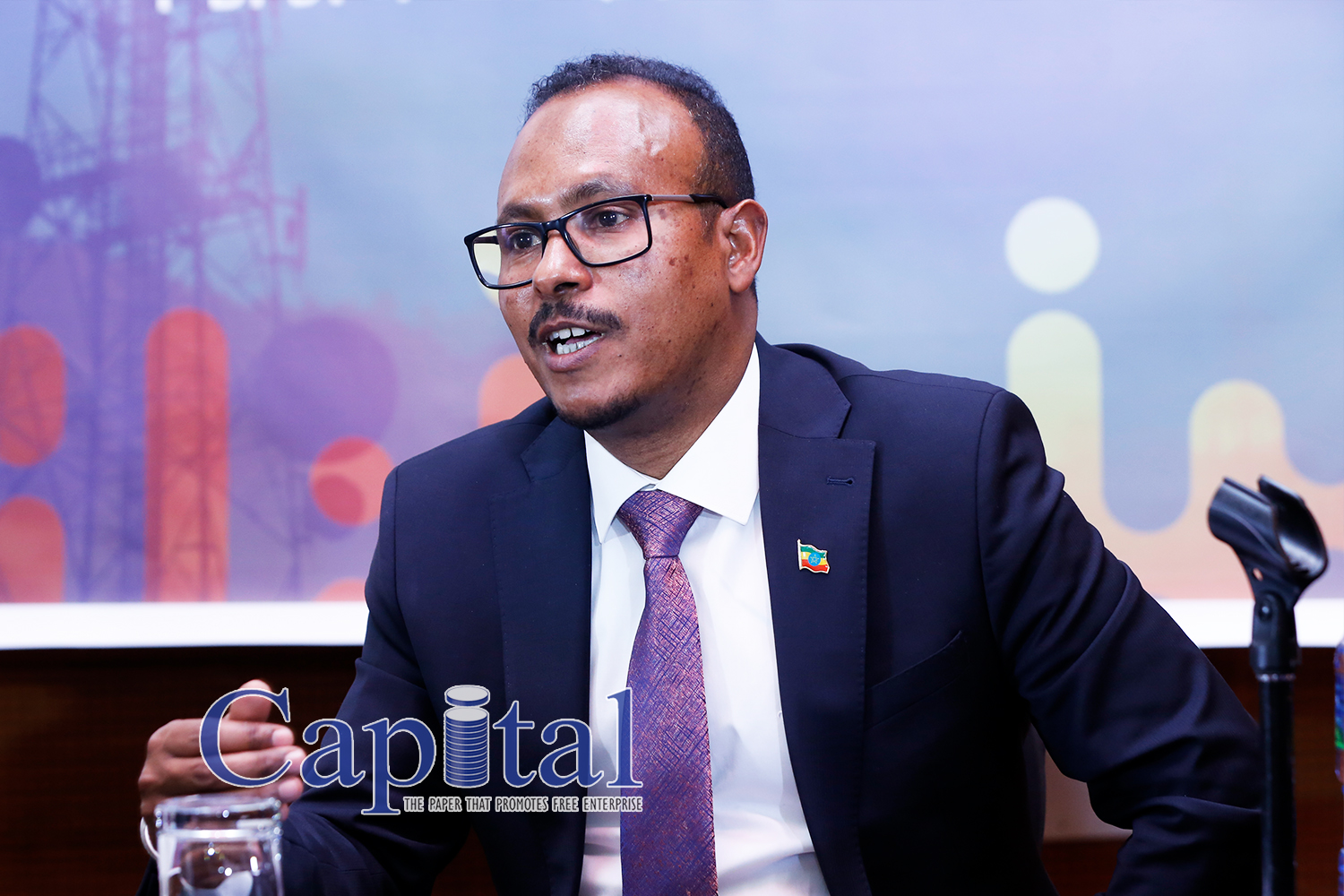
PM Abiy, who led the discussion, emphasized that the government is not deciding to open up the telecom sector just for the sake of others to say that we are opening the economy, “We are conducting the process for the benefit of our national interest, not for others,” he elaborated.
The process will entail two different schemes; this includes, partly selling the share of Ethio Telecom on the direction of privatization and selecting to more operators, which is the liberalization process.
Balcha Reba, head of ECA, said that after the final review on bid document and process with the relevant body, the document it will be floated in the coming few weeks to get two more operators.
The process of selecting two operators is expected to be finalized until mid 2021. The bid for adding shareholders at Ethio Telecom is also expected to be on air in the near future. The government has disclosed to sale out 40 percent of state monopoly share to foreign investors and five percent to Ethiopians.
“We expected that the two processes are going parallel,” Balch told journalists after the OPM discussion on Monday. The final decision is now up to the higher body of the government.
Recently, ECA floated an expression of interest and 12 companies from different continents and businesses besides involving the telecom sector have shown their interest in being the two new operators.
Early Monday, at the press conference held at Hilton, Balcha highlighted that some individuals described COVID 19 as a threat. He expressed that they argued that the time would not be good for selling new spectrums and may even affect the revenue that the country is supposed to get in the process.
“Some experts compared the economic slowdown by the pandemic with that of the financial crisis in 2007, with regards to the adverse effects on the financial sector. But the two are different. The 2007 crisis was the result of the effect on finance sector that significantly damaged the economy. The COVID 19 effect is not correlated with the finance sector, but the finance sector is in good hands and keen to provide finance for investments that has slowed down because of coronavirus. Therefore for investors it is not so much a worrying time since the process will not affect the process of adding more operators. Furthermore, with good and competitive rates the country will receive great benefit,” he clarified.
According to Balcha, the expression of interest targeted to prove the interest of new investors and evaluate the concerns of those who were afraid that COVID 19 may affect the process.
He added that the COVID 19 challenge clearly shows the need of the telecom sector which further demonstrates how lucrative the business is for the sector.
“The telecom service was a good instrument in the lockdown period,” experts said.
To realize the opening up of the telecom sector, ECA has issued and drafted different directives and regulations.
So far it has issued 18 directives.
The companies that have shown interest are: Global Partnership for Ethiopia (a consortium of telecom operators made of Vodafone, Vodacom, and Safaricom), Snail Mobile, Liquid Telecom, Telekom SA, etisalat, Liquid Telecom, Orange, Axian, Saudi Telecom Company and MTN from telecom operators.
Non telecom operators that expressed their interest are Kandu Global Telecommunications, Electromecha International Projects and Group of Associate Djiboutian Investors, who have not fulfilled the demanded requirements on the expression of interest requests.
Abiy has stressed that individuals who are involved on the process of privatization and liberalization of the telecom sector should work amicably and keep themselves from misdemeanors.
He warned that if there are any illegal acts it may take time to trace but eventually the acts will be identified.
New operators are expected to have coverage of 25 percent in the first year of their operation in the country that will expand to 40 percent in the second year, 55 percent in the third year, 70 percent of in four years, 80 percent in five years, 90 percent in seven and 95 percent in 10 years time. According to the plan companies would cover 97 percent of the country on their service by their 15th year operation period and the operation license period will be 15 years.
“Any country would not have full coverage on the telecom sector but at least close to hundred percent shall be tried to be filled,” the ECA head told Capital.
Regarding to universal access service, the authority targeted to achieve the same in five-years-time.
Balcha said that the Request for Proposal (RFP) will be floated until mid this month. “The process shall be finalized until April next year,” he said.
A cyber force introduced to counter security threats

The Defense Force of Ethiopia has established a new force to counter security threats on virtual systems.
The Defense Force that has different divisions has now established a cyber-force to keep the country from virtual attacks.
At the meeting held on Monday October 26 at the Office of the Prime Minister to evaluate the liberalization and privatization process of the telecom sector, Prime Minister Abiy Ahmed said that the Defense Force has established a new wing to counter the security threats that the country may face.
On the discussion held on the day, one of the participants raised his concern that the opening up of the telecom sector may affect the country’s security and make it vulnerable for others.
Similar concerns have been raised in different occasions on the consultations that were held in the past several months with stakeholders on the opening up of the sector for two more operators and selling shares for interested buyers at the telecom monopoly, Ethio Telecom, on the privatization scheme.
For the concern, PM Abiy said that there would not be a system to keep the country from threat because the liberalization has not happened. “I appreciated the concern with regards to national security issue. Even if we kept the sector closed; do we have a capacity to maintain ourselves from attack? As you know we have imported all equipment from aboard that we further don’t know what kind of equipment are installed therein, and how many of us know apparatus and applications installed on our phone?” he rhetorically asked.
He said that the major issue should be the strengthening of the national security and empowerment of the controlling bodies.
“We have established different organizations to countering the threat regarding the cyber system. One of that is the Information Network Security Agency (INSA),” he added.
“The defense force have had ground force, air force and recently reformed marine force. Now like the marine force it has established the cyber force,” he explained.
Like other forces the cyber force is working to keep the country from virtual attack. “Ethiopia is not in a place of producing and supplying end to end technologies that might be software or hardware, but the priority is establishing end to end encryption capacity based on sector behavior and sensitivity,” Abiy, who is one of the top figures to establish INSA stated.
“Regarding security, there is also the law of interception. Many countries do not have their own telecom operators but they have a managed legal framework in this regard,” he argued as he tried to tackle the issue of security vulnerability if the sector opened for others.
He said that the circumstance will have a chance to strengthen the capacity, “it will give us a chance to see the gap on the issue and strengthen our system.”
“Many countries national security are strengthening the process of attack and counterattack schemes. There is no one who is fully threat free,” he added.
After the political reform, which occurred early 2018, Ethiopia has reformed the marine force to keep the country’s security at the international water surface. The cyber force will be the new system at the Defense Force. About 13 years ago the government had formed INSA to secure the country from cyber attack. The force formed under Defense Force is the other power to keep the country from the modern world military section.
On the process of opening up the telecom sector the government has targeted to sell 40 percent of the share of Ethio Telecom and to add two more operators.
The process is expected to be finalized before the end of the current budget year.
