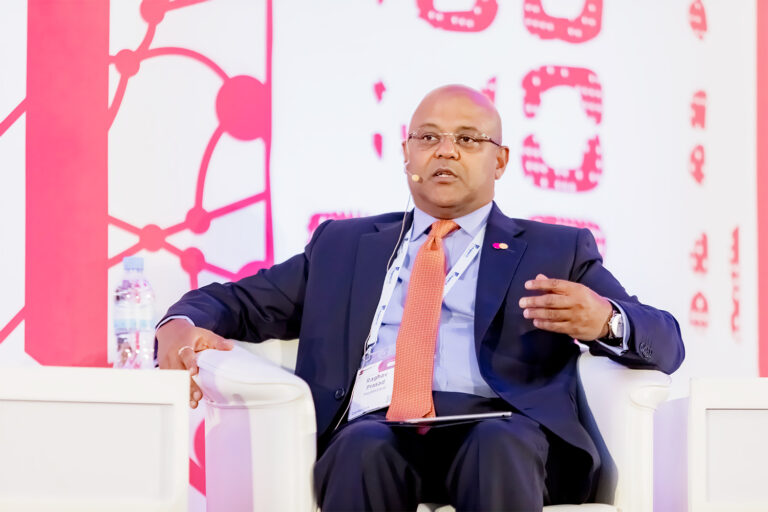
A Fintech and business turnaround veteran, as Mastercard’s Division President for Sub-Saharan Africa, Raghav Prasad is responsible for overseeing all of the company’s activities across thirty two countries, driving business strategy, sales & business development, product management and marketing and public policy. He is responsible for driving Mastercard’s strategy of inclusive growth, deploying innovative payment solutions and partnering with issuers, merchants, acquirers, fintechs, governments and market regulators. Prior to this he undertook the roles of President Payment Gateway Services and General Manager (Gulf Countries).
Recently his company signed MoU with Ministry of Innovation and Technology. He talked to Capital about the agreement and their future plan in Ethiopia. Excerpts;
Capital: Why is Ethiopia a priority for you as Mastercard and how committed are you to this market?
Raghav Prasad: Ethiopia, with her vibrant business and technology sector and her focus on driving inclusive economic growth for her hundred million population, is a very exciting market for Mastercard. We have committed to leveraging our technology platforms, our experience of working with over seventy governments, and our expertise in digitisation and financial inclusion in supporting markets like Ethiopia to reach their full potential as a regional and global leader. Ethiopia today sits at the crest of digital evolution, and we believe that the greatest opportunity in Ethiopia today lies in its ability to harness these advances for inclusive growth.
Mastercard is uniquely positioned to help advance inclusive growth in Ethiopia. As the “digital economy” increasingly becomes “the economy”, it is both our business strategy and our social responsibility to ensure that people and organizations have access to the networks, tools, and solutions they need to prosper. Of course, everyone has a role to play, from the smallest businesses to the biggest corporations, from governments to NGOs and as a trusted network, we partner with all of them. Our focus is on developing, incubating and scaling simple and locally relevant digital solutions that deliver strong payment platforms and ecosystems, improve financial literacy and extend acceptance infrastructure to even the smallest businesses in the smallest corner of the country.
Capital: Tell us a little about the partnership agreement you recently signed with the Ministry of Innovation and Technology (MINT)?
Raghav Prasad: The Ethiopian Government’s ‘Digital Ethiopia 2025’ strategy and Mastercard’s vision of bringing 1 billion people across the world into the digital economy by 2025 have a very strong consonance. We are therefore delighted to have signed an MOU with the Ministry of Innovation & Technology to support the government’s charge towards a digital economy that benefits everyone in Ethiopia. Our partnership with MINT will drive the development and implementation of strategic solutions and policies that will help drive the right outcomes as per the ‘Digital Ethiopia 2025’ strategy.
Under the MOU agreement, Mastercard will bring to bear our entire armory of capabilities – from our global technology platforms to our world-leading consulting and delivery capabilities in supporting Ethiopia to achieve its digital transformation objectives. These activities will directly support efforts towards driving financial inclusion, creating safe and accessible digitized payment solutions for small businesses, and implementing digital identity projects.
We owe this partnership largely to the meeting between President Sahle-Work Zewde and our Executive Vice Chairman Anne Cairns last year. A little over a year later and we are very excited about the progress we have made in our engagements with the Government of Ethiopia and believe that this is just the beginning as we will be working very closely with MINT to extend this partnership across several sectors of the economy.
Capital: You speak quite a bit about supporting the MINT in achieving the Digital Ethiopia 2025 strategy, why should the Ethiopian Government make a digitized economy a priority?
Raghav Prasad: The digitization of transactions is a key enabler of inclusive growth. It allows for transactions to be undertaken at low cost and digitized transaction records allow all kinds of services to be offered to citizens in the most far-flung parts of the country, putting the economy to work for everyone. It also supports the Government’s agenda to reducing the inefficiencies in the distribution of services for citizens and to reduce the leakage of taxes and levies. Critically, the digitization of transactions reduces the hidden cost of cash in an economy. Mastercard’s research across multiple markets around the world indicates that the cost of cash – from simply printing it, storing and transporting it safely and the government revenue leakage it causes – can be as much as 1.5% of the GDP of a country. That is a very significant sum of money that could be put to much better use for the benefit of citizens.
Mastercard has committed itself to the agenda of inclusive growth. We firmly believe that developing economies thrive, and that growth becomes sustainable, only when it is widely spread. The digitization of transactions makes it possible to scale this at low cost. And, as more people join the formal economy and begin to earn, spend and save, they collectively drive economic growth. It also ensures Governments can generate higher tax revenues which can deployed to generate economic growth. And, of course, when the economy grows, everyone prospers.
Capital: In Ethiopia what do you intend to achieve in the short term and what could we expect to see from you in the long term?
Raghav Prasad: Like I mentioned earlier, Mastercard is committed to Ethiopia and with the Ministry of Innovation and Technology we intend to:
Help define the frameworks and plans to drive the digitization of the payment ecosystem
Enable micro and small merchants to gain access to digital payment products, so they can make and receive payments digitally, allowing them to reduce costs. More importantly, digital transaction records allow banks to evaluate small and micro businesses for credit, offering working capital loans that help them grow. This growth generates employment and incremental tax revenues.
Leverage our technology, digital assets, and services to drive financial inclusion, by promoting low cost electronic payments
Support the Government of Ethiopia in reducing the “cost of cash” and the leakage of revenue into the shadow economy, and,
Support Ethiopia in driving digital transformation by strengthening existing infrastructure, developing enabling systems (Digital ID) and facilitating digital interactions between government, private sector, and citizens (Digital Payment).
In the long term, we are looking to be part and parcel of the development journey of Ethiopia. We will partner with all parts of the Ethiopian government as well as the Public & Private sector to drive the development of robust, safe and secure payments infrastructure that will extend the dividends of digitization to all sectors of the economy.
Capital: How is Mastercard demonstrating its commitment to women empowerment, youth employment, and diversity in Africa?
Raghav Prasad: Back in 2015, Mastercard pledged to bring 500 Million financially excluded people into the financial ecosystem, by 2020. We are delighted to say that we have achieved that goal! We have therefore pledged to extend that to bringing a total of 1 billion people and 50 million micro and small businesses into the digital economy by 2025. As part of this effort, we have also set ourselves the goal of providing 25 million women entrepreneurs with solutions that can help them grow their businesses.
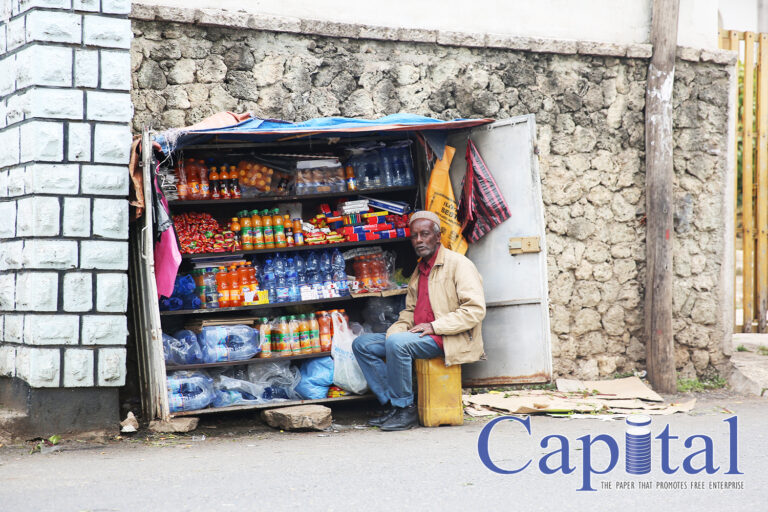
Our commitment to supporting micro-businesses is a way of directly addressing high youth unemployment. In many parts of Africa, starting a small business is the only way to earn a living. These Micro and Small businesses have the potential to make a genuine difference in their communities. All they need to succeed are the right tools to run and scale their businesses. Mastercard is committed to powering small businesses through our resilient network, insights, technology, products and services, and our philanthropic support – including a pledge of $250M to be spent globally to support such businesses.
We’re committed to leading the charge in reshaping the way our world is designed, coded, and constructed by bringing diverse perspectives to the table to unlock powerful ideas that open up our industry and the world’s possibilities to women. We’re pushing our networks further, forging ambitious partnerships, and championing the people, businesses, and innovations that are transforming the way our world works. Because a world that works better for women creates limitless possibilities for us all. It’s a world that gives everyone the chance to unleash their potential, pursue their passions, and make extraordinary things happen.
Capital: What are some of the projects you want to implement in Ethiopia to help it achieve its digital strategy by 2025?
Raghav Prasad: We have started working with the Ministry to determine what these projects will be, once these are fully developed, we will share these with you. Our joint objectives though are very clear – to create a digital economy that works for everyone everywhere.