Saturday, October 10, 2026
Home Blog Page 3589

Why Bitcoin Should Go From Strength to Strength in Ethiopia and Other African Markets

0

Africa has long been considered a fertile market for cryptocurrencies, with many commentators anticipating a massive bitcoin boom in the continent in the coming years. There have already been several signs that bitcoin payments will become increasingly normalized in both Ethiopia and the wider continent. This is because bitcoin is perceived as a comparatively stable store of money, particularly in countries where the fiat currency often succumbs to volatility. This is true in the case of the Ethiopian birr.

The state of play for bitcoin in Ethiopia and wider Africa

Many have spoken about the potential for cryptocurrencies to challenge the world’s existing financial systems, and recent trends indicate that the growth of bitcoin in Africa is accelerating to do just that. Analysis of monthly cryptocurrency transfers under the value of $10,000, both coming in and out of Africa, reveals that the number of transactions increased by 56% in June 2020 compared to the same period from the previous year. 2020 saw June transactions soar to a volume of $316 million. Some of Africa’s biggest economies, including Nigeria, South Africa, and Kenya, were among the biggest contributors to this volume of bitcoin transfers.

However, Ethiopia is undeniably playing its part in the spread of bitcoin. One of the most appealing qualities of bitcoin is its decentralized nature; this means that the completion of crypto transactions are not controlled by the government, so the value of bitcoin is uncorrelated to the performance of a national economy. This has been one of the biggest draws for the use of bitcoin in Ethiopia, where the Ethiopian birr has a reputation for volatility.

Ethiopia today unveils new Birr notes for 10, 50 & 100 denominations, with introduction of a new Birr 200 note. The new notes will curb financing of illegal activities; corruption & contraband. Enhanced security features on the new notes will also cease counterfeit production.

That much can be seen with the unveiling of new birr notes for the 10, 50, and 100 denominations, in addition to a new 200 note. The Ethiopian government has undertaken this measure to combat a 20% rise in inflation and concerns over liquidity. The cashless nature of bitcoin is therefore even more attractive to consumers and businesses based in the country. The birr may continue to fluctuate, but bitcoin will take its own trajectory. This makes it a viable alternative to relying on the fiat currency of Ethiopia.

African industries successfully integrating bitcoin payments

Sad to be leaving the continent…for now. Africa will define the future (especially the bitcoin one!). Not sure where yet, but I’ll be living here for 3-6 months mid 2020. Grateful I was able to experience a small part.

One of the biggest advocates of Africa’s positive bitcoin future is Jack Dorsey, the co-founder CEO of Twitter. Dorsey is a renowned fan of cryptocurrencies and blockchain technology, so his name could crop up prominently in future attempts to establish bitcoin in Africa. However, African businesses have already been integrating cryptocurrencies for several years without any intervention from rich overseas investors like Dorsey.

There are many examples in Ethiopia, the Yirgacheffe Coffee Producers Union are one notable collective to embrace blockchain tech. It is hoped that the incorporation of blockchain into the coffee-growing business will make salaries and trade fairer, while the Union has also begun to export coffee and receive payments in bitcoin. Individuals have likewise enjoyed the benefit of bitcoin. Hanna Teklie is an Ethiopian entrepreneur who has since moved to South Africa, where she has established a marketing network that spans the continent. Teklie acts as an intermediary for bitcoin investors, with traders based in Ethiopia able to acquire bitcoin mining machines through her service.

While that sort of business benefits traders with a prior interest in cryptos, it is the practical application of bitcoin that will champion its use to the average African consumer. There are many examples of bitcoin payments becoming commonplace throughout Africa. A very clear example of this is set by the best South African online casinos, as the likes of Punt Casino and African Grand permit users to transfer funds in and out of their account via bitcoin. Having bitcoin feature alongside traditional payment methods like Visa and Mastercard goes a long way to standardizing the use of cryptocurrencies.

That becomes even more tangible with the use of bitcoin ATMs, which have popped up throughout Africa. These machines stand on the street, usually in cities, so that they can allow users to buy and sell bitcoin. There are ATMs that can be found in Ghana, Uganda, and Nigeria, and it is surely only a matter of time before Ethiopia receives its first. In 2018, it was estimated that around 1,000 Ethiopians had invested in bitcoin. That number should skyrocket in the coming years as more and more African industries explore the potential of cryptocurrencies.

With the Ethiopian birr looking primed to continue along its traditionally volatile path, despite the measures of the government to introduce new denominations of its fiat currency, the appeal of bitcoin payments should continue to rise in Ethiopia. This trend will be matched by several other African economies, with the likes of South Africa, Nigeria, and Ghana expected to remain receptive to cryptocurrency technology.

Todd Ashton, Vice President and Head of Ericsson South and East Africa discusses Ericsson’s legacy and plans for Ethiopia

0

Q. How long has Ericsson been operating in Africa and Ethiopia?
We have been present in Africa for more than 120 years, with our first entry onto the continent in Ethiopia in 1894 followed quickly by the first fixed-line exchanges installed in South Africa and Kenya in 1896. As a company that remained invested in Africa for generations, we have seen the growth in fixed-line communications, early mobile communication, GSM, 3G and 4G.

Ericsson has done business in Ethiopia for a long time and our next big breakthrough occurred during the 1950s when Ericsson started to supply 500-point switching systems. Ethiopia ordered its first crossbar switching exchange in 1961, and Ericsson continued to supply equipment for the large-scale installation of automatic exchanges.

Five years later a relatively large exchange with 10,000 subscriber lines went into service in Addis Ababa, the capital city. Ericsson opened a technical office in Addis Ababa in the following year. Ericsson established a representative office in Ethiopia in 1997, in conjunction with the installation of a 280,000-line AXE system. This was part of a major project partly financed by SIDA, the Swedish International Development Authority.

In 2014,  we signed a framework agreement on 2G/3G mobile communication equipment and related services – such as design, planning, deployment, tuning, and optimization – with Ethio Telecom and continue to support our customer and the people of Ethiopia in the development of mobile broadband.

Q. What opportunities and challenges does the ICT sector present for Ethiopia?

Bridging the digital divide in Ethiopia can be achieved by investing and developing internet access at mobile broadband speeds for consumers in remote areas. Beyond the coverage-related challenges, rural communities face penetration-related challenges. Closing or reducing the digital divide requires both coverage and penetration-related initiatives – especially in a world where demand has changed because of the pandemic.

Ethiopia has come a long way in its digitisation journey – from mobile telephony to broadband, and from connecting to digitising key economic sectors, jobs, education, healthcare, government and society in general.

The development of ICT infrastructure is an integral part of Ethiopia’s growing economy and has proved to be an essential driver of an inclusive information society that integrates digitization in all critical aspects of life, such as education, transport, health, energy and many more.

According to our Ericsson Mobility Report, by 2025, in Sub-Saharan Africa mobile broadband subscriptions will increase to reach around 70 percent of mobile subscriptions, with increased 4G coverage and uptake being the main engine. Driving factors behind this shift include a young and growing population and availability of lower priced smart and feature phones.

Q. What is Ericsson’s promise to Africa and Ethiopia?

 Tackling the digital divide, continuing to build a robust ICT infrastructure, promoting sustainability, innovation, education and entrepreneurship will be critical for maximizing the role of technology in boosting resilience and inclusive growth in Africa. By achieving that, Africa will experience a paradigm shift on all levels with new game-changers such as e-health, e-government and e-education; the African society will accelerate into a much economically advanced nation. However, collaboration between the different stakeholders in the ecosystem becomes even more important than ever to achieve this vision.

Our promise and commitment towards Africa and Ethiopia are to always support a world where digitalization is transforming the eco-system; enabling sustainable growth, economic development and opening up opportunities for all.

To accelerate our promise to Ethiopia and achieve a true impact, we are looking forward to supporting our customers in their quest, bringing our latest innovations, leveraging our global and African skill and scale to the benefit of Ethiopia’s digital development.

#AfricaInMotion


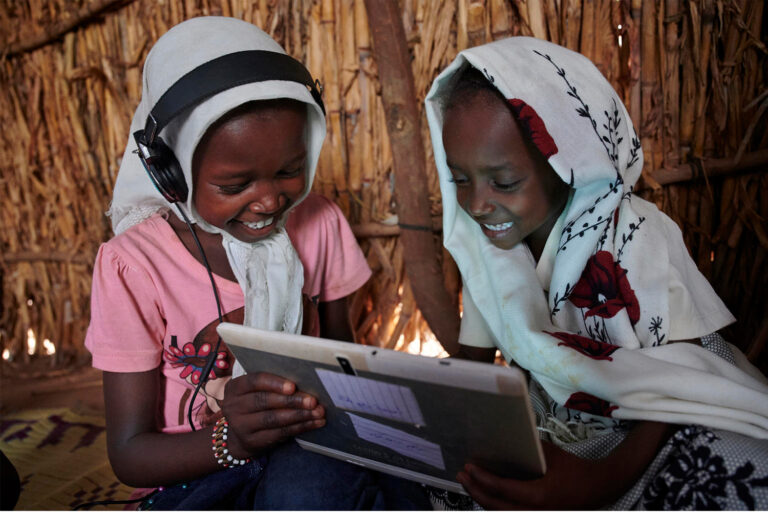
Ericsson and UNICEF launch global partnership to map school internet connectivity

0

Three-year initiative to identify connectivity gaps in 35 countries is a critical first step in connecting every school to the internet.

Ericsson (NASDAQ: ERIC) and UNICEF announced today a global partnership to help map school connectivity in 35 countries by the end of 2023. Mapping the internet connectivity landscape for schools and their surrounding communities is a critical first step towards providing every child with access to digital learning opportunities.

This joint effort is part of the Giga initiative. Launched last year and led by UNICEF and the International Telecommunication Union (ITU), Giga aims to connect every school to the internet. Ericsson is the first private sector partner to make a multimillion-dollar commitment to the initiative and does so as a Global UNICEF Partner for School Connectivity Mapping.

According to the ITU, 360 million young people currently do not have access to the internet. This results in exclusion, fewer resources to learn, and limited opportunities for the most vulnerable children and youth to fulfill their potential. Improved connectivity will increase access to information, opportunity, and choice, enabling generations of school children to take part in shaping their own futures.

“The deepening digital divide is one of the many inequalities that the COVID-19 pandemic has underscored,” said Charlotte Petri Gornitzka, Deputy Executive Director, Partnerships, UNICEF. “School closures, coupled with limited or non-existent opportunities for remote learning, have upended children’s education worldwide. Our partnership with Ericsson will bring us closer to giving every child and young person access to digital learning opportunities.”

In addition to funding, Ericsson will commit resources for data engineering and data science capacity to accelerate school connectivity mapping. Specifically, Ericsson will assist with the collection, validation, analysis, monitoring and visual representation of real-time school connectivity data. The data generated through the mapping will enable governments and the private sector to design and deploy digital solutions that enable learning for children and young people. Ericsson will also engage its extensive customer base to further advance the goals of the Giga initiative.

“Ericsson is uniquely positioned to be a key partner in helping address this important issue due to our technology expertise, global scale, decades of experience in public/private partnerships, and proven results connecting students and educators,” said Heather Johnson, Vice President of Sustainability and Corporate Responsibility, Ericsson. “Working together with partners, like UNICEF and the ITU, amplifies the potential impact of school connectivity and is a concrete first step in helping bridge the digital divide globally.”

“ITU brings a history of technology policy advocacy and regulatory expertise to the vital mission of connecting every school in the world,” said Doreen Bogdan-Martin, Director, ITU Telecommunication Development Bureau. “We are thrilled that Ericsson will join Giga and help build the mapping tools necessary to make connecting every school a reality.”

The UNICEF-Ericsson partnership also contributes to the Generation Unlimited Global Breakthrough on Digital Connectivity that aims to give young people digital skills so they can fully and meaningfully participate in the digital economy. Generation Unlimited is a global multi-sector partnership to meet the urgent need for expanded education, training and employment opportunities for young people. Additionally, the partnership supports UNICEF’s recent COVID-19 Agenda for Action in which the organization called for global action to keep children learning, thereby requiring the prioritization of internet connectivity in rural and remote areas.

Follow our progress and see current school mapping efforts at www.projectconnect.world. Or, for more information on this important initiative and how to get involved, please visit www.gigaconnect.org.


Ethiopian Loza named Maltese League Player of the Year

0

All time Ethiopian Women football greatest player Loza Aberra won Malta’s most prestigious Women Player of The Year award on Wednesday.
Arguably the most decorated Ethiopian Women player who boasts four local women’s league championship title, three time top scorer of a year and once Best Player of the Year award winner Loza Aberra crowned Women Best Player of 2020 in her very first season in Maltese League.
The first Ethiopian women footballer to sign a professional foreign deal, the 22 year-old striker turned an overnight Maltese Football starlet leading the Maltese giant Birkirkara to Women’s League championship scoring 30 goals in just fourteen matches. An average of 2.11 goals in every match she even once performed a miracle bagging seven goals in her team’s 17-0 demolition of Hibernians to record their biggest victory ever in the Malese Women’s League.
It was a rapid rise from Women’s League football to international arena for the young dreamer from South of Ethiopia Durame town. Two seasons with her first team Hawasa Ketema followed by a giant leap to strong side Dedebit where she won three championship titles in four seasons, Losa travelled to Turkey then to Sweden for trial matches before returning home to help Adama Ketema lift the championship title for the first time.
Six and a half seasons and more than 200 goals in her name at club level and another 25 goals to the national team “Lucy”, Loza reached Malta to perform a miracle at Birkirkara.
“A move to England would be a dream come true. I recently started to follow the Women’s Super League closely. I am shaping myself to the standard of the league and I believe I can perform well there” Loza who idolized five times world Women Player of the Year Brazilian Marta told reporters.