

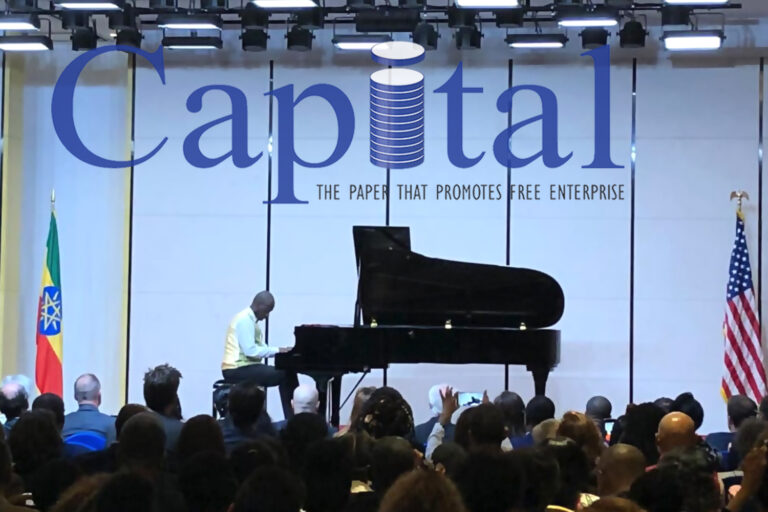
Girma Yifrashewa’s “Bridging Cultures” concert was held on January 30 at Skylight Hotel with over a thousand people in attendance. The concert will soon air on Arts TV, which was also one of the sponsors of the event. Ambassador Mike remarked, “What makes Girma such a compelling artist is not only that he’s a virtuoso pianist, but that he puts his virtuosity to the service of blending classical and Ethiopian music, and to building bridges between people through shared and transcendent musical experiences.”
Girma performed some of the pieces from his new album “The Banjo,” that are based on the works of the 19th century American pianist Louis Moreau Gottschalk, which was produced with support from the U.S. Embassy.
Bridging Cultures
Africa’s regional integration will benefit all
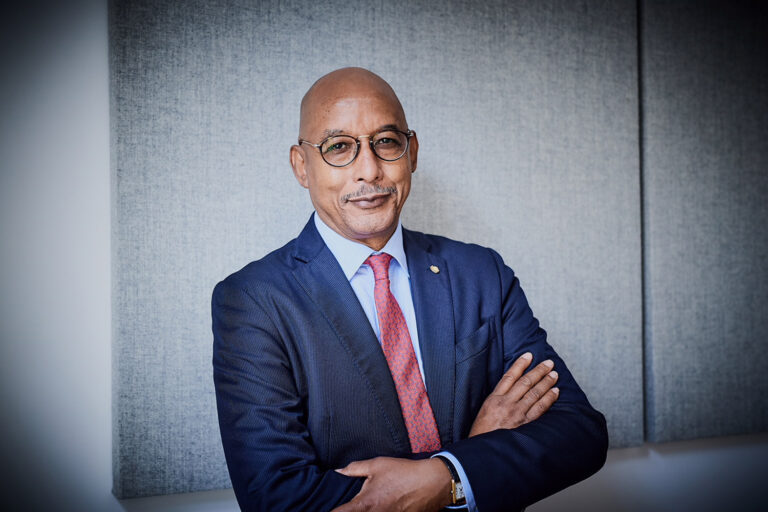
AUDA-NEPAD was created in Niamey, Niger, in July 2019, during the African Union summit. Its creation was one result of the AU reforms championed by Rwanda’s president, Paul Kagame, former chairperson of the AU. In an interview with Africa Renewal’s Kingsley Ighobor in New York Dr. Mayaki spoke on AUDA’s role in Africa’s development agenda and discussed regional integration and his agency’s plan to create a million jobs. Ibrahim Mayaki, chief executive officer of the New Partnership for Africa’s Development (NEPAD), which is currently transforming into the African Union Development Agency (AUDA)-the implementing arm of the AU. Excerpts:
Africa Renewal: What are the main differences between AUDA and NEPAD?
Ibrahim Mayaki: AUDA has a broader mandate. It is expected to address implementation challenges regarding decisions made by the African Union.
For example, we are now the African Union’s technical focal point with development partners such as China, India, the United States, the G20, the Tokyo International Conference on African Development (TICAD). This is very important in order to track implementation of agreements reached with these partners.
AUDA will also focus on resource mobilisation and the connections between sectors to avoid a siloed approach, which as you know is a key aspect of the Sustainable Development Goals (SDGs). For example, when we deliver in agriculture, we also look at water, energy, land, etc.
There is now a division of labour between the AU Commission, the Regional Economic Communities and AUDA in implementing the AU’s strategic frameworks at the national and regional levels.
Africa Renewal: You have reiterated that regional bodies play a bigger role in Africa’s development. Are there often tensions between regional institutions and national governments?
Mayaki: Your question is fundamental because regional integration will only progress if national governments-which manage regional bodies-implement regional decisions.
We see national governments push for regional development strategies. In the Southern African Development Community (SADC) for example, agriculture ministers meet regularly to discuss agricultural transformation in their region. The Economic Community of West African States (ECOWAS) meets regularly on a common strategy on energy.
The problem is how regional decisions essentially derived from continental frameworks are implemented country by country. That’s where our role becomes important. We need to make sure that there is coherence between regional strategies and national plans.
Africa Renewal:Africa’s new free trade area, for example, is a continental initiative. Until June this year, Nigeria and Benin were holding out. How do you ensure that national governments implement AU projects?
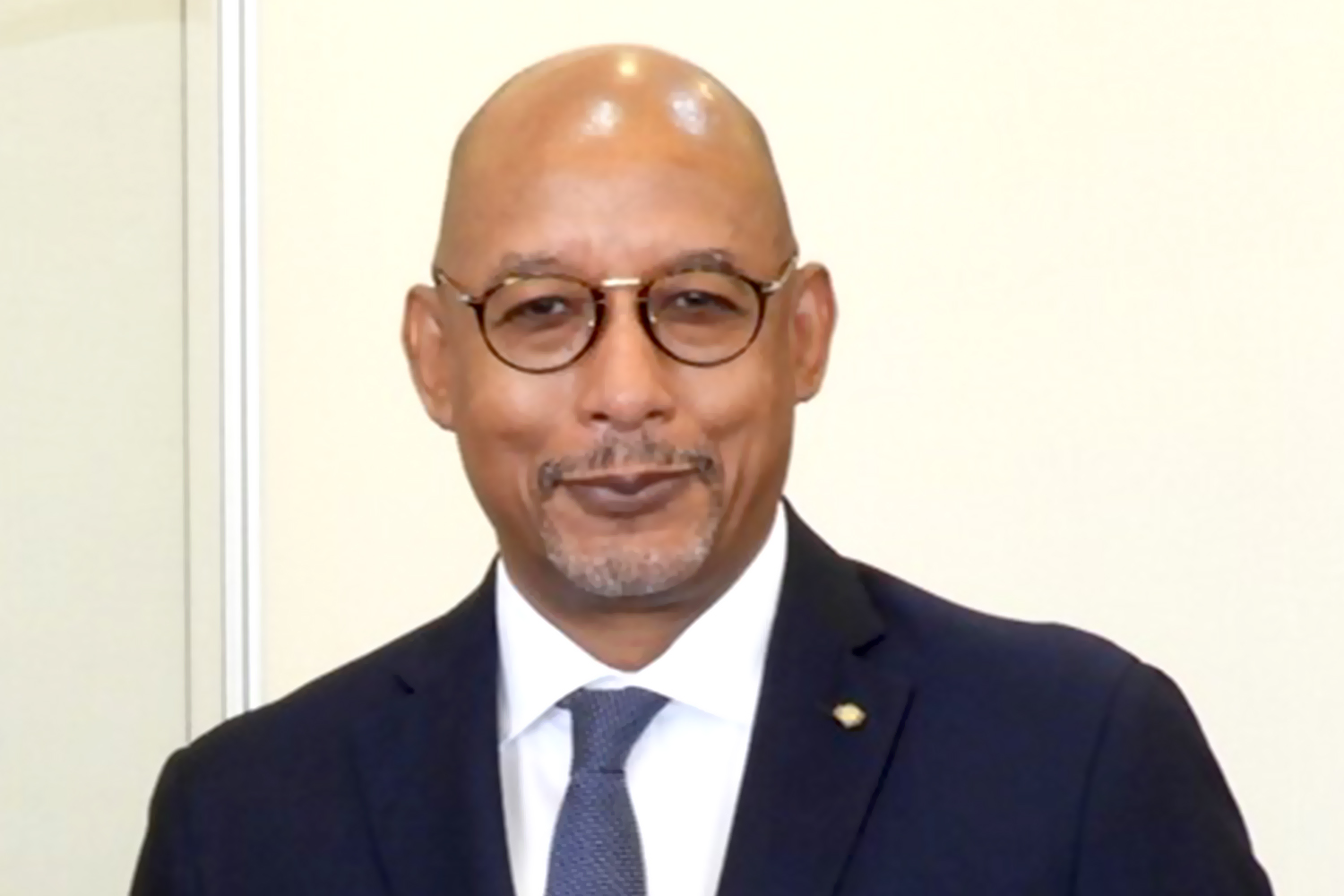
Mayaki: One of the critical factors of success in regional integration is having everybody on board. If the consensus is strong-and that takes time to build-we can have strong agreements and start thinking about an implementation roadmap. The more buy-in you have in the design of a project, the less resistance you have during implementation.
Also, our budget is approved by AU member states. These programmes reflect member states’ priorities because it is their money, so, for example, if we have a programme in renewable energy in East Africa, it must be a priority in that region.
Africa Renewal:Given AUDA-NEPAD’s new development focus, what hopes do you have for regional integration on the continent?
Mayaki: The AU has really made great strides, particularly in the continental free trade area. It took time to be designed and to get everybody on board. We know the technical skills we need, and there is political determination to implement the agreement.
In the current global uncertainty, we need to increase trading within our regional markets; otherwise we won’t tackle our development challenges. Implementation will not be easy because of the high-levels of financing needed as well as the need to harmonize policies between states, but we are on the right path.
Africa Renewal: You have also advocated for a bottom-up approach to development. Doesn’t that contradict the objectives of the regional frameworks, which are top-down?
Mayaki: No, it cannot be top-down, because none of the frameworks will work if you do not empower the local communities.
For example, you know that access to electricity in Africa is very low-more than 60% of our rural population has no access to electricity. But agricultural productivity will not increase if the energy issue is not addressed. The best way to solve the energy problem is to have decentralized energy services at the local community level, managed by local communities. This is what I call bottom-up. You can have the big strategy, but in terms of implementation, in terms of innovation, it must come from the bottom.
Africa Renewal: “Colonialism was a system of illicit financial flows,” you said recently at an event at the UN headquarters. What do you mean by that?
Mayaki: Look at our infrastructure in pre-independence Africa, and even before. If it was a road, it was one linking a mine to a port. So, all the infrastructure projects, except in countries and places where colonizers were thinking of settling in a definitive manner, all other infrastructure projects were geared toward extraction, extraction, extraction! Extraction of minerals, extraction of agricultural produce, and so on.
Africa Renewal: The infrastructure of the colonial period still stands in most of Africa, albeit modernised. What should be done about that?
Mayaki: That’s why we created the Programme for Infrastructure Development in Africa (PIDA). It reverses that trend of extractive-based infrastructure by focusing on regional projects and transport corridors that ease movement and spur development. That way we boost intra-Africa trade.
Africa Renewal:You have announced a plan to create 1 million jobs. How will you achieve that?
Mayaki: The African Union member states wanted to be very concrete regarding the creation of a decent jobs agenda. They said we should have a quantifiable objective so that we are accountable. We said, “OK, let’s set a target of 1 million jobs over the next three years.” But as you know governments do not create jobs; the private sector creates jobs, and the private sector in Africa is dominated by small and medium enterprises (SMEs). The African Development Bank tells us that 60% of our SMEs have less than 20 employees and the other 40% have less than 10. So, if we assist 100,000 SMEs, we can achieve that agenda of 1 million jobs.
Africa Renewal: Doesn’t Africa need more than 1 million new jobs?
Mayaki: Yes. Every year we need to create 20 million jobs. For the next three years, Africa needs to create 60 million jobs, but we can only target 1 million jobs for now. However, we want to harness best practices regarding SME creation, incubation centres, protection of intellectual property, financing of SMEs by national development banks, conducive environment, incentives, and others. We want these best practices to be replicated in all countries.
Africa Renewal: Given the lopsided strengths of African economies-with SMEs concentrated in more economically advanced countries-it appears poorer countries will benefit the least from this programme.
Mayaki: We target least developed countries. The money we get from the African Union is rarely used for projects in Egypt, South Africa or Nigeria. The aim of regional integration is to uplift the least developed countries, and this is the beauty of the African Union. Regional integration is fundamentally based on solidarity, and we know that solidarity is not only moral. It has an economic dimension that benefits everyone.
CONFUSED WORLD & TECHNOSPHERE

As humanity moved to increased complex organizational setups, mostly due to technical progress, the need to establish ground rules to facilitate, amongst other things, harmonious collective social existence became imperative. To this end and through time specialized institutions and structures were created. The proliferation of these entities in turn imposed certain restrictions on society at large, including those of individuals. For instance, individual rights (‘freedom/privacy’, etc.) had to be tempered to give way to the higher values of the common good. Unfortunately, at this late stage in the world system the above individual rights as well as the general ‘well-being’ of the community (work, health, etc.,) are being undermined seriously by the reigning global order. Result; leadership across the board fell in the hands of criminally inclined psychopaths!
The pillars of social existence, both physical and institutional that once led humanity to ‘development’ are being aggressively discounted, compliment of an alienated status quo. Detached from organic real life, material, spiritual, cultural, etc., the global ruling classes of the decaying world system continue to pursue projects that have no clear vision about the future of humanity or the planet as a whole. Societies led by such psychopaths have become willing victims of the blindly pursued universe that goes by the name the ‘techno-sphere’! See the article next column and others on pages 33, 36 and 38. The once revered cultural values of humanity that solidified all-rounded progress, via the instruments of honesty, sincerity, probity, etc., have all been impoverished, improvised and bastardized. This is because such human values are anathema to the simple logic of the techno-sphere. We give one clear example. The more intense the techno-sphere, the less the procreation! No OECD country (where the techno-sphere dominates) has a fertility rate to replace itself! This is probably the most devastating indictment against late modernity, which blindly worships the techno-sphere! Unfortunately, our ruling simpletons don’t seem to realize the fundamental challenges inherent in the techno-sphere; and the attendant consequences impacting both humanity and nature. Result; a world moving towards the precipice, without any capable leadership to give guidance!
The accelerating dehumanization of the world is reflected on many fronts. Lies tend to dominate politics, economics, etc., etc. Truth based activities, including the very sciences that once led humanity to enlightenment are being subjected to the whims of the politicos. The real sciences behind all major issues (nuclear power, climate change, soil erosion, species extinction, space exploration, WMDs, etc.) are all being used, in one form or another, to sustain the existing lopsided arrangement between transnational capital and humanity! In late modernity, all laws developed throughout the centuries have started to lose their significant imports. Today it is the mechanistic façade of the law, i.e. its legalistic aspect that is driving the proliferation of global rules and regulations. Justice as the real essence of the law is being undermined significantly! The strategy of the global status quo is to make laws to facilitate the expansion of capital. If capital doesn’t expand, it will die or expire. For example, the WTO was established to undermine all human (hence necessarily natural) reactions against the unlimited expansion of capital, which fuels the techno-sphere monster! Here are interesting reflections by an authority on the subject.
“THE TECHNOSPHERE DOESN’T particularly care whether you live or die, or whether you are happy or miserable. Its goal is to control you and to make you serve its purposes, which are to grow, to control everything and to dominate the biosphere. How it achieves this control is a matter of what is most efficient. If you are one of its faithful servants, then the best way to make you do your job well is to incentivize you-to give you high status, ample pay and lots of perks. But if you are a lowly menial grunt in its service who, unfortunately, cannot yet be replaced by a shiny new robot, then low pay and low status suffice, and destroying your autonomy and self-reliance while fostering your dependency is the key to making you perform. If you are a technologically useless person but harmless-an artist, a philosopher, writer, poet, free thinker-then the technosphere simply can’t see you, because what you do is not measurable in units the technosphere can understand. But if your thinking turns out to be dangerous or harmful to the techno-sphere-because you are someone who tries to break the chains of dependency and to find ways to live outside of the technosphere, or to undermine it in some other way-then it will consider you as nothing less than a terrorist!”
“Last, but by no means least, the advance of technology has produced a human population that is far more helpless and dependent than any human population before, one that is unable to survive when exposed to the elements, or travel long distances on foot, make its own tools, construct its own shelter, clothe and feed itself without outside assistance, treat diseases with substances available from the environment, or teach its children to survive on their own … How will these people, who have been conditioned since birth to expect to be taken care of by a vast industrial machine, respond to suddenly being forced to rely on their own wits and physical strength to survive? How many of them will not even try and simply await a rescue that will never come?” Dmitry Orlov, Shrinking the Technosphere: Getting a Grip on Technologies that Limit our Autonomy, Self-Sufficiency and Freedom. Good Day!
The Ethiopia Bankers Association
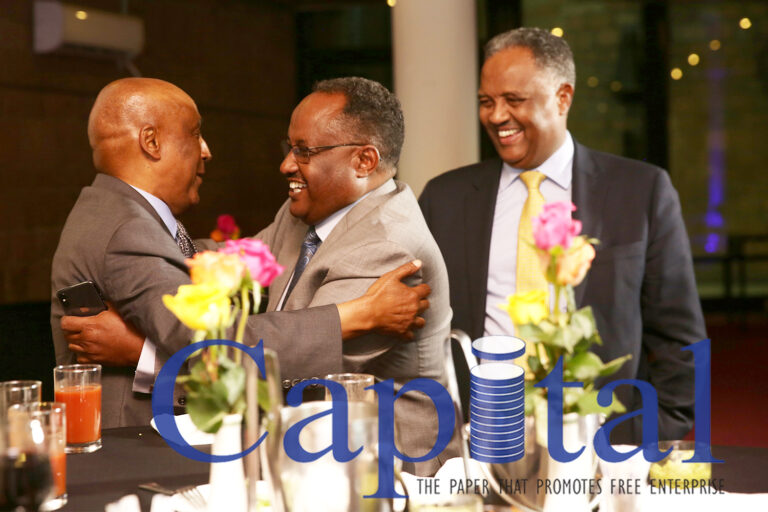
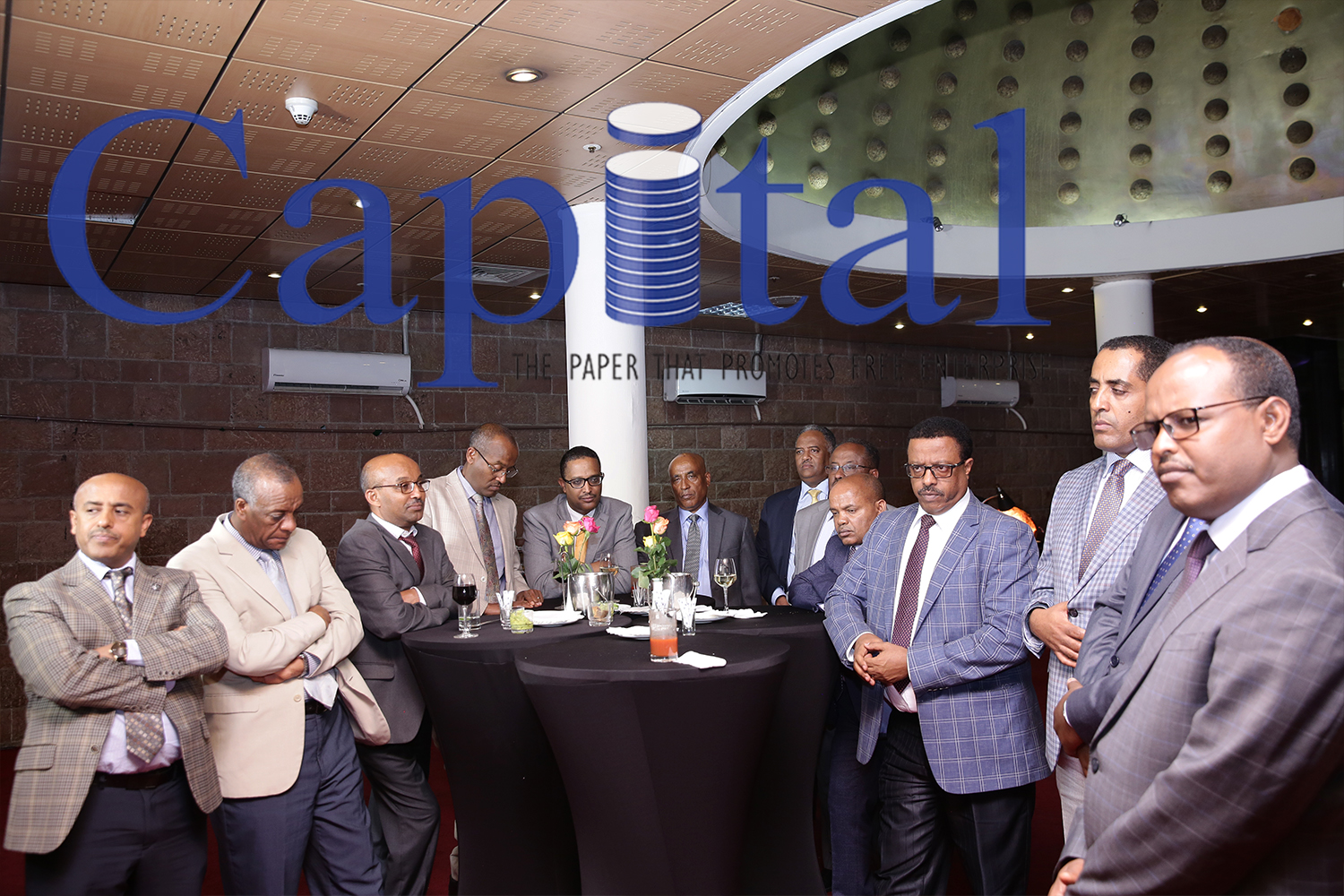
The Ethiopia Bankers Association (EBA), which represents private and public banks, bids farewell to two former bank presidents, Addisu Habba, former longtime president of the association and president of Debub Global Bank, and Taye Dibekulu former president of United Bank on January 31. Abe Sano president of EBA during the ceremony thanked both for their services they rendered during their tenure in their respective banks. He further said that the outgoing presidents should help those who are still in the sector.
“It is a time to test the banking industry. Unknown conditions are seen in the banking industry. On the Ethiopian banking industry cash shortage was not seen in the past” Abe said during his speech.
“Few years ago there were programs designed to use idle cash. The hard currency shortage was not the issue despite there was not big foreign currency at the time, while the demand was small. Know the demand has expanded compared with the supply,” he added.
