

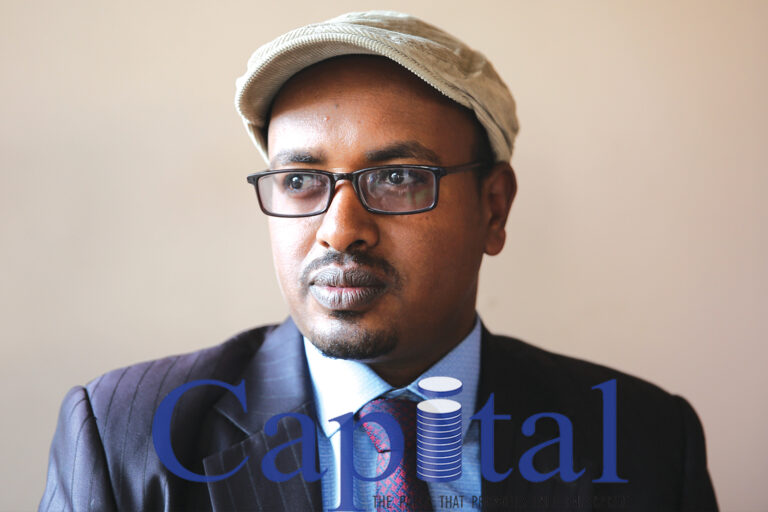
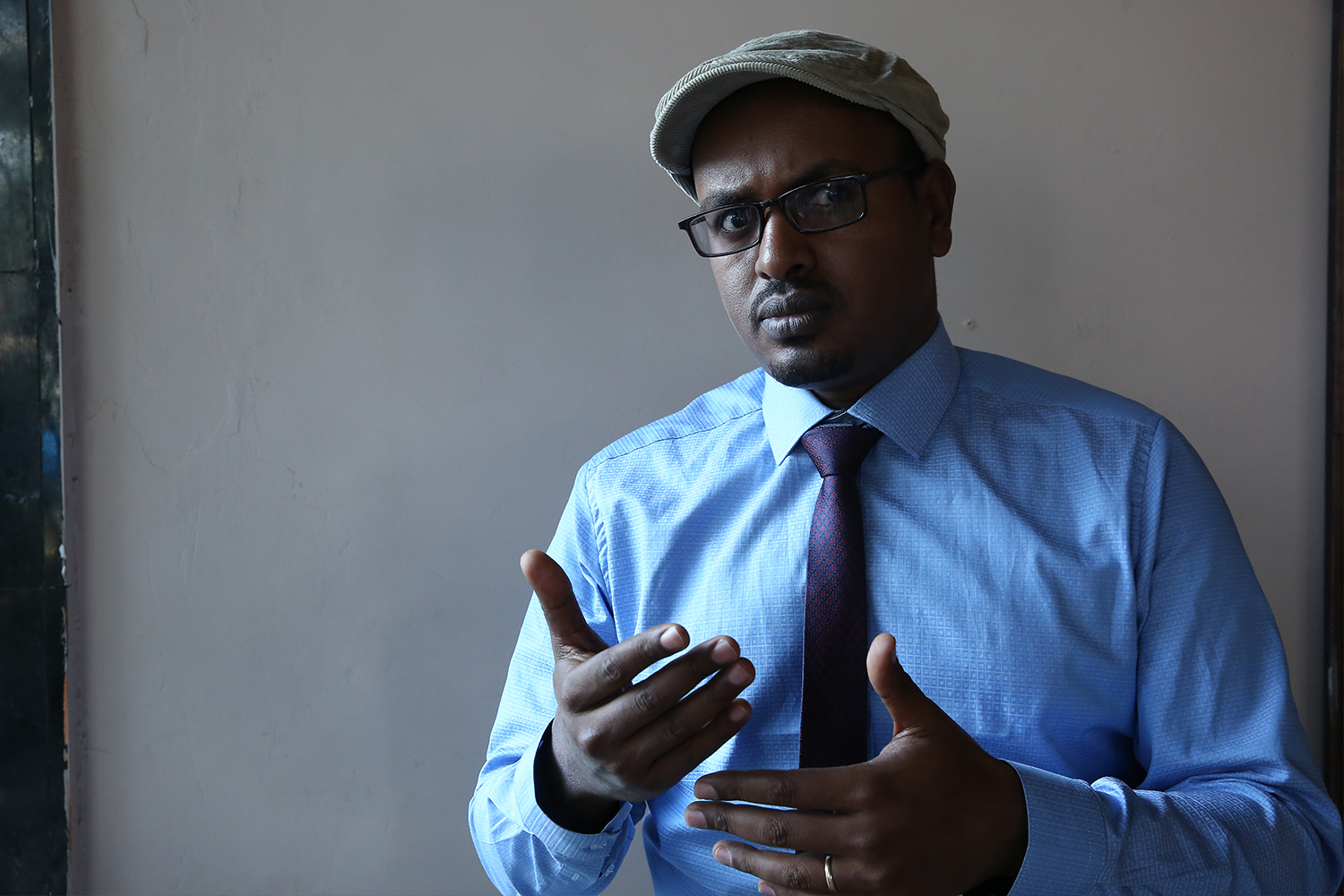
Frezer Ejigu is a PhD candidate at Addis Ababa University School of Journalism and Communication. He recently presented a research paper on the role of mass media in deepening the democratization process in Ethiopia which focuses on how the Ethiopian mass media play its role on supporting and promoting democratization process and current changing situation of the country in 2018 and 2019. Frezer is currently a lecturer at Hawassa University School of Journalism and Communication. He talked to Capital about his research paper.
Capital: How do you see the current development of mass media and flow of information in our country? Can we say it is developing and improved from previous times?
Frezer Ejigu: It is worth emphasizing that we should understand Journalism in Ethiopia in two categories belonging to the periodic Communication mode, inserted in the set of mass Communication within the Communication field. This is Communication category set by classes, here understood as genres, those express themselves in different forms, known as formats, replicated in species. From this framework, we can define the journalistic process and its subsequent ramifications, according to the structural Communication concept. The first category is autonomous and neutral media institution and the second one is a media institution which reflects advocacy journalism. When we see our Medias most of them are like the second one.
Nowadays number of mass media in the country is rising from day to day, there is a better flow of information, they can reflect their own beliefs, and also after the new political reform lots of media which were suspended by the previous government has been allowed to get and operate in the country. This is a good implication of development of information however most of mass medias still operate in the old way: they luck professionals, operate partiality, specially the current political and ethical division of the country plays role on rising biased mass medias. The government-owned media are claimed to be instruments of the government and the ruling party, whereas many of those privately-owned Medias reflect ideas of some group rather than the public. All in all if we see the number we can say it is developing but if we say the communication and information flow it is still back ward.
Capital: Tell us about your research
Frezer: The research was conducted by Debebe Hailegebreal Law Office with an American organization called National Endowment for Democracy. It focuses on the role of mass media in deepening the democratization processes for Ethiopia. It tries to study the overall journalism behavior with in the current changing situation of the country, reporting and tone of coverage of the mass media of the current situation including the major conflicts and the reform in the country and the new democratization process of the state. According to international studies after a political reform there will be four different kinds of conflicts in the country, Distribution and control of power between the new comers; Citizenship right and identity disputes; Authoritarian past; and Disputes in times of election.
Three of the conflicts have been seen in the past two years, we have pointed out six major conflicts, armed conflict in the country, dispute between regions, Addis Ababa issue, case of former ileitis, Gedio displacement and conflicts around Addis Ababa mainly in Burayu and 88 reports/news/ of different medias were coded across media and conflict case as sample. We use both qualitative and quantitative methods. We have participated different experienced journalists, editors, activists, political party members, members of the society including teachers and students. Six Broadcast medias, seven print medias, two political activists, the media regularatory body and news agency, three political parties were parts of the data sources In our study we try to categorize media out lets in Ethiopia in four categories. The one which are appointee media /personnel are appointed by the government/ second directive medias those receive directions from political parties and third are line medias those follows certain ideological or other line and the last are medias those who are exclusively guided by the market value
Capital: What are the major findings of the research?
Frezer: Journalism can help prevent polarization, violence and war. The place of free and. fearless journalism, online and offline, in times of conflict, information deception, internet disruptions and violent conflict should therefore be defended vigorously. In such kind of reforms Medias can play a mixed signal roles, one in promoting democratization. In terms of ensuring pluralism, the media is believed to have widely encouraged the democratization process via entertainment and multiple political discourses and narrative contributing to the existence of external pluralism on the public sphere. They facilitate and enhance engagement of public discussion; the availability of variety of news helps the public engaged in public discussions on social and political matters. Both dependent and largely independent medias preferred to promote institutional remedies to problems, prefer peaceful solutions and restrained themselves from calling violent actions, while ethnic afflation medias blame political institutions as cause for the conflict and the government and party affiliated medias prefer to blame identities as cause of the problem.
Capital: What are the challenges pointed out?
Frezer: We can say a lot just for example, journalism in Ethiopia is not free of political influence. Government and political groups or interest groups are dominance of the media ownership, the appointment of the media managers from the ruling party even after the reform it still continues. Medias don’t give Objective neutral accurate and balanced information. The other one is the imposition of restrictive media laws.
Capital: What should be done to improve performance of mass media and information flow in the country?
Frezer: The mass media provides an important link between the rural residents and vital health information. The mass media, in the form of the radio and television, are an effective way to persuade target audiences to adopt new behaviors or to remind them of critical information. Free, independent and professional journalism serve an essential role in democracies. It provides information that allows citizens to make informed decisions. It holds the powerful to account for the integrity, peace. Before doing anything media has to understand the public agendas “what the people need to hear”, they have to differentiate the problems and helps on the finding of solutions, start working autonomously and stop being biased by any group.
