

The horticulture industry, which contributed half a billion dollar in the last budget year, is vying to use shipment to export its product. In the new scheme the highly anticipated refrigerated containers or referee containers will be used to export products through train via vessel.
Currently the horticulture industry is using airfreight to export its flower or fruit and vegetable products, while the sector actors claimed that using referee container and export products via vessel would make Ethiopia’s product more competitive in the international market.
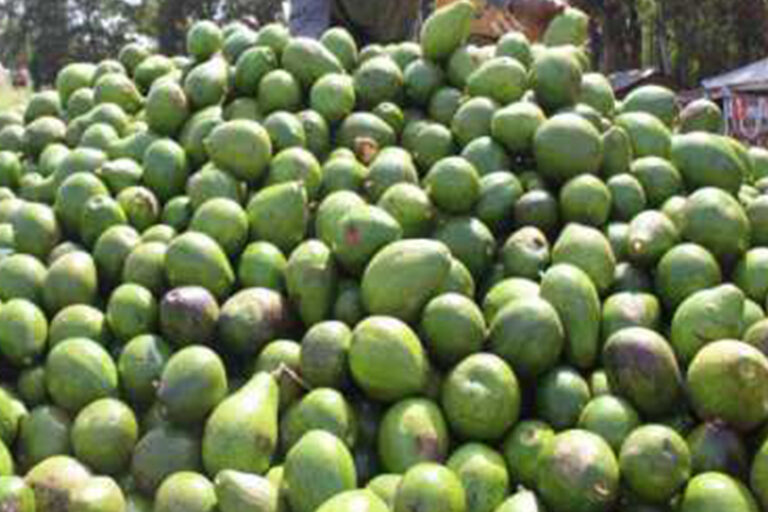
Using the new scheme Hass variety avocado was exported on Saturday August 22, in a vessel for the first by refrigerated container. 
Ethiopian Horticulture Producers Exporters Association (EHPEA) announced that 25 tons of Hass variety avocado collected from 87 out growers in Merawi Koga irrigation area is exported to Europe using a referee container from Bahirdar, then by train from Mojo to Djibouti for the first time.
Tewodros Zewdie, Executive Director of EHPEA, said that it is a big step since the railway system is introduced.
The Director said agro logistics cost makes Ethiopia unable to be competitive so far, “particularly the referee container cost is very expensive due to that we could not tap the European and Middle East market, which is dominated by Latin American fruit and vegetable suppliers.”
He said that using the train is one step forward but the government should give special attention and should harmonize the railway system and improve the availability of empty referee container.
“Currently farms pay round trip costs for referee container including empty leg (empty containers) that are transported from Djibouti to farms,” Tewodros explained.
If the empty leg cost is slashed the cost of transportation will drop by 50 percent, according to him.
He recommended that the government should consider availing more referee containers and to provide subsidy like what Ethiopian Airlines has done for the floriculture sector.
The availability of consolidation facilities like cold house everywhere and to encourage the private sector to be engaged on the investment is stated as a game changer on the fruit and vegetable sector.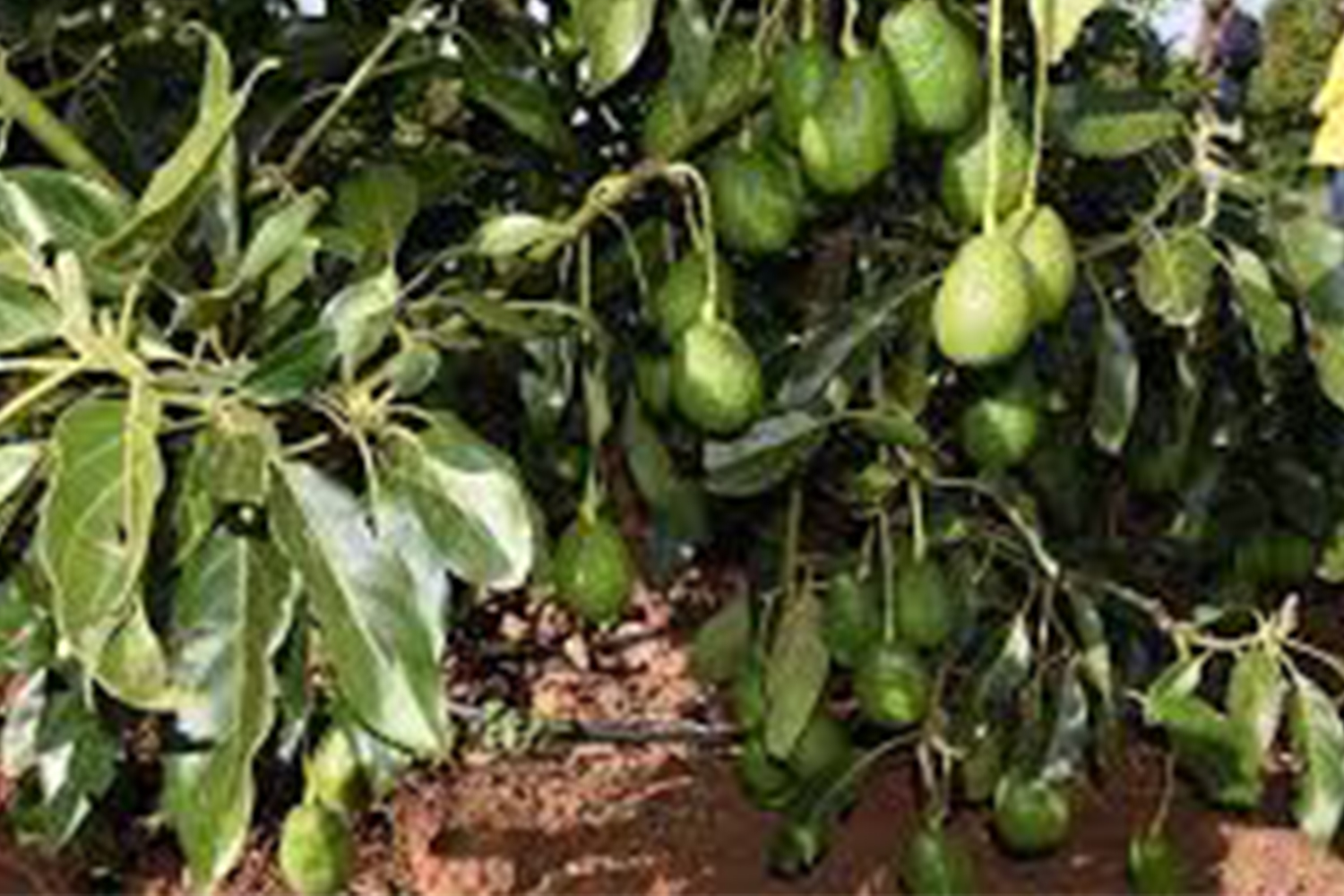
“We believe that Ethiopia will be competitive in the near future on the fruit and vegetable sector even better than the floriculture sector since the required smart and efficient agro logistics is improved,” Tewodros told Capital.
“In order to bring breakthrough result from fruit and vegetable sector there should be a turnaround in the perishable logistics system in the country,” he emphasized.
Koga Vege Agricultural Development Plc, which is founded in 2013 with an objective to boost rural economic development in the area around Bahir Dar, is the company behind the export of irrigated avocado to the European market.
In a Public Private Dialogue webinar on Attracting Investment to the Horticulture Sector a representative of Ethiopian Maritime Affairs Authority in charge of logistics transformation said that there is a cold chain project at Mojo Dry Port.
He said that the latest referee container shipment is a trial for the first time for the UK market. “Once this trial shipment achieved its target, I hope we will come up with good proposal for other horticulture actors to utilize this service,” the representative said.
“It will also give insight how we can support the requirement not only in Bahir Dar but adjacent area in Oromia, Arba Minch and south and western Ethiopia,” the representative further added.
Avocado has become a potential for Ethiopian horticulture export and it is now growing from time to time.
In the 2019/20 Ethiopia has secured USD 499 million from horticulture export, which is 146 percent of the target. In the 2020/21 budget year the sector is expected to generate USD 630.
Avocado export goes via refrigerated container
Ethiopian Airlines and Ethiopian Chefs Association signed a memorandum of understanding
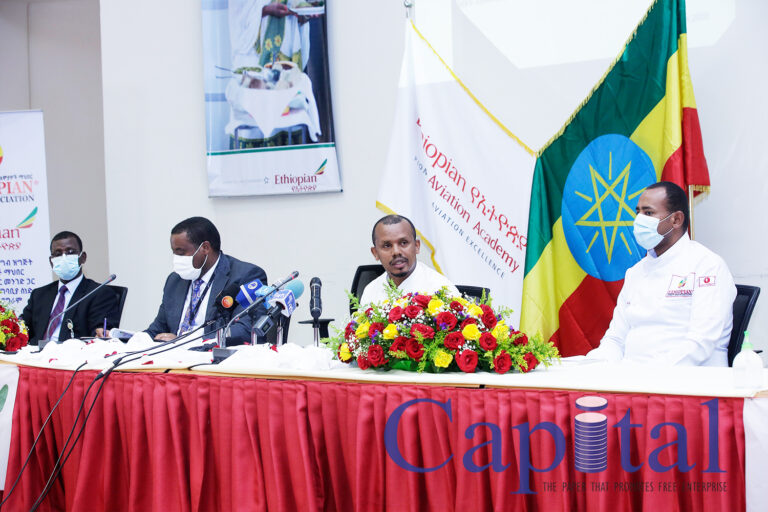
Ethiopian Airlines and Ethiopian Chefs Association signed a memorandum of understanding to promote Ethiopian traditional food to the world. The MoU is expected to enable the two bodies work on the development of traditional food catering service and food tourism. The MoU was signed between Ethiopian Airlines Human Resource Management Vice president Wasihun Asres and Ethiopian Chefs Association president Henok Zerihun. The partnership between the two bodies will last for five years.
The memorandum would also help the two sides to work in cooperation by exchanging expertise, enhancing the airlines catering schools through training, modernizing the catering services, and promoting Ethiopian traditional foods to the rest of the world.



Online shopping portal with its own warehouse enters the Ethiopian market

Detecting the growing trend of the digital market, a local technology firm Addis Path Trading has presented a new online shopping portal called addisber.com.
“addisber.com is the valuable platform for all personal and business needs” said Fitsum Hailu, General Manager of Addis Path Trading. As he said the portal presents a wide range of products to its existing and potential customers. The portal include items such as educational and entertainment, stationary and office supplies, cosmetics, food items, gardening and DIY tools, household items, kitchen appliances, solar energy devices, sport, fitness & health equipment and other fast moving consumer goods that will assist customers to transact from anywhere at any time. 
addisber.com also accepts various payment options. According to Fitsum it gives different alternatives starting from cash on delivery and all the way to accepting different international payment cards. “Customers may pay through online or by using their mobile phone,” said Fitsum. Recently, addisber.com concluded E-commerce merchant agreement with Bank of Abyssinia for the acceptance of Visa cards and Master cards using CyberSource.
Addisber also provides a platform for those living abroad, who want to send items and daily needs to their family in Ethiopia. Besides, addisber gave choices to let all transactions to satisfy their need from the displayed products on its e-commerce website.
In order to incorporate the huge number of mobile users in Ethiopia, the portal uses local payment gateways like Yenepay, Amole, CBE Birr, Hello Cash, M-birr and others. It is also possible for individuals or institutional customers to transfer money to a company account if they choose to go to the bank physically or using their mobile or internet access.
Beside addisber.com facilitates credit sales arrangement on a contract agreement basis for organizations that will have recurrent purchases.
“Most institutional customers are enjoying the price they get and benefited from some discount for their order. Some organizations are using the website for their retail market price analysis and to see the prevailed retail price level of the town,” Fitsum said. a
So far, the company invested more than15 million birr. It creates an employment opportunity for more than 30 employees and it has its own dispatch center and central warehouse located around Ayat area. “Unlike most online shopping service providers, addisber.com hold its own stock and is selling its own products,” Fitsum added.
Back to basics Enabling WASH to stem the spread of COVID-19 in Ethiopia
By Dr. Yeshitila Hailu
Since the Coronavirus disease (COVID-19) arrived in Ethiopia in mid-March, there have been over 31,000 confirmed cases and 544 deaths according to data released by the Ethiopian Ministry of Health as of 17 August. Like other countries around the world, Ethiopia, Africa’s second most populous nation, is reeling from the effects of the pandemic on a fragile health system, while at the same time grappling with the very real threat of economic recession and its devastating consequences.
While the government has declared a state of emergency that has so far lasted five months, imposed movement restrictions, and enforced social distancing and wearing of face masks while out in public, the pandemic continues to hold the country in its grip. But even as we focus on finding and implementing more long-term solutions to stemming the spread of COVID-19, simpler interventions such as handwashing with soap and water must not be overlooked.
Research has shown that washing your hands with soap and water is one of the most effective ways of protecting yourself and others from infection. Given that we touch our faces every 2-5 minutes on average, potentially increasing the risk of infection every time we touch our eyes, noses or mouths, handwashing with soap or using alcohol-based hand sanitizer that contains at least 60% alcohol is a simple yet effective frontline defense against the coronavirus.
Despite its simplicity, handwashing remains out of reach for an estimated 3 billion people around the world who still do not have access to facilities with water and soap within their homes. In countries like Ethiopia, 60-80% of communicable diseases are caused by limited access to sanitation and hygiene services and safe water, a reality that makes it harder for the government to respond to the coronavirus pandemic effectively – and for disadvantaged communities to keep themselves safe using basic resources.
To complement government efforts to increase access to improved Water, Sanitation and Hygiene (WASH) through the One WASH National Programme, which broadly seeks to achieve better WASH outcomes in Ethiopia through robust policies and a multisectoral approach, Amref Health Africa has partnered with WASTE, a Dutch non-profit organisation, to promote proper handwashing and improved sanitation. The project, dubbed Financial Inclusion Improves Sanitation and Health (FINISH), primarily aims to increase demand for and supply of sanitation and hygiene facilities within communities by making them affordable.
To create demand among low income households, Amref uses innovative ways to persuade communities to prioritize sanitation by selling the benefits of improved latrine systems, including hygiene and disease prevention. This includes carrying out mass communication activities that weave in COVID-19 prevention messages to increase awareness, and engaging health workers to conduct door-to-door campaigns to explain the significance of improved sanitation. The health workers also facilitate visits to sanitation facilities to make a stronger case for their usage by allowing households to experience them.
Once demand is created, this unique model then seeks to address the financial barrier that prevents communities from investing in these facilities by leveraging partnerships with financial institutions to offer affordable loans, encouraging households to pool their resources in order to access loans that average 364 USD per latrine. These funds are paid directly to the local contractors and masons, who Amref is collaborating with to develop affordable sanitation options that work within the local context.
Since the launch of the FINISH project in 2018, close to 300 sanitation facilities have been constructed in 5 districts of Oromia and Amhara regions, and 126,000 more are planned over the next 5 years. As a result, there has been significant improvement in handwashing practices, more community-led initiatives to construct latrine systems and increased willingness to pay for improved WASH facilities.
To build on these successes, Amref Ethiopia is constructing handwashing facilities in several towns and providing sustainable water supply to ensure proper hand washing – a critical intervention against COVID-19. This is being supplemented by the development of a mobile-based learning tool for health extension workers that focuses on providing accurate COVID 19 information and surveillance, and which integrates COVID-19 prevention messaging into the corresponding awareness creation sessions in order to make handwashing not only about hygiene, but about potentially saving lives.
It’s a relatively simple yet holistic approach to a complex challenge, but one whose success will be dependent on deeper community engagement and sustained multisectoral cooperation to plug the $US 2.8 million funding gap that threatens to reverse gains, which will lead to greater investment in affordable, accessible WASH facilities especially during the COVID-19 pandemic. It is crucial that now, perhaps more than ever before, water, soap and basic sanitation – core pillars of infection prevention and control – are made available especially to vulnerable communities, because until we find a viable vaccine or treatment, improved WASH practices remain the first line of defense against the COVID-19 pandemic.
Dr. Yeshitila Hailu is Programmes Director at Amref Health Africa (Ethiopia)
