Tuesday, October 13, 2026
Home Blog Page 3673

Fighting COVID 19

0

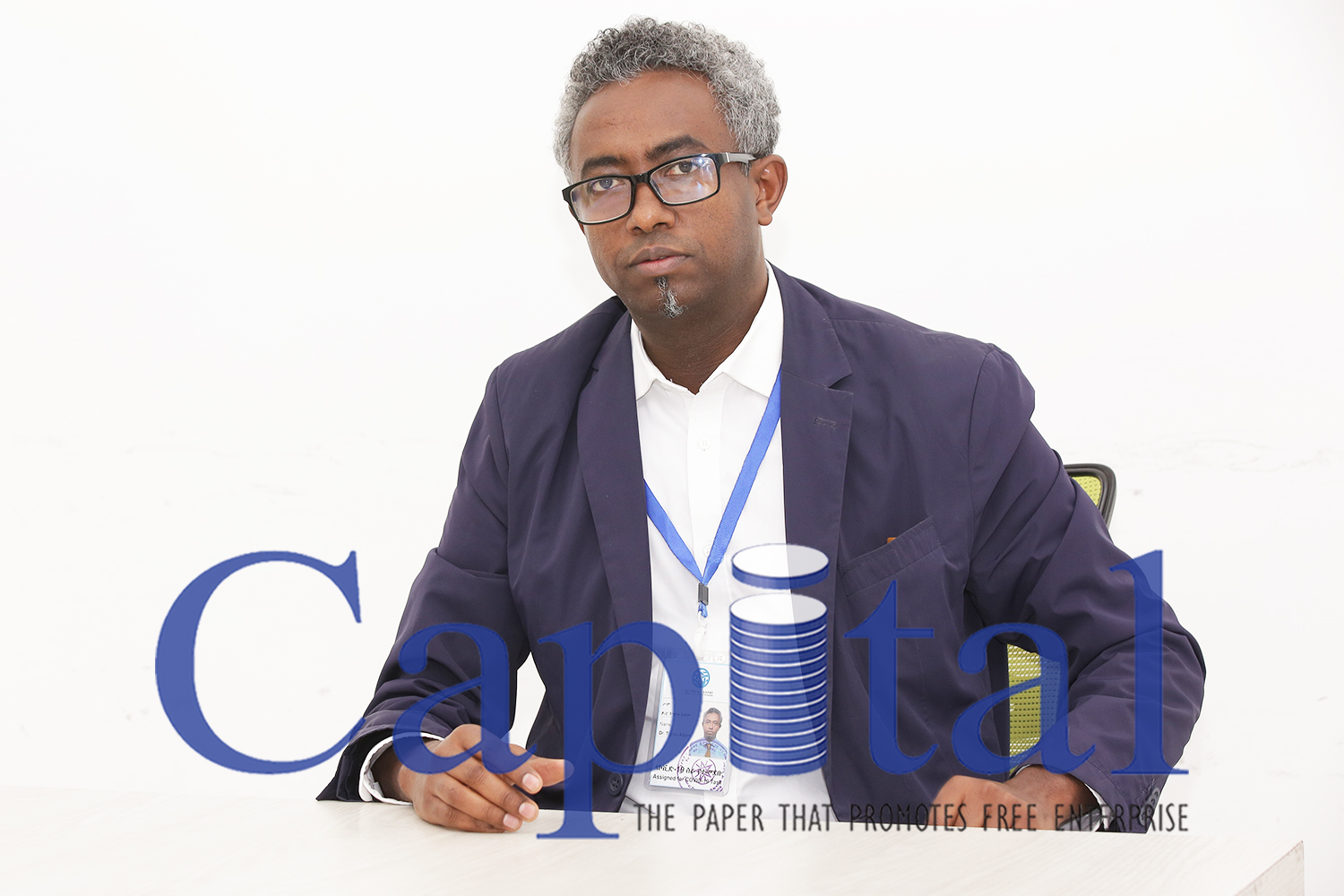
Following the assassination of Hachalu Hundessa, the country mainly Oromia, Harari, Addis Ababa and Dire Dawa City Administrations saw fatal violence for days starting from June 30. The violence in the country has highly affected the sample taking of COVID 19 tests. To control the outbreak and spread of the pandemic the government has banned public gathering and declared wearing face masks as mandatory but the majority of the protesters show up without considering the pandemic. According to the Ministry of Health data the samples that were taken for tests were highly affected. Tigistu Adamu (MD) is a medical doctor advisor at the Ministry of Health. He talked to Capital how his Ministry is trying to boost COVID 19 tests and how recent events affected their work. Excerpts;

Capital: How did the recent incident affect the activity of Ministry of Health on responding to the pandemic?
Tigistu Adamu: The incident has come up with a lot of effect to the response of the pandemic. One of the challenges were, the incident has reduced the samples taken for COVID 19 tests. Primarily it was related with logistics. It was difficult to send our staff to contacts and in the society to collect samples. The number of samples we took was reduced by 30 percent in average. During that time we took an average of 5000 samples. The highest number taken after the incident was 4,000 samples that was on Thursday July 9, 2020, even if it is higher than it was lower than before. The ministry has been planning to conduct 15,000 tests daily. Now we are reaching to 7,000 tests.
Usually the highest sample is taken from Addis Ababa and Oromia although the unrest was in these areas. Such kind of incidents affects the overall activities not only the health sector but other activities.
Capital: Does the Ministry have a guideline or protocol to continue the response to the pandemic if such kind of incidents happen in the country?
Tigistu: Yes we do have. While the politics is one issue when there is a pandemic there may be a lot of other subjects that can rise an unrest in a country. It could be political, social, economic or logistics. However it is difficult to predict when. In such times we cannot operate as normal therefore we have plan which can fit with the crises and crises management.
For example if the worst case scenario happens in one region and our limited mobility may upsets people and create grievances and unrest in the region, though to control such kinds of happenings the government has declared state of emergency and form a COVID 19 response team from the beginning of the outbreak. The Ethiopian Public Health Institute mainly run such kind of health crises response not only for covid. In such times this helps to work strongly with the security apparatus although some incidents may go out of control.

Capital: Have you identified hotspot areas based on the situations? And what will be the next step?
Tigistu: Usually hotspot areas are identified and determined based on positivity test result. We do the pandemic investigation based on population density, movement in the area, housing, socio economic status and other basic needs such as electricity, water and so on.
By taking this in to account previously we have prepared a map, for example in Addis Ketema, Liedeta and Gulele sub cities the positivity rate has been over lapping and were identified as a hot spot.
As in the previous we will do same researches, identify places were lots of protesters came from and were gathered. We get the information from security offices. Currently in collaboration with the national COVID 19 response team and security offices the Ministry is working to identify hot spot areas to control the spread of the virus. After mapping we will focus on the areas as a target, we will increase the sample test in the areas.
Currently the thing what is worrying us is most of the protesters were young and from regional areas. The thing here is that if they get infected in the protest they can transmit to their parents or other elders. Which is as we all see the virus can develop serious illness on old people and people with pre existing medical condition more than others. So currently we are talking with the Oromia Health Bureau and actively working to educate the people and focus on the areas on sampling.

Capital: How are you going to cope with it if the number goes to the worst case scenario?
Tigistu: It is like an evolution. In the first time we all have been working if the cases has shown symptoms, if they were in simple or high risk. They stay at the mandatory isolation centers. However from time to time if the numbers continue to increase it would be expensive to take care all the cases in governmental centers. Thou we have prepared a directive that if the case is in a mild situation and can be deemed to qualify for self-isolation at his home without infecting others they can do that.
This can help us to give space for the governmental isolation centers and the staff. But this is if the number of cases continues as it is now.
But if the number continues to increase and become beyond our control we will do as the other world does. So we will divide the cases based on their illness situation.

Capital: Besides COVID 19 there are a lot of diseaseas that are breaking out, such as measles in which the Ministry has started giving a vaccine, how does the Ministry managed it with its limited human resources?
Tigistu: It is known that there is a shortage of human resources. The World Health Organization suggests in minimum 4.5 health care workers’s for 10,000 people but in our context 1.2 health care workers is for 10,000 people. There is a big difference but we cannot sit just because there is a shortage when other situations happen in this time we are adjusting our staff and our resources by identifying places which will be affected and are in good condition.
We Move staffers from hospitals and clinics. Always when you start focusing on one thing there are always things that would be affected. So to minimize this we are deploying volunteers on hospitals and clinics.

ONE, MTV Base & Mandela Foundation pair up with 10 African artists in song to fight COVID-19

0

Ten of Africa’s biggest musical artists are uniting to record “Stand Together”, a rallying call to all Africans to unite against COVID-19. With artists from seven African countries, the song is a powerful reminder that no one is safe from COVID-19 until everyone is protected from the disease.
The biggest crisis facing Africa today is the COVID-19 pandemic, which comes on top of already high unemployment and poverty levels and is placing an increased strain on struggling healthcare systems. The good news, however, is that we are seeing an unprecedented mobilization of resources and collaboration across the continent in response to the virus.
Building on this collective unity and resolve, the artists are collaborating with the ONE Campaign to launch an anthem to call for solidarity in the face of the COVID-19 pandemic, while calling on African leaders to keep standing alongside African citizens in fighting this pandemic.
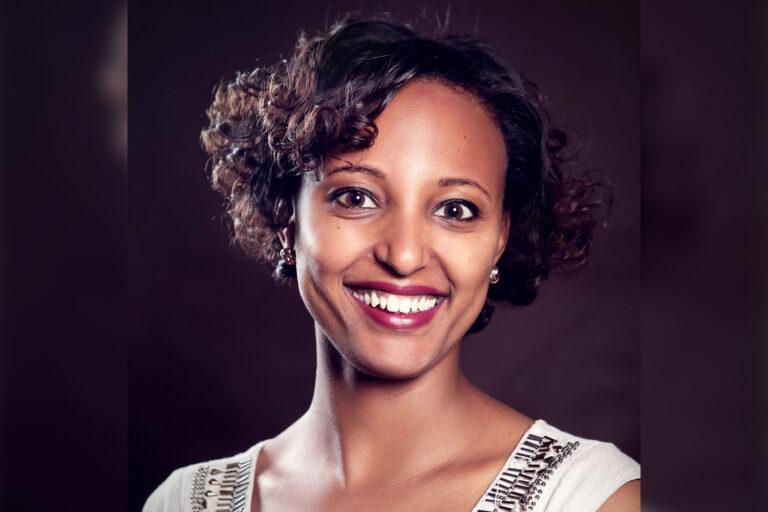
Participating artists include TuBaba (Nigeria), Ben Pol (Tanzania), Teni (Nigeria), Yemi Alade (Nigeria), Amanda Black (South Africa), Stanley Enow (Cameroon), Gigi la Mayne (South Africa), Prodigio (Angola), Betty G (Ethiopia) and Ahmed Soultan (Morocco). Stand Together was produced by Cobhams Asuquo.
The song is being launched in partnership with ONE, the Nelson Mandela Foundation and MTV Base on Mandela Day, an annual celebration of the life of Nelson Mandela. Stand Together debuted during the annual Nelson Mandela Lecture on Saturday 18 July.
Edwin Ikhuoria, ONE’s Africa Executive Director stated “ONE is delighted to collaborate with these 10 fantastic artists, MTV Base and the Nelson Mandela Foundation to release ‘Stand Together’, a beautiful and powerful message to all Africans that we will overcome COVID-19 with a spirit of unity, resolve and shared responsibility. We call on Africa leaders to follow the lead of these artists who are uniting the continent in line with the legacy of Nelson Mandela.”
“We have been encouraged by solidarity at so many levels as the world has responded to the challenge of the pandemic. But much more needs to be done. We hope that the coming together of artists in the ONE Campaign will signal a call to such action,” said Nelson Mandela Foundation Chief Executive, Sello Hatang.
Speaking on the collaboration, Monde Twala, Senior Vice President and General Manager for ViacomCBS Networks Africa commented “We are extremely proud and excited to partner with the ONE “Stand Together” campaign uniting all Africans in the fight against Covid-19. As a youth culture platform, it is important to ensure that we reach out and inspire young Africans with a positive message of hope and resilience to help overcome the challenges we all face. We are not alone and stand together, unified, through music and culture.”

Ding-Dong ! The Bells Are Tolling! It is a Wakeup Call All Countries of The Nile Valley!

0

By Dr. Eng Tsega Tibebu

Introduction
Yes Ding-Dong! The bells are tolling! It is a wakeup call for all the countries of the Nile Valley and the African Union. The world is witnessing a shameful squabble between Egypt, Sudan and Ethiopia on the impounding ( water filling) schedule of a dam in Ethiopia. It is worth noting that Egypt is harvesting a great benefit by using the waters of the Blue Nile for all aspects of its related development. The unbalanced water sharing between Ethiopia, Egypt and Sudan, has been going on for centuries, with negative result of unquantifiable loss of valuable opportunities of water resources development in Ethiopia. Accordingly, a change of norms and procedures are required to allow all the Nile valley countries to be equal beneficiaries of their water resources. The following brief historical account will clarify the existing situation.
Brief Historical Background
Since the prehistoric times, the Nile has been flowing unimpeded downstream to the Sudan and Egypt. This situation has helped the development of a legendary saying, that Egypt is the gift of the Nile. Following this proverbial saying, a myth has also developed to the extent that the flow of the river was controlled by some Gods, which the Egyptians were said to worship. The worship of the Gods was known to reach a climax, both when the river raged by overflowing its banks, and when it flowed below normal flood level. During the times of excess flow, the river was noted to have a devastating effect on the Egyptian population and surrounding areas. On the other hand, when the river flowed at very low stage, it was a sign of impending famine due to absence of adequate water that was essential for farming. With regard the Egyptian‘s strong attachment to the Blue Nile, the role played by the British during the colonial period is worth recalling. The British were known to have influenced them to believe that they were the rightful beneficiary of the Nile water. A proof of this assumption could easily be found in the various water partition agreements, which were drafted by the British during the colonial times and which were signed both by Egypt and Sudan, by excluding all the other Nile Valley countries. This is perhaps one of the main reasons as to why the Egyptians have adopted a wayward attitude to the construction of the Grand Renaissance Dam, which is being built by Ethiopia. Logically speaking and considering the facts on the ground, there are ample possibilities for both Egypt and Sudan to be free from complete dependence on the Blue Nile. The following is an account of alternative possibilities which could lead to harmonious development of all the inhabitants of the Nile valley.
Alternative Water Resources Development Possibilities for Egypt and Sudan
The following alternative possibilities for water resources development require serious study to arrive at the most sustainable benefits:-
The Nubian Sandstone Aquifer System
The Mediterranean and the Red sea sources for desalination
The lake Victoria storage with Jonglei canal scheme
Diversion from the Congo river
Recycling of domestic, industrial and irrigation canal wastes
The Nubian Sandstone Aquifer System
The Nubian Sandstone Aquifer System extends all over Egypt, eastern Libya, northern Chad and northern Sudan. Recent estimates show that it is about 450,000 cubic kilometers in volume. To cite an example, the Nubian Sandstone Aquifer development scheme by Libya could be mentioned. The successful irrigated farm development by that nation has helped it to be exporter of agricultural products, and has led it to attain a high standard of living. A similar development scheme could relive Egypt from complete dependence on the Blue Nile River.
The Mediterranean and Read Sea Desalination Alternatives
Humanity is now living in what is known to be the twenty first century and decades have passed since man has split the atom, and now we are proceeding to what is known as ‘fusion energy’. Whatever the progress in that direction, the desalination of sea water is already becoming economically feasible due to cheap electric energy. As a result, the desalination of water from either the Red Sea or the Mediterranean sea proves to be an attractive alternative source of water for Egypt and Sudan.
So, ding-dong! The bells are tolling! It is a wakeup call for our Egyptian and Sudanese brothers, who are in deep sleep given the fact that eight years have passed since the official commencement of the construction of the Grand Renaissance Dam in Ethiopia. Needless to state that the duration was more than adequate, to plan and execute any of the alternatives, that are being mentioned in this article.
Storage In lake Victoria With a By-pass Canal Across the Sudd
From information obtained from the British administration of both Sudan and Egypt, during colonial times, we know a scheme to build a water storage dam Lake Victoria for the purpose of augmenting the flow of the White Nile. It is known that the Blue Nile comprises about 85 % of the total Nile flow from many years of measurements at the gauging station in Khartoum. Neglecting the flow contribution of the Sobat River, which originates in Ethiopia, the flow contribution of the Blue Nile amounts to about 50 billion cubic meters per year. By contrast, the contribution of the White Nile is only 14 billion cubic meters, as found by many years of measurement at Khartoum. Naturally, this great difference in flow volume is one of the main causes of the great Egyptian attachment to the Blue Nile. The main difference in flow between the two rivers is caused by the presence of a wide expanse of marshy depression, which obstructs and traps the White Nile and lets it to waste its water by evaporation. The marshy is known to extend for some 8000 square kilometers in normal times and another additional 8000 square kilometers during the wet seasonal floods. What little amount of flow that remains, trickles down to joins the Blue Nile finally at Khartoum.
Diverting Part of the Voluminous Flow Of the Cong River
The flow of the mighty Congo river is estimated to be 40,000 cubic meters per second, most of which empties into the Atlantic Ocean. It has a gigantic electric generating potential of about 44,000 megawatts. Common sense shows that a considerable volume of water could be transferred to the Nile valley for any required purposes downstream. It is therefore an appropriate time for all the Nile valley countries to forge a cooperative union for the proper management of their natural resources. Piece meal projects, with the sole aim of building personality cults should be discouraged and be replaced by a wider scope which focuses on the benefit of the entire continent. Finally, with regards to the alternatives enumerated above, the last two should be preceded by preparation of a Nile valley water resources master plan for proper sequencing of feasible and sustainable projects. Therefor it should be emphasized that these two diversion schemes and any other one that could be planned, should focus strictly to the mutual financial, environmental benefits of the African people without any possibility for smuggling any water outside the continent.
Concluding Remarks
The squabble on the formation of a time table for the filling of the Grand Renaissance Dam of Ethiopia is regrettable. It is pure elementary economics which governs the commissioning of project. It is elementary economics to sense that the money invested on any project should be amortized within a specific period of time. The world knows that the construction of the Grand Renaissance dam was officially started eight years ago, thus giving ample time for providing any alternative solution for any imaginary or real water stress expected downstream in Egypt. Given the fact that the Grand renaissance’s storage capacity of about 74 billion cubic meters, it becomes purely a puzzle to schedule water impoundment, every time it exhausts its storage for electric generation. The water filling schedule should be automatic without any third party interference. Accordingly, the current agenda for discussing the reservoir impounding schedule becomes purely impractical, from the fact that it becomes repetitive every time the stored water is exhausted for electric generation. Accordingly, the discussion agenda should have been right from the beginning, on finding possible alternative solutions, which the Egyptians should or could implement. However, whatever the current situation, it is quite appropriate for Egypt to compensate for any possible financial loss, that would accrue by any delay of the commissioning of the dam. As shown in the above possible alternatives, the hurly-burly of negotiation on the delaying of the reservoir filling is quite a comedy, because it is surely a repetitive action required, every time the storage is exhausted by the yearly electric generation.
So ding-dong! The bells are tolling! It is a wakeup call for the Nile Valley Countries and the African Union, to setup guidelines for the proper and sustainable management of their natural resources.
It is also time to nominate the Ethiopian Prime Minister Dr. Abiye Ahemed and his crew, as ambassadors for Environmental Protection and Regeneration, to help them create a mass movement for planting trees, across all the Water Towers of Africa!

Mamil Masresha

0

Name: Mamil Masresha

Education: BA in Accounting

Company name: Sira App

Title: Co-founder and CEO

Founded in: 2018

What it does: Opportunity Matching

HQ: Addis Ababa

Number of employees: 10

Startup Capital: 15,000 Birr

Current capital Growing for starting the business: To bridge the gap between employers and jobseekers

The biggest perk of ownership: Making better opportunities for unfavorable community

Biggest strength: Knowing the right candidates for the right job

Biggest challenging: Illegal brokers

Plan: To help job seekers and organizations find opportunities to be successful

First career: Accountant

Most interested in meeting: Aliko Dangote

Most admired person: Etege Tayitu

Stress reducer: Time with friends

Favorite past time: Playing ground tennis

Favorite book: Rich Dad Poor Dad

Favorite destination: Dubai, UAE

Favorite automobile: Mercedes Benze
