

African hotel development had returned to growth at the start of 2020, with more than 78,000 rooms in 408 hotels in the pipeline, according to the 12th annual survey by W Hospitality Group, acknowledged as the industry’s most authoritative source. However, the COVID-19 outbreak is now shattering the dreams of Africa’s hotel industry.
W Hospitality Group’s Managing Director, Trevor Ward, said: “The growth of the chains’ presence in Africa has been a very positive story since we started this analysis in 2009. It is quite clear from the numbers that the chains, the developers, the investors – and all of us at W Hospitality Group! – continue to believe in the opportunities that Africa presents in the hotel and tourism industry. However, our industry has been devastated by the impact of COVID-19, possibly more so than most other economic sectors, mainly because of the almost total shutdown of borders and of the aviation sector – no flights means no guests.”
“With that background, we see a slowdown in pipeline growth in 2020, as we all get to grips with the new reality. With so many of the players locked down, fewer deals will be signed, and it is inevitable that some of the planned openings in 2020 will be delayed, due to closed or slower-paced construction sites, restrictions on funding and a lack of market demand. According to our latest data, there are 90 hotels with 17,000 rooms scheduled to open in 2020, but we estimate that at least half of these will be delayed, bringing the actualisation rate down to no more than 40%.”
COVID-19 threatens to ruin a record year for Africa’s hotel developers
COVID-19: Science, technology and innovation key to Africa’s recovery, says Songwe
Science, technology and innovation will be at the heart of Africa’s recovery from the devastating coronavirus (COVID-19) pandemic and the continent’s ability to create sustainable jobs, according to Executive Secretary of the Economic Commission for Africa (ECA), Vera Songwe.
In remarks at the beginning of a five-day virtual COVID-19 Africa Innovation and Investment Forum 2020, Songwe said Africa needs innovations to drive homegrown solutions out of the COVID-19 pandemic and the economic recession it has triggered the world over.
“We need investments in innovation, science and technology to understand how we can protect our citizens and also as a way of growing out of this crisis. STI will be at the heart of Africa’s recovery and its ability to create sustainable jobs that is why for a very long time ECA has been talking of the importance also of intellectual property rights to protect the innovations of Africa’s youth,” she said.
Songwe said the current costs of IP registrations on the continent were prohibitive and not rewarding innovation.
“This is not a strategy for growth,” said the ECA Executive Secretary, adding; “As we talk of science, technology and innovation, we also need to make sure that our policymakers ensure that our technological platforms are robust.”
Digital Ethiopia
The Council of Ministers has approved the Digital Ethiopia Strategy 2025 designed to be aligned with the country’s national development vision, policy objectives and priorities this week.
The strategy took into consideration the current economic drivers (Agriculture, Manufacturing and Services), the priority sectors, and the national objectives of jobs creation, foreign exchange earnings, and inclusive prosperity as a means of identifying the most relevant digital enabled pathways for Ethiopia.
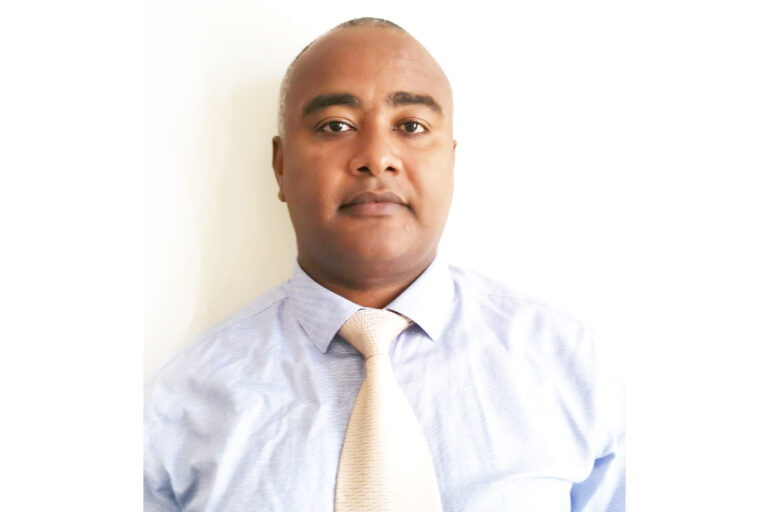
Capital talked to Abiyot Bayou who is the man behind the strategy. Abiyot is currently Director of the National Digital Transformation Program at the Ethiopian Ministry of Innovation and Technology.
Abiyot receives his PhD in Information and Telecommunication Technology Management from Korea Advanced Institute of Science and Technology. He has led and participated in drafting a number of strategies and policies including the National Information and communication Policy and The National e-Government Strategy. He has also led a number of National IT projects including the Expansion of the Ethiopian Government Network Infrastructure (WoredaNet) and the Deployment of the National Electronic Service Portal. Excerpts;
Capital: Can you explain what it means Digital Ethiopia Strategy 2025? How can it help Ethiopia?
Abiyot Bayou: The Digital Transformation Strategy is a plan that helps to transform the dominantly analog economy to a Digital economy, which is an economy mainly supported by the applications of the digital technologies. As indicated on the strategy document, Ethiopian Digital Transformation Strategy is the journey through which Ethiopia will move to a digitally enabled society, where technology will allow for more efficient and inclusive interactions between citizens, governments and businesses, thereby catalyzing its progress towards its national priorities.
The key objective of the strategy is to create an Inclusive Digital Economy. The strategy proposes an inclusive digital economy approach that will catalyze the realization of Ethiopia’s broader development vision. The strategy is an umbrella strategy, from which sectors can then design and co-create more specific action-oriented strategies.
The National Digital Economy has two contribution, the first one is integrating various independent initiatives conducted by government non-government actors and creates synergies that will create a better economic benefits. The second one is helping to integrate digital to the main sectors of the economy and help to create a digital economy. Ethiopia has ambitious National Plan to becoming a middle income country an becoming a knowledge based economy. Ensuring national prosperity, creating dignified jobs, and improving ease of doing business are among the major objectives of the National plan. There are various Digital and non-digital initiatives being implemented by different Ministries and Departments. Digital initiatives being run by different ministries and agencies lack a common agenda and are being implemented in a piecemeal manner. There is an Urgent Need to Coordinate the actions of the Ministries and Agencies. So one aspect of the National Digital Strategy is to integrate national efforts towards a common goal that will serve the national agenda. The strategy will harmonize efforts by defining common objectives, securing stakeholder buy in and defining an effective implementation plans.
Development in technology, especially the digital technology creates various opportunities for prosperity and help the economy to prepare for the future. Failing to take advantage of the opportunities created by digital technologies risks millions of citizens who are already entrenched by extreme poverty. Gains from digital technology are not inevitable. It must be planned and integrated in the national economy to get the benefit from the technology as a nation. The Digital Transformation Strategy Plays this role. It is a National plan based on the national economic development plans. Being a national plan it is based on the country’s situation. The digital transformation strategy helps the country to harnesses the best opportunities technology brings and minimizing the losses. Usually there is confusion between The National Digital Transformation Strategy and an ICT strategy. The National Digital Transformation strategy is not about the ICT sector; instead, it is about holistic growth strategies that harness digital technologies throughout the economy.
The Strategy identifies pathways that Ethiopia should focus and imperatives that must be done to realize Ethiopian Digital Economy. The strategy defines priority projects and programs that must be implemented in the next 5 years.
Capital: How can the digitization help the rural community that depend on agriculture?
Abiyot: The strategy identified four pathways for prosperity. One of the pathways focuses on unleashing values from Agriculture. The initiatives to succeed on this pathway includes building a Digital Agriculture platforms and an integrated system that offers new insights that enhance the ability to make decisions and subsequently implement them, and supporting and incentivizing Ag-tech entrepreneurship as these will ensure innovations, jobs, export in agriculture and related sectors, and inclusivity within the thriving Ag-tech entrepreneurship sector in Ethiopia.
Agriculture accounts 85$ of the country’s workforce. So it means a lot for the rural society. The strategy also addresses various issues related with infrastructure and other enabling systems like Digital Id and Payments. Today identification is the main concern of our populations, digitizing payments plays a crucial role in the life of the rural community either for remittance or buying agricultural inputs.
As I explained earlier the Strategy is well aligned with the Home-grown economic Agenda. Agriculture is one of the main sectors indicated in the Home Grown Economic Agenda, so the Digital Strategy also considers agriculture as a priority Sector. The Digital strategy identifies the best ways the digital technologies will add value in achieving the objectives of the sector. For example the Home Grown Economic Agenda in relation to the Agriculture sector focuses on Enhancing productivity of small-holder farmers and pastoralists through provision of modern inputs and services; for this specific objective the Digital strategy suggests various applications of technologies. For instance using the digital technology for farm productivity enhancement; market information services; financial services (e.g. providing farmers with access to credit) enhance modern farming techniques: such as Precision Agriculture and Vertical Farming. The strategy aims at bringing such type of digital services to the rural community.
Capital: Do you think this is achievable? Will it meet its target?
Abiyot: Yes this is achievable. Now the Government has the right policies. Technologies are becoming cheaper and more efficient. At the same time the awareness of our society is increasing. We do not have options; we have to succeeded. The challenge will be we have huge number of illiterate society lives in rural areas. So we need to consider this fact we select and adapt technologies
Capital: Technology is changing at a very fast pace; do you think you can keep up with the pace?
Abiyot: Technology is changing at an alarming rate. The government should adopt a right policy to use the technology. We shouldn’t solely focus on bringing technology from outside, we should embrace innovation. Especially the Digital technologies have wide rooms for innovation. We have a large young population, with the right policy we can make Ethiopia the center of innovation. We shouldn’t worry about the rate of technology change; we should worry how much we are approaching to innovation. If we become innovative as a nation, we will not be engulfed by technology changes, instead we can see opportunities through the changes.
Capital: Digital economy refers to an economy that is based on digital computing technologies, can the current infrastructure support this?
Abiyot: The current technology is at a very low stage, but it is improving. All our current problems are not completely attributed to infrastructure problems, in some cases we do not use existing infrastructure efficiently.
Currently the government has made important decisions to overhaul the technology/ the telecom sector in Ethiopia. The sector is opening up for competitions. And I believe this will help the country to have a better infrastructure. Hope the future is better
Capital: You said that digitizing the economy will create jobs, but due to this technology and the digital economy people are losing their jobs. What do you say?
Abiyot: Digitalization has the potential to improve productivity, efficiency and accuracy across any workplace or industry. However, there are also associated fears of losing jobs.
The effect of Digitization in replacing human workers is already seen. However, technology will not affect every job in a similar manner. Some occupation may be affected greatly, some affected less. As seen from our recent past, when new technology replaces some jobs, relatively new meaningful jobs will be created. New jobs we didn’t imagine before will be emerged, while old jobs are replaced. So Technologies instead of killing all jobs they will create a new one. However, one thing for sure is that the job as we now will not continue as it is.
But in our country situation there are a lot of tinges we should consider. We should use our relative advantages to create more jobs. Creating jobs is the main agenda of the strategy. Digital technologies can create a lot of new jobs we have never imagined. They can also help in formalizing existing informal jobs. For example, look what Ride creates in Addis Ababa, Taxi service was there already, however Ride changes the way taxi services is provided. This is what we call IT enabled services. They have formalized the taxi sector and at the same time creates more opportunities to several individuals. There are a lot of these type of jobs around us, which we do not think possible at this stage.
So, in general the net job gain is more than the job loss.
In a land of tranquility

Through yoga and meditation, we are able to witness a peaceful sanctuary, away from the noise and disturbance of the materialistic world, says Benoy K Behl
The immediate effect of yoga and meditation can astonish some people as they have the ability to quickly still the mind and clear negative thoughts. When we begin to meditate, we often wonder why we had not done it before. Patanjali, the ancient author of the ‘Yoga Sutras’, describes the mind as a restless monkey, which is constantly distracted and always hovering around.
However, meditation is something that can help one gain peace and control over the frenetic activities of the mind. We are able to land in a peaceful sanctuary, away from the noise and disturbance of the materialistic world. In this state of mind, our being is much better balanced and our body becomes healthy. This should be our first and most natural protection against the ongoing pandemic and all other diseases. If this is done in time, we may be stronger and we may not even need medicines. We must also remember that all yoga is first based upon yama or niyama. This is the ethical foundation of life and it is the basis of yoga. Unless this ethics is not followed, the mind will never be still and meditation will not be possible.
Here are a few excerpts from my film, Key to Immunity Part III, where yoga experts talk about how they view it:
Yoga expert, Dr Ananda Balayogi from Puducherry, says, “The chitta (a part of mind) is that subconscious, unconscious mind that is constantly in motion. The ancient rishis said that the mind is a monkey, a drunken one, and on top of that, is bitten by a scorpion. Well, if that’s how the mind is – constantly in motion, it’s whirlpooling the subconscious mind. The two together just drag you down, away from your goal even before you can blink an eyelid.”
Yoga exponent, Sivananda School, Grass Valley CA, Ananda Prema of Russia, says, “When you do asanas, your mind becomes focussed, and hence, it becomes still. When mind is still, there is no desire and when there is no desire, you attain happiness. It’s all about mind and controlling the mind. It’s very hard to control your mind which is running like a wild horse, unwilling to follow any discipline and it’s very tough to gently take over it, to make it listen to you, to make it follow what you would like it to do.”
New York-based Tulku Sherdor, director, Blazing Wisdom Institute, says, “What modern cognitive science, theories, physics, Buddhist science and the yoga agree with is that all that we ever experience is our own mind and all we can personally experience is the natural display or energetic expression of our own minds. This is exactly what we need to realise through practice. When we realise that all we experience is the product or result of our own minds, it means that there is a potential to work skillfully with that expression of our own minds to transform or change it.”
Acharya Swami Sitaramananda, Sivananda Yoga, Grass Valley CA, says, “A lot of people practice yoga but they jump over its foundation, – the two main practices of yama and niyama, which are the prescription by the yogis about the dos and don’ts, the restrictions and the observances.”
Talking about yama-niyama, Puducherry-based Yoga guru Minakshi Devi Bhavnani, says, “It basically means a method or could be called a technology to evolve from the dominance of the animal brain into the conscious use of the human brain.”
As Patanjali had said, yoga never harms. It is absolutely brilliant how it takes control of the tongue, our sexual desires, greed, the desire to steal and all the other natural impulses necessary for survival.
