

Public Procurement & Property Administration Agency, a regulatory body for the federal public procurement, allowed the Public Procurement and Property Disposal Service (PPPDS) to float a bid for 400,000 metric tonnes of milling wheat in shorter period of time than the usual time frame.
This week PPPDS decided to annul the 400,000 metric tonnes of procurement saying that it has a little bit higher price than the offer for 200,000 metric tonnes of procurement, which both were opened on the same day and supposed to be delivered in the same time frame.
Tsewaye Muluneh, Director General of PPPDS, said that the service has decided to rebid the 400,000 metric tonnes of wheat due to the offer on the previous bid opening may cost the country.
“Besides that for instance the company who offered better price for the three lots, which has 300,000 metric ton, offered different price for every lot but the product will be transported in similar time frame,” she told Capital.
Tsewaye said that if the service award the procurement it may cost the government an extra USD 2.07 million.
In a separate bidding process to procure 200,000 metric tonnes opened at the same day with the other 400,000 metric ton, the London based Gemcorp Commodities Trading that offered USD 204.97 per ton for the first 100,000 metric tonnes lot and USD 202.33 per ton for the second lot is awarded to supply the grain.
Singapore based company, Olam International, Marthina Mertens Sampl of German company offered lower price for first lot and three lots respectively.
The Singapore based company that participated only for the first lot had offered USD 212.7 per ton.
For the rest three lots classified by 100,000 metric tonnes each the German company had offered USD 219.35, USD 219.49 and USD 219.99 per ton from lot two to four.
At the same time, aiming to conclude the procurement within a short period of time the service has asked the Agency to allow a special procurement procedure.
Meanwhile the regulatory body gives a direction to the service to conduct the biding process within 25 days than special procurement, which is a way to conduct a bid by inviting limited participants.
The 400,000 metric tonnes of milling wheat is supposed to be procured for Ethiopian Trading Businesses Corporation to stabilize the market.
The procurement has taken several months due to different reasons. Tsewaye believed that the procurement process will be concluded until the end of the budget year, while since the Agency decided to conduct the bid as a normal bid with the participation of any interested bidders the process may take more time despite the bid opening date.
On Tuesday, June 9 Gemcorp and PPPDS have signed the award for the supply of 200,000 metric tonnes of wheat plus 20 percent or additional 40,000 metric tonnes at the total value of USD 48.8 million. The service has added additional 40,000 metric tonnes as per the bid rule that Tsewaye stated it would help to fill the possible demand gap until the 400,000 tonnes procurement is sealed.
The 200,000 metric tonnes of milling wheat is procured for the Ethiopian National Disaster Risk Management Commission.
Ethiopia to float 400,000 tonnes wheat bid, again
DBE join others in reducing interest rate
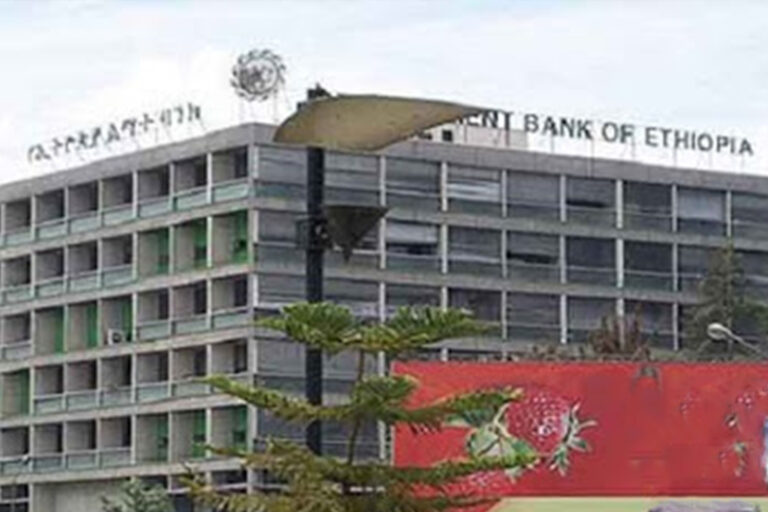
The Development Bank of Ethiopia (DBE) announced a significant reduction in interest rate to its customers to help them ease away the effects of the corona virus.
According to Haileyesus Bekele President of the Bank, the bank has made 4 to 5 percent interest rate reduction which it has been charging between 11.5 to 12 percent. “The reduction is for three month starting from April,” the president said.
The reduction on interest rate is different based on the vulnerability of the sector to the crises, which is 7.5 percent to hotel, tour operators and poultry farms and 8.5 percent for other sectors and industries.
According to the president because of the reduction the bank will lose more than 460 million birr and also due to the pandemic the bank failed to collect 1.5 billion birr loan in payment terms.
“If the situation continues the bank will continue the reduction for additional time,” the president said.
In addition to the interest rate reduction DBE has cut off additional payments for other services including letter of credit service charge and decided to reschedule and postpone loan settlement period.
Also to stabilize the market and solve the problem of hard currency shortage to buy commodities the bank has given out 2 billion birr to consumer cooperative unions.
So far the bank avails 49 billion birr total loan for more than 2,200 projects all over the country. Recently the Council of Ministers approved to increase the authorized capital of DBE to 28.5 billion birr by adding 21 billion birr.
The state owned development financial institution is supervised by the Public Financial Enterprises Agency and supports developmental projects mainly agricultural, industrial, manufacturing and foster the investment of private capital for productive purpose. One of the mandates of the bank is the provision of development credit to viable priority projects along with technical support through mobilizing resources from domestic and foreign sources.
Priority area projects financed by the Bank include commercial agriculture, agro-processing, manufacturing and extractive industries. DBE also extends a special line of credit for borrowers that operate in the textile, garment and leather and leather product industries. As an additional special line, the Bank offers credit for the procurement of raw materials in the pharmaceutical industry and to companies that supply products to corporate government entities.
New proclamation to ease energy development investments

A draft amendment for ‘Geothermal Resource Development Proclamation No. 981/2016’ that will include the exemption of taxes is tabled to parliament. The draft amendment will consider the energy development as other mining and petroleum investments.
The preamble of the draft amendment of the proclamation stated that the amendment aims to improve incentives for companies who are engaged in the investment of energy, which consume huge amount of resource.
The proclamation is not also fit with the licenses given under mining works and legal frameworks that were signed before the enactment of Geothermal Resource Development Proclamation, according to the preamble of the draft amendment.
It added that the behavior of geothermal development works has correlated with the work of other mining and petroleum development that needs similar tax calculation and the proclamation needs to add required incentives for the sector.
The title of part five of the proclamation ‘Administration, compensation, exemption from customs duties, license fees and environmental safety’ has changed by ‘administration, compensation, exemption from customs duties and taxes, income tax, license fees and environmental safety’.
Currently seven companies have received a geothermal development license and are undertaking the exploration work. From the stated licenses two companies have agreed with the government on ‘power purchase agreement’ and ‘implementation agreement’ to commence the development.
Africa records over 200,000 COVID-19 cases
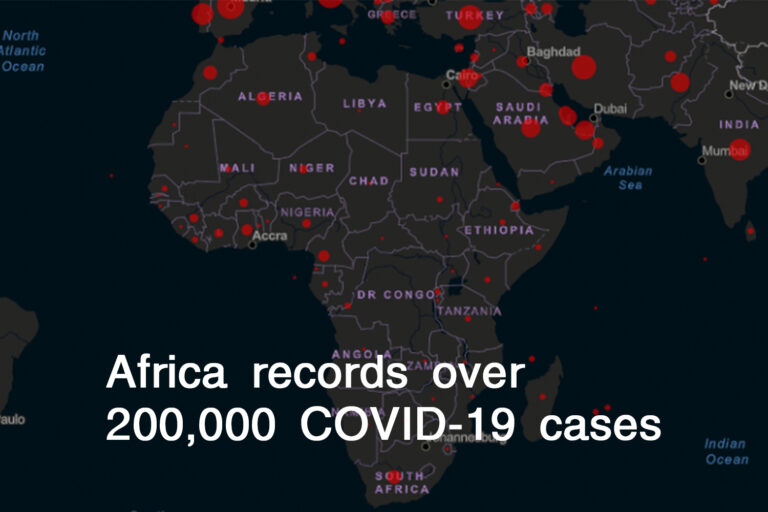
COVID-19 continues to spread in Africa since the virus was first detected on the continent in mid-February 2020. More than 200,000 cases have been confirmed so far, with more than 5,600 deaths. The pandemic is accelerating – it took 98 days to reach 100,000 cases and only 18 days to move to 200,000 cases.
Ten out of 54 countries are currently driving the rise in numbers, accounting for nearly 80% of all the cases. More than 70% of the deaths are taking place in only five countries: Algeria, Egypt, Nigeria, South Africa and Sudan.
South Africa is the most affected, accounting for 25% of the continent’s total cases, with the Western Cape and Eastern Cape provinces reporting high number of cases and deaths daily.
More than half of the countries in the continent are experiencing COVID-19 community transmission. In many cases this is concentrated in capital cities, but cases are spreading into the provinces.
“For now Africa still only accounts for a small fraction of cases worldwide,” said Dr Matshidiso Moeti, World Health Organization (WHO) Regional Director for Africa. “But the pace of the spread is quickening. Swift and early action by African countries has helped to keep numbers low but constant vigilance is needed to stop COVID-19 from overwhelming health facilities.”
Many countries were quick to make difficult decisions and put in place lockdowns and key public health measures such as promoting physical distancing, good hand hygiene and testing, tracing of contacts of people with COVID-19 and isolation of cases. With the support of WHO and other partners, governments also rapidly started to scale up health workforce and laboratory capacities, and to set up points-of-entry screening at airports and border crossings. These public health and social measures have been effective in slowing the spread of COVID-19 in Africa.
In recent weeks, countries began relaxing lockdowns to resume some economic and social activities. The shutdowns have come at considerable socioeconomic cost.
“Stay-at-home orders and closing of markets and businesses have taken a heavy toll, particularly on the most vulnerable and marginalized communities,” said Dr Moeti. “So, the need to balance between saving lives and protecting livelihoods is a key consideration in this response, particularly in Africa.
Easing restrictions should be a controlled process and needs to be coupled with ensuring that widespread testing capacities and mechanisms are in place. These steps need to be constantly adapted according to the trends in the data and maintained until the pandemic is contained or there is a vaccine or treatment for COVID-19 which is accessible to everyone.
As countries ease restrictions, health authorities will need to ensure continuity of essential health care services while also resuming the full gamut of routine health services.
