Tuesday, October 6, 2026
Home Blog Page 3697

JUSTICE…ARE WE THERE YET?

“Imperialism leaves behind germs of rot which we must clinically detect and remove from our land but from our minds as well.” Frantz Fanon

“Are we there yet” is the familiar and frequent cry of our children on those long road trips. Frankly and maybe embarrassingly most adults should admit that we can now relate to this annoying question after months of stay-at-home and work-from-home due to covid19. And then there were the protests. Youth took to the streets…14 days and counting…a convergence of four months of penned up frustrations from lock down with four centuries of rage based on racism, triggered by police murder of George Floyd. Many said, the protests will not yield anything in our “here we go again” voice but optimiss asked, could this be the turning point in justice? “Are we there yet?” A list of gains, circulating on social media, best captures the demands met by protestors including:
Minneapolis bans use of choke holds.
Charges are upgraded against Officer Chauvin, and accomplices are arrested and charged.
Dallas adopts a “duty to intervene” rule to stop other cops engaging in inappropriate use of force.
New Jersey’s attorney general will update use-of-force guidelines for the first time in 2 decades.
Maryland, a bipartisan work group of state lawmakers announced a police reform work group.
Los Angeles City Council introduces motion to reduce LAPD’s $1.8 billion operating budget.
Boston agrees to stop using public buses to transport police officers to protests.
Monuments celebrating confederates are removed in cities in Virginia, Alabama, and other states.
Street in front of the White House is renamed “Black Lives Matter Plaza.”
Mexico, Canada, Brazil, Italy, Ireland, Jamaica, Spain, Greece, Denmark, Germany, Poland, Syria, Australia, South Korea, and New Zealand amongst other countries also joined in with “I can’t breathe” signs and protests representing both the last words of Floyd, and the last words of Adama Traoré, a 24-year-old black man also murdered by police in Paris in 2016 in similar fashion. The rage filled removal of statues, though symbolic, was another significant product of the protests. Statues of King Leopold II of Belgium were targeted, as he was the most vicious 19th century European exploiter and murderer of an estimated 10 million Congolese during the “Scramble for Africa.” Cecil Rhodes did not escape. In front of Oxford University, crowds chanted “take it down” in support of the “Rhodes Must Fall” campaign. Rhodes, founder of De Beers diamond firm, was a racist businessman and politician who helped shape southern Africa in the late 19th Century, steering the annexation of vast swathes of land. He’s memorialized with coveted scholarships for overseas students to Oxford University and Southern Rhodesia (now Zimbabwe) and Northern Rhodesia (now Zambia) were named after him. Removing these statues dotting colonial centers make a major statement, but are we there yet?
As we move one block forward, colonial mentality and white privilege takes us two blocks back. Invaluable iconic treasures stolen from Africa by colonial powers and proudly displayed in European museums and private collections are set to come up for auction at Christies and Sotheby’s. Quartz Africa’s Oluwatosin Adeshokan writes, “Auctions of valuable African artifacts, some of which could be identified as candidates for repatriation to their lands of origin by activists, would be controversial in normal times but particularly so during the ongoing global pandemic and its attendant economic fallout.” Seriously Sotheby’s and Christies? Mercantile interests trump justice. Sotheby’s March online auction of 100+ works from 58 artists across 21 African countries, yielded a massive 46% increase in number of bids from 2019 with sales of $2.9 million. Money talks. But my bets are on the youth to tackle this issue too, hopefully shaming African countries to swap diplomacy for demands.
Finally, right here at home on the continent South African Julius Malema’s reprimand to fellow citizens was clear. Malema, the unrepentant firebrand armed with powerful and sometime painful speeches targeting the ANC status quo, emphatically declared that South Africans can’t say Black Lives Matter while killing Mozambicans, Nigerians, Zimbabweans etc. Discussions about black on black crime are also being held with the awful conclusion that we have known forever, the root of black economic and social issues are rooted in racism. So are we there yet? Frantz Fanon, known as a radical psychiatrist said, “Imperialism leaves behind germs of rot which we must clinically detect and remove from our land but from our minds as well.” His anti-racist anti-colonial approach to psychiatry, known as “institutional psychotherapy” asserts colonialism has a direct psychic effect with the “ability to render one mad by hijacking their person, their being, and their sense of self.” His famous books Black Skin, White Masks and The Wretched of the Earth unpacked the psychological effects of racist social and economic structures while probing the how’s of mental liberation. So with visible gains from the protest, including Ghana’s invitation to her kith and kin to return home, it appears we still have a way to go. So stock up on snacks, fuel, entertainment, educational materials etc. cause we are not there yet.

Dr. Desta Meghoo is a Jamaican born
Creative Consultant, Curator and cultural promoter based in Ethiopia since 2005. She also serves as Liaison to the AU for the Ghana based, Diaspora African Forum.
weathering a crisis

0

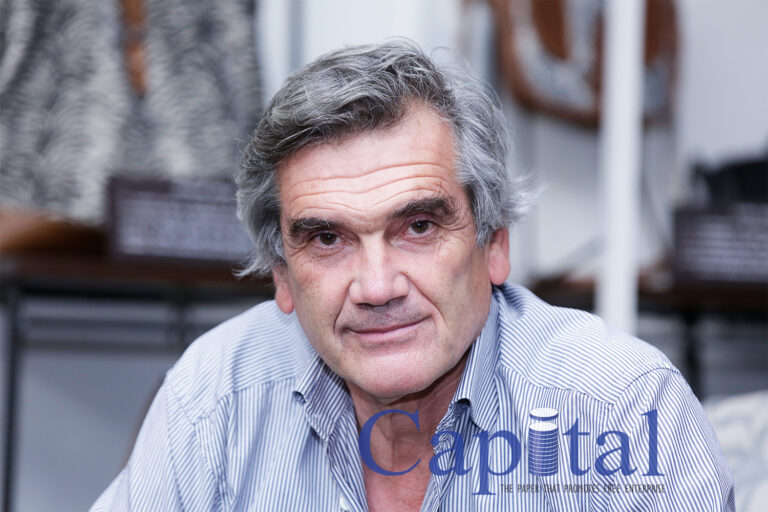
The leather sector is one of the major foreign currency generator of the country. Although since the outbreak of the global pandemic the export of leather and leather goods has been completely ceased. Lots of companies are facing a challenging time with the market. But these companies are looking for other options to sustain in the market and survive the crises. Village industry is one of the companies producing shopping bags to the international market under the line Afar. Camillo Calamai is the general manager of the company that started operation in 2004 as a knitting plant. Village has about 100 employees.
Village process fabrics and leather combining sophisticated technology and high quality natural raw materials and export finished products and also sold locally at various outlets in Bisrate Gabriel, Hilton and Jupitor Hotel. Excerpts;

Capital: Can you tell us how you start your company in Ethiopia?
Camillo Calamai: We set operation 15 years ago with a knitting plant that was supposed to be serving our company in Italy, which is a textile company established by my great grandfather in 1878. Between the two world wars the company becomes the third largest producers of blankets in Europe. It was quite a nice operation. When backing throughout the years we shifted to ladies wear and fashion fabrics and technical fabrics to sport so the knitting plant here was supposed to support the company in Italy and to make technical fabrics. Unfortunately the financial crises in 2008 has forced us to close the operation and we decided to move here to start a new business. The company in Italy was backing us to send some items to Italy but now it is not there anymore so we shift the business and instead of making syntactic fabrics we are making natural cotton and leather for bags.
The beginning was quite well because it was the first product to substitute poly bags before the law that enforce everybody to switch to use eco-friendly product so for a couple of years we produce these and other materials and then the competition becomes a little bit hard. At the beginning it was mainly for shops.
Six years ago we started making some bags of our own line called Afar also we start exporting. We decide to make our own line, our marketing, our branding and whatever was needed to launch a range of bags needed in Europe and other markets.
We participated on several fairs and now even though it’s a niche product and its having a very good acceptance because we are realizing that Africa now specially Ethiopia rely in fashion.
People are looking interested so we are using natural dying and local fabrics that is quite interesting. They are made from natural cotton that comes from the north west part of Ethiopia which is made using basically their hands, no chemicals very little toxic fuels and what really matters is no irrigation. It is very clean cotton which is the probably the best made for environment. We are trying to do natural dying mainly with soils with no chemicals natural and eco-friendly also the quality of the leather.

Capital: How much is your production capacity and who are your immediate target customers?
Camillo: We are making 1500 up to 2500 shopping bags per day and two dozens of this bags from very natural materials. Our target customer’s in terms of shopping bags are mainly food retailers. The commercial market like Europe is huge, it really represent millions of product that are served by China and other Asian producers with some plastic and synthetic materials. I think we have chance of selling not only the shopping bags but also other similar products that can be used in everyday life made from natural products. In terms of our Afar line our target customers are mainly travelers or any one that passes through Africa and has a strong emotional relation with the continent and with the country.

Capital: How do you see running a business in Ethiopia?
Camillo: It is an interesting experience. There are challenges and opportunities. I think I could say in two words that are the base of our market and also the focus we are trying to develop to understand where to go. One is uniqueness and the other is authenticity. I think this corona virus pandemic has been somehow increasing the gap between what we have seen and happening in terms of industrial development but also environment abuse in some highly advance industries. We are main stream producers insisting a lot on how the environment has been preserving this country in how the resources has been unique because of the care that has to be taken.
The other thing is authenticity. A lot of people now talk about eco-friendly product. We have a lot of biological or organic cotton which cost exactly the same price a very little difference with the industrial cotton that is grown with chemicals, irrigations and using mechanical machines which makes no sense here in Ethiopia or in Africa.

Capital: What do you think about the Bt cotton which is in a trial now in Ethiopia?
Camillo: The BT cotton is of course an occasion having cotton that is easier to produce and that goes in to the right direction. But again I am saying that we have to focus on what is really authentic in the country we have to remember that the first domesticated cotton was in Nubia and neighboring areas so this is where we got the first small plants of cotton. We could use to make garments for human beings and that is a long time ago and it is ok to go in to modern technics and also seeds.
In Humera people are still using their own seeds to produce cotton.

Capital: How does the pandemic affect your business what are the challenges your company is facing currently?
Camillo: Our main challenge is that all our orders are either canceled or suspended. So we have started to making face masks as like many textile companies around the world and we are also looking for inputs of other products that we can do because of course there is a need in the market.
If you want to keep the company alive you have to plan hopefully to bring it back to track.
We will work out but we believe that most of them will be resuming. The covid may also represent a chance because I hope there will be a term in to more natural and less harming products probably there will be also less mass consuming and more research of items that have story.

Capital: Do you fear that you may face the same thing that happened to your company in Italy which was closed in 2008/09?
Camillo: Hope it will not be closed. We are working to find a way to pass this difficult moment and we are using to understand what will be the world after the covid 19 crises especially related to our products and textile business. We have been targeting up to now. My feeling is as I said that the future may find some opportunities for our sector, for our business of how things are going in the directions that am hoping if we properly use our chances.

Capital: Do you have any plans to change products or to open other lines or factories?
Camillo Calamai: We are trying to focus on the service and specialize on some phases of what has been happening in the whole world.
In general all the multi phases of textile seems very basic product but it is not; there is agriculture then the cotton then spin you have dying, you have printing, then you have to cut then you have to switch, you have to finish the product properly many of the important operation are all this supply chains and cannot be efficient in modern world if done under assembly that we are 100 percent sure.

11 interesting things you should know about Africa

0

By Taiwo Kola-Ogunlade
Africa Day was celebrated on 25 May, and YouTube and ViacomCBS Networks Africa organized the “Africa Day Benefit Concert At Home”, which was streamed on the MTV Base Africa YouTube channel. The concert gave fans across the globe an opportunity to experience the beauty of music from across the continent while raising funds to support food and health needs for children and families affected by the COVID-19 pandemic.
In a world of social distancing, quarantine, curfews and lockdowns, the Africa Day Benefit Concert At Home also reminded us of the mellifluous and lively rhythms that African music is known for. Music is just one of the things that reflects Africa’s vibrant culture and fascinating peoples. Here are eleven others.
Language
Over 25% of the world’s languages are spoken only in Africa, which is home to an estimated 2000 languages. With a population of over one billion people, Africa has the highest linguistic diversity in the world. Nigeria alone is known to have over 250 languages. Arabic is the most widespread official language, other widely spoken languages are Berber, Igbo, Swahili, Hausa, Zulu, Portugese, Amharic and Yoruba.
Heritage sites
Have you heard of the ‘smoke that thunders’, ‘iSimangaliso- a place of miracle and wonder’, ‘Mosi-oa-Tunya’, or ‘Kilimanjaro?’ These are just a few of the UNESCO world heritage sites in Africa. Africa has a total of 89 cultural world heritage sites – places that represent the combined works of nature and of man. They reveal Africa’s beauty and diversity. Some other heritage sites to check out are the Okavango Delta in Botswana, Namib Sand Sea in Namibia and Osun Osogbo Sacred Grove in Nigeria.
Travel destinations
Africa is still one of the best travel destinations in the world. The continent welcomes visitors to its clear beaches, wondrous vistas and a rich history. From the National Museums of Kenya to the Arab Republic of Egypt- considered to be the cradle of civilization – Africa offers truly memorable experiences. Other popular tourist locations include São Tomé e Principe, Seychelles, Zanzibar, Rwanda, Reunion Island and Morocco.
Mineral resources
Around 30% of the earth’s remaining mineral resources are in Africa. These include uranium, platinum, diamonds, cobalt, gold, oil and gas reserves. Nigeria is the fifth largest exporter of oil, ahead of Iraq and Kuwait. Nickel and uranium can be found in Burundi, titanium in Gambia, and diamonds in Angola, Botswana, Central African Republic and Democratic Republic of Congo. It is interesting to note that almost half of the gold ever mined on earth has come from a single place – the Witwatersrand, in South Africa.
Early African art
Art has always been synonymous with Africans. The earliest form of African art is rock art. The oldest rock art images – scientifically dated from 27,000 years ago – are in Namibia. The petroglyphs, rock carvings that depict animals like giraffes that no longer exist in the area, are preserved in the Saharan sands in Niger and date back to 6500BC. The earliest known sculptures are the remarkable terracotta pottery heads from the Nok culture of Nigeria and are dated around 500 BC through to 200 AD. Metal sculptures, wood carvings and textiles also make up some of the early African art.
Young population
Africa has been home to some of the world’s oldest civilizations and now, it is the home to a very young growing population. The African population is much younger than the rest of the world with over 50% of Africans under the age of 20. This has enabled the continent to record growth in industries that fit this young demography such as fintech, entertainment, transportation, technology, real estate, fashion and food processing.
Fashion
African fashion has come a long way to where it is now – bold, diverse and original. Notable celebrities like Beyoncé, Jidenna, Chimamanda Adichie Ngozi and Erykah Badu have been spotted wearing African prints as fashion choices. African fashion designers like Nigeria’s Deola Sagoe or South African’s Sindiso Khumalo have been able to build recognizable brands not just in Africa but across the world.
African heroes
Africa also has its long list of heroes. These are notable personalities that have been identified for their admirable courage, nobility, or exploits. From Nelson Mandela, South African statesman to Kofi Annan, Ghanaian and the first African to be elected as Secretary-General from the ranks of UN staff; Chinua Achebe, Nigerian novelist; Desmond Tutu, South African cleric and Nobel Peace Prize winner; Ellen Johnson Sirleaf, Liberian stateswoman; Paul Kagame, Rwandan statesman and Wangari Maathai, Kenyan human rights and environmental conservation advocate, Africa has a wealth of heroes who are celebrated worldwide.
Food
Africa presents diverse culinary options. Preparing iconic dishes from Africa needs a unique set of skills and preparation techniques. From jollof rice from Nigeria, Piri piri chicken from Mozambique, Waakye from Ghana, Cachupa from Cape Verde, Yassa from Senegal to Superkanja from Gambia, African cuisine leaves a lasting impression on your palette. In Nigeria, to really enjoy your meals, you must explore the art of eating with your fingers. This is the norm in most African countries.
Architectural wonders
The Pyramids of Giza in Egypt date back to 2500BC. Pyramids in Sudan were originally built by the Kush under the ruling of Nubian Kings in the 4th century BC. Africa is known for its architectural wonders. The Corinthia Hotel Khartoum in Sudan, Aksum’s Giant Stelae in Ethiopia, the Reunification Monument in Cameroon, the Walls of Great Zimbabwe, Alice Lane Towers in South Africa and the Great Mosque of Djenne in Mali, all showcase Africa’s ingenious creativity.
Tribal ceremonies
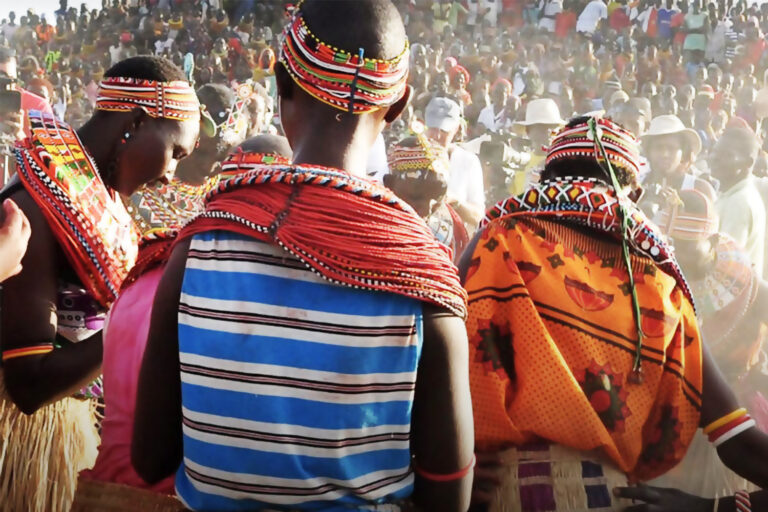
African tribal ceremonies pay homage to the rituals that mark important occasions in tribal life. The Maasai people of Kenya and Northern Tanzania view spitting as a form of blessing and a sign of respect. The Mursi tribe of Ethiopia is one of the last tribes in Africa where it’s the norm for women to wear large pottery or wooden plates in their lower lips and the courtship dance for young men of the Wodaabe tribe in Niger is an annual ritual competition where the winner is then eligible for marriage.
Africa is arguably considered the cradle of the world’s civilization. It’s rich culture is visible in its languages, food, tourist attractions and most especially, its people. The second largest continent in the world is distinctively unique and offers an unparalleled experience for those willing to visit or know more about its heritage.

Kola-Ogunlade is the Communications & PR Manager, West Africa for Google.

Documentary filmmaker Mary Olive Smith ’88 practices the Art of Reality

0

Mary Olive Smith ’88 is glad she isn’t 20 years old today, when everyone is expected to have an Instagram brand that may or may not reflect reality. Reality is Smith’s bread and butter.
At 53, the seasoned filmmaker remains laser focused on bringing truths about the world into viewers’ living rooms.
As the owner of Flying Pup Productions, Smith aims to create “moving image that moves the world” through the medium of documentary filmmaking.
Now the winner of an Emmy Award for the feature-length documentary A Walk to Beautiful, Smith says the path to her art was both obscured and illuminated by her varied passions.
Smith created her own major at Davidson, combining her love of culture, language, art history and political science. She first considered diplomacy as a career option.
“I was given the advice that sometimes the policy line wouldn’t align with my heart,” Smith says. “I had always been involved with film and music, and I knew that was truly what filled my heart, so I kept following my passions, and everything fell into place. It turned out I had knack for the technical and logistical side of filmmaking—the grind of it all. I was never doing it for the glamour; I love the day to day.”
For the first decade of her career, Smith produced primetime documentaries for PBS, Discovery and National Geographic, among others. Then, while working at Engel Entertainment in New York City, she was approached about the life-changing opportunity to direct A Walk to Beautiful.
The film tells the story of women in Ethiopia devastated by obstetric fistula, a childbirth injury with medical complications that can result in depression, infertility and social isolation. A USAID study documented an estimated 36,000 to 39,000 women in Ethiopia live with obstetric fistula, with more than 3,000 additional new cases occurring each year.
An anonymous funder contributed seed money for the project to shine a spotlight on the under-recognized issue.
Smith directed the documentary, which is available on Netflix in abbreviated form. She says it is both a story of healing and hope.
“By far, it was the best experience of my life,” Smith says. “There’s something about childbirth that is universal—you can go to the most remote part of the world and connect with another mother.”
Form and Content
Smith has since shifted her focus to freelance work, which provides more freedom to choose projects. Much of this work calls for shorter pieces on big topics, ranging from maternal health to infectious diseases—in places across Africa and in Haiti, remote parts of Nepal and Indonesia.
“I’ve always tried to tell the in-depth story no matter how long the end result is,” she says. “The challenge of adapting my storytelling technique into very short pieces was fascinating. I still prefer long form, but I learned you actually can tell a lot in a short time.”
One recent, longer-form project for the acclaimed PBS science series NOVA took Smith to Baltimore. She followed Safe Streets, an organization that’s working to stop violence by using an epidemiological approach. Filming in drug-ridden neighborhoods, she worked alongside a team of former gang members who are now fighting to save their communities.
“Culturally, it was the most difficult thing I’ve ever done,” she says. “I had to gain trust from people who have lived very different lives from my own.”
Looking ahead, Smith, who sings in a country music band and grew up in North Carolina, is interested in covering Appalachia and the poverty and plague of drug addiction in the region. She sees parallels to her work in Baltimore—addiction destroys urban and rural communities alike. She lives in a universally accessible home in Maplewood, NJ, with her husband, a librarian and fellow musician, and their 11-year-old son, who uses a powered wheelchair and enjoys life to the fullest.
“I can’t work for free, but I wish I could,” Smith says. “I feel lucky to get to work on these issues and tell important stories. Whether I’m in Baltimore or Ethiopia, I listen with sincerity to what people have to say. I’m 53 now, and I hope I’ll keep making films for another 30 years. People in my field tend to never quit.”
This piece appears in the Spring/Summer issue of the Davidson Journal magazine.