

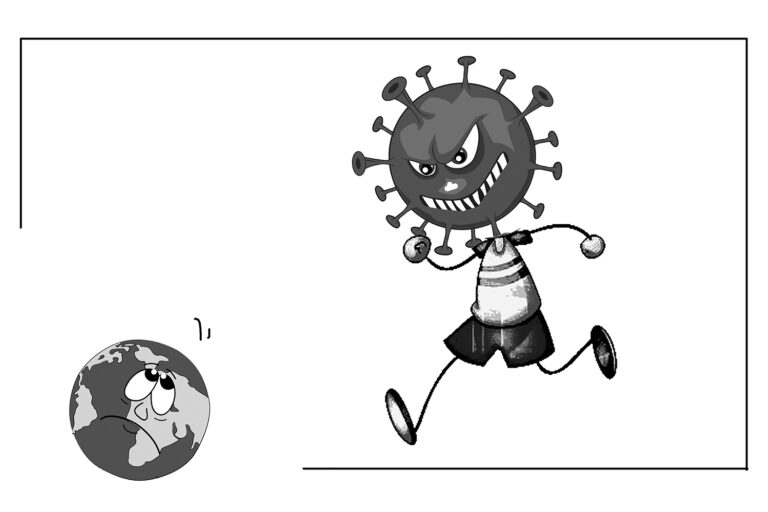
Pestilences are quite rampant in Africa. Tropical diseases are part and parcel of our existence. Unlike many places on the planet, pestilences still prevail and continue to cause havoc on the continent. Malaria, typhus, typhoid, cholera, sleeping sickness, yellow fever, river blindness, TB, snail fever, etc., etc., regularly kill thousands of people on a daily basis! AIDS took center stage from the early 1980s to about mid 2010s. Since AIDS was considered a severe impediment to all sorts of sexual activities, hence procreation, it scared and psychologically debilitated many a youth. Awareness and consequent measures managed to reduce the AIDS epidemic. Ebola might well be the new game in Africa, so to speak. It is recognized as one of the upcoming pestilences we might face in the near future. Nevertheless, Ebola vaccines are being attempted, amongst many places, in Cuba, Russia and China!
Experts and pundits alike tell us Africa will be devastated by Covid-19, without adequately elaborating the ‘whys’. These so-called experts predicted that the US would lose over two million people in short order, on the account of Covid-19. It seems these quack doctors/experts are now singing a different tune. Be that as it may, the whole fear mongering and terror inducing pronouncements seem to have done major damage to the old ways of doing things, all across the globe. May be that is the was the intention in the first place. The gullible sheeple (human mass) as usual, is frightened out of its wits. Laws that are being promulgated in many of the nation-states are bound to enforce changes on its livelihood, comprehensively! Don‘t forget; the world economy has been on the precipice, since at least 2008. The declared pandemic might serve as an opportune moment to restructure the world system. Incidentally, the official definition of a pandemic used to be, amongst other things, a death to infection ratio or fatality rate of 12%; not the current 0.1 to 0.5% of Covid-19! Many are still perplexed that things can change so much in such a short time. To this end, genuine scientists, not on the pay of Big Pharma, Big Governments, Big Banks, etc., who are not in research primarily for the money, have been airing their disagreements with the on going ‘paid science’ of the establishment. Naturally, this is something the ‘deep state’ (military-intelligence-industrial-banking-media-complex) doesn’t like, hence, is doing all it can to stop facts/truth from coming to light!
Covid-19 is a flu type affliction, which is usually more prevalent in the temperate regions of the world. In Africa such flues are not as common. One cannot in all honesty say what the impact of Covid-19 would be on Africa in the coming weeks, months or years. Some have predicted that Ethiopia alone would have about 23 million cases of Covid-19 resulting in millions of deaths! We agree precaution is very important, but in the case of Covid-19, we think exaggeration has taken the better of us. ’Covid-19 will be horrible in the developing world, she said. My heart is in Africa. I am worried. The only reason why the reported cases of the coronavirus disease in Africa is low now is most likely because there have not been wide testing of people. The disease is going to bite hard on the continent. I see dead bodies in the streets of Africa.’ Melinda Gates of the eponymous foundation. When total fatality (documented) is only three from Covid-19 in Ethiopia, in the last three months, extrapolating this three deaths to millions of deaths in the coming few weeks or months borders the irresponsible. We admit, Melinda Gates is very much in the know when it comes to Africa’s agriculture and health, not only productive! But since we are neither clairvoyants/fortune tellers nor pandemic planners/plandemics, there is not much we can say about the declared pandemic, except to look at the hard facts borne of genuine science, not paid science! See the article published by the Swiss Propaganda Research next column.
It is obvious Africa doesn’t produce top-notch scientists on regular basis. Even when it does, it has a hard time retaining them. After all, there aren’t many incentives to keep high caliber people inbound. General work environment and living condition might be the major impediments, but other factors such as the overbearing system of governance, mostly based on buffoonery, corruption and outright idiocy, is another one. As a result, instead of quality science, it is politically tainted science along with paid science that is officially imported by the politicos, with the help of our Ivy Idiots (Intellectuals yet Idiots-Taleb) that continue to saturate the airwaves! Since African nation states have no real sovereignty, it would be a waste of time to sincerely dwell on such matters. Nonetheless and from the look of things/data, the prognosis of Covid-19, as pontificated by the global establishment might not come to pass, God willing! In late modernity, where the profit motive supersedes life itself, one must always remain critical, no matter what the topic under discussion is. It is advisable to note that even in the deeply studied fields of the hard sciences (verifiable with potential falsifiability) there are always and will be, lingering reservations. Here is a four decades tug-of war between prominent scientists. It involves the connection between HIV and AIDS. The following is one extraction from the specific milieu.
‘Kary Mullis … is thoroughly convinced that HIV is not the cause of AIDS. With regard to the viral-load tests, which attempt to use PCR for counting viruses, Mullis has stated: “Quantitative PCR is an oxymoron.” PCR is intended to identify substances qualitatively, but by its very nature is unsuited for estimating numbers. Although there is a common misimpression that the viral-load tests actually count the number of viruses in the blood, these tests cannot detect free, infectious viruses at all; they can only detect proteins that are believed, in some cases wrongly, to be unique to HIV. The tests can detect genetic sequences of viruses, but not viruses themselves. Here is Mullis himself:
“Its not even probable, let alone scientifically proven, that HIV causes AIDS. If there is evidence that HIV causes AIDS, there should be scientific documents, which either singly or collectively demonstrate that fact, at least with a high probability. There are no such documents. Scientists are doing an awful lot of damage to the world in the name of helping it. I don’t mind attacking my own fraternity because I am ashamed of it.” Kary Mullis, inventor of the PCR system (polymerase chain reaction) and a Nobel Laureate in Chemistry (1993). Good Day!
AFRICA & PESTILENCES
Economist suggests 26% COVID bond on banks
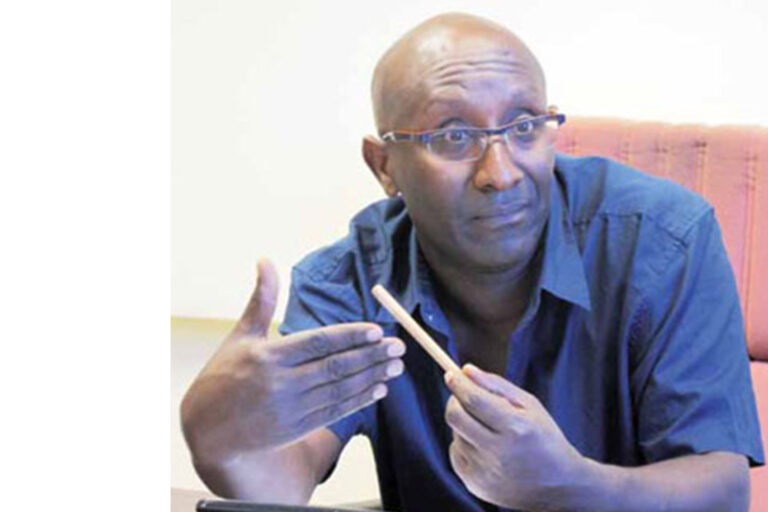
The recently published policy response for COVID 19 impact conducted by an economist suggested the government to mobiles finance through different instruments including imposing a 26 percent forced COVID bond on banks.
The paper published under the title ‘The Macroeconomic and Social Impact of COVID-19 in Ethiopia and Suggested Direction for Policy Response’ by Alemayehu Geda, Professor at Addis Ababa University, advised the government to include the 28 billion birr supplementary budget ratified by the parliament few weeks ago under the fund to tackle the challenge because of COVID 19.
He estimated that macroeconomic instability such as high inflation (in particular food inflation) is a real possibility that may emerge as part of the economic shock and policy response related to the COVID effect if it is not properly managed via different monetary and fiscal policies.
Alemayehu reminded that the fiscal posture of the Ethiopian government has been precarious for years that it is characterized by significant budget deficit every year (especially if the financial position of the state-owned enterprises is taken on board) and also characterized by requesting supplementary budget each year.
“This had implications for monetization of deficit, indebtedness and macroeconomic instability (as depicted by total debt to GDP ratio of 60 percent or more, double digit inflation, shortage of foreign exchange and significant parallel market premium as observed in recent years),” the paper added.
He underlined that the latest pandemic will further accentuate the problems if cautious and prudent macroeconomic policy is not accompanied with the effort to fight the economic impact of the pandemic.
He estimated capital expenditure might be halted until at least the current challenge solved or subsidized by other means.
To fund the problems that affect the total economy and fight the virus, the government has allocated 300 million birr, provide 15 billion birr for private banks to support their liquidity and it disclosed further USD 1.6 billion (51.2 billion birr) required to mitigate the challenge.
“This adds up to 66.2 billion birr which could raise the government’s current expenditure by 30 percent from its current level,” the professor on his paper said.
He recommended the supplementary budget should be included in the stated 66.2 billion birr to abate the pressure on macroeconomic instability in general and inflationary pressure in particular.
“I insist this supplementary budget to be part of the COVID related planned spending of USD 1.6 billion for otherwise the scale of macroeconomic instability could be much larger,” he added.
According to Alemayehu With these assumptions, the total public expenditure could increase by 17.4 percent compared to the base-run situation (the current expenditure increasing by 30 percent). He has also assumed that the government revenue will be shrunken by 16 percent, while combined effect of a rise in public expenditure (Birr 66.5 billion, 17.4 percent increase) and a fall in revenue (Birr 50.5 billion, 16 percent reduction) is to bolster public deficit by Birr 117.1 billion just to have a fiscal posture that the country had before COVID.
According to the paper taxes and non-tax revenues are expected to decline by 18.8 and 7.7 percent, respectively. He estimated that direct tax will reduce by more than22 percent, and indirect tax by 16.3 percent.
He said that if the supplementary budget will not be included in the stated 66.2 billion birr the budget deficit of the country will be wider.
“The combined effect of government revenue loss and a hike in public expenditure is to put unprecedented pressure on public deficit and strong pressure on monetization of this deficit,” he added.
Policy measures of monetization of the deficit by borrowing from the National Bank of Ethiopia that means printing money should be avoided according to Alemayehu because that would have massive damage for the macroeconomic stability of the country.
“Though the government of PM Abiy was in the course of controlling the excessive money supply (broad money) growth in the last decade by reducing its growth rate from 30 percent in 2017/18 to 20 percent in 2018/19, this growth rate itself is still on the high side,” he says “during the previous EPRDF regime money supply has been growing by an average annual rate of 30 percent for more than a decade.”
This has resulted in an unprecedented increase in the money supply form a meager figure of 68 billion birr in 2006/07 to 886.8 billion birr in 2018/19, thirteen-fold growth in just 12 years.
He showed this annual growth rate is about 5 times higher than a healthier growth rate that could have avoided the current double-digit inflation, high debt burden, structural trade deficit and shortage of foreign exchange – in short, unstable macroeconomic environment.
He added that the average money supply growth rate is about 26 percent in the last three years. He underlined that monetizing the budget deficit by borrowing from NBE will expand the money supply growth rate to 37 percent by additional 11 percent from the latest average growing rate and gallop the inflation significantly.
Due to such effect the government should look other alternatives to fill the budget gap that is occurred due to COVID 19 responses. He said half of the required fund should be secured from external sources that will expand the money supply to 32 percent with relatively lower inflationary pressure than the effect of borrowing from the central bank.
On this type of source of finance, he added that to halt inflationary pressure part of the external finance is used either to finance the importation of food and related essential or ensure their domestic production besides additional policy measures.
As third alternative to solve the effect of filling the budget deficit by Alemayehu is using mixed (heterodox) policies like shifting resources from others, avoiding devaluation, allow major economic sectors to function (unlike lockdown), strategic shift in some sectors like Ethiopian Airlines that shifted to cargo operation, and provision of credit or some kind of assistance for firms.
In his paper Alemayehu stated the use of the renaissance dam financing type bond selling scheme that may re-impose the 26 percent forced deposit on banks for COVID purpose for a limited period is worth considering.
“This could be an alternative way of financing to minimize the danger of macroeconomic instability significantly,” he recommended.
“Prior consultation with banks and financial institutions on this issue need to be part of this process, however,” he said.
Different scenarios
The paper has evaluated the expected effects in three different scenarios based on the timeframe that may continue based on condition of the virus.
The best case scenario is considering the effect of the virus will continue until the first quarter of the coming budget year (2020/21). In this scenario the country GDP will shrink by 5.6 percent or 114 billion birr.
The second scenario considered the effect period will last in the second quarter of the coming budget year that is the end of 2020. This period mostly stated as likely scenario for the effect of the virus in the economy of the country.
The worst case is considering the period until the third quarter of the budget year, which is almost one year from now. In this scenario the country’s GDP will be dropped by 16.7 percent or 341 billion birr.
The average effect of the virus in the economy will be 11.1 percent or 227 billion birr that included the last quarter of the current budget year that will end in July 7.
The paper that mentioned complete lockdown is impossible for the country stated that the major sector that will be affected by the pandemic is the industry sector.
This shock is found to be the highest in the industrial sector which is expected to shrink by 17 percent. This will be followed by the services sector which is expected to shrink by 15.6 percent and agricultural sector is expected to contract by only 1.6 percent, according to the paper.
The external sector is the most vulnerable one to the economic impact of COVID-19 since it is a global challenge.
Alemayehu estimated a most likely condition that the economic shock may last at least for the first and second quarters of the year 2020/21 and exports are expected to decline by about 16.2 percent.
“Oil seeds export leads this, by a decline of 25 percent. This is followed by pulses, coffee and leather and leather products, which are expected to decline by 21 percent,” he added, “similarly, the last quarters of the current fiscal year (March to June 2020) is expected to witness a decline in exports of about 16.2 percent.”
In the worst-case scenario total exports may decline by 24.3 percent.
He also estimated that import that is mainly focused on strategic products will be affected and its effect will be all rounded since most of the country import shall be related with projects and industries as input.
In average the import shall be dropped by 12 percent because of the virus that might be worsen to 18 percent at the worst case.
Electronic Negarit Gazeta coming soon

A draft bill that will make electronic Negarit Gazeta (Gazette) legal is tabled to the parliament.
The draft proclamation to ‘provide for electronic transaction’ that aims to develop digital economy and help improve the capability of the technology and expand the job creation in the sector has stated that the electronic Negarit Gazette will be considered equally acceptable as the printed paper gazette.
Article 36 sub article one of the draft proclamation states that the Federal Electronic Negarit Gazeta, a Federal Law Electronic Gazette published under the umbrella of the House of Peoples’ Representatives is established.
The draft proclamation that accepts article 2 of Federal Negarit Gazeta Establishment no. 3/95 has added some new features in the draft.
Article 36 sub article 2/A states that all laws of the federal government shall be published in the Federal Electronic Negarit Gazeta.
The same article sub article 3 also states that the publication date of any law under Federal Electronic Negarit Gazeta shall be considered as a date of publication of the law.
Sub article 4 added that if there differences occurred in publication date between the printed version (Federal Negarit Gazeta) and the electronic one it will be applicable based on the prior publication date of any of two versions.
Legal experts stated that the draft proclamation may help to accelerate the effectiveness of laws that were supposed to be waiting for several weeks for print that is crucial to apply the proclamations that the parliament ratified.
The proclamation that targets to undertake electronic transaction and digital business operation has also allowed the government to provide electronic government services besides the rational paper system.
The preamble of the proclamation stated that using electronic commerce positively affects market opportunities, thereby empowering citizens to be included in the economy and also enable Ethiopia to be part of the digital era.
It added that deploying electronic government service in support of good governance is essential for building effective, accountable and inclusive institutions at all levels.
Marriage, divorce, court verdict, wills, fixed assets trading and power of attorney are not included in the proclamation framework or not included as commerce or electronic government services, according to the introduction of the proclamation.
Ethiopia rises up 11 places on World Press Freedom Index
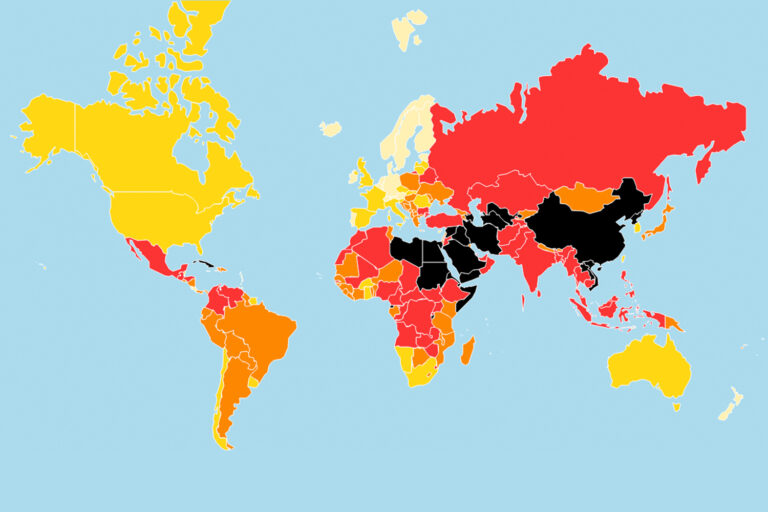
The 2020 World Press Freedom Index, compiled by Reporters Without Borders (RSF), shows that the coming decade will be decisive for the future of journalism, with the Covid-19 pandemic highlighting and amplifying the many crises that threaten the right to freely reported, independent, diverse and reliable information.
Ethiopia has risen 11 places up on the 2020 World Press Freedom Index, and now ranks 99th among 180 countries that most respect freedom of information.
Published annually by Reporters Without Borders (RSF), a non-governmental organisation based in Paris, the index evaluates the level of freedom available to the media throughout the world.
Ethiopia was 110 in 2019 world press freedom ranking. This year, the country achieved a score of 32.82, which was 35.11 in 2019.
Norway has topped the annual press freedom index for the fourth consecutive year scoring 7.84.
Finland retained its second place, while Denmark moved up two places to round out the top three at the expense of Sweden and the Netherlands, which both dropped a place to fourth and fifth respectively because of an “increase in cyber-harassment.”
Published every year for almost two decades, the ranking rates 180 countries and territories based on “the level of pluralism, media independence, self-censorship, legal framework, and transparency,” according to RSF.
The results are “calculated from responses to a questionnaire that is completed by experts throughout the world, supported by a qualitative analysis.”
North Korea dropped to last place in the table, usurping Turkmenistan, while Eritrea, which lies in 178th, is still the county with the least press freedom in Africa.
Malaysia, in 101st position, up 22, and the Maldives, in 79th place, up 19, had the biggest rises in comparison with last year’s Index. RSF cited “beneficial effects of changes of government” in the respective nations.
The report further states that there is a “clear correlation between suppression of media freedom in response to the coronavirus pandemic and a country’s ranking.”
Both China, 177th, and Iran, down three to 173rd, censored their COVID-19 outbreaks “extensively.” In Iraq, down six spots to come in at 162 in the press freedom index, the authorities recently stripped news agency Reuters of its licence for three months after it published an article questioning official COVID-19 numbers in the Middle Eastern country.
The 2020 edition of the Index, which evaluates the situation for journalists each year, suggests that the next ten years will be pivotal for press freedom because of converging crises affecting the future of journalism: a geopolitical crisis (due to the aggressiveness of authoritarian regimes); a technological crisis (due to a lack of democratic guarantees); a democratic crisis (due to polarisation and repressive policies); a crisis of trust (due to suspicion and even hatred of the media); and an economic crisis (impoverishing quality journalism).
These five areas of crisis – the effects of which the Index’s methodology allows us to evaluate – are now compounded by a global public health crisis.
“We are entering a decisive decade for journalism linked to crises that affect its future,” RSF secretary-general Christophe Deloire said. “The coronavirus pandemic illustrates the negative factors threatening the right to reliable information, and is itself an exacerbating factor. What will freedom of information, pluralism and reliability look like in 2030? The answer to that question is being determined today.”
