continued from last week
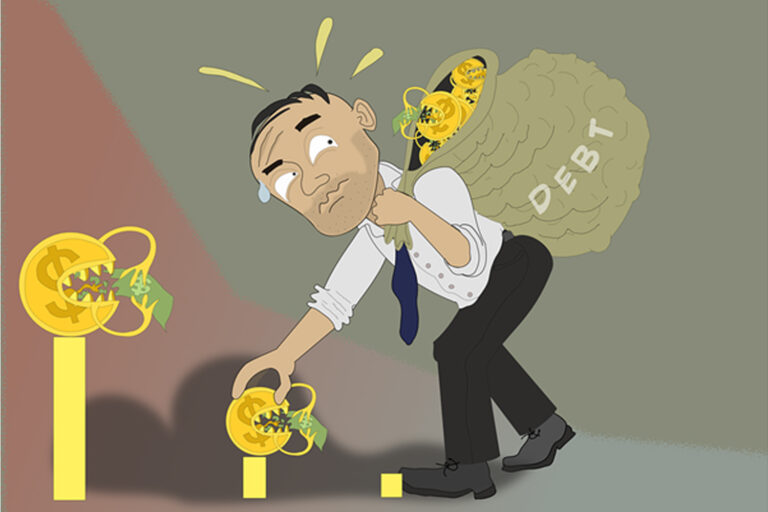
Arab governments and their external sponsors tend to prioritize the wrong threats. Most Arab governments continue to introduce superficial reforms in pivotal sectors such as education, employment, and anti-corruption, but their efforts mostly remain unsuccessful or limited in their impact. Simultaneously, the broader Arab trend in most countries since the end of the Cold War around 1990 sees steadily increasing pauperisation, vulnerability, perceived injustice and helplessness, and disparities.
Long-term, cross-generational poverty now seems inevitable for families that suffer short-term setbacks in their income, because most Arab states are unable to generate the new decent jobs or provide the social services required to pull poor and vulnerable families out of their miserable condition. Recent studies indicate that the Middle East is the most unequal region in the world, with the top 10 percent of its people accounting for 61 percent of wealth, compared to 47 percent in the United States and 36 percent in Western Europe. Inequalities are documented in virtually every sector of life and society, including rural/urban, gender, income, ethnicity, and others, suggesting that this has become a deeply engrained structural problem rather than a fleeting phenomenon due to short-term economic stresses.
Poverty, vulnerability, and inequality have converged into a single dynamic that is deeply anchored in existing economic realities and state policy deficiencies that show no signs of changing appreciably, and consequently they will be difficult to reverse in the short term. The 2018 ESCWA and Economic Research Forum report indicated that some Arab countries, including Egypt, have even reversed decades-old recent trends and registered a rise in fertility rates in the past five years, which will increase the demographic pressures on economic and social systems that have been unable to keep pace with population growth even when fertility rates were declining in recent decades. According to the report, an estimated nine million Arabs are born every year, nearly two million in Egypt alone, all of whom will need education, health services, housing, water, and jobs that the Arab states already are unable to provide to the existing population.
Beyond the pain that this situation brings to poor and vulnerable families is the additional dangers that societies suffer, such as fragmentation, political instability, social, class, and sectarian tensions, citizen alienation from the state, and sometimes political violence, criminality, or illegal migration. External powers have done little to address these massive social and economic problems, and in most cases have supported regime policies which make them worse.
Jordan offers a timely example of how social, economic, and political stresses on families lead to wider tensions in society, ultimately generating serious splits between citizens and their state. From the late 1990s to 2018, for example, Jordanians significantly increased their perceptions of injustice and inequality in their lives, especially their treatment by the state and its institutions. Data from polls by the respected local consultancy NAMA, directed by Dr. Fares Braizat, shows those who say that justice does not exist in their lives increased from 8 to 24 percent in that period, and the perception of inequality increased from 10 to 30 percent.
These sentiments are especially high in rural areas and among those who migrated from rural to urban centers in recent decades; most of these citizens depend on state employment or other state-related income, have not benefited from private sector investments or jobs, and increasingly in recent decades have found themselves unable to meet their basic family needs. Polls by NAMA and the Center for Strategic Studies at the University of Jordan reveal some disturbing trends in family-level economic and political distress, including the critical perceptions of injustice that seem to be a crucial driver of anti-government protests.
Jordanians who see no justice in their lives increased from 40 to 46 percent in just the four months between June and September 2018, two-thirds of citizens feel the country is moving in the wrong direction, 72 percent of households said they could not meet their basic expenses, compared to 42 percent in mid-2011, and two-thirds of households reported their economic situation is worse than it was a year ago. The inability to meet basic household needs, or barely to do so but without being able to save any money, is also mirrored in regional polls by the Arab Barometer and the Doha-based Arab Center for Research and Policy Studies, both of whose pan-Arab surveys indicate around 70-75 percent of families cannot afford to pay for their most basic needs.
Protests in the past year in Jordan and across the entire Arab region including Sudan, Algeria, Iraq, Tunisia, Lebanon, and other lands, indicate fact that citizens are stressed by a debilitating combination of political and socio-economic factors in their lives. Many suffer from precarious socio-economic conditions as well as their lack of political power to address compelling issues like corruption, political accountability of the elite, and being treated with disdain by their state. The most dramatic example of the latter was the desire of the Algerian ruling elite to nominate President Abdelaziz Bouteflika for a fifth consecutive term, despite his near comatose physical and mental state, which makes a mockery of the presidential election being an opportunity for citizens to voice their political views.
Rami Khouri of American University of Beirut stated that these powerful internal forces of discontent and public protest by large numbers of citizens across almost the entire Arab region have already started to impact on their states’ foreign policies and international relations, in several ways. In many situations where millions of citizens suffer sustained poverty and marginalization that leads to alienation from their state and society, large numbers of them (especially unemployed young men) join the reservoirs of vulnerable people who are easily recruited into militias, terror groups, and other organizations that impact both domestic calm and foreign relations.
In some cases discontented citizens mobilize to vent their anger at their countries’ policies towards Israel, as happened in Jordan in 2018, when the King succumbed to public pressure and rescinded a clause in the 2004 peace agreement with Israel that allowed Israel to maintain control of a few patches of Jordanian land in the Jordan Valley. Turbulent conditions triggered by large numbers of dissatisfied citizens also prompt many of the best educated among them to emigrate, thus depriving the country of precisely the youthful talent and energy it needs to overcome its lingering socio-economic stagnation and political stresses.
Finally, when governments increase and harden security controls on their citizens in order to ensure “stability”, as many Arab countries have done since 2011, the result is usually the opposite. Popular discontent rises, the ruling elite expands its powers and clientelist networks, economies lumber along without significant new growth or investments, the state relies more and more on external security and financial support to survive, and the cycle of pent-up discontent that exploded in the 2010-11 uprisings starts to build again. This should prompt scholars of international relations, along with the ruling elites of the Arab states in question, to examine more closely the worsening internal conditions of these countries, especially the mindsets of hundreds of millions of citizens whose attitudes and actions ultimately will determine the fate of their societies and the direction of the entire region.