Tuesday, September 22, 2026
Home Blog Page 42

Türkiye’s COP31 Presidency Sets Out Targets, Key Milestones, and Thematic Agenda for Global Summit in Antalya

0

Türkiye’s COP31 Presidency today published its third Letter to Parties providing an overview of its priority themes, key milestones on the road to COP31 in Antalya, and the thematic days for the global summit itself.

Signing the letter, COP31 President-Designate, Murat Kurum, said, “The challenges before us are considerable, but so are the opportunities. By working together with ambition, flexibility and a shared sense of responsibility, we can strengthen confidence in multilateral climate cooperation and deliver practical, inclusive and ambitious outcomes that respond to the urgency of the climate crisis.”

East Africa’s Next Frontier: Islamic Finance and Interest-Free Banking

0

In an exclusive interview with Capital, Muhammad Zubair Mughal, CEO of the AlHuda Center of Islamic Banking and Economics, outlines why East Africa—particularly Ethiopia, Kenya and Tanzania—could become one of the most dynamic regions for interest-free banking over the next decade.

Speaking ahead of growing regulatory and market activity in Ethiopia’s nascent non-interest banking sector, Mughal highlights the region’s combination of large Muslim populations, high mobile-money penetration and untapped demand for Shariah-compliant products. He argues that Islamic finance is not a niche offering for Muslims alone, but a values-based model built on transparency, risk-sharing and asset-backing that can appeal to a broad range of customers and investors.

The conversation covers the role of multilateral institutions such as the IMF and World Bank, the importance of sovereign Sukuk and tax-neutral regulation, and how Ethiopia’s position as host of the African Union could allow it to shape the development of Islamic finance across the Horn of Africa. Mughal also addresses the specific challenges facing Central Africa, the lessons from francophone West Africa’s regional approach, and how building basic Islamic finance infrastructure can unlock foreign direct investment from Gulf and other Islamic markets. Excerpts;

Capital: How do you evaluate the growth and potential of the East African market—specifically countries like Ethiopia, Kenya, and Tanzania—for interest-free banking compared to other global regions?

Muhammad Zubair Mughal: Honestly, I find East Africa incredibly exciting—and perhaps underappreciated by the global Islamic finance community. When I look at Ethiopia, I see a country with tens of millions of Muslims who have never had access to a Shariah-compliant product that they could genuinely trust. That is not a niche—that is a generation of potential customers who have either stayed out of the formal financial system entirely or accepted conventional products with considerable discomfort.

Kenya is more advanced—you already have functioning Islamic banking, some Takaful activity, and a relatively open regulatory posture. Tanzania is moving more slowly but steadily. What makes me optimistic about the whole region is the mobile phone penetration. In East Africa, people leapfrogged traditional banking infrastructure and went straight to mobile money. If we can bring Shariah-compliant products onto those same digital rails, we can reach people at a cost and at a scale that was simply not possible ten years ago.

Is it going to happen overnight? No. There are real challenges around Shariah scholarship, regulatory capacity, and public awareness. But the trajectory is clearly positive, and I think East Africa will surprise people over the next decade.

Capital: In what ways can Islamic finance contribute to broader financial inclusion and socio-economic development within Muslim-majority countries?

Muhammad Zubair Mughal: I always come back to a simple observation: in many Muslim-majority countries, the most financially excluded people are not excluded because they are too poor or too remote—they are excluded because they have made a conscious choice not to participate in an interest-based system. That is a huge distinction. When you offer a genuine, trustworthy Shariah-compliant alternative, you are not just creating a new product—you are opening a door that people have been waiting to walk through.

I have seen this firsthand in markets where Islamic banking was introduced and the uptake was remarkable, not because of aggressive marketing, but because the demand was already there. And then there is the social finance side—Zakat and Waqf. These are not just historical curiosities. If we can modernise and formalise these instruments, channel them through proper institutions with accountability and transparency, the development impact can be transformative. A well-structured Waqf endowment can fund a school or a clinic in perpetuity. That is the kind of long-term thinking that development programmes need to embrace more seriously.

Capital: How would you address the common misconception in emerging markets that Islamic finance is exclusively restricted to Muslim populations?

Muhammad Zubair Mughal: I have heard this so many times, and I understand where it comes from. People see the word “Islamic” and they immediately assume it is only for Muslims—that they need to be a certain religion, or say certain words, or be part of a particular community. And that is simply not true.

The honest reality is that Islamic finance is built on principles—transparency, fairness, asset-backing, avoiding exploitation—that resonate with people of all backgrounds. When I sit with a non-Muslim entrepreneur and explain that I am offering them a financing arrangement where I will share in the profit and the risk rather than charging them a fixed interest rate regardless of how their business performs, the reaction is almost always positive. They do not see a religious product; they see a fair deal.

The challenge is getting past the label to the substance. And I think part of the solution is that practitioners and regulators need to do a better job communicating the universal values that Islamic finance embodies, rather than leading with the religious framing. Let the principles speak for themselves—and they will.

Capital: What role do multilateral organizations, such as the IMF and World Bank, play in the institutional development of Islamic banking and finance?

Muhammad Zubair Mughal: Multilateral organisations can be genuinely transformative in this space—but the key word is “can.” When they engage seriously and with genuine commitment, the impact is significant. The IMF producing thoughtful guidance on how central banks should supervise Islamic banks, or the World Bank facilitating a sovereign Sukuk in a frontier market—these are not small things. They send a signal to the entire financial community that Islamic finance is credible, is mainstream, and is worth taking seriously.

But I will also be honest: multilateral engagement can sometimes be slow, heavily bureaucratic, and insufficiently attuned to local contexts. The guidance that works in Malaysia does not always translate directly to, say, Djibouti or Ethiopia. What I would advocate for is deeper country-level engagement—not just high-level frameworks, but hands-on technical assistance that helps regulators build the specific capacity they need to license, supervise, and develop Islamic financial institutions in their particular market context. When multilaterals do that well, the results are impressive.

Capital: From a regulatory perspective, what are the key components of an ideal ecosystem required to successfully foster an interest-free banking industry?

Muhammad Zubair Mughal: If I had to distil it to the essentials: you need legal clarity, regulatory understanding, and Shariah credibility—and you need all three working together, not just one or two. I have seen markets where the law was clear but the regulators did not really understand what they were supervising, so Islamic banks operated in a perpetual grey zone. I have seen markets where the regulatory capacity was there but the Shariah governance was weak, so public trust never developed. And I have seen markets where excellent intentions were undermined by a lack of capital market infrastructure—Islamic banks could take deposits but had nowhere to invest the liquidity in a Shariah-compliant way, which created enormous operational strain.

The ideal ecosystem addresses all of these dimensions simultaneously. It does not have to be perfect from day one—no ecosystem is—but it has to be coherent, and the regulator has to be genuinely committed to making it work, not just ticking a box.

Capital: How can regulatory authorities, such as capital market authorities and central banks, best support the expansion of non-interest banking products?

Muhammad Zubair Mughal: The single most important thing a central bank can do is issue Sukuk—sovereign, government-backed Sukuk. I cannot overstate how important this is. Islamic banks that accept deposits have a fundamental problem: they cannot put that liquidity into interest-bearing government securities, because that is Riba. If there are no Shariah-compliant alternatives—no sovereign Sukuk, no Islamic money market instruments—those deposits effectively sit idle or are invested in sub-optimal ways. That is a structural constraint that limits the entire sector.

When the government issues Sukuk, it solves that problem. It also sends an incredibly powerful signal to the market: the government is committed to this, it is not just window-dressing, it is real. Beyond Sukuk, I would emphasise regulatory clarity and tax neutrality. Islamic finance transactions are often structurally more complex than conventional equivalents, and if each step in the transaction is taxed as a separate event, the product becomes uncompetitive. Getting those two things right—Sukuk and tax neutrality—would transform the landscape in most emerging markets.

Capital: In what ways does Ethiopia’s unique geographical location position it to become a regional hub for East African Islamic finance?

Muhammad Zubair Mughal: Ethiopia fascinates me. Here you have a country with roughly 50 million Muslims—that is comparable to the entire population of South Africa—and until very recently, there was essentially no formal Shariah-compliant banking option for them. The market was completely unserved. And now the windows are opening, the National Bank has issued guidance, the big banks are setting up interest-free divisions. The momentum is real.

But what I find particularly interesting about Ethiopia’s geography is the connectivity—not just physical, but also in terms of influence. Addis Ababa is where the African Union sits. It is where a lot of the continental policy discussions happen. If Ethiopia gets this right—if it builds a credible, well-regulated Islamic finance sector—it has the platform to share that experience with its neighbours and potentially shape how the whole region approaches interest-free banking. Somalia, Djibouti, South Sudan—they are all watching what happens in Ethiopia very carefully. The opportunity is extraordinary. The question is whether the institutional investment matches the ambition.

Capital: What challenges do central African regions face regarding the development of Islamic banking structures, and how might those gaps be addressed?

Muhammad Zubair Mughal: Central Africa is honestly the most challenging frontier I can think of in this space—not because the demand is absent, but because so many of the enabling conditions are still underdeveloped. You have countries in CEMAC that are legally and monetarily integrated, which is actually a potential advantage if you could get a regional approach to Islamic finance off the ground—but so far that has not happened. The regulatory frameworks were designed entirely around conventional banking, and adapting them takes time and political will.

And then there is the Shariah scholar problem. In Arabic-speaking environments, you have access to a large pool of scholars. In French-speaking Central Africa, finding scholars who can fluently bridge Islamic jurisprudence and modern finance in French is genuinely difficult. You can bring scholars from elsewhere, but local legitimacy matters enormously for public trust. My honest assessment is that Central Africa will need sustained, patient investment—from multilaterals, from the IsDB, from regional governments—over a period of years before you see genuine sector development. The shortcut does not exist. But the potential is there, and the growing interest from Chad and Cameroon in particular is encouraging.

Capital: How can the expansion of interest-free banking infrastructure stimulate foreign direct investment and bring specialised expertise into emerging financial markets?

Muhammad Zubair Mughal: Think about it from the perspective of a GCC investor or an Islamic fund manager. They have a mandate—often legally binding—to invest in Shariah-compliant assets. If they look at an African market and there is no Shariah-compliant investment vehicle, no Islamic bank, no Sukuk—they cannot invest, full stop. It does not matter how attractive the underlying economic fundamentals are. The infrastructure simply is not there.

But the moment you establish that infrastructure—even a basic framework—you open the door. Suddenly that GCC family office or that Islamic pension fund can come to the table. And with them come not just capital but networks, expertise, governance standards. I have seen this happen. A country issues its first sovereign Sukuk, and within months it is fielding calls from investors who had never previously considered it. The infrastructure creates the possibility, and the possibility attracts the capital. That is the dynamic that emerging markets need to understand. Developing Islamic finance infrastructure is not just a domestic social good—it is a foreign investment strategy.

Capital: In terms of operational infrastructure, what lessons can be drawn from the success of francophone West African countries in implementing interest-free banking and finance?

Muhammad Zubair Mughal: What I find most instructive about francophone West Africa is the regional dimension. BCEAO covers eight countries. If you can get BCEAO to issue guidance on Islamic banking—which has been a slow but incremental process—you do not need each individual country to reinvent the wheel. You get regulatory coherence across a region of over 130 million people. That is enormously powerful.

The second thing I take from West Africa is the importance of meeting people where they are. The products that worked were the ones designed around the lives of real farmers, traders, and women entrepreneurs—not the sophisticated products designed for sophisticated investors. Murabaha for working capital, group-based saving and investment schemes, simple Takaful products. The fundamentals, done well, adapted to local context.

And the third lesson, which I think is probably the most important and the most consistently underestimated: education. People need to understand what they are being offered and why it is different. They need to trust it. The markets that invested in that upfront work—building relationships with religious leaders, with community associations, with local media—saw much better adoption than those that just opened branches and waited. Trust is not given; it is earned, and it takes time.

Structural deficits, fiscal dominance drive persistent price instability

0

Ethiopia’s economy continues to grapple with chronic price instability, a problem rooted in deep-seated shortcomings in macroeconomic policy coordination and a persistent lack of structural separation between fiscal and monetary authorities. The severity of the crisis is underscored by recent data from the Ethiopian Statistical Service (ESS), which reveals that annual headline inflation has surged to 15.3 percent. This sharp acceleration marks a significant climb from 13.9 percent the previous month and starkly reverses the short-term reprieve of single-digit inflation—recorded at 9.7 percent—achieved just months earlier.

At the heart of this inflationary surge is skyrocketing food inflation, which climbed to 15.7 percent. While government officials frequently attribute these pressures to imported global commodity price shocks and transitional economic adjustments, independent experts and leading macroeconomists argue that this phenomenon is symptomatic of long-term structural mismanagement rather than temporary anomalies.

The core of the crisis lies in an institutional lack of firewalls between fiscal and monetary authorities. This structural defect perpetually fuels currency depreciation, imported inflation, and exacts a devastating toll on the country’s most vulnerable populations. Dismissing these recurring spikes as short-term adjustments ignores deeply rooted governance breakdowns that have persisted for generations.

Price instability is not a new challenge for the Ethiopian economy. Over the past six decades, inflation has repeatedly flared up, proving resilient to temporary policy fixes.

Yisehak Teka Nibere, a banking, finance, and macroeconomics expert with over two decades of experience in Ethiopia’s financial sector, told Capital that soaring price levels have remained the singular, unbroken macroeconomic challenge since the era of the Ethiopian People’s Revolutionary Democratic Front (EPRDF) and beyond.

Recent academic research contextualizes this trajectory. Citing World Bank data, historical assessments show that prior to 2003, outside of severe supply shortages and wartime anomalies, Ethiopia largely maintained single-digit inflation. During the final eight years of the imperial regime (1966 to 1973), the average inflation rate hovered at a modest 1.8 percent, with a peak of 10.1 percent recorded only as the regime faced imminent collapse in 1970. Under the military government of the Derg, price volatility shifted alongside intensifying civil conflict, culminating in a high of 35.7 percent in 1991 as the civil war reached its zenith.

During the EPRDF era, spanning from 1992 to 2017, average inflation until 2003 remained manageable at 9.4 percent. However, the period between 2004 and 2014 witnessed rapid acceleration, with average inflation rising to 17.7 percent and peaking at 44.4 percent in 2008. This upward trajectory continued into the Prosperity Party administration, where average inflation climbed to 19.2 percent, reaching a peak of 26.8 percent. Economists argue that these recurring spikes underscore the necessity of adopting a modern, targeted inflation policy—typically benchmarked globally between 2 and 3 percent—to insulate the public from high inflation, which acts essentially as a regressive indirect tax on ordinary citizens.

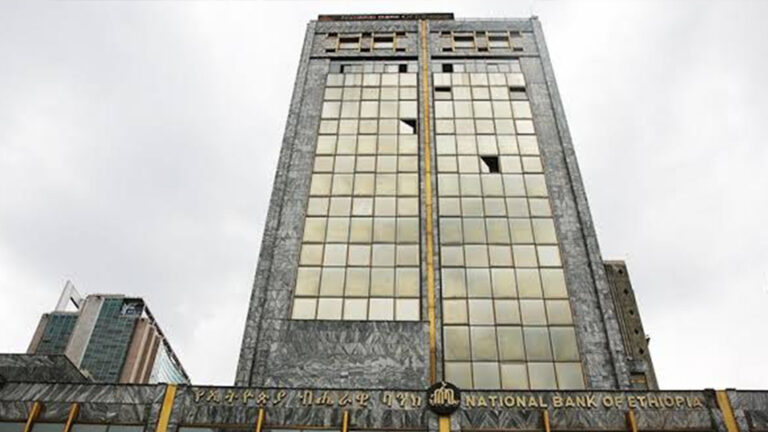
The root cause of Ethiopia’s enduring inflation cycle, analysts emphasize, is the historical subordination of monetary policy to fiscal imperatives. In an institutional framework where the National Bank of Ethiopia (NBE) lacks complete autonomy from the Ministry of Finance, the central bank’s ability to act as a guardian of price stability is fundamentally compromised. As prominent analysts frequently observe, the institutional overlap between the entity managing government expenditure and the entity regulating money supply creates a severe structural conflict.

When the government heavily spends on public projects and fiscal operations, a massive amount of liquidity is injected into the economy. In a functioning independent framework, the central bank is mandated to use various monetary instruments to absorb this excess liquidity, thereby balancing the money supply with the aggregate supply of goods and services.

Two years ago, the Ethiopian parliament passed a landmark central bank proclamation designed to alter this dynamic. The legislation significantly expanded the National Bank of Ethiopia’s (NBE) operational capacity and legally restricted direct monetary financing of the government. This provided the statutory autonomy needed to combat inflation without political interference. Yisehak emphasizes that restoring this equilibrium is non-negotiable, as prices inevitably spiral upward when the money supply decouples from physical economic output. The current system, which allows the executive branch to unilaterally dictate fiscal priorities, effectively dismantles critical checks and balances. This phenomenon, known as fiscal dominance, strips the central bank of its role as an independent guardian of monetary stability.

In 2024, Ethiopia embarked on an ambitious macroeconomic overhaul supported by the International Monetary Fund (IMF), highlighted by the historic decision to float the Ethiopian birr. While transitioning to a market-determined exchange rate was presented as an essential step toward modernization, the immediate aftermath saw a depreciation exceeding 160 percent. The direct consequence has been intense exchange-rate pass-through inflation, magnifying the vulnerability of an import-dependent economy to external shocks. Throughout this rollout, the IMF has repeatedly insisted that tight monetary discipline and absolute central bank independence are non-negotiable pillars for success.

Recent empirical analyses of monetary transmission mechanisms in developing markets emphasize that central banks require robust institutional and financial independence to effectively steer market interest rates. Without adequate capitalization and operational autonomy, central banks often need state bailouts to absorb losses from sterilization or currency interventions. Such financial dependency erodes institutional credibility, exposing monetary policy to direct political and fiscal coercion. Consequently, commercial banks and the public discount policy tightening signals, neutralizing the central bank’s ability to anchor inflation expectations or influence lending rates. Beyond domestic monetary expansion, Ethiopia’s vulnerability exposes a deeper structural flaw: an over-reliance on import-driven supply chains.

While public discourse often focuses on how inflation devastates household purchasing power, analysts warn of a more profound institutional threat: unchecked inflation compromises the operational capacity of the state itself. As financial experts frequently note, inflation in the country’s economy primarily harms the government. Rampant price growth systematically erodes the real value of public budgets, paralyzing planned capital expenditures and making the procurement of basic public goods and services untenable. Regional and woreda administrations operating on fixed birr allocations find themselves unable to purchase essential operational supplies as market prices outpace budget cycles. This dynamic degrades public service delivery across every tier of government.

Furthermore, because a substantial portion of Ethiopia’s sovereign debt is denominated in foreign currency while state revenues are collected in depreciating local currency, inflation generates an unsustainable fiscal squeeze. Servicing identical dollar-denominated liabilities requires exponentially larger volumes of local currency. This structural bind is intensified by the rigorous austerity measures mandated by the IMF to restore macroeconomic equilibrium.

The Fund has persistently advocated for contractionary monetary policies and aggressive domestic revenue mobilization drives to ensure fiscal sustainability. These recommendations have pressured the administration to aggressively scale up tax collection, pushing to reverse a dip in the tax-to-GDP ratio that had languished around 7.1 percent during the 2023/24 fiscal year.

In the first half of the previous fiscal year, the National Bank aggressively used liquidity auctions, absorbing hundreds of billions of birr and raising its policy rate to 16 percent. These strong measures were central to a deliberate strategy to separate central bank financing from the federal treasury—a reform widely praised by international observers. The initial results were clear: by December 2025, annualized inflation dropped to a promising 9.7 percent. In recent Article IV consultations and program reviews, IMF leadership has continued to emphasize the urgency of solidifying central bank independence and improving policy transparency.

Ultimately, economic consensus suggests that chronic inflation will persist until Ethiopia establishes a truly independent central bank with statutory authority, operational autonomy, and immunity from political interference. Furthermore, domestic price stability will remain vulnerable to external shocks until structural reforms successfully diversify the economy and eliminate its dangerous dependence on foreign imports.

Mandatory cameras roll out in breweries, bottling plants to curb tax evasion

0

The Ministry of Revenues (MoR) has begun installing high-definition surveillance cameras in manufacturing facilities subject to excise duty, including major breweries and bottling plants. Sources confirmed by Capital indicate that the federal government has allocated an estimated 300 million birr to fund this advanced technological infrastructure.

For years, Ethiopian tax authorities have struggled with significant shortfalls in collecting anticipated revenues from high-demand excise goods such as alcoholic beverages, tobacco, and soft drinks. Government estimates suggest that substantial revenue leakages result from persistent information gaps, under-reporting, and widespread evasion. The new monitoring system aims to close these gaps by providing real-time, remote tracking of production processes, facility exit points, and freight transport, giving the Ministry unhindered digital oversight directly on the factory floor.

While excise taxes on items like alcohol, tobacco, soft drinks, and luxury goods are crucial revenue streams, officials acknowledge that administrative shortcomings and leakages continue to erode collections. To reverse this trend, the state is shifting from traditional auditing to automated, technology-driven compliance enforcement.

According to industry sources who spoke to Capital, technicians and regulatory experts have started installing advanced digital camera systems at critical points within major manufacturing facilities. These strategic monitoring devices specifically target production lines, packaging areas, and warehouses where finished goods are loaded for distribution.

“This was never formally communicated to the factories beforehand,” a senior factory manager said on condition of anonymity. “They walked into a meeting called by the Ministry of Revenues and were directly told that the equipment would be installed. At least two cameras have been installed inside each facility at the operators’ own expense.”

Backed by a 300 million birr budget allocated under excise tax regulatory provisions, this rollout enforces the legal mandate that excisable goods stored in licensed facilities must remain under strict regulatory oversight.

Implementation Directive No. 1079/2025 mandates the use of physical excise stamps—such as tamper-evident scratch-off or circular seals—or direct digital coding printed on product packaging. Mandated items include spirits, beers, wine, ready-to-drink beverages, bottled water, perfumes, all tobacco products, and sweetened or carbonated soft drinks.

Furthermore, the directive stipulates that licensed manufacturers must install technological monitoring systems allowing remote tracking of production, loading bays, and vehicle movements, while granting the Ministry of Revenues unrestricted real-time access.

For years, tax authorities have grappled with the “reporting gap”—the discrepancy between a factory’s actual production and its declared output for tax purposes.

Under revised Directive No. 1007/2024, malt beer is taxed at 40 percent or 28 birr per liter, whichever is higher, a sharp increase from the previous flat rate of 11 birr per liter. Domestic barley beer containing at least 75 percent local raw materials is taxed at 35 percent or 23 birr per liter. Tobacco products have also seen steep hikes.

Cigarettes are now subject to a 30 percent tax plus a specific excise of 20 birr per pack of 20 sticks, up from the previous rate of 8 birr per pack. Loose tobacco and cigars are taxed at 30 percent plus 644 birr per kilogram, up from 250 birr per kilogram. These inflation-adjusted changes are expected to significantly increase retail prices.

Experts link Ethiopia’s tech-driven enforcement campaign to broader structural economic reforms mandated by international financial institutions, particularly the International Monetary Fund (IMF).

As a key milestone in Ethiopia’s National Medium-Term Revenue Strategy (NMTRS), the economic reform program prioritizes accelerating the implementation of excise stamps and digital track-and-trace systems. This framework necessitates close collaboration between the Ministry of Revenues, the Ministry of Finance, and the Information Network Security Administration (INSA) for technological deployment.

IMF country reports highlight these measures as central to enhancing control over high-risk commodities such as alcohol, tobacco, and beverages. The multilateral lender anticipates the comprehensive digital track-and-trace system will be fully operational by December 2026.

This technological integration coincides with inflation adjustments to specific excise rates for alcohol and tobacco, designed to protect real revenues. The Ministry of Finance has been conducting monthly performance reviews since June 2026.

The government’s NMTRS, published in October 2024, outlines a reform roadmap for the 2024/25 to 2027/28 fiscal years. The strategy aims to reverse Ethiopia’s declining tax-to-GDP ratio, which fell from 20 percent in 2003/04 to 8.5 percent in 2021/22.

Under the NMTRS framework, tax policy measures are projected to increase GDP by approximately 3 percent, with administrative reforms contributing an additional 2.9 percent.

The IMF has repeatedly emphasized that Ethiopia’s tax-to-GDP ratio significantly trails regional peers, stressing that robust domestic resource mobilization is crucial for stabilizing public finances.

According to the African Development Bank’s African Economic Outlook 2026, Ethiopia’s 7.3 percent tax-to-GDP ratio represents a critical vulnerability, limiting fiscal space during periods of high social spending pressure. Debt service consumes 26.3 percent of government revenue, and external debt stands at 220 percent of exports.

Directive No. 1004/2024 governs the digital excise stamp system, requiring manufacturers and importers to affix unique identifiers to all excisable goods. This system enables authorities to track production, importation, and distribution from the factory to the end consumer. Manufacturers are responsible for integrating their production accounting systems with the excise stamp management platform at their own expense.

In the 2025/26 fiscal year, the Ministry of Revenues collected 1.518 trillion birr, exceeding its revised target of 1.5 trillion birr and marking a 68.69 percent increase over the previous year. Domestic taxes accounted for 774 billion birr, while customs duties and foreign trade taxes contributed 725.3 billion birr.

Minister of Revenues Aynalem Nigussie recently attributed this performance to the expanded deployment of digital systems, enhanced enforcement, and deliberate efforts to broaden the tax base. Officials also cited policy changes, including a new requirement for companies to settle quarterly advance corporate income taxes instead of waiting until year-end.

However, Capital sought details from the Ministry of Revenues regarding the overall camera installation project and its allocated budget but did not receive a response. According to Ministry of Finance projections, total excise tax revenue for the 2026/27 fiscal year is targeted at 48.8 billion birr. Of this, the beer sector is expected to generate 18.49 billion birr, soft drinks 9.6 billion birr, and tobacco products 6.69 billion birr.