Saturday, April 11, 2026
Home Blog Page 494

Embracing China is Embracing Opportunity

0

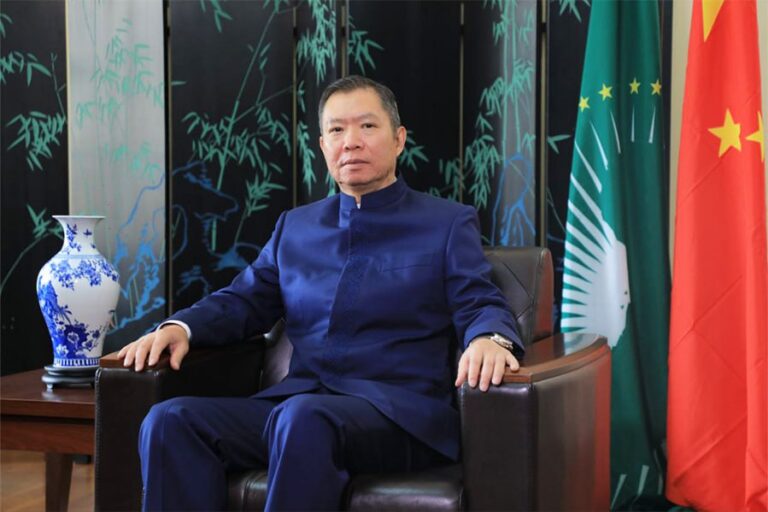
By Ambassador Hu Changchun

The world today is undergoing changes unseen in a century, with transformation, historical shifts and epochal evolution unfolding in ways never witnessed before. Global uncertainties, instabilities and unpredictable factors have increased significantly, while the US abuse of tariffs has further exacerbated the instability of the world. Under such circumstances, China will remain committed to being an “enabling power”, injecting stability and positive energy into global peace and development.

China is the main engine of global development and prosperity. In 2024, the Chinese economy showed strong resilience in a complex international environment, with its GDP reaching 134.9 trillion yuan (nearly 18.94 trillion US dollars), a year-on-year increase of 5%, and its contribution to world economic growth remained at around 30%. China has set its expected GDP growth target for this year at around 5%, showing the world its confidence in promoting high-quality development. Since March this year, China’s “Two Sessions” (the National People’s Congress and the Chinese People’s Political Consultative Conference), the Annual Meeting of the China Development Forum, and the Annual Meeting of the Boao Forum for Asia have been held successively. President Xi Jinping met with representatives of the international business community. China continues to expand high-standard opening-up and deepen international cooperation.

In stark contrast to China’s commitment to openness and cooperation, the U.S. government recently imposed so-called “reciprocal tariffs” on nearly all its trading partners. China has taken and will continue to take necessary measures to resolutely safeguard its legitimate interests, and uphold international fairness and justice. As the world’s second-largest economy, China has the strong leadership of the CPC Central Committee with Xi Jinping at its core, possesses the institutional strengths of a socialist market economy, the demand advantages of an ultra-large domestic market, and the supply advantages of a complete industrial system. Coupled with ample policy tools in reserve, China is fully confident, capable, and well-positioned to withstand the impact of the US’ abuse of tariffs. As the largest trading partner of over 150 countries and regions, China will steadfastly advance high-standard opening-up and share development opportunities with all nations to achieve mutual benefit and win-win outcomes. 

China is the anchor of stability in the turbulent world. The U.S. frequently resorts to trade protectionism, wields the sticks of tariffs and export controls, and builds “small yards with high fences”, and has thus exacerbated deglobalization and the uncertainty of the world. China remains committed to fulfilling its international responsibilities. It upholds true multilateralism, promotes global governance based on extensive consultation, joint contribution, and shared benefits, and expands equal, open, and cooperative global partnerships. China advocates for a just, equitable, and inclusive international order, and devotes itself to peace, stability, and common development of the world.

The year 2025 marks an important year for both China and the world. China will solemnly commemorate the 80th anniversary of the victory in the Chinese People’s War of Resistance Against Japanese Aggression and the World Anti-Fascist War, and host a series of major events including the Shanghai Cooperation Organization summit. China has always been and will continue to steer the trend of the times towards peace, development and win-win cooperation. No matter how the international landscape evolves, China will stand firm on the right side of history and on the side of human progress. We will provide stability to this uncertain world. 

China is the firm supporter of African development. Under the guidance of President Xi Jinping and African leaders, China-Africa relationship is now at its best in history. There will be no global modernization without African modernization. China implements a zero-tariff policy on 100 percent of products originating from the least developed countries ( LDCs) with which it has diplomatic ties, including 33 African countries. We are ready to actively implement the Ten Partnership Actions outlined at last year’s Beijing Summit of the Forum on China-Africa Cooperation (FOCAC), supporting Africa in accelerating its development and forging a new path of self-reliance and self-strengthening. 

China and Africa are the backbone of the Global South. The G20 Summit will be held on the African continent for the first time this year. China firmly supports South Africa in carrying out its duties as G20 president to enhance Africa’s representation and say in international affairs. I am confident that China and Africa will jointly participate in the reform and improvement of the global governance system, resolutely oppose unilateralism and acts of bullying, thereby propelling the global governance toward greater fairness and equity, and making new contributions to building a community with a shared future for mankind. 

Ambassador Hu Changchun is Head of Mission of the People’s Republic of China to the African Union and Representative of the People’s Republic of China to the UNECA


The high price of protectionism: How Trump’s tariffs threaten global economic stability

0

Economists and trade experts warn that the former president’s return to protectionist policies will cripple consumers, spark retaliatory measures, and destabilize global trade relationships, while China navigates a complex balancing act between retaliation and strategic maneuvering.

President Donald Trump’s resurgence on the political stage has been accompanied by a resurgence of his trademark trade policies: aggressive tariffs designed to reshape global economic dynamics. While proponents tout the benefits of these measures for American manufacturing and economic independence, a growing chorus of economists, policymakers, and international observers warn of dire consequences for both the U.S. and the global economy. As Trump’s tariffs take center stage once again, this feature explores the potential damage they could inflict and how China, a primary target of these policies, is strategically positioning itself amid the turmoil.

Economic Fallout: A Costly Affair for American Families

One of the most vocal critics of Trump’s trade policies is former Treasury Secretary Larry Summers, who has described them as “masochistic” and economically unsound. According to Summers, these tariffs would inflict a heavy burden on American families, potentially costing them as much as $300,000 per year. “Trump’s tariffs are the most expensive and masochistic the US has pursued in decades,” Summers wrote. He elaborated in an interview, highlighting the unprecedented market downturn triggered by the tariff announcements. “This action has taken $3 trillion off the stock market as a consequence of an hour of rhetoric,” he stated.

The pain is not merely confined to the stock market. As an “anti-tariff declaration” signed by nearly 900 economists, including Nobel laureates, warns, “American workers will incur the brunt of these misguided policies in the form of increased prices and the risk of a self-inflicted recession.” Trump’s claim that these tariffs are a form of “economic liberation” is met with skepticism, with critics arguing that they instead invert the principles of liberty and prosperity.

Broken Supply Chains and Inflated Prices

The impact of tariffs extends far beyond financial markets and high-level economic indicators. In practice, they act as a tax on consumers, raising the cost of everyday goods and services. From automobiles to electronics, American households will feel the pinch as companies pass on the increased cost of imported components and materials.

Moreover, the disruption of global supply chains could have cascading effects on various industries. For companies that rely on international suppliers, tariffs create uncertainty and force them to make difficult choices: absorb the increased costs, pass them on to consumers, or seek alternative (and potentially less efficient) sources.

China’s Strategic Response: A Mix of Retaliation and Diplomacy

As the primary target of Trump’s trade policies, China finds itself in a complex situation, balancing the need to defend its economic interests with the desire to maintain stability and prevent further escalation. China’s initial response has been retaliatory, with the imposition of tariffs on a range of American goods. This has directly impacted American farmers and businesses, particularly those in states that supported Trump in the past.

Beyond retaliation, China is also employing a multi-pronged strategy to mitigate the impact of tariffs and bolster its position in the global economy. This includes:

  1. Seeking alternative markets:
    China is actively working to diversify its export markets, reducing its reliance on the United States and strengthening trade relationships with other countries. This includes expanding trade with countries in Southeast Asia, Africa, and Latin America.
  2. Promoting domestic consumption:
    Recognizing the need to reduce dependence on exports, China is focusing on stimulating domestic demand and fostering a more self-reliant economy. This involves policies to boost consumer spending, encourage innovation, and promote the growth of domestic industries.
  3. Asserting global leadership:
    China is increasingly positioning itself as a champion of globalization and multilateralism, contrasting its commitment to open trade and international cooperation with the protectionist policies of the United States. This includes actively participating in international organizations like the World Trade Organization (WTO) and advocating for reforms to the global trade system.

The Geopolitical Implications: A Shifting World Order

Trump’s tariffs are not simply an economic policy; they are a geopolitical statement that could have far-reaching consequences for the global balance of power. By challenging the existing trade order and disrupting long-standing alliances, the United States risks alienating its allies and creating opportunities for other countries, particularly China, to assert their influence.

The economic policies of a nation serve as the basis for stability within its borders, while at the same time, the economic strategy of a nation can be an opportunity to expand its global power and standing. The long-term results of these policies could leave a lasting mark on global alliances.

As the world’s second-largest economy, China has been steadily increasing its influence in international affairs. Trump’s actions may accelerate this trend, as countries look to China as a more reliable partner and a champion of free trade.

A Call for Reason and Cooperation

As the world grapples with the potential fallout from Trump’s tariffs, there is a growing call for reason and cooperation. Experts emphasize the need for countries to come together, engage in constructive dialogue, and find common ground to address trade imbalances and other economic challenges.

The hope is that countries can prevent a devastating trade war and work towards a more stable, prosperous, and equitable global economy. Only through open communication and working together will world leaders be able to guide global economic prosperity.

Navigating an Uncertain Future

Trump’s return to protectionist trade policies poses a significant threat to the global economy, potentially triggering a recession, disrupting supply chains, and undermining international cooperation. China, as a primary target of these policies, is strategically navigating this turbulent landscape, balancing retaliation with a broader effort to diversify its economy and strengthen its global influence. Whether the world can weather this storm will depend on the actions of policymakers, businesses, and individuals, and their willingness to embrace cooperation over confrontation in an increasingly interconnected world.

“The language turned out to be the hardest part for me”: What challenges do participants in the Alabuga Start program face?

0

Alabuga Start international program is becoming increasingly popular among young people in our country. This initiative offers young women aged 18 to 22 the chance to move to Russia and start building their careers in the Alabuga Special Economic Zone.

The program description is certainly appealing, but only someone who has actually participated in Alabuga Start can truly describe what relocating to Alabuga is like. Redemptor Cathy spoke exclusively to Capital about the challenges of adapting to life in Russia, learning a new language and culture, and discovering the quirks of the local cuisine.

«Money’s become the key factor for me»

My name is Redemptor Cathy, I’m 23 years old and I’m from Uganda. I’ve always been curious about how people live in other countries. I’ve dreamed of making decent money to travel the world someday. But with the average salary in Uganda being about $220 a month, it’s hard to imagine being able to afford a big trip like that.

The opportunity actually found me — I came across the international Alabuga Start program, which advertised a monthly salary of $860. At first, I found it hard to believe that such salaries were real, but after chatting with other participants in a group chat and talking with my HR representative, they convinced me it was true. That’s when I decided to give Catering a try through the program.

I started my career as a kitchen worker at Shokoladnitsa Cafe, where I helped with food preparation, learned to cook Russian dishes, and got to know the menu. After six months, I was promoted to waitress and received a pay raise. By then, I was already mentoring a new Alabuga Start participant from Nigeria, who had just begun her journey in the catering industry.

“Russia’s winters? Breathtaking nature, thrilling sports – it’s all here.”

I first heard about the Alabuga Start program from my friends, who saw advertisements for it on social media. I decided to give it a try, so I applied on the website and immediately began learning 100 Russian words from the provided list, since that was required to participate. Not long after, Alabuga’s HR specialists got in touch with me and answered all my questions about the program.

Interestingly, another mandatory step before the Alabuga Start HR interview involved completing a namesake computer game. As my HR supervisor later explained, this business simulation is a proprietary tool developed by Alabuga SEZ to assess three-dimensional and logical reasoning skills.

Once all my documents were gathered, my medical exam was finished, and I received my visa, Alabuga bought my tickets to Russia.

When I first stepped outside in Kazan (the capital of the Republic of Tatarstan), I was amazed – I had never seen snow before in Uganda. Winter in Tatarstan is truly beautiful, and the region offers just as many wonderful winter sports. Last year, I learned to skate and ski for the first time, and this winter, my friends and I joined the biggest snowball fight with students from Alabuga Polytech.

“When I tried borscht, I was surprised.”

It was difficult to get used to new dishes, I had never tried Russian cuisine before.

My first encounter with traditional Russian borscht is quite a tale in itself. I remember being fascinated by this unique dish… These days I’ve mastered cooking it myself, and not just borscht – I’ve also learned to make manti, ochpochmak, and rassolnik soup. They’re all classics from both Russian and Tatar culinary traditions.

Of course, the challenges weren’t just about getting used to local ingredients — the cultural differences and language barrier were tough too. At first, Russian felt impossible: everyone spoke so quickly, I struggled to express myself, and I relied on a translator constantly. That frustration actually pushed me to work harder in my Russian lessons with our teacher Yoanna. Now, I can chat comfortably with native speakers. My colleagues at Alabuga have been great too — whenever I ask them to practice, they’re happy to help. It’s a win-win: they improve their English while I work on my Russian.

I’m continuing to improve my Russian while also starting to learn Chinese.

My friends often ask how I managed to climb the career ladder so quickly. Honestly, there’s no big secret. It really comes down to working hard, taking your responsibilities seriously, and never skipping those Russian language lessons. In our line of work, it’s crucial not just to understand Russian well, but to speak it fluently and accurately.

I’m definitely not going to stop there. Now I am 23 years old, I have been working at the Shokoladnitsa Cafe for more than a year, I managed to get my first promotion, I earn more than $ 1,100 a month and help my parents. Very soon, a friend from Uganda will fly to me to become a part of Alabuga Start.

If you have any questions about moving to Russia, living there, or about Alabuga Start, feel free to ask in the comments — I’m happy to help with anything you want to know.

Mastercard brings UEFA Champions League to life across key Africa markets with Priceless football experiences

0

By our staff reporter

Mastercard is bringing Africa closer to the UEFA Champions League like never before with the launch of its 2025 Africa football campaign, running from February to May 2025. As a proud and long-standing sponsor of the UEFA Champions League, Mastercard is delivering a powerful campaign that connects millions of fans to the thrill of world-class football through uniquely curated, Priceless experiences—deeply rooted in African culture, tourism and connection.

Cardholders across South Africa, Kenya, Tanzania, Morocco and Ghana have the opportunity to win exclusive UEFA Champions League viewing experiences—designed to resonate with local audiences and elevate their passion for the game. The campaign brings unique experiences to life, from a chance to win luxurious, all-expenses-paid trips to iconic African destinations, to football-themed mall activations with instant rewards. It captures Africa’s energy and love for football while celebrating the continent’s rich beauty and diversity.

Africa’s enthusiasm for football is iconic. With over 400 million fans tuning in for UEFA Champions League broadcasts each year, the appetite for premium football experiences continues to grow. Mastercard is stepping into that moment with purpose, investing in meaningful ways to bring African fans closer to the game they love.

“At Mastercard, we understand that the connection to football goes far beyond the pitch for millions of fans across Africa —it’s a shared language that unites communities and ignites passions across the continent. The 2025 Africa football campaign is our commitment to fuelling this bond by connecting communities to the UEFA Champions League with unforgettable experiences that blend football, culture and the spirit of African tourism. This initiative is an example of how we bring our global assets to life in a way that is meaningful locally,” said Ahmed Abdel-Karim Hussein, Executive Vice President, Marketing and Communications, Mastercard EEMEA.

In a major highlight, Mastercard brought the UEFA Champions League Trophy to Morocco for the first time, offering fans a rare opportunity to see the trophy up close at Morocco Mall. The experience featured interactive screen games, iconic UEFA moments, influencer-led engagements, and instant prizes for fans who made transactions using Mastercard via Google Pay or Apple Pay, creating a powerful connection between local fans and a global sporting icon.

With this initiative, Mastercard is not only strengthening its presence across African markets but also reaffirming its long-standing commitment to the region’s growth.

By merging global collaborations with local culture and national pride, Mastercard is delivering unforgettable experiences that go beyond payments to connect people to what matters most to them. For over three decades, Mastercard has been an unwavering supporter of the UEFA Champions League, bringing fans and cardholders Priceless moments and unparalleled experiences. The UEFA Champions League represents the pinnacle of European club football, and Mastercard is committed to delivering that global excitement to Africa with a campaign rooted in creativity, connection, and cultural pride.