The Ethiopian Quality Award Organization (EQA) was established in 2008 through a collaboration between Addis Ababa University (AAU) and Walta Media and Communication. Its mission is to cultivate a national quality brand by recognizing and rewarding organizations that implement quality systems in their products and services, while keeping pace with the rapidly evolving global economic landscape and market competition. To achieve its goals, EQA has been working closely with the government and is currently collaborating with the Office of the Prime Minister to draft a regulation aimed at enhancing its resources and maximizing the benefits for recipients of its prestigious award.
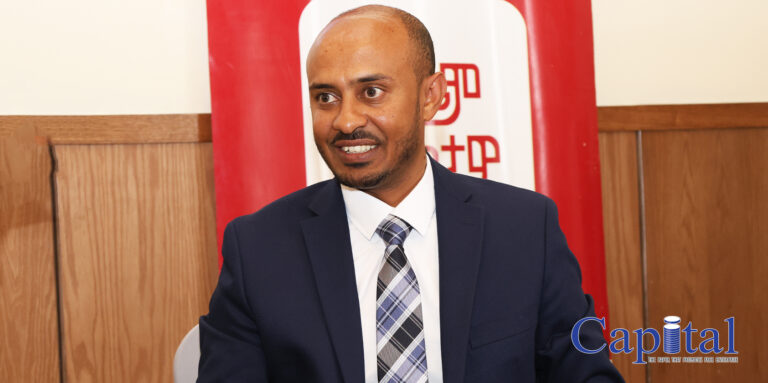
As the organization prepares for upcoming changes and continues its activities, Tewodros Mebrat, CEO of EQA, spoke with Capital to discuss the current state of the award, its challenges, and future aspirations. Since 2016, Tewodros has been at the helm of the Ethiopian Quality Award Organization (EQA) as its CEO. His role encompasses overseeing executive leadership, training initiatives, and public relations, all while driving the organization towards its strategic goals. Under his guidance, EQA has embraced ambitious business strategies and cultivated a workplace culture rooted in transparency and accountability.
Capital: What is the current state of the Ethiopian Quality Award (EQA)? Has the previous level of grace and prestige been maintained?
Tewodros Mebrat: The grace and prestige of the Ethiopian Quality Award have significantly increased. For example, the award ceremony, which was previously held in hotels, is now hosted at the National Palace—a venue that is not easily accessible to everyone, symbolizing the award’s elevated status. The ceremony attracts representatives from high-standard companies and organizations competing for this prestigious recognition. Maintaining the award’s grace is critical; if we fail to do so, institutions and companies may lose their desire to compete in the future. While the process itself provides a valuable learning experience for participants, even those who do not win, the award ceremony must be conducted at a high level, consistent with international standards.
Capital: It is known that the expenses involved in this process are significant. How do you manage these costs from start to finish? What role does the government play in supporting the organization?
Tewodros: Initially, the founders of EQA, Addis Ababa University (AAU) and the former Walta Media (a state-affiliated media organization), provided funding to support the initiative. Currently, large organizations, including private companies and state-owned enterprises that understand EQA’s mission, are sponsoring the program. Additionally, registration fees from participants help cover the costs of the quality competition. However, we still face a significant resource gap, particularly in promotion, training, and raising awareness about quality issues. To address this, we are drafting regulations and engaging with the Office of the Prime Minister. We have already had one round of discussions and received feedback to refine the regulations further. Once finalized, we hope to secure direct government budget support, similar to practices in other countries.
It’s important to note that the award must remain neutral, especially since government institutions also compete. At the same time, EQA plays a vital role in enhancing the country’s international competitiveness, making it a key government initiative deserving of budget support. For example, the cost of supporting a single organization from registration to the final stage exceeds one million birr. However, as a non-profit organization, we only charge a service fee to cover operational costs, unlike profit-driven certifications like ISO.
Ultimately, EQA’s success relies on patriotic individuals with extensive expertise who volunteer their time and skills to serve the organization. If their contributions were monetized, we would not be able to sustain the organization’s operations.
Capital: You mentioned that you have prepared regulations. What is your current relationship with the government, and how is it evolving?
Tewodros: We, along with the President of Addis Ababa University, have met with the Head of Cabinet Affairs in the Prime Minister’s Office and discussed our collaboration with the Minister of Trade and Regional Integration. For the government to provide budget support, there must be a proper channel for allocating funds. Currently, the Ethiopian Science Academy serves as a model for us. It is an autonomous body where scholars conduct research, and the government allocates a budget of 10 million birr in grants, along with free office space. This type of arrangement is relatively new in Ethiopia.
In other countries, such as the United States, foundations often support initiatives like the Malcolm Baldrige National Quality Award, which receives consistent funding through its foundation. This model is not yet widespread in Ethiopia. For the EQA, the goal is not to generate revenue but to provide services through government funding or other sources, ensuring its independence. Additionally, to foster a culture of quality and raise public awareness, we believe the government should allocate a dedicated budget for this purpose.
Capital: What are the benefits for organizations that receive this award, and what additional advantages do you expect to create for awardees?
Tewodros: The primary benefit for organizations is gaining a clear understanding of their operational health, the systems they have in place, and their capacity to sustain performance in the future, even without key individuals. Beyond the competition, the detailed feedback they receive—spanning over 60 pages—is invaluable. It highlights their strengths and areas for improvement, guiding them toward better practices. Often, organizations are unaware of their gaps, which is why some participate multiple times, using the feedback to address their weaknesses. For example, some organizations have competed more than seven times, continuously improving through the process.
Additionally, organizations that win the award three times consecutively must take a five-year break from competing. This ensures that the focus remains on improvement rather than just winning. For instance, Horizon has won the award twice in a row and has registered again this year. If it wins this time, it will be excluded from the competition for the next five years. Such companies serve as benchmarks for developing human resources and systems, contributing to overall organizational growth and strength.
We are also working on establishing mandatory indirect quality standards.
For example, certain industries, like food and beverage production, could be required by law to meet specific quality standards. However, this must be approached carefully, as the government also considers factors like job creation and investment. Not all organizations can be expected to meet excellence standards immediately.
To further enhance the value of the award, we are advocating for a legal framework that would provide additional benefits to awardees. These could include priority in procurement and bidding processes, the right to use the EQA logo on their materials, and expedited public services or customs procedures. We are drawing inspiration from developed countries, where awards like the Malcolm Baldrige carry significant weight. For example, in the U.S., receiving the Malcolm Baldrige Award is a major advantage for organizations, as it expands their market share and builds trust with stakeholders. We aim to replicate this impact in Ethiopia, making the EQA a symbol of excellence that drives both recognition and business growth.
Capital: When do you expect the regulation ratification process to be finalized?
Tewodros: The regulation ratification process is currently being led at the board level, as it is crucial for the existence and future of the institution. I am actively supporting this process by submitting the necessary documents. Dr. Samuel Kifle, the chairman of the board and President of Addis Ababa University, is spearheading this effort. We anticipate that the process will be completed this year. Additionally, President Taye Atske Selassie, the honorary guardian of EQA, has expressed support for issuing the regulation. Our motto emphasizes “quality as a national priority,” and the government has invested significantly in quality infrastructure, highlighting that the administration is prioritizing quality issues. Therefore, I am optimistic that the regulation will be finalized very soon.
Capital: How much do organizations pay to participate in the competition?
Tewodros: We have recently increased the participation fees. Previously, organizations paid 175,000 birr, but the fees are now set at 250,000 and 300,000 birr. While these fees help cover some costs, organizations are not just competing; they are also supporting our mission. We have established a minimum fee level and rely on sponsors to cover the remaining expenses. If the government provides additional support, we may be able to reduce these fees further. It’s important to note that the Ethiopian Quality Award is not a profit-driven initiative; our goal is to promote and recognize quality excellence.
Capital: What are the current gaps or weaknesses in your organization?
Tewodros: Our most significant gap is in promotion. While we excel at coordinating and supporting our technical committees, who excel at evaluating participants, we struggle with raising awareness about the award and its importance. Improving our promotional efforts is critical to reaching a wider audience and attracting more participants.
Capital: What do you expect from the agreement you made with 27 Marketing and Branding?
Tewodros: We expect this partnership to significantly enhance the visibility and recognition of EQA. With the help of 27 Marketing and Branding, we aim to improve our presence not only in traditional media but also on social and digital platforms. There have been organizations interested in competing in the past that requested information but ultimately did not participate for various reasons. We believe that with improved marketing and branding efforts, more organizations will be encouraged to compete, leading to an overall increase in participation.
At the National Museum of African Art, a Washington, D.C. artist’s work illuminates a gallery room and honors 54 people who died this century
In the center of a meditative gallery, artist Tsedaye Makonnen’s seven light towers—made from mirrored boxes featuring the cutout designs of Ethiopian crosses—serve as monuments to lost Black lives.
Printed on a nearby gallery wall are the names of 54 deceased Black people. Forty-six of them died under tragic, and sometimes violent, circumstances, and the other eight are luminaries such as Toni Morrison, Audre Lorde and Aretha Franklin, whom the artist calls “Black matriarchs.” Under each name is the first name’s given meaning, the person’s age at the time of their death and the date they died.
The tower installation, titled Senait & Nahom | The Peacemaker & The Comforter, bears the names of two people listed on the wall: An Eritrean woman, Senait, and her son, Nahom, migrants who died in a European detention center. The light towers pay tribute to them.
In the mirrors and light, which illuminates the boxes from within, viewers see themselves reflected in the towers, adding to and multiplying the people represented in the artwork. “That was important for me,” Makonnen says, “wanting people to see themselves in the work and also see themselves in the stories of these women and these individuals, and to connect with them in a way that would trigger reverence and respect.”
Her use of mirrors also multiplies the view of the towers and their cross cutouts. “It looks like there are a million Ethiopia Coptic Orthodox crosses and a million light towers,” she says.
Makonnen’s exhibition showcasing these towers, now on display at the Smithsonian’s National Museum of African Art, is called “Sanctuary.” The Ethiopian crosses symbolize eternal life and connection, and given that a sanctuary is a place for refuge and safety and holiness, Makonnen’s artwork provides some semblance of that for the spirits of the fallen and slain after their lives have ended.
The names on the wall, curator Kevin Dumouchelle, says, “reinforce this idea of the work as a sanctuary, as a memorial, a reflective space, where these names are sanctified, remembered and memorialized through the retelling of their names.”
For the exhibition, Dumouchelle put Makonnen’s towers in conversation with other artworks from the museum’s collections, such as actual 15th- to 17th-century metal Ethiopian crosses, traditional Ethiopian paintings of mother and child and contemporary Ethiopian photographs. The inclusion of these pieces connects Makonnen’s work to the historical canon of Ethiopian art and relics.
Makonnen’s heritage and surroundings have also provided essential influences on her art. Makonnen was born in Washington, D.C. to Ethiopian parents and had been enamored with the designs of Ethiopian crosses since childhood. She grew up around Ethiopians who were part of the student movement that fought against the dictatorship of Mengistu Haile Mariam in the 1980s that caused famine, economic decline and war in the country. “I grew up in a political home,” she says. “Politics were discussed; imperialism was always discussed. And just growing up around D.C., protests were always happening.”
Now, activism is an integral component of her artistic practice. While not formally trained in studio art, Makonnen received mentoring from influential artists, including Ghanaian sculptor El Anatsui and American mixed-media sculptor Martha Jackson Jarvis.
In 2018, she was accepted into the District of Columbia Public Library’s Makers-in-Residence program, after Jarvis suggested she apply. And because she had access to a laser cutter at the residency, she came up with the idea to create individual light boxes from acrylic mirrors. During the same year, she conducted an informal residency with Anatsui for three weeks where he showed her how to build a career as an artist—that’s when she designed the light towers.
She also earned a place in the Smithsonian Artist Research Fellowship in 2019, allowing her to study the African art collection, including the Ethiopian crosses and artworks, and be inspired by it. Dumouchelle and a colleague saw Makonnen’s light towers at a gallery in D.C. in 2019 and were taken with them. He thought the strong visuals connected contemporary issues with historic forms. “There was such a really direct application of her studying the Ethiopian Coptic Orthodox crosses, and sort of learning about those forms and applying that to our work, we just thought it told such a wonderful, multilayered, rich story for us that it was a clear winner for us,” he says.
Through the individuals it honors, “Sanctuary” tells the stories of Black heartbreak and history, womanhood and motherhood, all while its towers glow and enliven the darkened space of the exhibition. “My greatest hope is that people will take the time to appreciate the scale of the stories that [Makonnen] is telling here,” Dumouchelle says. He adds that he wanted to create an atmosphere “in which the light of these works, literally and metaphorically, emanates in the space and sort of creates that sort of quiet, reflective environment.”
Ultimately, Makonnen’s work seeks to honor Black lives lost and make those who see it more conscious of themselves and the larger world around them.
“I wanted to make people reflect on their lives because we think we’re so important and actually we’re not,” she says. “There’s so much more going on than just us.”
Ethiopia stands on the brink of a significant transformation as it seeks to join the World Trade Organization (WTO), a move that could reshape its economic landscape and enhance its integration into the global trading system. However, Ethiopia’s journey toward WTO accession is marked by unique challenges and opportunities that set it apart from other African nations. As the country prepares for crucial negotiations, it is essential to evaluate its accession process in comparison to its peers, understanding the implications for Ethiopia’s future.
Ethiopia first applied for WTO membership in 2003, making its accession process one of the longest among African nations. Over the years, the country has faced numerous delays due to internal reforms, political changes, and global economic conditions. In contrast, several other African countries have successfully navigated their accession processes in a shorter timeframe. For instance, Rwanda and Zambia completed their membership within a decade, benefiting from relatively stable political environments and focused reform agendas.
This prolonged timeline raises questions about Ethiopia’s readiness for WTO membership. The country has invested significant resources in preparing for this moment, but the extended duration has also led to concerns about whether it can effectively compete in an increasingly globalized economy. As Ethiopia approaches the next round of negotiations, it must demonstrate that it is not only ready to join but also capable of thriving within the WTO framework.
To meet WTO requirements, Ethiopia has undergone extensive economic and trade policy reforms aimed at liberalizing its economy and improving regulatory frameworks. These reforms have been particularly focused on integrating the private sector and enhancing infrastructure. However, while other countries like Ghana and Kenya have also undertaken significant reforms, the pace and scope of these changes can vary based on each nation’s economic structure and political will.
Ethiopia’s heavy reliance on agriculture presents unique challenges in meeting WTO standards related to agricultural subsidies and market access. Unlike more diversified economies such as South Africa or Kenya, which incorporate manufacturing and services into their economic frameworks, Ethiopia must navigate the complexities of aligning its agricultural policies with international trade norms. This challenge underscores the importance of strategic planning and targeted reforms to ensure that Ethiopia can compete effectively on the global stage.
The political landscape in Ethiopia has been complex, with internal conflicts and governance challenges impacting the accession process. The government’s commitment to reform has been crucial in moving forward but has also faced significant hurdles. Political stability plays a vital role in any country’s accession process; Rwanda’s relatively stable environment has facilitated its quicker progress compared to nations grappling with unrest.
As Ethiopia continues to address internal challenges, including ethnic tensions and governance issues, it must remain focused on building a cohesive national strategy for WTO accession. This involves not only economic reforms but also fostering political stability that can support sustained growth and engagement with international partners.
Ethiopia is actively engaging in bilateral negotiations with several countries alongside its multilateral discussions at the WTO. These agreements are essential for securing favorable market access for Ethiopian goods—a key benefit of WTO membership. Many African nations pursuing WTO membership also engage in similar bilateral agreements; however, countries like South Africa have already established extensive trade agreements that facilitate their integration into global markets.
For Ethiopia, successfully navigating these bilateral negotiations will be critical in ensuring that it can leverage its accession to enhance trade relations with key partners. This proactive approach not only strengthens Ethiopia’s position but also demonstrates its commitment to becoming a responsible player in international trade.
Ethiopia has received support from regional organizations like the African Union (AU) and the Intergovernmental Authority on Development (IGAD) in its efforts to join the WTO. Such support is invaluable as it provides a platform for collaboration among African nations striving for greater integration into the global trading system.
Other African countries also benefit from regional organizations during their accession processes; for example, the Economic Community of West African States (ECOWAS) plays a critical role in supporting member states’ integration efforts. By leveraging regional partnerships, Ethiopia can enhance its negotiating power and align its strategies with broader continental goals.
Ethiopia faces both challenges and opportunities that are distinct from those encountered by other African nations. The prolonged timeline of accession underscores the need for continued commitment to reform while addressing internal political dynamics that could hinder progress.
Ethiopia’s reliance on agriculture necessitates targeted strategies that align agricultural policies with international trade norms while fostering diversification within its economy. Engaging actively in bilateral negotiations will be crucial for securing favorable market access and enhancing trade relations with key partners.
Ultimately, Ethiopia’s journey toward WTO membership is not just about joining an international organization; it represents a broader vision for economic transformation and integration into the global economy. By learning from the experiences of other nations that have successfully navigated this path, Ethiopia can position itself as a competitive player on the world stage—one ready to harness the benefits of globalization while addressing domestic challenges head-on. The road ahead may be complex, but with strategic planning and unwavering commitment, Ethiopia can turn its aspirations into reality.