
Tuesday, May 12, 2026
Home Blog Page 643

Comparing Oil Prices Without Due Emphasis on People’s Income: A Critical Analysis

0

The price of oil is a key determinant of economic activity, impacting transportation, manufacturing, and energy costs. It also influences government revenues in resource-dependent nations. However, comparing oil prices in isolation, without considering the context of people’s incomes, can lead to skewed perspectives on affordability, living standards, and economic stability. This article explores the significance of integrating income levels into oil price analyses to derive a more holistic understanding of its socio-economic impact.

It is true that Oil Prices alone are misleading. Oil prices are often used as a barometer for economic trends, but this approach ignores significant socio-economic variables. Key shortcomings of focusing solely on oil prices include: Income Variability Across Regions – a $1 increase in oil prices affects populations differently based on income levels and purchasing power. For instance, low-income households in developing countries might feel a greater strain compared to wealthier nations where incomes are higher.

Inflation and Currency Effects – in countries with weaker currencies, even moderate changes in global oil prices can lead to substantial increases in domestic fuel costs, disproportionately affecting low-income groups. Fuel Dependency Levels – societies where individuals rely heavily on personal vehicles or where public transportation is fuel-dependent are more affected by oil price changes, especially if incomes are low.

To fully understand the economic impact of oil prices, it is crucial to examine them relative to average income levels and other economic indicators: Fuel Affordability Index – comparing oil prices as a percentage of average monthly income provides a clearer picture of affordability. A high ratio indicates that fuel costs take up a significant portion of disposable income, particularly burdening the poor.

Purchasing Power Parity (PPP) – evaluating oil prices in terms of PPP adjusts for differences in income levels and cost of living, enabling a fairer comparison across countries. Income Elasticity of Demand – lower-income populations are more sensitive to price changes, as a larger share of their earnings goes toward essential goods, including fuel.

Overlooking Income Levels have serious economic consequences. Neglecting income disparities when comparing oil prices can lead to flawed economic policies and social outcomes: Regressive Impact on Low-Income Groups – fuel price increases disproportionately affect lower-income households, exacerbating inequality if not addressed through targeted subsidies or assistance.

Social Unrest and Instability – perceived unfairness in fuel pricing policies, especially in low-income countries, has historically led to protests and political instability. Policy Misalignment – governments focusing solely on stabilizing oil prices might overlook broader socio-economic measures, such as increasing household incomes or improving energy efficiency.

To develop balanced energy policies, it is imperative to integrate income dynamics into oil price analyses which includes the following: Subsidy Reform: While subsidies can mitigate the impact of high oil prices, they should be targeted at low-income groups to ensure equitable benefits without straining public finances. Diversification of Energy Sources: Promoting renewable energy and reducing reliance on fossil fuels can shield vulnerable populations from volatile oil prices.

Strengthening Social Safety Nets: Expanding income support programs can alleviate the economic strain of high fuel costs on low-income households. Income Growth Strategies: Policymakers should emphasize raising median incomes through job creation, education, and economic diversification to improve overall affordability.

There are a number of global examples. To indicate the few, Norway: With high incomes and extensive social welfare programs, Norwegian households are less affected by high oil prices despite the country’s high fuel taxes. Nigeria: In contrast, low-income households in oil-exporting Nigeria struggle with affordability due to lower average incomes and inadequate social protections. India: Subsidies on liquefied petroleum gas (LPG) for low-income families demonstrate a targeted approach to mitigate the impact of rising oil prices.

To conclude, comparing oil prices without accounting for income levels presents an incomplete and often misleading picture of their socio-economic impact. Policymakers and analysts must adopt a holistic approach that incorporates income dynamics, purchasing power, and local economic conditions. By focusing on affordability rather than absolute prices, governments can craft equitable and effective policies that cushion the impact of oil price fluctuations on vulnerable populations while fostering economic stability.

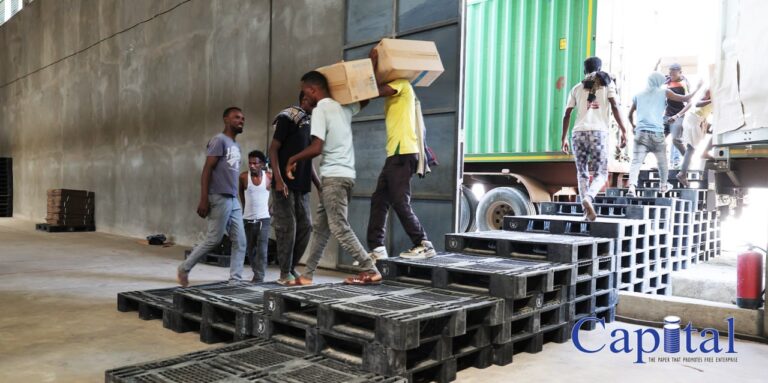
Doing business in Ethiopia.

0

Stress

We all experience a certain amount of stress, whether we live in the countryside, in Addis Abeba, in Ethiopia or elsewhere in the world. Although the factors that cause stress vary, there are many uncertainties that people face, like for example of food security, employment, conflict, violence, the environment, competition, security, and the costs of living.  At work, people are expected to adjust to competitive pressures, organizational restructuring, new technologies and the ever-present push for improved quality and productivity. Anybody reading this article will have experienced some of these pressures during their career at some point.

Change of any sort in organizations is often accompanied by increased stress for the people involved. Managers must thus be able to effectively deal with stress in their organization. Consider the following example from my own experience. Some years ago, the organization I worked for had hired a woman to head a department in the line of her competencies. Not long after, there was a strategic re-direction and she was given the opportunity – a nice way of saying that she was expected to – continue to head another department outside of her professional expertise and perhaps even her interest. She tried hard, struggled and found it difficult to manage this department well. I tried hard to encourage and coach her, but the gap was too big to bridge. One day I called her into my office, and I suggested that it may be better to let her go. While I expected her to protest, she instead sighed with relief and replied: “Perhaps I can now sleep again tonight.” She must have experienced quite some stress over a period of perhaps months. But what exactly is stress?

Stress is a state of tension experienced by individuals facing extraordinary demands, constraints, or opportunities. In the above example the organization’s demands from the department head were just too much and in fact it was not fair to expect her to do well managing a department outside of her experience.

All workers face stress to a certain extend and thus every manager must understand stress and how it operates in the workplace. 

Interesting enough, stress does not always act as a negative influence on our lives. There are in fact two faces to stress, one constructive and one destructive. Constructive stress acts in a positive way for the individual or organization. Moderate stress can increase effort, stimulate creativity and encourage diligence in one’s work. This kind of stress causes students to study hard for exams, pay attention in class and complete assignments on time. The same positive results of stress can be found in the workplace. Managers should therefore seek the positive performance edge offered by constructive stress. And they must at the same time be concerned about the potential for stress to impact workers and their performance negatively. One of the most difficult tasks here is to find the optimum stress points.

Destructive stress or distress is dysfunctional for the individual and the organization. Excessive high levels of stress can overload and break down a person’s physical and mental systems. Performance may suffer and workers experience illness brought on by very intense stress and they may react by being absent from work, making mistakes, causing accidents, dissatisfaction, reduced performance, or even unethical behaviour, like cheating. Did you ever get a receipt showing services that you never received? If you did, you probably assumed that the company was trying to get some extra money out of you. Instead, it may have been a fabrication of workers to make their performance look good to management on paper. Think again. 

Stressors are things that cause stress and can be classified into three categories: work factors, non-work factors and personal factors.

Work factors to stress include the following: unrealistic task demands, role ambiguities (the worker is not clear as to what is expected from him/her), role conflicts (the worker is expected to do different things at the same time), interpersonal conflicts, career development (too fast or too slow), and physical aspects (noise, overcrowding, temperature, air pollution etc.).

Non-work factors causing stress that can spill over into performance include family issues (perhaps somebody died or on a happier note, a new child is born), economic difficulties (costs of living, the school fees, that must be paid) and personal affairs (a separation or divorce for example). Since it is often difficult to completely separate work and private life, stress of this sort can indeed affect the way people feel and behave at work and at home.

Finally, there are personal factors causing stress such as individual needs, capabilities and personality. People react to stress differently and stress can reach a destructive state more quickly for example by highly emotional people or by those with a low self-esteem. Also, people who experience a good fit between their job requirements and their skills have a higher level of tolerance for stress than those who feel less competent as a result of a person-job mismatch.

Ton Haverkort