The Ethiopian Roads Authority (ERA) has reported significant challenges in the completion of road projects due to rising costs affecting contractors. Inflation has exacerbated delays and hindered overall project performance, making it increasingly difficult for contractors to secure necessary financing.
During a review by the Standing Committee on Urban Infrastructure and Transport of the House of People’s Representatives, concerns were raised regarding the low performance standards in major road works, including procurement and maintenance. Melka Bekele, Deputy Director General of ERA’s Construction Project Management, attributed these issues to increased resource requirements driven by inflation.
ERA highlighted that road projects typically require substantial fuel resources, averaging four fuel tanks per contractor, costing around 4.5 million birr each. To adequately finance fuel needs, contractors require between 18 to 20 million birr monthly. Without sufficient funding for fuel, project performance suffers significantly.
Despite improvements in cement supply, Melka noted that price discrepancies between factory and market rates complicate procurement efforts. Furthermore, the aging machinery within the industry poses another challenge, as many machines are outdated and hinder project execution. The high rental and purchase costs of machinery have created gaps in contractor capabilities.
Security concerns have also impacted project implementation, with 27 projects currently stalled. The ongoing conflict in various regions has led to delays and heightened risks for contractors operating in those areas.
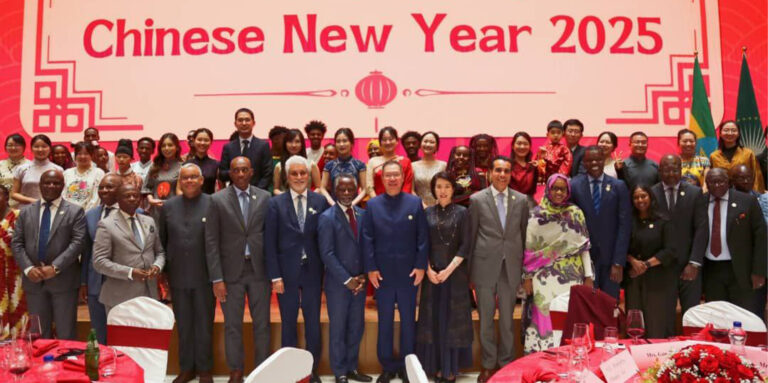
Ambassador Hu Changchun welcomed guests to the Chinese New Year Reception held at the newly completed Chinese Mission compound on January 23, 2025. This event marked the first official gathering in the modern facility, which took three years to construct and symbolizes China’s commitment to strengthening ties with Africa and the African Union (AU).
In his opening remarks, Ambassador Hu emphasized the significance of the Spring Festival, which has recently been inscribed on UNESCO’s List of Cultural Heritage. “As the most important and joyous traditional festival in Chinese culture, we are delighted to share this joy of new year and family reunion with our African friends,” he stated.
The reception brought together diplomats, government officials, and members of the local community to celebrate the upcoming Year of the Snake. Ambassador Hu expressed gratitude to the AU, the Ethiopian government, and all attendees for their support of the new mission and its initiatives. He also congratulated the newly established China-AU Chamber of Commerce, which aims to enhance business exchanges between China and Africa.
Reflecting on the past year, Ambassador Hu highlighted significant achievements in China-Africa cooperation. He noted that the Forum on China-Africa Cooperation (FOCAC) Beijing Summit had successfully elevated China-Africa relations to an “all-weather community with a shared future for the new era.” The ambassador acknowledged Chairperson Moussa Faki’s leadership during his delegation’s visit to China, which contributed to the summit’s success.
Ambassador Hu further detailed various collaborative efforts between China and Africa over the past year. He mentioned that 200 AU officials were invited to China for training programs, strengthening ties across multiple sectors. Additionally, he recognized numerous high-level Chinese delegations visiting AU institutions, reinforcing China’s commitment to partnership with African nations.
The ambassador also discussed practical cooperation initiatives such as the “China-Africa Perennial Rice Technology Center,” “Chinese Language Workshop,” and “China-Africa Vocational Education Cooperation Program.” These programs aim to bolster educational exchanges and technical collaboration between China and African countries.
Looking ahead to 2025, Ambassador Hu expressed optimism about the future of China-Africa relations. He highlighted recent visits by H.E. Wang Yi, underscoring China’s long-standing commitment to Africa as a reliable partner in development. “Through concrete actions, China has demonstrated that no matter how international and regional circumstances change, we will always be Africa’s most reliable friend,” he affirmed.
In closing, Ambassador Hu called for continued collaboration with African nations to implement outcomes from the FOCAC Beijing Summit and pursue high-quality Belt and Road cooperation. He encouraged attendees to embrace hope for the new year, wishing everyone harmony and prosperity in their endeavors.
As guests mingled and enjoyed traditional Chinese performances during the reception, it was evident that this celebration not only marked a new year but also reinforced the enduring bond between China and Africa. The event served as a reminder of shared cultural values and mutual aspirations for growth and development in an increasingly interconnected world.
The Djibouti Ports Corridor Road SA (DPCR SA) is revolutionizing road maintenance through cutting-edge artificial intelligence (AI) solutions, significantly improving trade connectivity in the Horn of Africa. This initiative, aligned with Djibouti’s National Vision 2035, aims to establish the country as a leading logistics and trade hub for East Africa.
In collaboration with RapidCanvas and digital transformation partner 4C Solution, DPCR SA has implemented AI-powered detection systems to monitor and manage road infrastructure. This strategic move addresses critical challenges, including the inefficiencies of manual inspections and a reactive maintenance approach that has historically led to increased repair costs and traffic disruptions.
The AI-driven solutions enable DPCR SA to gather data through GoPro cameras and dashcams installed in vehicles, capturing high-quality video footage of the extensive road network. This footage is then processed and annotated to identify various types of road degradation, allowing for proactive maintenance before issues escalate.
The results have been impressive. The AI implementation is projected to reduce maintenance costs by 30%, resulting in annual savings of approximately $390,000. Additionally, DPCR SA has reported a fivefold return on its AI investment, with enhanced safety and improved responsiveness to road conditions.
“This innovative approach not only preserves road quality but also supports the safety of all users,” said a DPCR SA representative. “By shifting from reactive to proactive management, we are ensuring the longevity of crucial trade routes that facilitate economic growth.”
The project is also creating a foundational digital database of road conditions, enabling better trend analysis and maintenance planning. This evolving system sets a replicable standard for other nations in Africa, positioning Djibouti as a pivotal logistics hub in the region.
As the DPCR CorridorVision AI project continues to optimize trade corridors, it enhances regional integration across the Intergovernmental Authority on Development (IGAD) and the Common Market for Eastern and Southern Africa (COMESA). The success of this initiative showcases the transformative potential of AI in modernizing infrastructure and boosting economic connectivity across the continent.
Due to the liberalization of multimodal logistics operations, Ethiopian commodities importers now have greater freedom in freight transportation. The logistics authority has recently granted operational licenses to a select group of entities to participate in the multimodal transport system.
For the past 13 years, the Ethiopian Shipping and Logistics (ESL), a state-owned logistics company, has held a monopoly on handling the majority of import goods, including containerized cargo.
When the government established the multimodal operation, it granted ESL and the former Ethiopian Shipping and Logistics Services Enterprise (ESLSE), which was formed 14 years ago through the merger of Ethiopian Shipping Lines, Dry Port Services Enterprise, and Maritime, Transit Services, and Comet Transport, exclusive rights to manage most import commodities.
The multimodal system entails transporting cargo from the loading port to the importer’s or buyer’s warehouse using various modes of transportation, including land, air, and sea.
The monopoly that took effect in 2012 sparked significant controversy between the government and the business community, particularly among private logistics firms.
However, one of the government’s recent actions, following its rise to power about six years ago, was to liberalize multimodal business and partially open the logistics industry to international companies.
According to a proposal introduced nearly five years ago, additional operators would be allowed to enter the industry alongside the existing state-owned vessel operating common carrier, ESL.
In 2021, the government issued a directive titled “Multimodal Transport Operators Commercial Licensing and Competency Certification Directive No. 802/2021,” aimed at incorporating more players into the multimodal framework.
The Ethiopian Maritime Authority (EMA), a regulatory body, took several years to identify competent multimodal operators based on established criteria. In March 2024, three additional participants were selected.
Following this selection, the Ministry of Transport and Logistics, EMA’s governing body, formally granted certificates to Panafric Global, Tikur Abay Transport, and Cosmos Multimodal Operation. These three companies were chosen from approximately eight competitors, allowing them to operate as non-vessel operating common carriers (NVOCCs) on behalf of their customers.
However, the process of obtaining an operation license, which was expected to be approved swiftly, faced unexpected delays due to issues on the Djiboutian side.
As per the agreement signed between the two nations in 2006, Djibouti, Ethiopia’s primary sea port for cargo, informed Ethiopia that it would not permit NVOCC multimodal operators to conduct business within its territory, just weeks after Ethiopia announced its decision to adopt a multimodal approach.
Consequently, it took months to resolve this issue. Fortunately, recent reports indicate that the two parties reached an amicable resolution that now allows multimodal operators to function in Djibouti.
The three operators can now commence their operations following the EMA’s awarding of a work permit and commercial license, as reported by Capital from reliable sources.
Cosmos CEO Dawit Woubeshet confirmed that his company has received an operating license from the EMA.
Per the regulatory body’s regulations, participants are required to begin operations within six months of obtaining their operating licenses.
According to sources, the selected companies are preparing to set up offices in countries that Ethiopian freight traverses, including neighboring nations, and are importing machinery to manage cargo.
The two largest new entrants into the market are Tikur Abay, a transport firm operated by the Amhara regional administration, and Cosmos, which was established by the well-known logistics provider Tradepath International, along with Geda Transport, a company from the Oromia region.
Belayneh Kinde, a prominent businessman, has partnered with Panafric Global Plc, one of the logistics companies involved in multimodal transport.
Cosmos CEO stated that the company is working to establish branch offices at ports and other locations globally where Ethiopian commodities primarily arrive.
“In addition to importing trucks and heavy machinery, we are also developing dry ports and hiring professionals,” he told Capital.
“We have issued an international bid for multimodal operating systems, which include support systems and services that operate within a company’s physical data center,” he continued.
To acquire equipment that requires foreign currency, the CEO expressed hope that the government will provide sufficient funding.
“We will implement various strategies, including leasing and purchasing, as well as long-term rentals, to import the expensive heavy-duty machinery,” he added.
According to the 2021 directive, a multimodal operator must meet minimum paid-up capital requirements, own or lease suitable real estate and infrastructure, possess logistical equipment, and employ trained personnel.
Selected companies are also required to maintain a fleet of trucks, both owned and rented, to operate branches abroad, and to establish partnerships in the shipping and aviation sectors.
At least 10% of the 350 million birr paid-up capital must be in cash from all available assets.
Industry observers note that this development marks a significant turning point for the logistics sector.
Since January 1, 2012, ESL has been the only multimodal operator used for importing products, handling 105,648 TEUs in the most recent fiscal year (2023/24), which accounted for 95% of all import containers for that year.
During that time, ESL managed 39.5% of the 1,775 imported vehicles under multimodal schemes.