Xiamen Airlines is set to make its historic entry into the African aviation market, anchoring its maiden route with long-haul Boeing 787-8 aircraft. Beginning November 28, the Chinese carrier will launch a weekly seasonal service connecting Xiamen Gaoqi International Airport (XMN) to Addis Ababa Bole International Airport (ADD).
Running through February 28, 2027, the deployment of the widebody twin-engine jet marks a major milestone as the carrier expands its intercontinental footprint.
Currently, no other carrier serves this specific airport pair, giving Xiamen Airlines a strategic advantage. While point-to-point traffic between the two cities has historically been modest, the Ethiopian capital serves as the continent’s primary gateway for nonstop China-Africa capacity.
Industry analysts note that the route is heavily oriented toward capturing connecting traffic, allowing passengers from across Xiamen’s domestic and regional network to seamlessly feed into onward destinations throughout Africa via Addis Ababa.
The introduction of the Boeing 787-8 on the Addis Ababa link aligns with a broader, aggressive expansion of Xiamen Airlines’ international schedule. Bolstered by rising global demand and growing network capacity through the winter season, the SkyTeam alliance member aims to strengthen commercial and travel ties between China and East Africa.
A coalition of 41 nations issued an urgent appeal at the 63rd regular session of the United Nations Human Rights Council, focusing heavily on safeguarding the safety, security, and rights of civilians, frontline operators, and aid providers across Ethiopia. Delivered by Ambassador Rytis Paulauskas, Permanent Representative of Lithuania, the joint statement emphasized that ongoing armed conflicts and security breakdowns continue to exact an unacceptable human toll, demanding immediate corrective action and strict adherence to international humanitarian law.
The international group directed its focus toward volatile conditions unfolding across several key regions, particularly highlighting the Amhara and Oromia areas. The coalition strongly urged all conflicting parties to immediately halt human rights violations and systemic abuses. Central to this call is the unconditional protection of vulnerable civilian populations caught in the crossfire of regional hostilities, ensuring that local communities can secure basic safety.
Particular emphasis was placed on the perilous operating environment navigated by humanitarian and frontline workers. The 41 countries expressed deep alarm over targeted violence, security obstructions, and fatalities affecting aid personnel who strive to deliver life-saving provisions to populations suffering from severe drought and climate pressures. The statement stressed that humanitarian operators must be granted unhindered, safe access to distressed zones, noting that their physical security is a non-negotiable prerequisite for international relief operations.
To address the aftermath of these violations, the coalition insisted that absolute accountability must be secured for all victims and survivors of grave international humanitarian law breaches. This mandate explicitly covers accountability for the unlawful killings of humanitarian workers, signaling that impunity for attacks on aid providers will not be tolerated by the international community. The address called for transparent investigative processes and comprehensive, victim-centered justice mechanisms to address historical and ongoing grievances.
To foster long-term stability, the international collective encouraged the Ethiopian government to fully leverage available technical assistance through the Office of the High Commissioner for Human Rights (OHCHR) country office. Furthermore, the coalition urged authorities to implement targeted recommendations from prior OHCHR and Ethiopian Human Rights Commission (EHRC) reports.
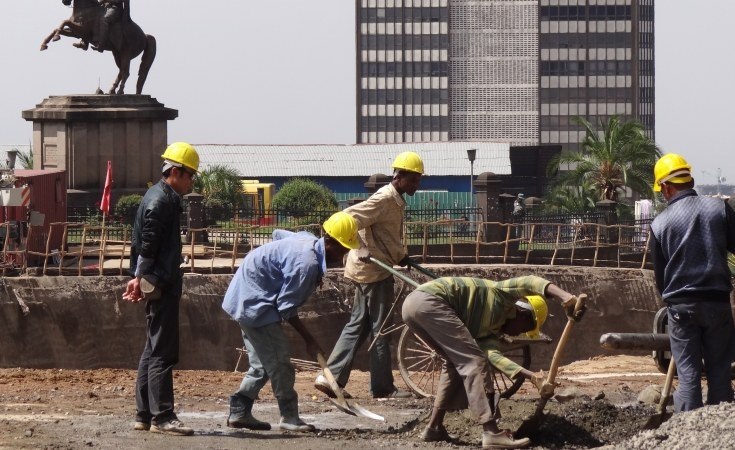
Ethiopia’s rapidly expanding construction sector has long grappled with critical challenges, including chronic project delays, surging costs, and a persistent lack of standardized oversight. A primary contributor to these systemic hurdles has been the heavy reliance on an aging regulatory framework.
Issued in March 1991, the Building and Transport Construction Design Authority (BaTCoDA) guidelines were originally established to set uniform technical specifications, measurement methods, and legally binding contracts across public and private projects.
According to Mesfin Negewo, Director General of the Ethiopian Construction Authority, the BaTCoDA system was created during an era when complex megaprojects were rare. It utilized a basic 12-point weight calculation method tailored primarily to standard building structures. While it once provided a shared baseline for project execution, the framework has failed to evolve alongside a booming and diversifying modern industry.
“Every project actor, contractor, and consultant used their own subjective methods to calculate physical and financial performance, resulting in widespread reporting inconsistencies,” Mesfin told Capital.
These fragmented evaluation methods frequently generated distorted data. Some stakeholders overstated progress—reporting incomplete tasks as finished—which misled decision-makers into assuming projects were on track. Conversely, others understated progress or obscured setbacks, preventing regulatory bodies from detecting early delays.
A study on Ethiopian construction projects conducted by Jimma University highlights that time and cost overruns are the primary consequences of these delays, typically stemming from financing difficulties, poor planning, and ineffective resource utilization. While industry professionals have long noted that the absence of standardized manuals creates an uneven playing field between contracting parties, the Authority took a step to address price escalation issues in state-owned projects by releasing a price adjustment implementation manual in July 2024.
To definitively bridge this gap, the Ethiopian Construction Authority, in collaboration with key stakeholders, is rolling out a new physical performance measurement standard.
Unlike its rudimentary predecessor, the new framework incorporates expansive parameters, including detailed work breakdown structures, localized productivity rates, manpower tracking, and machinery utilization metrics. Because regional geography and operational conditions vary across Ethiopia, officials stress that the new standard balances national consistency with practical adaptability.
To ensure nationwide compliance, the new system will be strictly enforced as a mandatory contractual requirement for all federal government-funded projects, binding contractors, consultants, and clients to a single, transparent measure of accountability.
This builds on previous modernization milestones, including the October 2025 launch of the Construction Regulation Information System (CRIS) by the Authority in partnership with the Information Network Security Administration to significantly enhance project tracking. Additionally, the Ministry of Urban and Infrastructure has emphasized that sector regulations and guidelines must be continuously reviewed and revised to establish a modern, uniform regulatory system that ensures projects adhere strictly to expected standards of quality, safety, and cost-effectiveness.
The construction industry plays a vital role in accelerating Ethiopia’s economic growth, establishing infrastructure networks, and creating employment opportunities. This new standard marks a critical step toward ensuring that this essential sector operates with the transparency and efficiency necessary to support the nation’s broader development ambitions.