Sunday, May 10, 2026
Home Blog Page 671

Marsa Maroc to Invest in Djibouti’s Petroleum Port

0

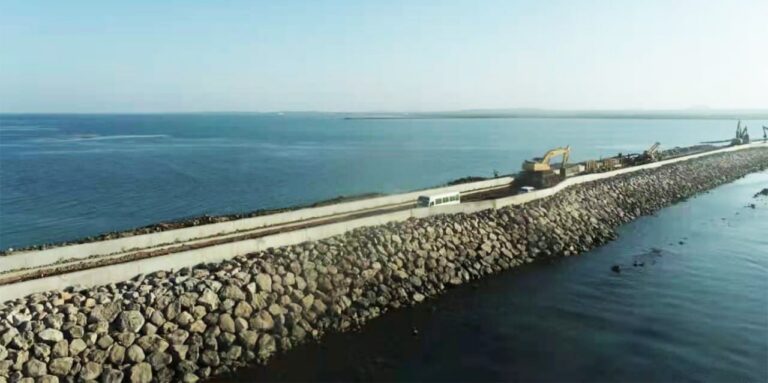
The primary port operator in Morocco, Marsa Maroc, is set to make a significant investment in the petroleum port in Djibouti, where Ethiopia has expressed interest in acquiring a stake.

Marsa Maroc is expanding its presence on the African continent by establishing two new subsidiaries in Djibouti and Benin, according to various sources.

As part of a decision by the Moroccan government on January 6, Marsa Maroc plans to invest an undisclosed amount in Damerjog Oil FZE, a company responsible for constructing an oil and gas terminal in Damerjog.

To oversee this initiative, Marsa Maroc has established a subsidiary called Marsa Maroc International Logistics, which will manage a separate organization known as Marsa Djibouti.

This project aligns with Marsa Maroc’s objective of strengthening its role in the logistics chains of East Africa.

Reports indicate that the Marsa Maroc group is exploring new expansion opportunities, particularly through public-private partnerships for managing ports in other African countries.

Marsa Maroc International Logistics, which will supervise the company’s international investment projects, has a capital of USD 30 million.

In East Africa, Marsa Djibouti is expected to acquire a stake in Damerjog Oil Jetty FZE, which is responsible for developing and managing a petroleum terminal in Djibouti’s free zone.

The strategic location aims to capitalize on significant logistics flows related to the storage and reloading of petroleum products, especially targeting the Ethiopian and Djiboutian markets.

Ethiopia currently relies on the Damerjog port, a large construction complex located on the southern outskirts of Djibouti along the Gulf of Aden, to import petroleum products. These products are presently imported through Horizon, which is not fully equipped to serve the needs of the world’s most populous landlocked country.

It was noted that during a visit approximately five months ago, a team from the Ethiopian Petroleum Supply Enterprise (EPSE) requested alternative discharge ships for oil imports from Djibouti authorities, as the Horizon Djibouti Terminal was partially closed for repairs at that time.

The UAE’s Horizon Djibouti Terminal, opened in 2005 with an annual capacity of 4.5 million tons, is increasingly unable to meet Ethiopia’s growing demand for petroleum products.

In late 2017, transport ministers from both countries engaged in extensive discussions about constructing a new oil terminal to address Ethiopia’s rising needs for key commodity imports.

Additionally, Ethiopia has shown significant interest in acquiring a share of the oil port facility, based on negotiations held in previous years that culminated in a Memorandum of Understanding (MoU).

The recently established sovereign wealth fund (SWF), Ethiopian Investment Holdings, has been involved in negotiations with Djibouti authorities to secure a thirty percent stake in Damerjog Liquid Bulk Port, a state-of-the-art facility capable of accommodating the latest generation of oil tankers.

While no further progress has been reported, it was stated in late 2022 that the investment holding would secure the stake through EPSE, one of the 27 large public firms owned by the SWF.

Damerjog Liquid Bulk Port is projected to handle 13 million tons as part of the USD 4 billion Djibouti Damerjog Industrial Park.

Marsa Maroc’s financial performance reflects a strong market position, with profits reaching USD 85.2 million in the previous year, marking a 5% annual increase.

To support its expansion, Marsa Maroc recently secured USD 69 million in funding from the European Bank for Reconstruction and Development to enhance its terminal capacity.

The port operator, which is 25% state-owned and has Tanger Med Port as a 35% shareholder, continues to demonstrate its commitment to expanding its presence in Africa.

New Legal Framework Aims to Combat Economic Crime and Recover Illegally Acquired Assets

0

Ethiopia is taking significant steps to combat economic crime with the approval of a new legal framework aimed at recovering assets of unknown origin. The Standing Committee on Law and Justice Affairs has endorsed a draft proclamation that seeks to address the serious economic damage caused by illicit financial activities, which have hindered foreign direct investment and negatively impacted the country’s financial systems.

The new legislation focuses on recovering properties that have been acquired through illegal means. Under this proclamation, individuals must demonstrate that their assets or standard of living are proportionate to their legal income, or risk having their property classified as of unknown origin. If a person claims to have acquired assets from abroad, they will be required to provide proper bank receipts to prove that the funds have legally passed through the banking system. Failure to do so will result in those assets being deemed income of unknown origin, subject to confiscation.

The draft decree allows for legal action to recover properties acquired within ten years prior to the proclamation’s enactment. This includes provisions for confiscating assets without a prior conviction, allowing authorities to act against suspected economic criminals more effectively.

Individuals receiving inquiries from prosecutors regarding the source of their assets must respond in writing within one month, providing detailed descriptions and evidence of their properties. This initiative aims to close loopholes that have allowed economic crimes, such as money laundering and tax evasion, to flourish in Ethiopia.

The government hopes that this new legal framework will deter illegal activities and restore integrity to the financial system, ultimately fostering a more favorable environment for foreign direct investment and economic growth. As Ethiopia grapples with rising economic crime rates, these measures represent a critical step towards safeguarding the nation’s economic interests.

Awash Bank celebrates 30 years of growth with deposits surpassing 273 billion birr

0

Awash Bank has marked its 30th anniversary by announcing a significant milestone: the bank’s deposits have surpassed 273 billion birr. Founded on February 13, 1995, by 486 shareholders with an initial paid-up capital of 24.2 million birr, the bank has grown exponentially over the past three decades.

Currently, Awash Bank boasts a paid-up capital exceeding 25 billion birr, with projections indicating it could reach 55 billion birr within the next three years. Tsehay Shiferaw, the bank’s CEO, highlighted that total assets have surged from just 103 million birr at the end of its first financial year to over 300 billion birr today.

The bank began its operations with deposits totaling 146 million birr in its inaugural year, a figure that has dramatically increased to over 273 billion birr. Tsehay emphasized Awash Bank’s leadership in profitability within Ethiopia’s private banking sector, reporting over 10.8 billion birr in profits for the 2023/24 financial year. The government has also benefited from this success, receiving more than 3.2 billion birr in dividend tax during the same period.

In conjunction with Awash Bank’s anniversary, its sister company, Awash Insurance, has also celebrated three decades of operation. CEO Jibat Alemneh Faji reported that the insurance company collected premiums of 15.5 million birr at the end of its first term and has since grown to receive over 3.12 billion birr in premiums by June 30, 2023/24. The company’s paid-up capital has risen from 4.8 million birr to an impressive 2.5 billion birr, with total assets reaching 7.7 billion birr.

Jibat noted that Awash Insurance has maintained market leadership in the general insurance sector for the past twelve years and remains one of the top life insurance providers in Ethiopia for six consecutive years.

New coffee strategy aims to position country as second-largest global coffee exporter by 2033

0

The new coffee strategy and roadmap aim to position Ethiopia as the world’s second-largest coffee bean exporter within eight years, while also increasing the country’s hard currency revenues by more than six times.

Ethiopia, known as the birthplace of coffee and home to over 10,000 distinct varieties, currently earns relatively little from this vital industry, despite coffee being one of the most traded commodities globally.

Since coffee was first discovered in the ninth century in Keffa, located in western Ethiopia, it has been marketed internationally and is commonly regarded as the second most traded commodity by volume, following crude oil.

The coffee industry supports at least 20% of the Ethiopian population and is a crucial source of hard currency from exports. However, analysts argue that the sector remains underdeveloped, largely due to neglect by the EPRDF administration and the absence of an independent regulatory agency.

The Ethiopian Coffee and Tea Authority (ECTA), established in 2016, has initiated several projects to promote the marketing and development of the coffee industry.

Since 2019, particularly under the current central government administration in the Oromia region—Ethiopia’s largest coffee producer—numerous initiatives have been introduced to revitalize aged coffee trees, many of which have exceeded 45 years of age. Millions of coffee seedlings have been planted across the country in recent years, reflecting a strong commitment to sector growth.

Prime Minister Abiy Ahmed has projected that Ethiopia will rank among the top coffee exporters in the coming years.

About a year and a half ago, he expressed confidence that Ethiopia would become the third-largest coffee exporter within three years.

According to ECTA’s recently released Coffee Sector Transformation Strategy, Ethiopia is expected to become the second-largest producer and exporter of coffee by 2033.

The strategy outlines a roadmap indicating that the area dedicated to coffee plantations will more than double by that year, increasing from an estimated 2.2 million hectares this year to 4.7 million hectares by 2033.

Productivity is also anticipated to rise, with yields expected to increase from 7.5 quintals per hectare in 2024 to 15 quintals per hectare. This will result in a projected 433% increase in total annual production, reaching 4.4 million tons compared to 833,000 tons in the previous budget year.

The roadmap further indicates that the export volume of green coffee beans, both washed and unwashed, is expected to rise from 298,000 tons in the previous budget year to over 2.2 million tons, marking a 645% increase relative to the 2023/24 budget year.

By 2031, it is anticipated that half of Ethiopia’s total coffee output will be exported.

Interestingly, Ethiopia’s coffee industry is unique in that it is not only the origin of the coffee tree but also the largest consumer of the commodity. For instance, in the 2023/24 budget year, which ended on July 7, 2024, 64% of the annual coffee production was consumed domestically.

Despite being the country’s primary source of foreign exchange, the volume of coffee exports remains low due to strong local consumption.

The strategic document highlights the increasing demand for premium coffee as a promising opportunity for the Ethiopian coffee industry.

It emphasizes the government’s commitment to establishing a responsible organization within the industry and its efforts to enhance growth through agricultural initiatives and improved marketing strategies. These efforts are expected to create more opportunities for a bright future in the coffee sector.

The new strategic plan aims to expand the industry through technology-driven commerce and digital agriculture initiatives. It anticipates that significant export earnings in the coming years will enhance productivity, supported by high-quality, value-added products.

Key factors considered in the document include ensuring fair prices to boost revenue, as well as promotional initiatives that showcase Ethiopia’s vast potential for specialty coffee and competitive value-added products, which are crucial for increasing export earnings.

Beyond agricultural and commercial advantages, the document acknowledges the broader economic benefits of the sector. It states that promoting coffee tourism and fostering Ethiopian coffee culture are vital to maximizing the industry’s economic impact.

According to the new agreement, several regulatory frameworks will be implemented to achieve goals within the coffee sector, which contributes up to 4% of the country’s GDP and supports around five million growers.

The sector is also responsible for up to one-third of hard currency earnings from agricultural exports.

The report highlights Ethiopia’s significant potential to generate substantial revenue from coffee due to the growing global demand for specialty coffee. The country’s genetic resources, encompassing 11,691 Arabica coffee germplasm accessions, are identified as a key strength of the Ethiopian coffee industry.

The core concepts of the strategy include strengthening sector players, particularly coffee unions, enhancing quality and sustainability, building a strong brand, promoting coffee culture and tourism, and expanding research initiatives—all aimed at achieving strategic objectives.

According to the strategic document, farmers have received 49 improved seeds, including nine hybrids and 40 selections, with a plan to increase this number to 60 by 2032.

It notes that a significant weakness in sector growth is the insufficient on-the-ground efforts.

The document states, “Ethiopian coffee quality and its diverse range of varieties are extraordinarily preferred in the global market,” citing the high-quality output and growing demand for specialty coffee as a major strength for the future.

By 2033, the strategy projects that Ethiopia’s exports of green coffee could generate USD 10.4 billion. The volume of coffee exports and the country’s hard currency earnings have risen in recent years. This new goal represents a target of more than six times the previous year’s earnings of USD 1.4 billion.

Adugna Debela, Director General of ECTA, remarked on the publication, “The strategy and roadmap demonstrate our eagerness to elevate the Ethiopian coffee industry and position Ethiopia as a leading, competitive coffee producer alongside countries like Brazil and Vietnam.”

Brazil is currently the world’s largest coffee producer and exporter, followed by Vietnam and Colombia. With a 4% market share, Ethiopia is the leading coffee producer in Africa and ranks seventh globally.

The World Bank recently reported that due to infrequent tree trimming, approximately 80% of Ethiopia’s one million hectares of coffee trees are underproductive.

A paper from a few years ago asserts that the problem lies not in the quality of Ethiopian coffee. Approximately 95% of the country’s diverse coffee varietals are produced organically, traditionally without fertilizers or pesticides. Demand is also not an issue.

However, the study questions why Ethiopia’s coffee output lags behind that of other leading coffee-producing countries such as Brazil, Colombia, Indonesia, and Vietnam. It identifies a lack of proper pruning as the primary cause of this shortfall.

The World Bank highlights that millions of smallholder farmers, who depend on coffee production for their livelihoods, face significant challenges due to the low yields of Ethiopia’s coffee plants.

To ensure robust production from coffee fields, the new initiative has focused on critical areas of improvement. Analysts note that Ethiopian coffee cultivation is attracting private sector investment, a trend that began before the 1974 revolution when the Derg, a communist military regime, nationalized several industries.

They emphasize that “one of the key areas to achieve the goals set by the authorities will be the role of the private sector.”