Friday, April 3, 2026
Home Blog Page 673

“Zore Beya Sayew”: Negussie Tefera’s Autobiography Unveiled at National Theatre Hall

0

On November 30, 2024, Negussie Tefera (PhD) celebrated the inauguration of his 438-page autobiography, “Zore Beya Sayew,” at the National Theatre Hall. A passionate reader since childhood, Tefera reflects on his journey from radio to a leadership role in the Prime Minister’s Office, detailing his experiences through significant political transitions. With multiple accolades and a rich publishing history, Tefera’s work adds a vital narrative to Ethiopian literature.

The autobiographical book titled “Zore Beya Sayew” was inaugurated by Negussie Tefera (PhD), who has had a deep passion for reading since childhood. The event took place at the National Theatre Hall on Saturday, November 30, 2024.

Negussie Tefera spent over three years writing this 438-page autobiography. He is the author of three books on journalism and has served as a co-editor for more than six published works in the United States, as well as contributing to over thirty different magazines. His achievements have earned him numerous awards both domestically and internationally.

In his biography, he details his transition from radio to the campaign department, where he served as the head of the Foreign Affairs, Justice, and Publicity Bureau in the Prime Minister’s Office for five years during both the Derg and the EPRDF regimes.

Merid Tafesse’s book launch co-curated by Rita Marley

0

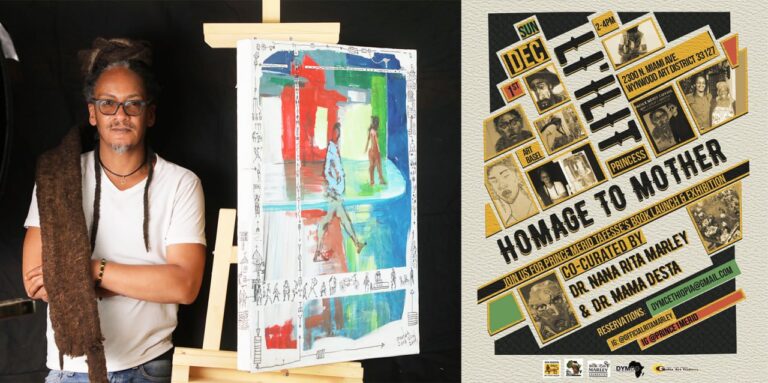
The vibrant Wynwood Art District is set to host the launch of Ethiopian artist Prince Merid Tafesse’s latest book, ‘LI’ILIT|PRINCESS: Homage to Mother’, co-curated by renowned artist and philanthropist Rita Marley. The event will take place on Sunday, December 1, and will also be accessible via Zoom.

Rita Marley, wife of reggae legend Bob Marley, has long been a champion of Ethiopian visual arts, intertwining her legacy with heritage and music. Alongside her close friend, Desta Meghoo, she has curated this retrospective of Merid’s work, which spans 25 years. Marley describes Merid’s art as “powerful and purposeful,” capturing the hope, pride, and complexities of the Ethiopian and broader African experience.

The bond between Marley and Merid dates back 20 years to the Africa Unite concert in Addis Ababa, a celebration of Bob Marley’s legacy. “When we met and I allowed my art studio to participate in the celebration, I never imagined she would be co-curating my artwork. I am honored and blessed,” expressed Merid.

In recognition of their contributions to the arts, both Rita Marley and Merid will receive a Congressional proclamation from Florida Congresswoman Frederica S. Wilson. This honor will be presented by High Chief Nathaniel B. Styles, Executive Director of Osun’s Village Miami and the African Caribbean Arts Corridor.

The book launch promises to be a unique experience, featuring a live-streamed discussion with Merid from Addis Ababa, a pop-up exhibition, and a silent art auction benefiting the Rita Marley Foundation. Attendees can participate either in person or online via Zoom.

This event not only celebrates the artistic journey of Merid Tafesse but also aims to bridge cultural connections between Ethiopia, Africa, and the global diaspora through the transformative power of art.

Watch Gondar Fasiledes Cultural Group at Addis Jazz Festival

0

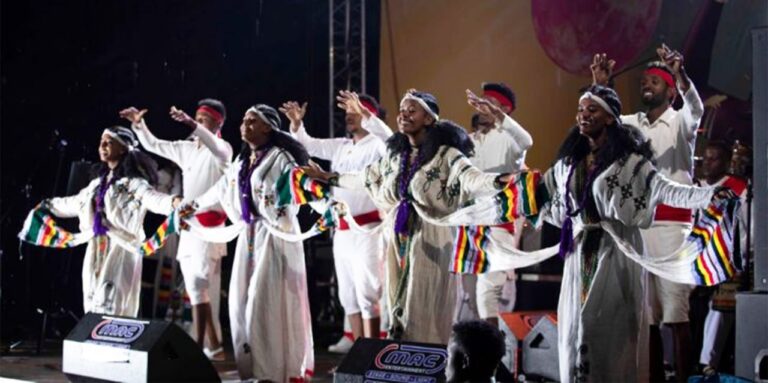
Record label Muzikawi has unveiled the full performance video of the Gondar Fasiledes Cultural Group at the Addis Jazz Festival 2023.

This stunning showcase is a visual and auditory feast, featuring energetic music, vibrant costumes, rich culture, lively dances, harmonious melodies, and a dynamic blend of dialects.

Founded in 1977, the Gondar Fasiledes Cultural Music Group has been a cornerstone of Ethiopia’s artistic history. Initially known as Taglo Atagay, the group quickly gained popularity for its dynamic performances that merged music, dance, and theatre.

In 1979, the group was renamed Ras Dejen Kinet, expanding its repertoire to include social and political theatre. By 1983, the group became Yefasiledes Kinet, playing a pivotal role in promoting Ethiopian culture on the global stage, particularly through their influential Hizib Lehizib concert. However, following the regime change in 1990, the group disbanded, and Gondar’s cultural arts scene faced a decline.

In 2014, the Gondar City Administration revived the group as the Gondar Fasiledes Cultural Music Group. After getting new leadership, the group officially relaunched in 2018. Now with 34 members, it continues to celebrate and share Gondar’s rich cultural heritage through music and dance. The group’s contributions to Ethiopian culture have been recognised with various awards, including third place in the 2014 Amhara Region cultural competition.

In addition to its Addis Jazz Festival performance, the Gondar Fasiledes Cultural Group recently teamed up with Muzikawi to release the single ‘Eregnaw’ from their upcoming album, Gonder Fasiledes, on 10 May. The single is available on both the Muzikawi YouTube channel and its other digital streaming platforms, with the full album, featuring 12 tracks, set to be released soon.

The group hails from Gondar, a city in Ethiopia that was founded in 1636 by Emperor Fasilides, who also built the Fasil Ghebbi fortress complex. The Fasil Ghebbi complex is a UNESCO World Heritage Site that includes the emperor’s castle, palaces, churches, and other buildings. The area was a centre of artistic, architectural, and literary achievement during the Gondarine period, which lasted from 1632 to 1769.

Revisiting AGOA: PACCI Calls for Adjustments to Ensure Africa’s Economic Growth

0

As the US Senate deliberates the AGOA Renewal and Improvement Act of 2024, extending the African Growth and Opportunity Act (AGOA) until 2041, the Pan-African Chamber of Commerce and Industry (PACCI) has raised critical concerns. While the 16-year extension offers stability for Africa-US trade relations, PACCI emphasizes the need for greater flexibility to ensure the legislation benefits African economies without creating undue barriers.

A Welcome Extension, But Challenges Persist

The new legislation proposes several updates to AGOA, including enhanced eligibility criteria, stricter compliance standards for textile exports, and provisions to align with regional integration efforts under the African Continental Free Trade Area (AfCFTA). However, these changes come with potential risks for African exporters.

Kebour Ghenna, Executive Director of PACCI, applauds the extension but cautions against provisions that may unintentionally exclude countries or create compliance bottlenecks.

“We welcome the stability that the 16-year extension brings,” said Ghenna. “But the new criteria must reflect Africa’s economic realities and avoid punitive measures that hinder trade opportunities. Flexibility is crucial for creating an inclusive and impactful framework.”

Key Concerns

  1. Stricter Eligibility Criteria
    The revised act introduces detailed requirements on corruption, human rights, and labor practices. Countries flagged in US reports, such as the Trafficking in Persons Report and the Child Soldiers Prevention Act, could face suspension from AGOA. PACCI warns that many African countries risk disqualification due to the subjective nature of these criteria.

“Eligibility criteria should be progressive, offering African countries the technical and financial support needed to meet these standards rather than outright disqualification,” Ghenna argued.

  1. Textile Compliance Regulations
    The emphasis on supply chain scrutiny, particularly regarding Chinese cotton under the Uyghur Forced Labour Prevention Act, complicates compliance for African apparel exporters.

“The textile sector is a major job creator in Africa,” Ghenna noted. “We must ensure that these new provisions do not disrupt the sector’s growth or exclude smaller exporters.”

  1. Out-of-Cycle Reviews
    The new legislation allows Congress to initiate out-of-cycle reviews at any time, introducing unpredictability for African exporters. This uncertainty could deter long-term investment and trade planning.

Opportunities to Build On

Despite its challenges, the legislation contains promising elements, including:

  • A 16-year extension, offering businesses and investors long-term planning stability.
  • Support for AfCFTA integration, with updated rules of origin allowing regional value chain participation by all AfCFTA member states.
  • $100 million in trade capacity-building funds, aimed at improving customs operations, export promotion, and trade-related infrastructure.

“These provisions have the potential to unlock new opportunities for African economies,” Ghenna said. “However, they must be implemented in a way that prioritizes inclusivity and practicality.”

PACCI’s Recommendations

PACCI is advocating for adjustments to the act, including:

  • Introducing grace periods or support mechanisms to help countries meet the updated eligibility criteria.
  • Providing technical assistance to build local textile and apparel value chains and reduce dependency on imports.
  • Ensuring transparent review processes to minimize trade disruptions.
  • Expanding AGOA’s product coverage to include more goods critical to African economies.

A Call for African Unity

As the debate over AGOA’s renewal intensifies, PACCI calls on African governments and businesses to actively engage with US lawmakers. “We must ensure this legislation reflects Africa’s aspirations for sustainable development and economic growth,” Ghenna concluded.

PACCI is also urging its members to issue a unified press release in support of AGOA’s extension while advocating for much-needed reforms to safeguard the interests of African businesses.

By striking a balance between compliance and flexibility, AGOA can continue to serve as a cornerstone of Africa-US trade relations, fostering economic growth and integration across the continent.