Friday, April 3, 2026
Home Blog Page 674

Nyala Insurance reports gross profit of over 636 million birr

0

Nyala Insurance S.C. (NISCO) has announced a gross profit of Birr 636.4 million for the previous fiscal year, achieving a remarkable 109.5 percent growth despite the challenging macroeconomic and socio-political conditions in the country.

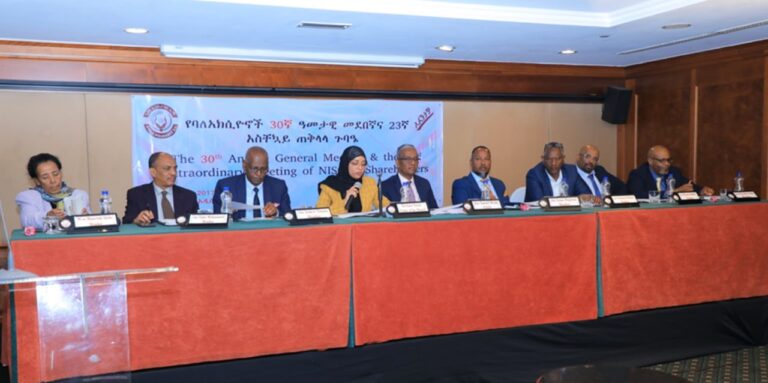
During the 30th General and 23rd Extraordinary General Meeting held on November 26, 2024, at the Sheraton Addis, Dr. Sara Surur, Chair of the Board of Directors, presented the company’s annual performance report to shareholders. She highlighted a significant increase in gross profit, which rose from Birr 303.7 million to Birr 636.4 million, more than doubling the previous year’s figure. As a result, earnings per share (EPS) increased from Birr 354 to Birr 502, reflecting a 42 percent rise.

Dr. Surur also emphasized that NISCO generated over Birr 1.6 billion from general, long-term (life), and takaful insurance operations, marking a 20 percent increase. Of this total, the general insurance segment accounted for approximately 74 percent, while long-term insurance premiums and takaful represented increases of 18.7 percent and 7.6 percent, respectively.

Additionally, she noted that the company’s total assets grew to Birr 4.5 billion, representing an 18.8 percent increase from the previous fiscal year. This growth was partly attributed to increased equity from capital investments made by shareholders.

Conversely, Dr. Surur reported that the company disbursed approximately Birr 350 million in claims to customers, which is a 5.6 percent decrease from the previous year.

Yared Mola, CEO of Nyala Insurance S.C., expressed the company’s commitment to improving operational efficiency, enhancing customer satisfaction, and expanding into untapped markets, particularly those that are underserved.

“This year marks the second year of our ambitious strategic period. We are focusing on digital transformation and innovation to meet our customers’ evolving needs. To advance our goals, we have restructured NISCO to drive innovation and enhance service delivery, positioning ourselves as a future-ready organization. In line with this vision, we have introduced a new customer-centric initiative by transforming our branches into Customer Experience Hubs (የደንበኞች ቤት),” he stated.

The CEO explained that these hubs are designed to enhance customer interactions by integrating the customer experience concept at every touchpoint, ensuring a smooth and personalized service journey for each customer. This transformation underscores the company’s commitment to elevating service quality and delivering an exceptional experience for clients.

Yared emphasized the company’s dedication to becoming a forward-thinking, technology-driven institution that prioritizes customer satisfaction and operational efficiency.

Founded in 1995 with a paid-up and subscribed capital of Birr 7 million and 25 million, Nyala Insurance S.C. is a robust and innovative financial institution that offers tailored products and services, including microinsurance, mobile insurance, and diaspora insurance.
Parliament approves supplemental budget of 463 billion birr

0

The funding for macroeconomic reforms is assisting the government in restructuring financing approved months earlier. The International Monetary Fund (IMF) has completed its second-round review ahead of schedule.

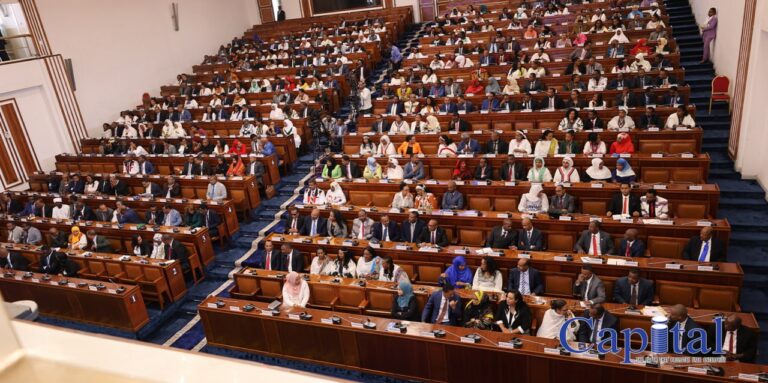
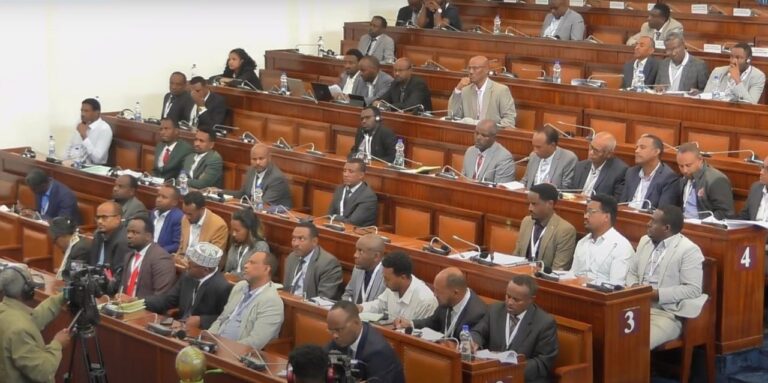
On Tuesday, November 26, the Ethiopian parliament passed a supplemental budget of 463 billion birr for the fiscal year 2024/25, which commenced on July 8. This budget includes a finance restructure totaling 119 billion birr.

The authorized budget is being redirected to other funding sources through this finance restructure. The ratified proclamation indicates that approximately 300 billion birr of the total amount has been secured through grants and loans from overseas sources, which significantly exceeds the initial projections in the annual budget.

In recent years, the government has received less foreign funding than in the past. For example, the authorized budget in June projected that only 82 billion birr (about USD 656 million at current exchange rates) would be obtained from external grants and loans.

However, foreign partners became more inclined to support the initiative after the government’s decision to begin implementing significant macroeconomic changes on July 29. On the same day that the reform package, which included liberalizing foreign exchange, was announced, the World Bank and IMF provided USD 2 billion.

To expedite the reform process, the IMF has since allocated an additional USD 340 million, bringing the total authorized amount to USD 3.4 billion.

Experts note that the government has been able to avoid utilizing local loans, which were authorized nearly five months ago to address the budget shortfall, due to the influx of funds from foreign partners. Consequently, the government has restructured the 119 billion birr originally intended to be financed through local credit sources.

According to the supplementary budget and finance restructuring proclamation, the World Bank has allocated 123 billion birr, while the World Bank and IMF have loaned 112 billion and 65 billion birr, respectively.

In June, the parliament approved a 971 billion birr budget, with 325.6 billion birr expected to come from local credit sources. However, resources from foreign partners have already replaced more than one-third of this anticipated local loan amount.

Historically, direct advances—which are a primary contributor to inflation—and Treasury bills have been used to cover budget deficits.

Of the 463 billion birr included in the recent supplemental budget, 121 billion birr has been designated to settle internal debts, including loans that public enterprises have defaulted on to the state-owned Commercial Bank of Ethiopia. As part of the economic reform initiative, the government has agreed to pay off these loans to prevent the bank from going bankrupt.

Sixty-two percent (75 billion birr) of the 121 billion birr allocated for internal debt repayment will be used to pay interest.

The administration has indicated that various forms of assistance from bilateral and multilateral partners are expected since the reform process began four months ago.

A USD 3.4 billion loan agreed upon by the IMF will be disbursed over the next four years, with 40 percent of the approved amount already released.

In the near future, the IMF Executive Board is expected to authorize Ethiopia’s access to approximately USD 251 million in funding, which represents 7.5 percent of the total amount.

This week, the IMF team, led by Alvaro Piris, completed its second review of the four-year USD 3.4 billion Extended Credit Facility (ECF) arrangement. The IMF staff visited Addis Ababa from November 12 to 26, 2024, to discuss the progress of reforms and the government’s policy priorities as part of this review.

“Ethiopia’s economic reform program, including the transition to a market-determined exchange rate, continues to progress well. Recent developments have been supported by the relaxation of foreign exchange (FX) surrender requirements, increased activity in the emerging interbank FX market, and the successful launch of a domestic interbank money market. Foreign exchange shortages have significantly eased, and the gap between the official and parallel markets has fallen below 10 percent after a brief spike in October,” Piris stated.

He also noted that the IMF team and Ethiopian authorities have reached a staff-level agreement on the second review of the country’s economic program under the ECF arrangement. This agreement is subject to approval by IMF management and the Executive Board in the coming weeks. Upon completion of the Executive Board review, Ethiopia will gain access to USD 251 million.

Future reviews will take place every six months.

Call for bank loans for urban land lease auction participants

0

In a recent meeting, stakeholders discussed the need for a proposed bill on urban land leasing to facilitate access to bank loans for investors who paid for land leases. The Standing Committee on Urban, Infrastructure Development, and Transport of the House of People’s Representatives convened to review amended draft proclamations concerning urban land tenure registration and the leasing of urban land.

During the discussions, participants highlighted the challenges faced by developers who recently participated in an auction conducted by the Addis Ababa City Administration. They emphasized that these developers require loans to cover costs incurred during the auction process and requested that provisions be included in the proclamation to address this need.

The Urban Landholding Registration Proclamation No. 818/2006 is currently undergoing amendments aimed at enhancing transparency in land allocation across the country. The new ordinance mandates that at least 20% of allocated land must be designated for housing construction. This change is seen as a significant step toward addressing issues within the sector and ensuring citizens’ rights to land use.

Additionally, stakeholders stressed the importance of implementing a modern data management system for organizing urban land tenure and related property registration consistently across all cities.

The amendment bill also addresses the necessity for rapid and sustainable development aligned with Ethiopia’s current growth trajectory. The Addis Ababa City Land Development and Administration Bureau has initiated its fourth round of land lease bidding, offering 285 plots across ten sub-districts, with 60 plots carried over from the previous round.

Goh Betoch Bank announces 22.9 million birr dividend

0

Goh Betoch Bank’s Board of Directors has recommended a dividend distribution of 22.9 million birr to shareholders, allocated in proportion to their paid-up shares. This initiative is part of the bank’s strategy to encourage investors to reinvest their dividends, thereby supporting the bank’s capital growth.

In a remarkable financial turnaround, Goh Betoch Bank reported a gross profit before tax of 83.4 million birr for the 2023/24 fiscal year, marking an impressive increase of 77 million birr compared to last year’s profit of 6.4 million birr, which is more than a twelvefold increase.

During the fiscal year, the bank generated total income of 414.1 million birr, reflecting significant growth of 201.5 million birr (94.8%) compared to the previous year’s total of 212.6 million birr. This income surge was driven by both interest and non-interest earnings, which accounted for 66% and 34% of the total income, translating to 273.3 million birr and 140.8 million birr, respectively.

In compliance with regulatory requirements, Goh Betoch Bank successfully raised an additional 90.6 million birr in paid-up capital, increasing its total to 1.41 billion birr, a notable rise of 6.9% from last year. Following directives from the National Bank of Ethiopia (NBE), the bank aims to grow its capital to 5 billion birr over the next five years.

The bank’s deposits also increased, reaching 1.02 billion birr, an increase of 112.6 million birr (12.3%) from last year’s deposits of 911.8 million birr. The number of deposit accounts surged by 39.2%, rising from 21,932 to 30,530.

Furthermore, Goh Betoch Bank reported a rise in outstanding loans, which reached 1.55 billion birr, an increase of 233.3 million birr from the previous year’s total of 1.32 billion birr. Notably, loans for building and construction made up 60.7% of the bank’s loan portfolio.

Despite navigating a challenging macroeconomic environment and increased competition within the banking sector, Goh Betoch Bank continues to demonstrate resilience and growth, underscoring its commitment to delivering value to both shareholders and customers.

Although Goh currently provides commercial banking services, its primary goal is to focus on mortgage banking, aiming to become the only specialized bank in the financial industry. According to the draft banking business proclamation under review by parliament, the NBE will issue a directive allowing the establishment of specialized banking licenses, extending beyond the current scope of commercial banking services.

This draft proclamation defines a “specialized bank” as one, other than an investment bank, that is licensed by the NBE to provide focused banking services tailored to specific sectors of the economy or market segments. These sectors may include export-import, mortgage, agriculture, cooperatives, small and micro-enterprises, or other areas determined by the NBE through its directives.