Ethiopia’s commitment to preserving its rich and diverse indigenous cultures is facing significant challenges due to low budget allocations for the cultural sector, according to a recent study. Despite the country’s vibrant cultural landscape, the financial resources dedicated to this sector have been insufficient, hindering its effectiveness in promoting and safeguarding cultural heritage.
The study highlights that investment in Ethiopia’s cultural sector is critically low and often underestimated. Although there have been ongoing policy reforms, the cultural sector continues to grapple with daunting challenges. In response to these issues, Selam Ethiopia has launched a new initiative called Connect for Culture Africa (CfCA) in partnership with the African Union. This initiative aims to mobilize coordinated efforts to secure adequate financial resources for the cultural sector.
Findings from the study indicate that the cultural sector is considered a priority in the upcoming federal budget, which is expected to increase support for this area. However, the allocation remains alarmingly low, with only approximately 0.11% of the national budget designated for cultural initiatives—far below the 1% target specified in the African Union agreement.
With only five years remaining to meet commitments made by 2030, experts stress that increasing traditional budget allocations is essential. This move would help mitigate risks of sudden budget overruns and mismanagement by strengthening the structural capacity of public institutions within the sector.
The recently released “Baseline Study and Actor Mapping for Public Investment in Ethiopia’s Culture Sector” examines the challenges facing the Connect for Culture Africa movement and provides recommendations for addressing these obstacles. Dr. Yitsema Tsege Shaw, the lead researcher, emphasized the urgent need for greater investment support in the cultural sector. “Although the cultural sector is at the forefront of Ethiopia’s 10-year plan, the budget allocated to it is significantly less than what is outlined in the African Union’s plan,” he stated.
The study also revealed that the utilization rate of funds within the cultural sector accounts for 75-80% of the total budget, which directly influences future budget allocations. A senior budget expert from the Ministry of Finance noted that key factors determining budget amounts include development priorities outlined in national plans, financial performance, physical performance, and strong justifications presented during budget hearings.
Despite efforts to raise awareness about increasing the share of the federal budget allocated to culture to 1%, communication regarding this campaign has been inadequate among senior officials and experts at the Ministry of Finance. Consequently, awareness has not sufficiently influenced budget allocations for the sector.
Historical data shows that from fiscal years 2020 to 2023, allocations for the cultural sector remained relatively low: 0.127%, 0.118%, and 0.144%, respectively. This trend underscores both a need for greater commitment to funding and coordinated action from all stakeholders to ensure sustainable cultural development by 2023.
The research conducted as part of Connect for Culture Africa—a five-year initiative led jointly by Selam Ethiopia and the African Union—aims to encourage African countries to allocate 1% of their national budgets to arts and culture sectors by 2030.
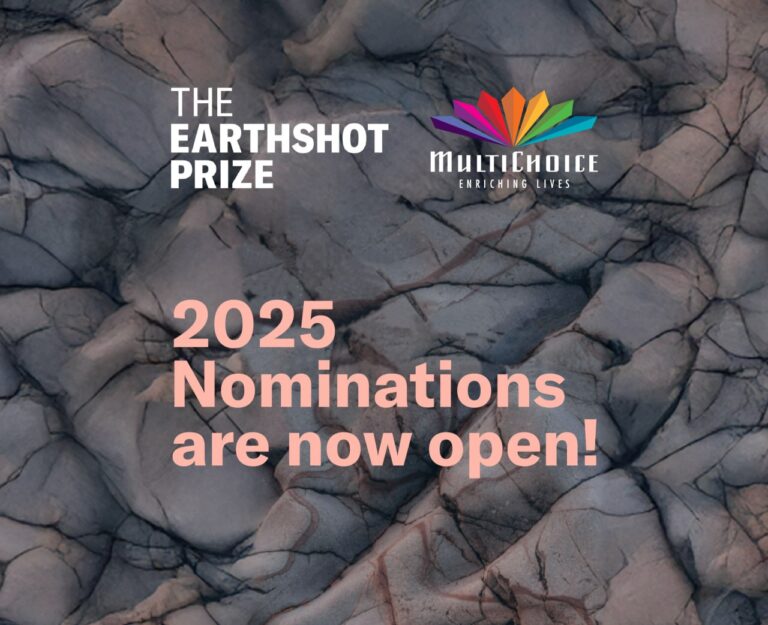
November 2024 – Following a record-breaking year for nominations, and a historic first awards ceremony on the African continent, The Earthshot Prize (TEP) is officially open for entries for its 2025 cohort and MultiChoice is proud to once again be an official Africa nominator for TEP.
TEP seeks innovative solutions across five critical Earthshots: Protect and Restore Nature; Clean Our Air; Revive Our Oceans; Build a Waste-Free World; and Fix Our Climate.
This year’s cycle saw an unprecedented surge in nominations, with over 2,000 entries received from 139 countries, demonstrating a growing global momentum for environmental innovation.
The star-studded awards ceremony, held in Cape Town, South Africa was broadcast live to millions of people across the continent by MultiChoice, the official African broadcast partner of TEP. The ceremony celebrated several African-led initiatives, including:
Green Africa Youth Organisation (GAYO) (Ghana): Winner of the Clean Our Air Earthshot, GAYO is tackling air pollution with its innovative “Zero Waste Model”.
Keep IT Cool (Kenya): Winner of the Build a Waste-Free World Earthshot, Keep IT Cool is revolutionising food preservation for small-scale farmers and fishers with its sustainable refrigeration systems.
These winners, along with all other TEP recipients, exemplify the power of local solutions to address global challenges and contribute to the 2030 Agenda for Sustainable Development. Each winner receives £1 million in prize money to scale their impactful solutions.
TEP invites individuals, communities, businesses, and organisations across Africa and beyond to submit their groundbreaking ideas and technologies that can accelerate the transition to a sustainable future. The Prize seeks solutions that are:
Impactful: Demonstrating tangible positive effects on the environment.
Inspiring: Motivating others to act and join the global movement for change.
Inclusive: Benefitting communities and promoting equitable access to resources.
TEP is a beacon of hope in the face of the climate crisis, searching for the next generation of environmental pioneers who are developing innovative solutions to repair the planet. Anyone with a bold idea is encouraged to apply here.
At the heart of TEP’s mission is a determination to bring environmental solutions to scale as fast as possible, to reach the goal of protecting and restoring the planet by 2030.
Founded by Prince William and The Royal Foundation in 2020, The Earthshot Prize is a global environmental prize designed to discover, accelerate, and scale groundbreaking solutions to repair and regenerate the planet. Inspired by President John F. Kennedy’s Moonshot, the Prize aims to catalyse an Earthshot challenge to encourage and scale innovative solutions that can help put the world on a trajectory towards a stable climate where communities, oceans, and biodiversity thrive in harmony by 2030.
Teresa Clarke, Chair, CEO, and Executive Editor of Africa.com, interviewed Paulin Basinga on advancing public health initiatives in Africa.
In an era where global narratives about Africa often oscillate between despair and paternalism, Dr Paulin Basinga the newly appointed leader of the Bill & Melinda Gates Foundation in Africa, spoke of a vision of philanthropy that prioritizes dignity and partnership over dependency. In an insightful interview with Africa.com, he was clear about his vision: “Africa is not a charity case. It’s a continent full of potential—and our job is to work with others to help unlock it.“
For Basinga, the opening of these offices is not merely symbolic. It signals a long-term commitment to embedding philanthropy into Africa’s local ecosystems in a way that strengthens, rather than substitutes, existing structures. “Philanthropy must catalyze change, not overshadow governments or the private sector,” he explains.
As Africa faces intersecting challenges—from climate change to food insecurity—Basinga acknowledges that philanthropy alone cannot solve them. But he remains hopeful. “Our role is to spark the kind of innovation and collaboration that leads to lasting change,” he says.
Expanding presence for greater impact
With new offices in Senegal and Kenya, Basinga is leading the foundation into a new era of proximity and partnership. This move, he insists, is not about expanding influence but about deepening impact. “We learned over time that proximity to policymakers and local communities makes a significant difference in scaling sustainable solutions,” he says, reflecting on the evolution of the foundation’s strategy.
The recent development in Kenya and Senegal is very important as it enables the Foundation to cover the three main Africa regions, thus creating sub-regional hubs. Basinga said, “Expanding our footprint highlights our commitment to a long-lasting relationship with Africa.”
Building local capacity, not dependence
Basinga’s career has been shaped by his experiences across the continent—from leading health reforms in Rwanda to strengthening health systems in Ethiopia and Nigeria. It’s a perspective that allows him to see both the opportunities and pitfalls of global philanthropy. He’s quick to acknowledge the dangers of dependence on external funding. “We need to ask ourselves: How do we ensure governments and local institutions sustain these efforts when philanthropy steps back?“
The newly opened offices in Senegal and Kenya will deepen partnerships across Africa and work to support local health initiatives while fostering stronger regional collaboration. Central to these efforts is a focus on health system strengthening—what Basinga calls the “bedrock” of sustainable development. “The aim is not to replace government functions but to enhance their capacity to deliver better services,” he explains. This includes everything from supporting data systems that improve vaccine distribution to funding local research institutions that can lead Africa’s health innovations.
Leveraging diverse experience
Basinga’s diverse roles within the foundation have equipped him with a deep understanding of African priorities. From his early work in Rwanda on public health reforms to leading the global policy advocacy team in Seattle, his multifaceted experience spans health system strengthening, human capital development, and economic empowerment. Reflecting on his journey, he says, “Each role allowed me to gain both technical expertise and a deep understanding of African priorities. Now, as I lead our Africa team, I’m applying these experiences to foster a comprehensive approach.”
Health, innovation, and trust
At the heart of Basinga’s mission is a drive to ensure Africa becomes a leader in health innovation. He sees locally-led research and production as essential not just for improving access to medicines but for rebuilding trust in health systems. “If vaccines are researched, produced, and distributed in Africa, they will be trusted more,” he argues.
The foundation is already backing initiatives to make this a reality, from the African Medicines Agency, which will strengthen regulatory frameworks, to the Africa Clinical Trial Network, which is equipping research sites across the continent. “These investments aren’t just about infrastructure. They’re about fostering self-reliance and trust,” he says.
Redefining philanthropy’s role in Africa
Basinga’s vision is not without its critics. As philanthropic organizations like the Gates Foundation expand their footprint, some argue they risk entrenching global power imbalances or setting priorities that don’t align with local needs. But Basinga is adamant that his foundation approach is different.
“Being African shapes how I lead,” he says. With roots in Rwanda and the Democratic Republic of Congo, and fluency in multiple African languages, Basinga sees his identity as a bridge between global expertise and local realities. “We’re not here to impose solutions. Our role is to listen, to respect local knowledge, and to support the changes Africans are already driving.“
This philosophy extends to how the foundation engages the private sector. The foundation has pioneered innovative financing models, such as partnering with banks to lower borrowing costs for smallholder farmers. Yet, Basinga is clear about the limits of philanthropy. “Our return on investment is measured in human impact, not financial gain,” he says.
Basinga highlighted the importance of conducting vaccine research and production within Africa to build public trust and ensure the availability of effective vaccines. He mentioned, “Engaging African researchers and strengthening the vaccine value chain, from clinical trials to production, is crucial.” Initiatives like the African Clinical Trial Network and support for local manufacturers such as Revital in Kenya and Institut Pasteur in Dakar are crucial for developing a self-sustaining health ecosystem.
Basinga emphasized the pivotal role of philanthropy in addressing market failures, particularly in health innovation. He explained, “Philanthropy plays a crucial role in development but is most effective when strategically applied.” Initiatives like GAVI have significantly increased vaccine availability by mobilizing funds and enhancing immunization systems. The foundation continues to support early-stage research and innovation, such as developing new tuberculosis vaccines, and enhances government functions through data analysis and support services.
Health, agriculture, and women’s empowerment are priorities
The foundation’s top priorities in Africa include health with a focus on polio eradication, combating infectious diseases, reducing maternal and child mortality, and strengthening health systems. Agriculture is also a priority with a focus on supporting climate adaptation, improving access to seeds and fertilizers to boost sustainable agricultural productivity. The foundation is also in the inclusive finance space enhancing financial access for women and smallholder farmers to promote economic empowerment. The foundation also supports literacy and numeracy in primary schools through evidence-based policies as well as digital public infrastructure that enables countries to safely deliver economic opportunities and social services.
Conclusion
Paulin Basinga’s strategic vision for the Gates Foundation in Africa embodies a commitment to sustainable, impactful development through localized engagement, strategic partnerships, and a deep understanding of the continent’s diverse needs. Basinga, with more than thirteen years of experience within the foundation and wide-ranging experience working in different African countries, feels he is ready to lead the organization to a successful and sustainable future on the continent.
UNDP-ETH-00376 National firm level to provide social media outreach and online engagement for timbuktoo ManuTech hub call for application
Negotiation: UNDP-ETH-00376
The United Nations Development Programme (UNDP) hereby invites you to submit a Proposal to the Request for Proposal (UNDP-ETH-00376) National firm level to provide social media outreach and online engagement for timbuktoo ManuTech hub call for application. Detailed Terms of Reference as well as other requirements are listed in the RFP available on UNDP Quantum/supplier portal (http://supplier.quantum.partneragencies.org).
This specific tender is managed via the new supplier portal system of UNDP which will in the future replace the online eTendering system currently in use. If you are interested in submitting a bid for this tender, you must subscribe following the instructions in the user guide. If you have not registered a profile with this system, you can do so by following the link for Supplier Registration.
If you already have a supplier profile, please login to the Supplier Portal, then search for the negotiation using the reference number UNDP-ETH-00376, following the instructions in the user guide.
Introduction:
Note:
When registering in the supplier portal please use the full company/Firm name same as in the Legal document and Bank account in the Supplier name section
Kindly upload financial proposal documents in financial section (Financial Evaluation – Commercial) only. If your financial proposal is visible in any part of the technical section, your proposal will be disqualified.
UNDP Ethiopia CO is seeking a service provider who can participate in our RFP for the provision of below.
Assignment Title: National firm level to provide social media outreach and online engagement for timbuktoo ManuTech hub call for application
Project: timbuktoo Addis
Assignment Duration: 22 working days
Type of Firm: National Firm
Engagement: Immediately, after signing of contract
Duty Station: Addis Ababa, Ethiopia
Please indicate whether you intend to submit a bid by creating a draft response without submitting directly in the system. This will enable the system to send notifications in case of amendments of the tender requirements. Should you require further clarifications, kindly communicate using the messaging functionality in the system. Offers must be submitted directly in the system following this link: http://supplier.quantum.partneragencies.org using the profile you may have in the portal. In case you have never registered before, you can register a profile using the registration link shared via the procurement notice and following the instructions in guides available in UNDP website: https://www.undp.org/procurement/business/resources-for-bidders. Do not create a new profile if you already have one. Use the forgotten password feature in case you do not remember the password or the username from previous registration.
Search for the specific tender using search filters and subscribe to the tender in order to get notifications in case of amendments of the tender document. If you need support with the online system, you can contact the contact details of this tender as indicated in the solicitation document.
Documents : Negotiation Document(s) (Before Accessing other negotiations Document(s), please click on this link)