Thursday, April 2, 2026
Home Blog Page 687

ADvTECH acquires Flipper International School for $7.5 Million

0

The ADvTECH Group has announced the successful acquisition of a 100% interest in Flipper International School in Addis Ababa, for USD 7.5 million (approximately 900 million birr). This strategic move reinforces ADvTECH’s position as a leading provider of private education across the African continent.

With this acquisition, ADvTECH will add five schools and approximately 3,500 students to its international portfolio in one of the fastest-growing cities in Africa. The deal was internally funded by ADvTECH, reflecting the group’s commitment to expanding its educational offerings.

Geoff Whyte, CEO of ADvTECH, expressed enthusiasm about the acquisition, stating, “We are delighted to welcome Flipper International School to the ADvTECH Group as we expand our presence across Africa and further cement our status as leaders in teaching and learning on the continent.”

Flipper International School, founded in 1998 by Menna Selamu and Serkaddis Seifu, is known for its academic excellence. In 2018, the founders sold an 85% stake to Tana Africa Capital and the Saham Group, who provided funding for enhancements in technology, academics, governance, and human resources. This investment has significantly contributed to the school’s growth over the past five years.

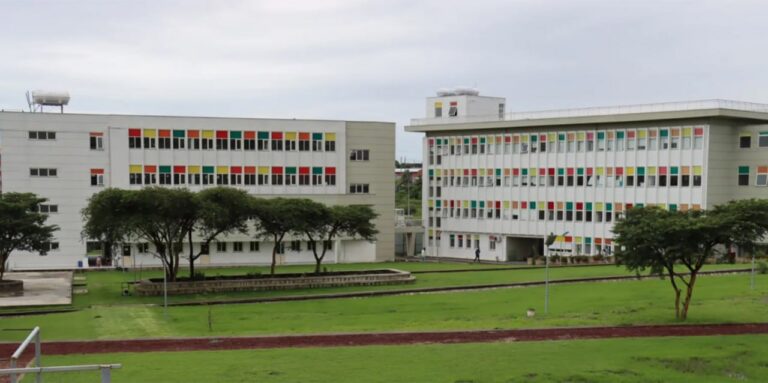
The school operates five campuses located in Beklobet and Summit areas of Addis Ababa, with a total capacity exceeding 3,500 students. As Ethiopia experiences rapid urbanization, the demand for quality private education has surged due to constraints within the public schooling system.

Whyte emphasized ADvTECH’s unique position to make a meaningful impact on people’s lives through education. “Flipper International School has always been a beacon of academic excellence in the region. We look forward to applying our resources and expertise to this school and taking it to even greater heights in the years to come,” he added.

Sharing their thoughts on the acquisition Menna and Serkaddis said “We are incredibly proud of what we have built at Flipper International School. Our mission has always been to be a beacon of academic excellence in the region. We are confident that ADvTECH’s expertise and resources will help the school further enhance the educational experience and growth opportunities for students and staff.”

Ethiopia faces growing cyber threats as DDoS attacks increase

0

As Ethiopia continues to expand its digital services, the country is increasingly vulnerable to cyber threats, particularly distributed denial of service (DDoS) attacks. According to the latest NETSCOUT Threat Intelligence Report for the first half of 2024, Ethiopian telecommunications have experienced a notable rise in DDoS incidents, highlighting the urgent need for enhanced cybersecurity measures.

The report reveals that Ethiopia recorded a total of 107 DDoS attacks in the first six months of the year. These attacks primarily targeted the wireless telecommunications sector, with some incidents lasting as long as 29 minutes. The most common attack method was DNS Amplification, which accounted for 37 of the incidents. The largest single attack reached a bandwidth of 12.18 Gbps and a throughput of 1.18 million packets per second (Mpps).

Bryan Hamman, regional director for Africa at NETSCOUT, emphasized that as digital infrastructure grows, so does the risk of cyberattacks. “Ethiopia’s expanding reliance on digital services makes it a prime target for threat actors looking to exploit vulnerabilities,” he stated. “Organizations must prioritize robust DDoS mitigation strategies to safeguard their digital assets and ensure operational continuity.”

The report indicates that East African countries are facing escalating cyber risks, with Kenya and Mauritius emerging as the top targets for DDoS attacks in the region. Kenya alone saw 57,319 attacks in the same period, with attackers employing sophisticated multi-vector tactics. The telecommunications sector in Kenya was particularly hard hit, raising concerns about similar vulnerabilities in Ethiopia’s telecom infrastructure.

While Ethiopia’s figures are lower than those of its neighbors, the increase in DDoS activity signals a growing threat landscape that requires vigilant monitoring and proactive defense strategies. As businesses and government entities enhance their digital capabilities, they must also invest in cybersecurity measures to protect against potential disruptions.

The NETSCOUT report serves as a critical reminder of the evolving nature of cyber threats in East Africa and underscores the need for collaboration among governments, businesses, and cybersecurity experts to build resilient defenses against DDoS attacks and other cyber threats.

CSO’s urged to achieve self-sufficiency amid funding challenges

0

Civil society organizations (CSOs) are increasingly facing challenges due to their reliance on donor funding, which has proven to be temporary and insufficient for sustainable operations. With over 5000 CSOs registered in the country, more than 1,000 have lost their licenses due to an inability to submit annual budgets and report their activities to regulatory bodies.

The heavy dependence on external funding has raised concerns about the long-term viability of these organizations. Fasikaw Molla, Deputy Director General of the Ethiopian Civil Society Organizations Authority, emphasized the need for indigenous and reliable financing sources. “If CSOs in Ethiopia are to continue operating effectively, they must seek out sustainable funding options,” he stated.

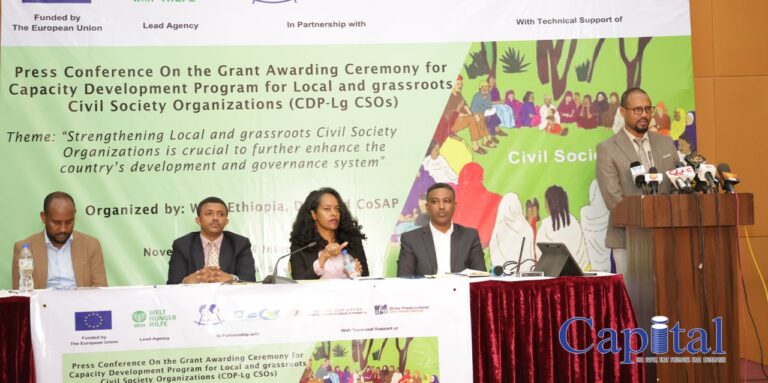
The current funding landscape has forced many organizations to withdraw from their activities, prompting calls for a shift towards self-sufficiency. The Civil Society Fund (CSF), supported by Welthungerhilfe (WHH) and the European Union, is taking steps to address these challenges by implementing a new capacity development program aimed at strengthening 101 indigenous civil society organizations across Ethiopia.

With a total budget of 6.52 million euros over five years, the program is set to enhance the operational capacities of these organizations in regions such as Amhara, Afar, Oromia, and Benishangul-Gumz. Approximately 3.75 million euros will directly benefit 75 indigenous civic community organizations, enabling them to develop internal capacities and contribute actively to democratic processes and conflict resolution mechanisms.

“Strengthening indigenous civil society organizations is essential for advancing development and governance in our country,” said a representative during the official project launch. The initiative aims to empower CSOs by promoting digital literacy and skill development while ensuring affordable and reliable internet connectivity.

As part of the program’s rollout, 36 organizations have already been awarded 50,000 euros each, with support continuing for an additional 49 organizations in the coming months. The fund is being implemented by WHH in collaboration with Development Expert Sinter (DEC) and CoSAP (Union of Self-Help Group Organizations in Ethiopia).

The Ethiopian government recognizes that empowering civil society is crucial for fostering a vibrant democracy and ensuring that citizens’ voices are heard. By encouraging CSOs to become self-sufficient and resilient, Ethiopia can build a stronger foundation for civil engagement and social change.

Wegagen Bank reports strong recovery with over $300 Million in forex revenue

0

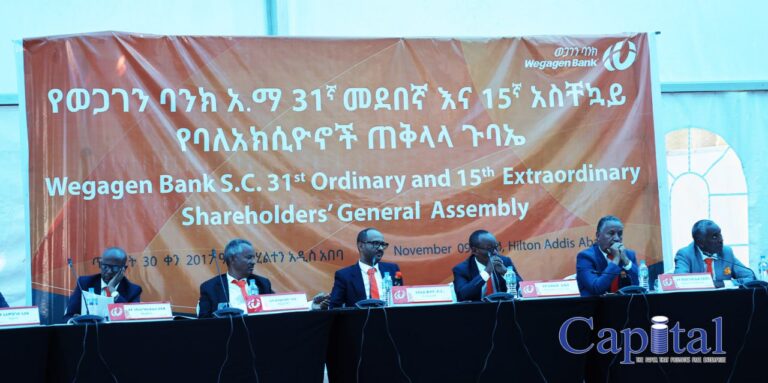
Wegagen Bank has announced a remarkable achievement, reporting that its foreign exchange revenue has surpassed $300 million for the 2023/24 fiscal year. This marks a significant increase of $241 million, or 65%, compared to the previous year’s revenue of just $27 million, demonstrating the bank’s resilience amid various domestic and global challenges impacting international banking operations.

During the presentation of the bank’s annual report, Abdishu Hussien, Chairman of the Board of Directors, attributed this success to strategic initiatives aimed at attracting and retaining exporters while diversifying foreign exchange sources. “This significant achievement has been made possible through our focused efforts in enhancing our service offerings and expanding our market reach,” he stated.

The bank’s total assets also saw substantial growth, increasing by 23% to reach Birr 65.7 billion in the 2023/24 fiscal year. Loans and advances constituted the largest portion of the bank’s assets at 66%, followed by cash and bank balances at 20%.

Wegagen Bank’s total revenue for the fiscal year stood at Birr 9.8 billion, reflecting a notable increase from Birr 7 billion in the previous year—an impressive growth of Birr 2.8 billion or 40%. The income composition revealed that interest on loans and advances accounted for 69% of total revenue, while commissions and charges contributed 22%. Interest on investments represented 5%, with other income making up the remaining 4%.

At the end of the fiscal year, Wegagen Bank reported a total capital of Birr 9.2 billion, marking a 33% increase from the previous year’s performance of Birr 6.9 billion. The paid-up capital reached Birr 5.1 billion, up from Birr 3.98 billion in the prior year.

With approximately 12,000 shareholders, Wegagen Bank achieved a net profit exceeding Birr 1.6 billion in the fiscal year. The bank’s loans to various sectors of the economy reached Birr 45.1 billion, reflecting a growth rate of 22%.

Abdishu Hussien emphasized that Wegagen Bank’s strategic focus on enhancing its foreign exchange capabilities has positioned it well to navigate the complexities of international banking and contribute positively to Ethiopia’s economic landscape.