Thursday, April 2, 2026
Home Blog Page 688

NBE warns financial institutions against illicit forex activities

0

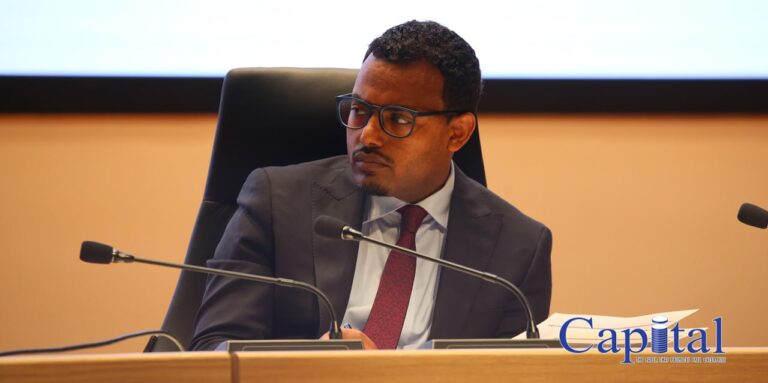
The National Bank of Ethiopia (NBE), the regulatory authority for the financial industry, has issued a warning to financial institutions and businesses involved in illicit activities related to the foreign exchange market. NBE supervisors have conducted on-site investigations into the foreign currency operations and management of every bank.

Recent macroeconomic reforms have enabled the country to increase its foreign exchange reserves over the last quarter of the year, facilitating the repatriation of profits by international corporations and airlines.

Significant changes were implemented as part of the macroeconomic reform initiated on July 29. These changes included the establishment of a free foreign exchange market and modifications to how the banking sector manages foreign exchange. Notably, citizens are now allowed to open foreign exchange accounts, and new forex bureaus have been established.

NBE Governor Mamo Esmelealem Mihretu reported that the reform has yielded positive and encouraging outcomes in its initial quarter. In an interview with Fana TV, he highlighted several new statistics and developments since the reform’s inception.

For the first time in the nation’s history, the balance of payments recorded a surplus. “The balance of payments showed a USD 573 million surplus, compared to a USD 1.2 billion deficit the previous year,” he stated.

Mamo noted that the government has launched various initiatives aimed at achieving significant results from the new macroeconomic reform. He pointed out that prior to the reform, the gap between the official exchange rate and the parallel market was nearly double. Currently, since the reform began, the difference between the official and black market rates has been between three and five percent, with the overall exchange rate difference now being less than ten percent.

“Since the start of the reform, the exchange rate has fluctuated, but we understand the reasons behind these changes,” the governor explained. He expressed optimism that the gap between the official and parallel markets will narrow and eventually converge.

Mamo is confident that the rate will converge soon, utilizing the tools provided by the government. He emphasized the role of banks in closing the gap with the illegal rate. He justified the need for banks to distribute foreign cash to their clients in accordance with the law and regulations, free from unnecessary restrictions.

Mamo stressed that the NBE reform replaced the outdated and ineffective system, which was vulnerable to criminal activities, with a simpler and more dynamic approach. “Unhealthy activities are being observed at certain banks,” he stated, affirming that the NBE will address any bank officials who continue to engage in unlawful practices.

He mentioned that NBE officials have been investigating all banks on-site over the past two weeks regarding foreign exchange operations, policies, and other relevant matters. “We will take legal action based on the investigative report that has already been completed and submitted for decision,” he added.

He underscored the critical role banks play in aligning the exchange rate closer to parity. “Those who benefited from the previous system may attempt to obstruct our efforts, as we work to reform this deeply entrenched system,” he acknowledged.

Mamo concluded by conveying his desire for the public to understand that NBE and the government have made significant strides to improve foreign currency administration.

He highlighted the government’s decision to allow unofficial hawala players to establish legitimate currency bureaus, a move that would legally benefit them, as part of the reform actions.

He stated that the government has made it easier for individuals involved in domestic and international money transfers to access the legal system, emphasizing that “there is no way to engage in illegal activity.”

He noted that banks, in collaboration with the NBE-led campaign, have provided more incentives for both consumers and money transfer providers.

“Those who attempt to access foreign currency through illegal means jeopardize their businesses,” Mamo stressed, emphasizing that banks should supply funds to investors or importers in need of foreign currency.

He cautioned, “Our goal is to ensure the reform is successful, so we can take corrective action.”

Mamo assured that new technology in the financial regulatory system will be employed to monitor trade and financial activities.

He remarked that the system will effectively track financial transactions, stating, “We are equipped with new technology that facilitates our regulation.”

Capital has learned that during a recent trip to the United States, a delegation including Finance Minister Ahmed Shide, Mamo, and representatives from commercial banks met with money transfer companies focused on the Ethiopian market.

According to sources, the government has urged remittance providers to comply with the law or face legal repercussions under Ethiopian law, especially in relation to its diplomatic ties with North America, where the largest Ethiopian diaspora resides.

Sources informed Capital that the government has previously conducted thorough investigations into remittance businesses, particularly those based in the U.S. that are largely operated by the Ethiopian or East African diaspora involved in illicit money transfer activities.

In his latest briefing on the reform’s progress, Mamo advised travelers to use independent foreign exchange bureaus for small-value transactions (up to USD 10,000) as an additional option.

Experts in the international banking divisions (IBD) of commercial banks have noted that some bankers are still considering conducting business in the traditional manner.

One head of a commercial bank’s IBD, who requested anonymity, told Capital, “I can say that there are some banking staff looking for loopholes to benefit themselves.”

He expressed hope that the central bank would take action to rectify these issues.

According to Mamo’s latest data, commercial banks have generated USD 1.2 billion from exports of goods and services since the reform began and have sold USD 1.7 billion worth of foreign currency in just three months.

Mamo noted that the amount they are acquiring continues to grow daily.

“The size of the forex reserve in the banking system is a strong indicator that the reform is progressing well,” Mamo stated.

The reserve at the NBE, which was USD 1.4 billion on July 29, has increased to USD 3.4 billion within three months.

Additionally, the reserves of commercial banks have risen from USD 1.7 billion to USD 2.4 billion in the same period.

Banks now have nearly zero net open positions (NOP) due to USD 518 million in existing or legacy letters of credit (LCs) settled during the reform period.

The governor remarked, “Now they can focus on new LCs,” noting that a USD 100 million transaction was part of the interbank FX trade that commenced a few weeks ago.

The International Monetary Fund, in its latest assessment report, revealed that private banks have significantly reduced their NOP, with many now maintaining balanced or modestly long positions.

According to Mamo, international corporations, including airlines, have successfully repatriated their profits to their home countries during recent reform periods.

However, due to a scarcity of hard currency, there have been allegations that foreign direct investments (FDIs) and airlines selling tickets in Ethiopia are unable to access their foreign exchange profits to remit back to their home countries.

What’s Wrong with the IMF’s Approach to Ethiopia?

0

By Kebour Ghenna

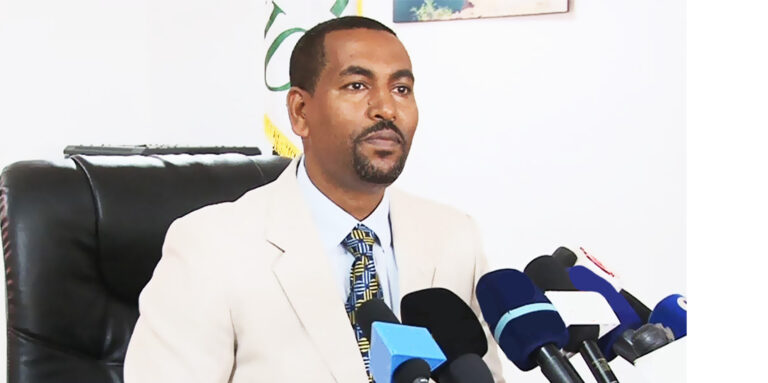
The International Monetary Fund (IMF) recently gave Ethiopia a pat on the back, praising its economic reforms and tighter monetary policies. But let’s take a closer look—this isn’t the shiny success story it’s made out to be. In fact, it feels a bit like cheering for a marathon runner who’s barely made it past the first mile and is limping already.

First, the exchange rate gap. Yes, the IMF applauds Ethiopia for narrowing the gap between the official and black-market rates, but let’s not pop the champagne just yet. What’s really happened? The official rate is sliding toward the black-market rate, yet a gap of 12-15% remains. It’s like patching a leaky boat with duct tape—it’s still taking on water. Can this really be considered “fixing” the economy? Businesses struggling to access foreign currency would certainly disagree.

Then there’s the talk about “better management of the economy and improving the business environment.” Seriously? Tell that to the entrepreneurs grappling with inflation, dwindling purchasing power, and red tape that could stretch to the moon. Statements like this might look good on IMF stationery, but they’re not fooling the people living with the consequences.

A particularly troubling aspect of the IMF’s assessment is its praise for Ethiopia’s tight monetary policies. While controlling inflation and reducing central bank borrowing are important, these measures risk pushing the country into austerity at a time when growth is desperately needed. Ethiopia’s economy requires robust public investment, especially in infrastructure and agriculture, to create jobs and reduce poverty. Tight money policies could stifle this growth, further exacerbating economic challenges.

Most glaringly, the IMF fails to address Ethiopia’s ongoing security crises in the Amhara and Oromia regions. These regions are among the most agriculturally productive in the country, yet they are mired in escalating violence and instability. The conflict not only disrupts livelihoods but also undermines the very foundation of economic growth and food security. It is puzzling, if not outright negligent, that the IMF overlooks these significant factors in its analysis.

So, what’s wrong with the IMF? Its approach appears overly focused on technical economic indicators, sidelining the broader socio-political context that directly impacts economic performance. By ignoring the severe security issues and the lived realities of businesses and citizens, the IMF risks promoting policies that may look good on paper but fail to address Ethiopia’s core challenges. A more nuanced, inclusive, and grounded approach is urgently needed to truly support Ethiopia’s recovery and growth.

EEP to independently complete Aysha II Wind Farm Project

0

By our staff reporter

The Ethiopian Electric Power (EEP) has decided to independently complete the Aysha II Wind Farm project, which was initially funded by the Chinese Export-Import (Exim) Bank.

The Aysha project, located 20 kilometers west of the Djibouti border and near an existing international transmission line, is recognized as a highly viable initiative and has reached 83 percent completion to date.

Signed approximately nine years ago, the project was financed by the Chinese Exim Bank, according to Moges Mekonnen, head of public relations at EEP.

Under the original agreement, the Chinese bank was set to cover 85 percent of the total cost, while the Ethiopian government would contribute the remaining amount. However, Moges noted that only 40 percent of the total funds promised were actually disbursed by the financier.

The primary reason for the delay in funding was an increase in the country’s external debt risk, which compelled the Chinese contractor, Dongfang Electric Corporation, to continue the project for over five years without sufficient financing.

Moges informed Capital that the project has already surpassed 83 percent completion. He added that the wind farm began generating electricity two years ago and is currently producing 80 MW of the intended 120 MW capacity.

EEP leadership has now decided to use its own resources to complete the remaining portion of the project. According to Moges, EEP management has been tasked with allocating funds from the power purchase agreement with Tanzania to carry out the project.

If the power export agreement with Tanzania is finalized, the power company will receive foreign currency. Although the agreement, which was expected to conclude a few months ago, is still pending, EEP has decided to allocate funds now to expedite the project despite the delay in anticipated foreign currency from the power sales deal.

“The installation of 16 turbines will be the main component of the remaining work,” Moges stated. He added that the foundation’s civil work has been completed, and turbine manufacturing has begun in China. He expects the farm to be finished by the upcoming fiscal year.

The project, consisting of 48 turbines with a capacity of 2.5 MW each, is projected to cost USD 257.3 million. Located in the Sity zone of the Somali region, 680 kilometers east of Addis Ababa, the project is highly anticipated due to its potential to generate foreign currency through exports to Djibouti, which already receives Ethiopian green energy.

Dongfang, a Chinese giant, is experienced in Ethiopian power projects, having previously worked on various electromechanical projects, including hydro projects.

Since the government acquired local debt from the state-owned Commercial Bank of Ethiopia, EEP has maintained a stable financial position. According to EEP CEO Ashebir Balcha, the ongoing macroeconomic reform is expected to significantly enhance the standing of the large public company.

Shabelle Bank S.C

0

Announcement of Criteria for Board of Directors Nominations

Dear Shareholders

We are pleased to announce the Criteria established for the selection of candidates for the Board of Directors. These standards ensure that nominated individuals possess the essential knowledge, experience, integrity, and financial soundness required to serve in this capacity effectively.

General (Collective) Requirements for the Board

– Board Size: minimum nine and maximum thirteen (9-13) directors.

– Diversity: At least two female directors to ensure gender diversity and a mix of academic, technical, and professional backgrounds.

– Collective Skills and Competencies: A balanced mix of skills covering banking, finance, law,
management, technology, sustainability, and other relevant areas.

Commitment and Conflicts of Interest: No individual should hold directorships in more than four organizations.

Individual Eligibility Criteria for Directors

1. Education and Experience

   – Directors: A minimum of a first degree from a recognized institution and at least seven years of
relevant experience (e.g., banking, finance, law, technology).

   – Independent Directors: A master’s degree or equivalent in a relevant field and at least ten years of
experience in finance, risk management, auditing, or other related fields.

   2. Integrity

   – No criminal record related to dishonesty or fraud.

   – No history of withholding information or failing to meet regulatory requirements.

   – No disciplinary actions or investigations for breaches of trust, fraud, or financial crime.

3. Financial Soundness

   – No history of personal or affiliated entity bankruptcy.

   – No record of loan defaults, tax payment failures, or non-performing loans within the two years
preceding the National Bank’s assessment.

   – For share purchases, net worth must exceed the value of shares acquired.

These criteria are designed to enhance the leadership strength and governance of the Board, ensuring we are well-equipped to guide the bank toward sustainable success.

Thank you for your attention and commitment to upholding these standards.
