Wednesday, May 13, 2026
Home Blog Page 732

Emirates unveils its first Airbus A350 Aircraft at Exclusive Dubai Event

0

Dubai, UAE

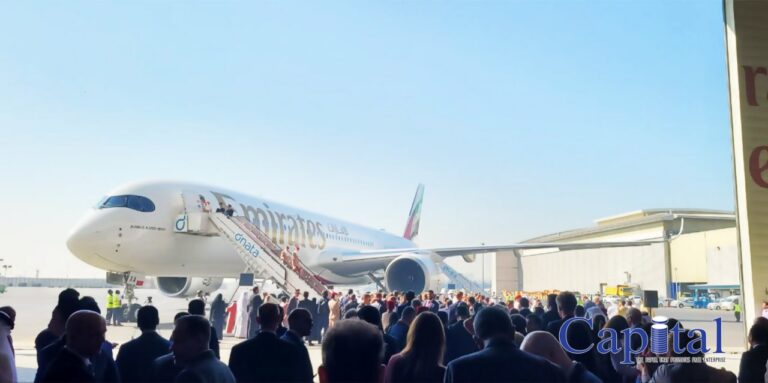
Emirates has officially unveiled its first Airbus A350-900 aircraft during a special showcase event in Dubai, marking a significant milestone for the airline. The event was led by Sir Tim Clark, President of Emirates Airline, and attended by VIP guests, government officials, and aerospace partners, including Abdulla Bin Touq Al Marri, UAE Minister of Economy.

Guests at the unveiling had the opportunity to explore the aircraft’s interiors, which feature next-generation products and state-of-the-art technologies aimed at enhancing passenger comfort and operational efficiency. The Emirates A350 is designed to accommodate 312 passengers across three spacious cabin classes: 32 next-generation Business Class lie-flat seats, 21 Premium Economy seats, and 259 Economy Class seats.

Sheikh Ahmed bin Saeed Al Maktoum, Chairman and Chief Executive of Emirates Airline & Group, expressed his enthusiasm for the new aircraft. “Today is an exciting milestone for Emirates as we showcase our first A350 and usher in a new era for our fleet and network growth,” he stated. “This aircraft sets the stage for Emirates to spread its wings farther by offering added range, efficiency, and flexibility to our network.”

The introduction of the A350 aligns with Emirates’ broader strategy to support Dubai’s D33 Strategy, aimed at transforming the city into a pivotal hub in the global economy. The airline plans to acquire a total of 65 A350s in the coming years, enhancing its capabilities to meet customer demand in new markets.

Philippe Mhun, Executive Vice President of Programmes & Services at Airbus, highlighted the long-standing partnership between Emirates and Airbus. “We are proud to further expand our strategic partnership with Emirates,” he said. “Marking a new chapter for Airbus, we expect the A350 to become an integral member of the Emirates fleet and support its continued growth and sustainability ambitions.”

Omar Ali Adib, Senior Vice President for Rolls-Royce in the Middle East and Africa, emphasized the collaborative efforts among Emirates, Airbus, and Rolls-Royce. “This partnership exemplifies what can be achieved when we share a commitment to excellence,” he noted.

In addition to its newly delivered A350 aircraft, Emirates operates a diverse fleet that includes Boeing 777s and the iconic Airbus A380. The introduction of the A350 will enable Emirates to expand into new destinations globally, including mid-sized airports that are unsuitable for larger aircraft.

The airline has announced that its first scheduled commercial flight with the A350 will take place on January 3, 2025, to Edinburgh. Following this inaugural flight, customers can expect to see the A350 servicing existing routes in the Gulf Cooperation Council (GCC) region as well as new destinations in Europe and West Asia.

The unveiling of Emirates’ first Airbus A350-900 marks a significant step forward for the airline as it continues to enhance its fleet and expand its global reach. With advanced technology and improved passenger experiences at the forefront of this new aircraft’s design, Emirates is poised to meet growing customer demand while reinforcing its position as a leader in the aviation industry.

As Emirates prepares for this exciting new chapter, travelers can look forward to experiencing enhanced comfort and service aboard its latest addition to the fleet.
CSO Authority responds to ban on three organizations

0

For the first time, the Civil Society Organizations Authority (CSOA) has publicly addressed the recent ban imposed on three organizations in Ethiopia, including the Center for Advancement of Rights and Democracy (CARD), Lawyers for Human Rights (LHR), and the Association for Human Rights in Ethiopia (AHRE). The announcement was made during a press release on November 28, 2024, coinciding with the celebration of Civil Society Organizations Week, which is being held for the fourth time.

In its statement, a representative from the CSOA explained that the organizations were banned due to violations of their mandates and actions deemed politically biased. “They have acted in a manner that is not politically neutral and have exceeded their mandate, carrying out activities harmful to the interests of the country and its people,” the officials said. The official indicated that a final decision regarding the bans would be made shortly.

The restrictions on these organizations were implemented following allegations of misconduct.

The CSOA’s decision to impose bans is grounded in Article 77 (4) of the Civil Society Proclamation No. M3/201, which allows for immediate sanctions against organizations that violate regulations. Letters detailing the bans were issued to the affected organizations, which have since responded by disputing the claims made against them.

In their statements, CARD, LHR, and AHRE asserted that the reasons given for their suspension were unfounded and did not adhere to legal procedures. They called for transparency and adherence to due process in such matters.

Fassikaw Molla, Deputy Director General of Civil Society Organizations, emphasized that warnings are not always necessary for violations. “We don’t have to give them a warning; the law allows us to act directly,” he stated. He further clarified that while minor offenses might warrant a warning, serious violations could lead to immediate action.

The CSOA has stated that monitoring efforts will intensify as part of their commitment to ensuring compliance within the sector. Fassikaw mentioned that investigations are ongoing regarding the three banned organizations and promised comprehensive information would be provided in due course.

Ahmed Hussein, Vice President of the Council of Ethiopian Civil Society Organizations (ECSOC), revealed that discussions have taken place between ECSOC leaders and representatives from the CSOA regarding these suspensions. He noted that efforts are ongoing to address concerns raised by civil society groups.

Amnesty International has also weighed in on the issue, condemning the bans as an escalation of civil society suppression. In a statement released on November 26, 2024, Amnesty described the allegations against these organizations as “blatant and unsubstantiated,” urging the federal government to reverse its decision promptly. The organization emphasized that such actions violate individuals’ rights to freedom of association and expression.

Despite these challenges, the Civil Society Organizations Authority is set to collaborate with ECSOC to host the fourth Ethiopian Civil Society Organizations Week from December 6 to 8, 2024, at Gion Hotel. The event aims to promote civil society contributions to economic and social services while strengthening cooperation between the private sector and civil society organizations.

Forex market faces new risks following reforms

0

The recent shift to a market-driven foreign exchange (FX) system in Ethiopia has sparked both opportunities and risks for the banking sector, according to industry experts. While the flow of forex from outside increased following macroeconomic reforms, the anticipated growth in foreign exchange transactions has not materialized as expected.

Since July 29, 2024, commodities such as gold and coffee, which were previously traded on the black market, have begun to be processed through banks. However, experts indicate that the development in this area over the past three months has fallen short of expectations.

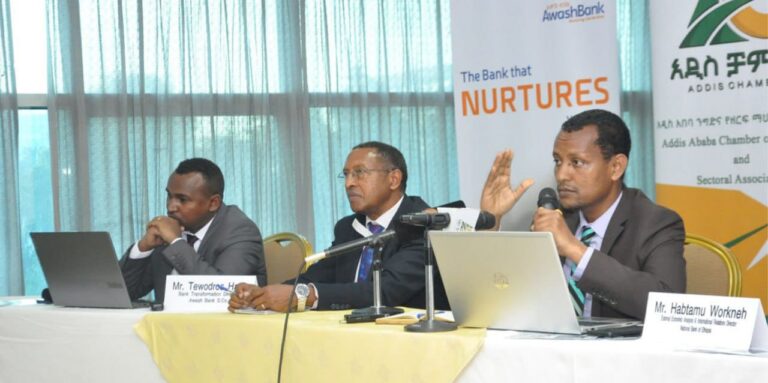
Tewodros Hailu, Director of Awash Bank’s Banking Transformation Directorate, commented on the implications of the government’s reforms on the financial sector. “Foreign exchange has brought risk to banks,” he stated. “We were previously focused on local currency, but now FX exchange has become critically risky.”

Tewodros also noted that the introduction of new foreign banks into the Ethiopian market could intensify competition for local banks, particularly given their relatively low capital and assets in dollar terms. He highlighted a significant challenge facing the sector: a lack of trained personnel. “We are working to address this issue,” he added.

Despite these challenges, Habtamu Workineh, Director of External Economic Analysis and International Relations at the National Bank of Ethiopia (NBE), reported that banks’ foreign exchange reserves have reached $600 million within just four months. He noted that the NBE has licensed 12 non-bank foreign exchange offices, which have conducted transactions totaling $774,000 as of November 27, 2024. Of this amount, $540,000 was sold through these offices.

Habtamu emphasized that five of the licensed offices are operational, which could help mitigate the flow of foreign currency into the parallel market.

These developments were discussed during a panel event hosted by the Addis Chamber of Commerce and relevant stakeholders, focusing on the implications of recent macroeconomic reforms on Ethiopia’s financial sector. The discussions underscored both the potential benefits and risks associated with the new FX regime.

The NBE’s reforms aim to create a more competitive banking environment while ensuring that foreign exchange transactions are managed effectively. However, industry leaders have expressed concerns about how these changes will impact local banks and their ability to compete with new entrants.

As Ethiopia navigates its transition to a market-driven foreign exchange system, stakeholders are closely monitoring both the challenges and opportunities that arise. While there is optimism regarding increased foreign exchange reserves and reduced reliance on black market transactions, concerns about competition and personnel training remain critical issues for the banking sector.

Awash Bank

0

In compliance with Article 28, Sub Article 2(b) of Banking Business Proclamation No. 592/2008, Awash Bank S.C publishes its statement of Profit or Loss and other Comprehensive Income & Statement of Financial Position for the Year Ended June 30,2024.