Wednesday, April 1, 2026
Home Blog Page 810

Ethiopian family businesses face governance challenges

0

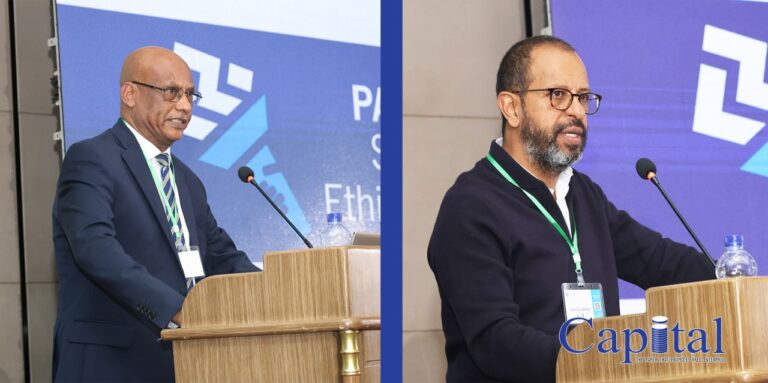
In a significant development, the inaugural conference of the Ethiopian Family Business Forum (EFBF) has shed light on the critical challenges faced by family businesses in Ethiopia. The conference, held under the theme “Passing the Torch; Sustaining Success in Ethiopian Family Business,” highlighted the importance of these enterprises in the country’s economy and the need for support to ensure their growth and success.

Family businesses in Ethiopia, known as Ethiopian Family Businesses (EFBs), are a significant contributor to the country’s economic growth. However, they face numerous challenges, including weak governance structures, lack of formal succession planning, and inadequate talent management practices.

Solomon Gizaw, the Chairman and CEO of HST Consulting, emphasized that one of the most critical challenges in family businesses is transition planning. This involves preparing leadership and ownership in advance for the seamless transfer of leadership from one generation to the next. He stated, “It is no exaggeration to say that family businesses are the pillars of our economy that foster entrepreneurship, resilience and motivation to innovate.”

The EFBF was established to address the importance of family businesses in the economy and support their growth. In Ethiopia, these enterprises not only contribute significantly to GDP but also play a vital role in job creation and community development. The forum is now formally registered and is currently supported by the customer sector and professional services in HST Consulting.

According to Solomon, the purpose of the EFBF is to serve as a platform for the exchange of knowledge and experience for current and future family business owners. The conference featured a great group of speakers with a wealth of experience and knowledge, engaging in extensive discussions on the main topics of family business management.

The establishment of the EFBF marks a significant step in recognizing the importance of family businesses in Ethiopia’s economy. By providing a platform for knowledge sharing and addressing the challenges faced by these enterprises, the forum aims to help EFBs grow and sustain their success.

As family businesses continue to play a crucial role in Ethiopia’s economic landscape, addressing the challenges of weak governance structures, succession planning, and talent management will be essential for their long-term success. The EFBF’s efforts to support and empower these enterprises are commendable and will undoubtedly contribute to the overall economic development of the country.
United States (US) Consulate Supports Africa Creative Market, Strengthens Collaboration with Nigeria’s Creative Industry

0

For the third consecutive year, the U.S. Consulate General in Lagos supported the Africa Creative Market to further strengthen the creative industry collaboration between the United States and Nigeria.

Founded by Dr. Inya Lawal, an alumna of the Fortune-U.S. Department of State Global Women’s Mentoring Partnership program, the Africa Creative Market brings together stakeholders from the African and international creative industries to exchange ideas and explore innovations to spur the growth of Africa’s creative economy.

This year, two U.S. creative industry leaders –– Steffan Horowitz, from the University of Southern California’s School of Cinematic Arts and Director of the U.S. Department of State’s Africa Creative TV (ACTV) exchange program; and Dedren Snead, CEO of Atlanta-based transmedia company SUBSUME Studios –– participated in the weeklong conference with support from the U.S. Consulate General Lagos.

During the conference, U.S. Consulate Public Affairs Officer Julie McKay joined Horowitz and Nigerian alumni of the Africa Creative TV exchange program to discuss opportunities for bridging the gap between African creatives and global audiences, offering valuable insights for emerging filmmakers, producers, and content creators. Similarly, Snead led a workshop focused on entrepreneurship, innovation, and the power of digital platforms in amplifying African stories globally. He shared perspectives on the use of animation and gaming to create immersive cultural experiences that elevate African narratives internationally.

Additionally, the African Creative Market hosted the AWE 2.0 Initiative that brought together 150 alumnae of the Academy for Women Entrepreneurs for a three-day immersive program aimed at advancing their digital skills to scale their businesses. Snead engaged with the AWE alumnae underscoring the U.S. government’s commitment to promoting women-led businesses and equipping female entrepreneurs with the skills needed to succeed in the rapidly evolving digital economy.

U.S. Consul General Will Stevens noted that the participation of U.S. industry leaders at the Africa Creative Market reflects the growing creative industry collaboration between the United States and Nigeria that is bringing the two countries closer together in music, film, fashion, gaming, arts, tech, professional and educational exchanges.

“The United States recognizes the tremendous potential of the creative industries in driving growth, fostering prosperity, and creating economic opportunities,” Consul General Stevens said. “At the U.S. Mission, we continue to engage with Nigeria’s creative industry leaders and innovators to discuss building a sustainable ecosystem, unlocking access to new markets, and advancing opportunities for two-way trade and investment in the creative sector.”

U.S. Consulate Public Affairs Officer Julie McKay highlighted the significance of the Africa Creative Market, describing it as a unique opportunity for emerging Nigerian creatives to connect with their U.S. counterparts and explore collaborations and sustainable business models in the global creative marketplace.

“Every year, the U.S. Mission sends emerging leaders in Nigeria’s creative industry on a variety of U.S. government sponsored exchange programs,” McKay said. “We remain committed to supporting programs and initiatives that promote artistic expression, encourage cultural exchange, and strengthen the capacity of Nigerian artists and professionals in the creative industry.”

The United States has a long history of supporting Nigerian creative talents. Recently, the U.S. Department of State introduced three new exchange programs for Nigeria’s creative industry. They include Africa Creative TV (ACTV) initiative for writers and producers in the film and TV industries; the American Music Mentorship Program, which is in partnership with the Recording Academy (Grammys); and the Community College Initiative, a one-year program that will take participants through the script to the screen process.

Distributed by APO Group on behalf of U.S. Embassy and Consulate in Nigeria.

Gates Foundation report calls for targeted global health spending to save millions of children from malnutrition and disease

0

In its eighth annual Goalkeepers report, the Bill & Melinda Gates Foundation has urgently called on world leaders to increase global health spending in areas where it is most needed. The report emphasizes the critical importance of boosting children’s health and nutrition, particularly in light of the escalating global climate crisis.

Titled “A Race to Nourish a Warming World,” the report warns that without immediate global action, climate change could condemn an additional 40 million children to stunting and 28 million more to wasting between 2024 and 2050. The foundation argues that scaling up effective solutions now can prevent these dire outcomes while simultaneously building resilience to climate change and fostering essential economic growth.

According to the World Health Organization, an estimated 148 million children currently experience stunting—a condition that impairs physical and mental development—while 45 million suffer from wasting, which leaves them weak and emaciated. These conditions significantly increase the risk of developmental delays and mortality, representing the most severe forms of chronic and acute malnutrition.

Despite these alarming statistics, the report highlights a troubling trend: the total share of foreign aid directed towards Africa has decreased over the past decade. In 2010, African countries received 40% of foreign aid; this figure has now plummeted to just 25%, the lowest percentage in 20 years. This decline is particularly concerning given that more than half of all child deaths occur in sub-Saharan Africa, leaving millions at risk of preventable diseases.

Bill Gates, co-chair of the Bill & Melinda Gates Foundation, expressed his concern about the current global landscape, stating, “Today, the world is contending with more challenges than at any point in my adult life: inflation, debt, new wars. Unfortunately, aid isn’t keeping pace with these needs, particularly in the places that need it most.” He believes that global health can still achieve a resurgence even amidst competing challenges for government budgets.

Gates described malnutrition as “the world’s worst child health crisis,” exacerbated by climate change. He urged for sustained global health funding and immediate action to combat child malnutrition through support for the Child Nutrition Fund—a new platform aimed at coordinating donor financing for nutrition initiatives. He also called on governments to fully fund established institutions like Gavi, the Vaccine Alliance, and the Global Fund to Fight AIDS, Tuberculosis and Malaria.

“If we do these three things,” Gates asserted, “we won’t just usher in a new global health boom and save millions of lives—we’ll also prove that humanity can still rise to meet our greatest challenges.”

The report further outlines the catastrophic economic costs associated with malnutrition. According to the World Bank, undernutrition results in an annual productivity loss of approximately $3 trillion globally. In low-income countries, this loss can account for 3% to 16% (or more) of GDP—equating to a permanent recession at 2008 levels each year.

Gates emphasized that investing in nutrition is crucial for combating climate change’s impacts. “Malnutrition makes every forward step our species wants to take heavier and harder,” he stated. Conversely, solving malnutrition could facilitate progress on various fronts: reducing extreme poverty, enhancing vaccine effectiveness, and decreasing mortality rates from deadly diseases like malaria and pneumonia.

The Gates Foundation’s report serves as a clarion call for immediate action from global leaders to prioritize health spending targeted at combating malnutrition and its associated challenges. By addressing these issues head-on, there is hope not only for saving millions of children’s lives but also for fostering a healthier future for generations to come.

EthSwitch elects Solomon Desta as Chairperson of the Board

0

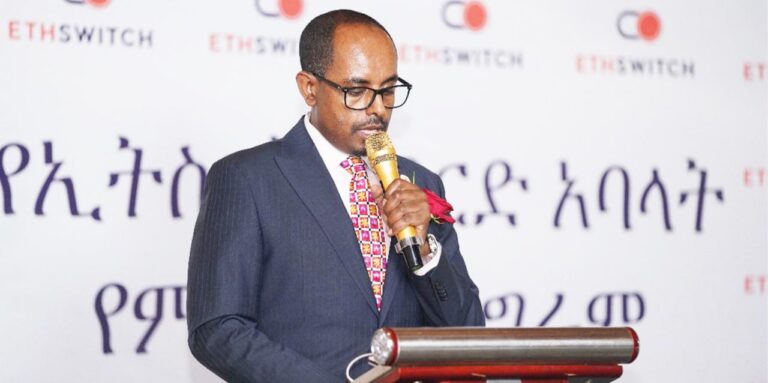
EthSwitch S.C. has announced the election of Solomon Desta, the Deputy Governor of the National Bank of Ethiopia, as the new Chairman of its Board of Directors. This appointment marks a significant step for EthSwitch as it continues to enhance its strategic direction in Ethiopia’s digital payment landscape.

Yilebes Addis, CEO of EthSwitch, expressed confidence in the newly elected board members during the announcement. He stated, “The members of the Board of Directors have been setting the strategic direction of our institution and carrying out critical activities to take it to a higher level, formulating various policies and guidelines, taking advantage of the opportunities available at the time and providing solutions to the challenges it faces.”

The contributions made by the Board of Directors have laid a solid foundation for EthSwitch’s activities and will inform the new strategies that are expected to be developed in the coming years. The board’s collective expertise is crucial as EthSwitch aims to streamline and enhance digital payment systems across Ethiopia.

Solomon Desta emphasized the importance of collaboration among board members, highlighting their collective knowledge and experience in implementing Ethiopia’s national digital payment strategy and financial inclusion initiatives. “We believe that the Digital Ethiopia 2025 strategy and EthSwitch’s initiatives will significantly contribute to the country’s economic growth,” he added.

EthSwitch has elected a total of 12 members to its Board of Directors, which includes representatives from various financial institutions such as ZamZam Bank (Melika Bedri), Oromia Bank (Teferi Mekonnen), Dashen Bank (Asfaw Alemu), and Zemen Bank (Dereje Zebene). This diverse representation underscores EthSwitch’s commitment to fostering collaboration within Ethiopia’s banking sector.
