

The United States and the African Union have warned against the regional expansion of Sudan’s war following reports of air strikes conducted by the Sudanese military inside neighbouring Chad. U.S. Senior Advisor for Africa Massad Boulos condemned the strikes in Chadian territory on Wednesday, saying there is no justification for expanding the violence beyond Sudan’s borders. Boulos called for an immediate humanitarian truce and urged the United Nations Security Council to urgently update its sanctions regime and arms embargo to halt external military and financial backing for the warring parties. African Union Commission Chairperson Mahmoud Ali Youssouf also voiced deep concern over the reported Aug. 20 strikes in Chad’s Ennedi-Est region, calling on all sides to respect national sovereignty and the inviolability of borders. Youssouf urged maximum restraint and called for stronger regional cooperation to secure shared frontiers and prevent cross-border escalation. (Sudan Tribune)
Kiting
Kiting involves fraudulently using financial instruments, such as checks, to obtain unauthorized credit. This practice targets banks and retailers, exploiting float times to facilitate illegal withdrawals.
The Beaumont Code and ethical leadership in business
In business, success is often measured in figures: profits, growth, market share and shareholder returns. But behind every balance sheet are decisions made by people and those decisions are shaped by values.
This is where the “Beaumont Code” offers an important lesson for today’s business leaders. Its emphasis on ethical conduct, professional integrity and responsibility highlights a question that businesses can no longer afford to ignore. Can a company achieve lasting success if ethics are treated as an afterthought? The answer is increasingly clear: no.
Modern managers make decisions that affect far more than the bottom line. Employees, customers, investors, suppliers, communities and the environment can all be affected by corporate choices. While financial performance is essential to keeping a business alive, profit alone cannot define good management.
History has repeatedly shown what can happen when organisations prioritise short-term gains over ethical standards. Fraud, corruption, exploitation and misleading business practices may produce temporary benefits, but the eventual consequences can include damaged reputations, financial losses, legal action and the collapse of public trust.
Trust begins at the top. One of the strongest lessons from the Beaumont Code is the connection between integrity and trust. Managers set the tone for their organisations. When leaders act honestly, accept responsibility and treat people fairly, those behaviours can become part of the workplace culture. But when senior executives tolerate questionable behaviour because it produces revenue or helps meet targets, employees may conclude that results matter more than integrity. Ethical leadership is therefore not simply about whether an individual manager is a good person. It is about creating an environment in which ethical behaviour is expected, supported and rewarded.
As Trevino and Nelson in their 2021published book entitled “Managing business ethics: Straight talk about how to do it right” argue, leaders play a central role in shaping the conditions in which ethical or unethical behaviour takes place. A code of conduct, however, means little if it sits in a company handbook and is forgotten after employee induction. Ethical principles must influence recruitment, promotion, performance assessments, leadership training and strategic decisions.
A manager should be judged not only by what they achieve, but also by how they achieve it. A sales director who meets ambitious targets by misleading customers may look successful on paper. But if those results come at the expense of trust and reputation, the organisation may ultimately pay a much higher price. Accountability cannot be optional.
The “Beaumont Code” also draws attention to another essential principle: accountability. Large organisations can be complicated places. Decisions may pass through several departments, committees and levels of management. When something goes wrong, this complexity can make it tempting for individuals to blame someone else.
Good governance requires the opposite. Managers must be prepared to take responsibility for decisions within their control and ensure that organisational actions can be properly examined. Senior executives should not be above the standards expected of everyone else. This issue has become particularly important as businesses face growing expectations around environmental, social and governance issues. Customers, employees and investors increasingly want companies to demonstrate that corporate responsibility is more than a slogan.
Stakeholder theory, developed by Edward Freeman in 1984, reinforces this broader view of business. Companies have responsibilities not only to shareholders but also to the people and communities affected by their activities. Ethics and profit are not enemies. Some business leaders may argue that ethical standards can make it harder to compete. After all, businesses must control costs, improve productivity and generate profits.
But this presents a false choice. Ethical management and commercial success do not have to be opposites. A company that treats its employees fairly can build loyalty. A business that is honest with customers can strengthen its reputation. An organisation that manages risks responsibly can become more resilient.
Porter and Kramer in their 2011 published work entitled “Creating shared value” similarly argue that companies can create economic value while addressing wider social needs. The real challenge is turning ethical principles into everyday business practice. That means creating clear standards for behaviour, providing safe channels for reporting misconduct and protecting legitimate whistleblowers. It also means examining whether executive bonuses and performance targets encourage managers to take excessive risks or sacrifice long-term interests for short-term results. If employees are rewarded solely for hitting quarterly targets, businesses should not be surprised when long-term consequences are overlooked.
Ethics should not be treated as a single subject that students complete before moving on to the supposedly more important areas of finance, marketing or strategy. Ethical decision-making should be part of the entire business curriculum. Future managers need to know how to analyse financial performance, but they must also know how to recognise conflicts of interest, evaluate the consequences of business decisions and challenge practices that may be profitable but fundamentally wrong.
Ultimately, the “Beaumont Code” points to a simple truth: effective leadership requires both competence and responsibility. A company can achieve impressive results through aggressive management and questionable practices, but such success is unlikely to last. Sustainable organisations are built on trust, accountability and legitimacy.
Profit matters. But profit without integrity can become a liability. The quality of a business should therefore be judged not only by how much money it makes, but also by how it treats people, how it makes decisions and whether its leaders are willing to accept responsibility for their impact. For today’s business managers, the message is straightforward: ethics is not an obstacle to success. It is part of what makes success sustainable.
Mahmoud Ahmed Announces 26th and Final Album, LeTarik
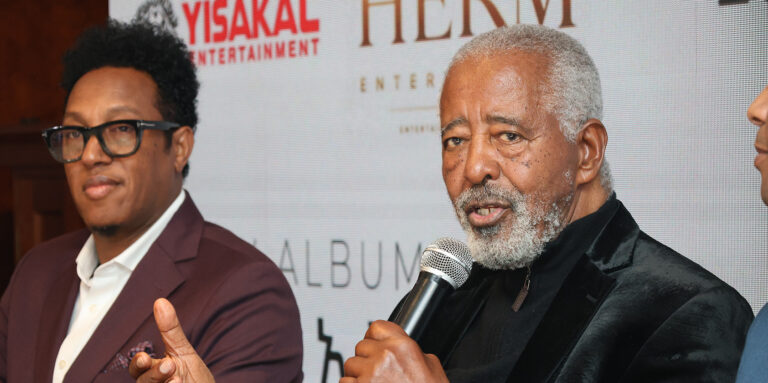
Legendary Ethiopian singer Mahmoud Ahmed has announced the release of his 26th studio album, LeTarik—meaning “For History”—which he described as the final work of his long artistic career spanning six decades.
The announcement was made during a press conference held at the Sheraton Addis Hotel on August 26. Mahmoud Ahmed, widely regarded as one of the defining voices of Ethiopian music, said the album is intended to preserve the country’s musical heritage and pass its melody, spirit and identity to younger generations.
The title LeTarik reflects the album’s purpose, according to the organisers: to honour the legacy of earlier Ethiopian music while creating a work that can serve as a cultural record for the future.
The album draws on Mahmoud Ahmed’s distinctive vocal and performance style, blending contemporary instruments with traditional Ethiopian musical sounds. It includes both new compositions and nostalgia-infused songs, with lyrics exploring love, life philosophy and social values.
Veteran and younger lyricists, composers, arrangers and music producers collaborated on the project. Mahmoud used the occasion to reflect on his decades-long journey in music and called on a new generation of artists to embrace modern production without abandoning the country’s cultural identity, traditional musical scales and artistic heritage.
The new release follows Mahmoud Ahmed’s final public stage performance, held last year, which marked the conclusion of his live-performance career. While he has stepped away from public concerts, LeTarik will serve as his final major artistic statement and a lasting contribution to Ethiopian music.
LeTarik will be distributed through major digital platforms, including Spotify, Apple Music and YouTube, as well as other outlets. A single from the album is expected to be released on the eve of Enkutatash, the Ethiopian New Year, ahead of the full album’s planned release in end of September.
The project is being coordinated by Yisakal Entertainment in partnership with an international music-distribution company. The organisers said the collaboration is intended to give the album wider global reach while preserving the authenticity of Mahmoud Ahmed’s music.
Yisakal Entertainment said it is working to honour established Ethiopian artists, promote their legacy and introduce Ethiopian culture and history to international audiences through the entertainment industry.
The company organises and coordinates local and international music events, concert platforms and arts programmes. It also promotes the work of veteran and emerging artists, distributes albums, manages contracts, produces audio-visual and digital content, and works with media organisations on promotional campaigns.
