

By Eyasu Zekarias
Ethiopian Electric Power (EEP), the state-owned energy enterprise, has announced a significant reduction in its debt from 55% to 20% as part of the government’s ongoing macroeconomic reforms. This change is seen as a crucial step in stabilizing the financial situation of the utility, which has been burdened by high levels of debt for years.
The reduction in debt was achieved through a combination of measures, including the transfer of liabilities to the Accountability and Asset Management Corporation (LAMC), established under the Ministry of Finance in 2021. Additionally, EEP received relief from a new debt amounting to 263 billion ETB, which has further strengthened its financial position.
Demere Assefa, Executive Officer of the Finance Division at EEP, stated, “The institution’s debt has been reduced from 55% to 20%.” He highlighted that the total assets of EEP now stand at 709 billion birr, with 586 billion birr classified as paid-up capital. This substantial asset base positions EEP as a key player in the region’s energy sector.
EEP ranks third among Africa’s electricity management institutions in terms of energy generation capacity. As of July 7, 2023, the company reported a total debt of 367 billion birr. The ongoing economic reforms initiated by the government aim to address the financial challenges faced by EEP and the broader energy sector.
In a recent forum it was noted that while the service is currently operating at a loss, the annual net profit is insufficient to cover even the cost of purchasing four transformers.
Demere Assefa explained that 28% of the state’s energy generation accounts for the energy bills, underscoring the financial pressures on EEP. He elaborated that 25.5% of the total assets consist of power substations, transmission lines, and switchyards, valued at 150.5 billion birr. The remaining 46.5% includes vehicles, buildings, and other fixed and movable assets.
Currently, EEP operates over 19 power generation stations, maintains a network of 20,000 kilometers of high-power transmission lines, and manages more than 144 power substations, along with a fleet of over 900 vehicles. These assets are crucial for ensuring a reliable electricity supply to the Ethiopian population and supporting economic growth.
The government’s decision to implement significant changes in the energy sector, including taking on EEP’s debt and recapitalizing the Commercial Bank of Ethiopia (CBE), reflects a broader commitment to economic reform. By reducing EEP’s debt burden, the government aims to create a more sustainable financial environment for the utility, enabling it to focus on improving service delivery and expanding access to electricity.
EEP reduces debt to 20% amid government economic reforms

Exporters face market share loss due to indirect trade with china
By Eyasu Zekarias
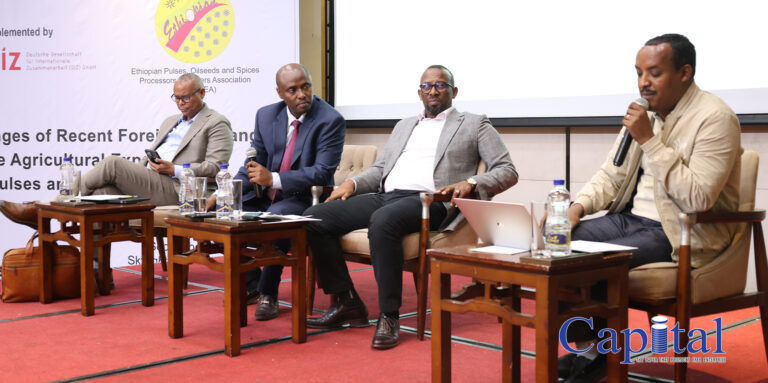
Exporters are struggling to maintain their market share in China as government regulations restrict direct sales, forcing them to rely on indirect channels. The Ethiopian government has mandated that all exports to China must go through commercial banks, a policy established eight years ago when loans owed to the World Bank and the International Monetary Fund (IMF) were exclusively handled by these banks.
As a result of this policy, many exporters, who have been engaged in foreign trade for years, find themselves unable to sell their agricultural products directly to Chinese buyers. Instead, they are compelled to sell through third parties, which diminishes their profits and market presence. Despite China being the largest importer of Ethiopian products, the Ministry of Trade and Regional Integration has faced criticism for failing to recognize Ethiopia’s achievements in the import of pulses and oilseeds during the last fiscal year.
Yigzaw Negraw, Head of Tropical Exporters, expressed concern over the situation, stating, “The Chinese market takes a lot of products from Ethiopia, but the current banking system complicates our ability to sell directly.” He explained that while they may receive favorable prices in China, the requirement to process payments through commercial banks limits their ability to capitalize on these opportunities.
The challenges are compounded by the fact that many traders prefer to work with private banks, which they claim better meet their needs for loans and foreign exchange. However, this creates a dilemma, as payments must still be routed through commercial banks, forcing exporters to sell their products to intermediaries rather than directly to Chinese buyers.
Demelash Tadesse, Owner and General Manager of ADYAD Import & Export, echoed these sentiments, stating, “For the exchange rate policy to be effective, we need active exports. Banks must allow loans to facilitate this process.” He noted that the current restrictions are pushing traders to seek alternative market options, which could further erode Ethiopia’s position in the Chinese market.
Edao Abdi, President of the Ethiopian Pulses, Oilseeds and Spices Processors Exporters Association (EPOSPEA), acknowledged the validity of the exporters’ complaints and indicated that they have raised these issues with relevant authorities. He emphasized the need for reforms that would allow exporters to operate freely and effectively in the international market.
Ethiopian exporters continue to navigate these challenges, the government faces pressure to reassess its policies to enhance direct trade with China and ensure that local producers can compete effectively in one of their largest markets.
Amhara Bank appoints Yohannes Ayalew as new CEO
By Eyasu Zekarias
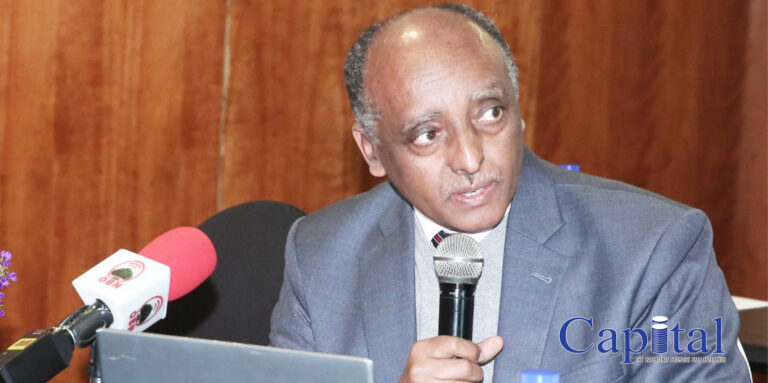
Amhara Bank has announced the appointment of Yohannes Ayalew (PhD) as its new Chief Executive Officer (CEO), effective September 12, 2024. Yohannes, who previously served as the head of the Development Bank of Ethiopia (DBE) for the past four years, will be taking over from Chanyalew Demsie, who has been acting CEO for the past nine months.
Yohannes’ appointment comes on the heels of his resignation from DBE, where he played a pivotal role in steering the institution through challenging times. His leadership was instrumental in addressing the bank’s financial difficulties, and he is expected to bring that experience to Amhara Bank as it continues to grow and expand its services.
The Board of Directors of Amhara Bank officially announced Yohannes’ appointment on September 13, 2024. His extensive background includes serving as a member of the management board of the Ethiopian Development Bank since December 15, 2011, as well as holding positions as Director General of the Ethiopian Development Policy Institute and former Deputy Governor and Chief Economist of the National Bank of Ethiopia.
Chanyalew Demsie, who has been at the helm of Amhara Bank as acting CEO since early 2022, submitted his resignation letter on September 9, 2024, shortly before the announcement of Yohannes’ appointment. Sources indicate that Chanyalew was unhappy with the decision to appoint a new CEO while he was still in the acting position.
Amhara Bank, established just a year ago with a capital of 6 billion birr, has quickly become one of the significant players in Ethiopia’s banking sector, boasting around 171,000 shareholders. The bank aims to enhance financial inclusion and provide a range of banking services to its customers, contributing to the economic development of the Amhara region and beyond.
Yohannes’ leadership is anticipated to bring a fresh perspective to Amhara Bank, particularly as the institution navigates the complexities of the current economic landscape in Ethiopia. With his extensive experience in the banking sector and a strong commitment to economic development, he is well-positioned to guide the bank toward achieving its strategic goals.

PACCI to host landmark conference on AfCFTA and Intra-African Trade
The Pan African Chamber of Commerce and Industry (PACCI) is set to host the highly anticipated Prosperity Africa 2024 Conference from September 25 to 27. This significant event will gather over 45 chamber of commerce presidents from across the continent to explore the transformative potential of the African Continental Free Trade Area (AfCFTA) in enhancing intra-African trade and fostering economic integration.
The AfCFTA, which connects 1.4 billion people across 54 of Africa’s 55 countries excluding Eritrea represents a market with a combined GDP of $3.4 trillion. This agreement has the potential to reshape African economies, driving growth through increased trade, investment, and collaboration.
Ali Adji Mahamat Seid, President of the Chad Chamber of Commerce, emphasized the opportunities presented by the AfCFTA, stating, “Business leaders must wake up to the fact that Africa is entering a new era. The AfCFTA offers an unprecedented opportunity to reshape intra-African trade and drive economic growth. Entrepreneurs should prepare to engage with this vast market, which holds immense potential for businesses across the continent.”
Kebour Ghenna, Executive Secretary of PACCI, highlighted the conference’s importance for Ethiopia’s business community. “This is an excellent opportunity for Ethiopian businesses to expand their networks across Africa and learn about the vast opportunities that AfCFTA provides for reaching new markets and forming partnerships. Whether you’re a small business or a large enterprise, the AfCFTA is designed to benefit you.”
Kebour further encouraged business executives of all sizes to register for the conference, stating, “I encourage all business leaders, regardless of their size or sector, to register and attend the conference. This is a unique chance to learn from experts, connect with potential partners, and explore how AfCFTA can open doors to new business opportunities across the continent.”
The event is supported by major partners, including the Ethiopian Chamber of Commerce and Sectoral Association, UNDP’s Regional Bureau, UNECA’s African Trade Policy Center, the EU-TAF, and Afrexim Bank. The conference will not only focus on how African businesses can support one another but will also emphasize strengthening ties between African nations and equipping Ethiopian firms with strategies for international success.
With backing from the AUC Economic Development, Trade, Tourism, Industry, and Minerals Division, Prosperity Africa 2024 aims to forge stronger economic ties across the continent and provide businesses with the tools they need to thrive in a continental market. Key discussions will revolve around digital transformation, climate finance, and regional value chains, all crucial for harnessing the full potential of the AfCFTA.
As the event date approaches, business leaders across Africa are encouraged to participate in the Prosperity Africa Conference to gain insights, build partnerships, and position themselves for success in Africa’s evolving economic landscape.
