Thursday, April 2, 2026
Home Blog Page 865

Exporters lack awareness of international trade, says EPOSPEA

0

By Eyasu Zekarias
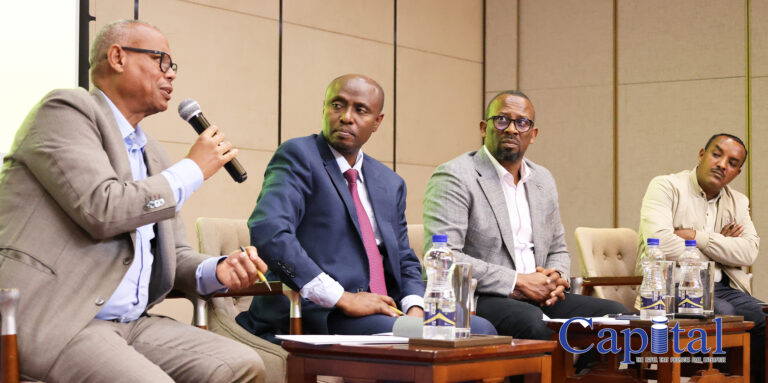
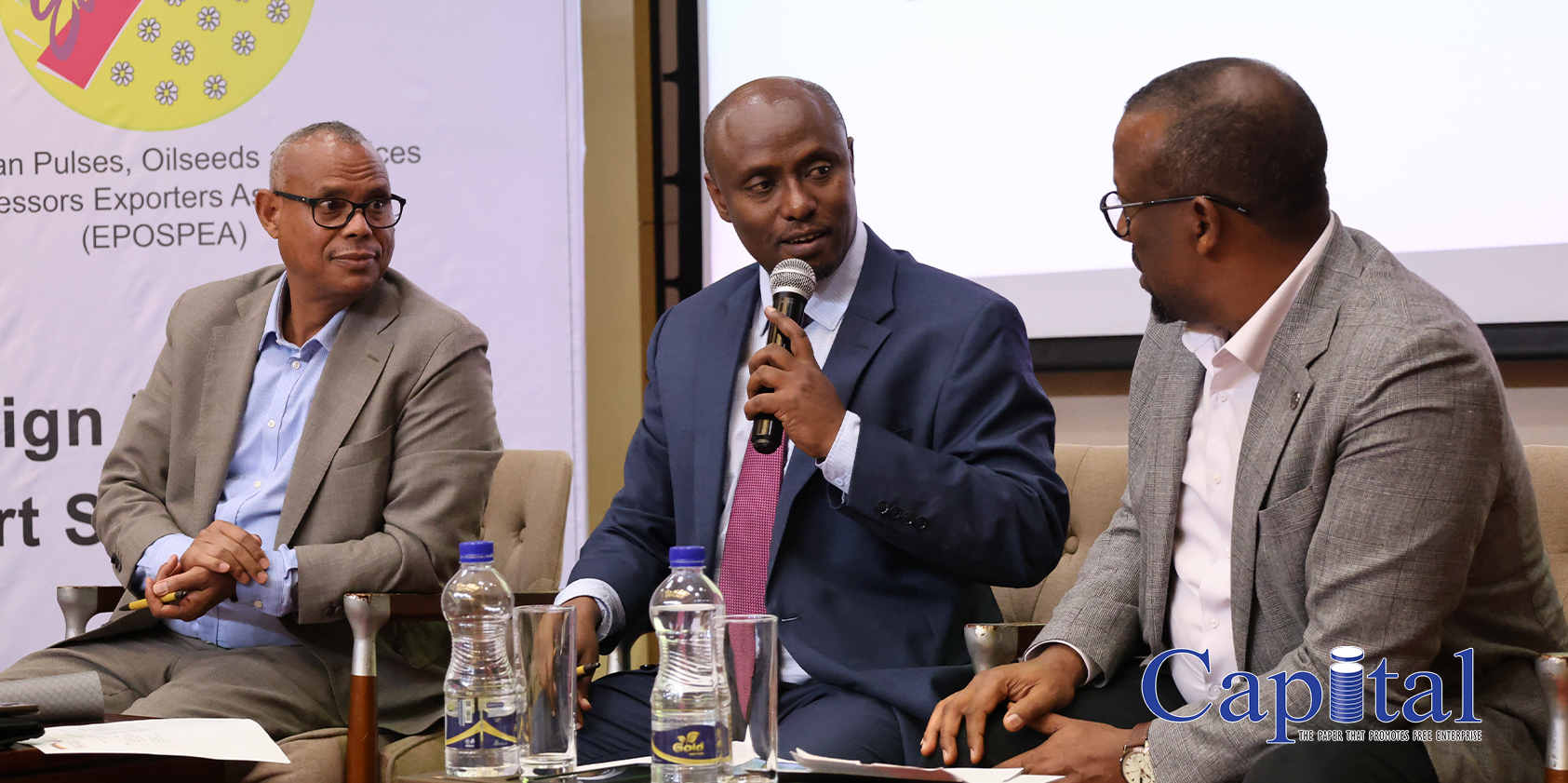
Ethiopian exporters across various sectors are exhibiting low awareness of international trade practices, according to a recent announcement from the Ethiopian Pulses, Oilseeds and Spices Processors Exporters Association (EPOSPEA). Edao Abdi, the board president of EPOSPEA, emphasized the urgent need for qualified personnel to navigate the global business landscape effectively.
During a discussion focused on foreign exchange policy reforms impacting the trade of pulses, spices, and oilseeds, Abdi noted that there have been numerous complaints from recipient countries regarding the lack of trade facilitation. He highlighted challenges faced by exporters, including difficulties in locating addresses after products have been shipped.
In response to these issues, Yasmin Wahab, Minister of State for Trade and Regional Integration, addressed the meeting, outlining various policy reforms aimed at boosting the export of pulses, oilseeds, and spices while increasing foreign exchange revenue. Yasmin stated that the reforms are designed to attract foreign investors and integrate them with local businesses, thereby addressing challenges related to technology transfer and enhancing market competitiveness.
The recent macroeconomic reforms introduced by the government are expected to bolster agricultural production and productivity, as well as alleviate the current shortage of foreign exchange through increased exports. The forum set a target of generating approximately $7 million from the pulses, oilseeds, and spices sector in the fiscal year 2024/25.
Participants at the forum were urged to abandon outdated practices in order to adapt to the challenges posed by the new macroeconomic reform policies. The emphasis on training and equipping exporters with the necessary skills and knowledge is seen as crucial for improving Ethiopia’s position in the international market.
As Ethiopia seeks to enhance its export capabilities, the call for greater awareness and understanding of international trade dynamics remains a pressing concern for industry stakeholders.

NBE reports 90% of Ethiopia’s borrowing now supports private sector growth

0

By Eyasu Zekarias
The National Bank of Ethiopia (NBE) has announced a significant shift in the country’s economic landscape, revealing that 90% of the wealth generated and collected by the banking sector now comes from the private sector. This marks a departure from previous years when government investments and state-owned enterprises dominated the economy.
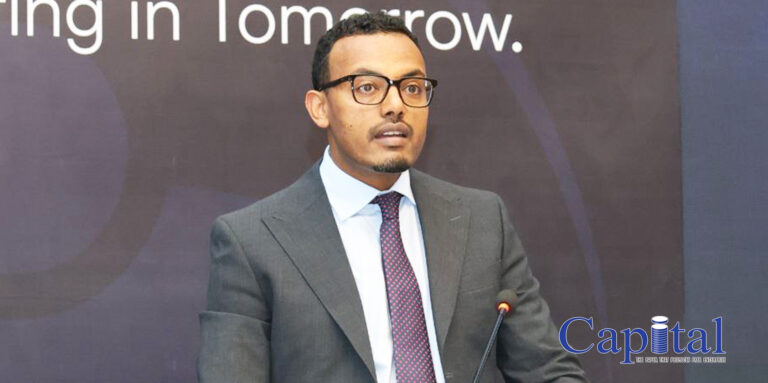
Governor Mamo Mihretu emphasized the dramatic changes that have taken place over the past six years, stating, “The economy was largely funded by government agencies and government projects, but now it has changed dramatically.” He attributed this transformation to increased private sector engagement and the need for a robust financial system to support it.
Despite these positive developments, concerns have been raised by private sector investors regarding their access to loans. The NBE has stated that complaints from these investors are often unfounded, urging them to ensure that their documentation meets the necessary requirements for borrowing.
Investors have expressed frustration over the challenges they face when applying for loans, citing issues such as insufficient documentation and lack of collateral. Many have argued that these obstacles hinder their ability to secure financing for their ventures, particularly in export trade.
Mamo highlighted the importance of enhancing the capacity of the private sector as a key aspect of foreign policy, noting that a previously non-existent system has now been established, leading to tangible changes in the economy. He emphasized that the NBE is committed to supporting this growth by facilitating better access to financial resources for private investors.
The NBE’s focus on the private sector aligns with the government’s broader economic reforms aimed at increasing productivity and foreign exchange earnings. However, stakeholders are calling for further improvements in the loan application process to ensure that private sector players can effectively contribute to the economy.

Hibret Insurance unveils new brand identity to mark 30 years in business

0

Hibret Insurance, one of Ethiopia’s largest and most established insurers, has officially unveiled its new brand identity, including a modernized logo, to commemorate its 30 years in the market. The unveiling took place on September 9 at a ceremony attended by officials from the National Bank of Ethiopia.
The new logo is designed to reflect the company’s core values of unity, diversity, strength, continuous growth, and excellence. Described as simple, contemporary, memorable, timeless, and attractive, the logo aims to resonate with both current and future clients.
Wondwossen Teshome, Chairman of the Board of Directors, expressed optimism about the new branding, stating, “the new logo will represent the company for the next several decades.” He emphasized that the redesign was necessary to align the company with the fast-paced, modern world.
Founded in 1994 with a subscribed capital of 25 million birr and over 8 million birr in paid-up capital from 87 investors, Hibret Insurance has grown significantly over the years. As of June 30, 2024, the company boasts 714 shareholders and an asset value of 4.5 billion birr, with subscribed funds totaling 1.5 billion birr and paid-up capital reaching 1.1 billion birr.
The rebranding initiative comes at a crucial time as the insurance sector in Ethiopia continues to evolve, and Hibret Insurance aims to strengthen its market position while enhancing its service offerings to meet the needs of its diverse clientele.

US Special Envoy emphasizes urgency of DDR in Tigray to prevent return to violence

0

The US Special Envoy for the Horn of Africa emphasized at his most recent media roundtable that there is no justification or explanation for the violence in the Tigray region to flare up again.
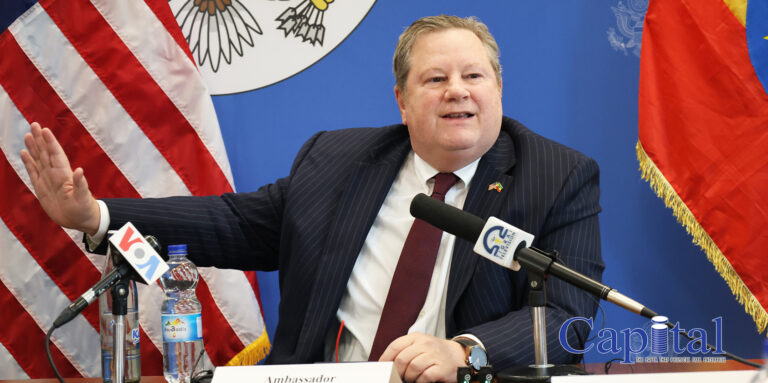
In order to maintain long-term peace in the region, the US Special Envoy for the Horn of Africa (SEHOA), Mike Hammer (Amb), informed the media that the Tigray region must quickly execute demobilization, disarmament, and reintegration (DDR).
“I had a meeting with Temesgen Tilahun, Commissioner of the National Rehabilitation Commission, on Thursday, in which we talked about the urgency of launching the DDR program because these forces should be completely mobilized,” he said at the media roundtable held at the US Embassy in Addis Ababa on Friday.
He added that these individuals or combatants need to go back to their daily lives, and they want to go back to their daily lives.
“I heard on Thursday from Getachew Reda, Interim President of the Tigray region, as well as previously from Vice President Tsadkan Gebretensae and even from Debretsion Gebremichael, TPLF Chairperson; they are fully committed to going through with the DDR,” the SEHOA says, adding that the United States is contributing to a fund that the UNDP is putting together.
“We know the financing is there for the first tranche, which would demobilize about 75,000 of the Tigrayan commands,” he added.
He underlined that there is no reason or explanation that could be given for returning to violence; the tragic suffering that Tigray and Ethiopia faced during the war is unfathomable.
In response to the issue of whether Ethiopians are very concerned that a war between Tigray forces and the government will break out soon, he said, “So let’s get going, let’s make sure that we deliver resolutions that can ensure lasting peace in Tigray.”
It was at the time the worst conflict on Earth, but through the courage of political leadership in Pretoria, it was brought to an end. “That same courage needs to be displayed every day to ensure that you do not go back to conflict or war.”
He also insisted on bringing peace to the Amhara and Oromia regions.
“We are committed again to being a good partner to all Ethiopians and to hopefully address these issues through dialogue, and to get to the point where we are not talking about war,” he said.
“Even though peace has been achieved in Tigray, the work is not done, and that is why the United States continues to offer its good offices for dialogue with Amhara Fano, if that is possible,” Hammer said, participating in talks with the OLA and the government in Dar es Salaam in November of last year.
“We remain open to pursuing further talks, whether it’s on the Oromia track or if it’s at all possible in the case of Amhara. These conflicts do not have military solutions,” he said.Proofread Version: Regarding peace and dialogue issues in Amhara and Oromia regions, the Special Envoy said that he and the US Ambassador, Ervin Massinga, and his team in Addis Ababa are looking for opportunities to cooperate with the Government of Ethiopia. They aim to facilitate dialogues and negotiations that may help bring an end to these conflicts. He stated, “We are working on it each and every day.”
“In the case of Oromia, we conducted talks in Tanzania. Although we were hopeful that this would lead to a positive outcome in silencing the guns in Oromia, the talks did not succeed. However, this has not halted our efforts,” he said.
The Special Envoy appreciates the peace in Tigray since the Pretoria peace agreement was signed, although not all aspects of the agreement have been implemented yet.
In response to a question about the reinstatement of Ethiopia on the AGOA scheme, Hammer emphasized the importance of commitment on the ground. He stated, “What I continuously hear from the government and Tigray region officials is a strong commitment to ensuring lasting peace. The United States, together with the African Union, IGAD, and the United Nations, is prepared to play its part in making this happen.”
He further added, “Let’s not lose sight of the fact that the United States is also concerned about the significant violence in Amhara and ongoing violence in Oromia. We would be delighted to see Ethiopia return and be reinstated into AGOA. However, our law requires that there are no human rights violations by government forces.”
According to the Special Envoy, there are still reports of abuses and atrocities being committed. As long as this continues, Ethiopia cannot be reintegrated or reinserted into AGOA.
He mentioned that there are some signs of IDPs beginning to return, particularly in the south. However, he emphasized that more progress is needed. He stated, “During my visits, we are working to push both the federal government and the interim regional administration of Tigray to collaborate and ensure the safe return of IDPs to their homes. While we acknowledge some progress, we must not lose sight of the fact that silencing the guns was a crucial step, and we must remain committed to a lasting peace.”
He added, “In my meetings with Tigray region officials and the government, I have heard a continued commitment to fully implement the Pretoria agreement.”
The Special Envoy reiterated that the United States is committed to supporting Ethiopia’s sovereignty, territorial integrity, and unity. He stated, “This is the core of our partnership with Ethiopia. We want to stand by the Ethiopian people and provide our support.”