Friday, April 3, 2026
Home Blog Page 938

Digital coin’s Potential to Transform the Telecommunications Market

0

The telecommunications industry has been a cornerstone of global connectivity for decades. With the advent of digital technologies, the industry has continuously evolved, but now it stands on the brink of a potentially transformative shift. The emergence of decentralized digital assets, driven by blockchain technology, offers unique opportunities to revolutionize telecommunications. This article explores how this innovation could reshape the telecommunications landscape, introducing new efficiencies, security measures, and economic models.

The Need for Innovation in Telecommunications

The telecommunications sector is characterized by high infrastructure costs, regulatory complexities, and the need for constant innovation. Traditional models often struggle to keep up with the rapid pace of technological advancements and increasing consumer demands for faster, more secure, and affordable services. Go to gasfolex.com and make an account there.

Challenges in Current Telecommunications Systems

  1. Centralization and Control: Telecommunications networks are typically controlled by a handful of large corporations and governments. This centralization can lead to issues like data privacy concerns, censorship, and limited competition.
  2. High Operational Costs: Maintaining and upgrading infrastructure, especially in remote or underdeveloped regions, is expensive. These costs are often passed on to consumers, resulting in higher prices for services.
  3. Security Vulnerabilities: Centralized systems are more vulnerable to cyber-attacks, data breaches, and other security threats. As the volume of data transmitted over these networks grows, so does the potential for malicious activities.
  4. Regulatory Hurdles: Navigating the complex web of regulations across different countries can be a significant barrier to innovation and expansion for telecommunications companies.

Decentralized Digital Assets: A New Paradigm

Decentralized digital assets are powered by blockchain technology, which enables secure, transparent, and decentralized transactions without the need for intermediaries. This innovation offers several key advantages that could address the challenges faced by the telecommunications industry.

Enhancing Security and Privacy

Blockchain technology offers a decentralized and immutable ledger, which enhances the security of transactions and data transmission. In a decentralized network, data is not stored in a single location but is distributed across multiple nodes, making it much harder for hackers to compromise the system. This can significantly reduce the risk of data breaches and unauthorized access.

Reducing Operational Costs

The decentralized nature of these digital assets can streamline operations by reducing the need for intermediaries. For instance, smart contracts—self-executing contracts with the terms of the agreement directly written into code—can automate and simplify complex processes, such as billing and payment settlements, reducing overhead costs and improving efficiency.

Facilitating Cross-Border Transactions

One of the most significant challenges in telecommunications is handling cross-border payments and transactions. Traditional methods can be slow, expensive, and subject to regulatory scrutiny. Decentralized digital assets can enable faster, cheaper, and more secure international transactions, bypassing traditional financial institutions and reducing costs for both providers and consumers.

New Business Models and Opportunities

The adoption of decentralized digital assets in telecommunications could give rise to entirely new business models and opportunities, creating a more competitive and innovative landscape.

Microtransactions and Pay-As-You-Go Services

Decentralized digital assets allow for seamless microtransactions, which can be used to create flexible pay-as-you-go services. For example, users could pay for internet or mobile services on a per-second or per-megabyte basis, rather than committing to long-term contracts. This could be particularly beneficial in regions where affordability and access to financial services are significant barriers to connectivity.

Decentralized Networks and Infrastructure

Another promising application is the development of decentralized telecommunications networks, where users contribute resources like bandwidth and storage in exchange for rewards. This model could reduce the need for centralized infrastructure, lowering costs and increasing access to connectivity in underserved areas.

Incentivizing Innovation

Decentralized digital assets can also be used to create incentive structures that reward innovation and participation in the network. For instance, developers and users could be compensated for contributing to the development and maintenance of the network, fostering a more collaborative and dynamic ecosystem.

Overcoming Regulatory and Adoption Challenges

While the potential benefits are significant, the integration of decentralized digital assets into the telecommunications industry is not without challenges. Regulatory concerns, technological barriers, and market adoption are key issues that must be addressed.

Navigating Regulatory Landscapes

The decentralized nature of these digital assets can create tension with existing regulatory frameworks, which are often designed around centralized control. Telecommunications companies will need to work closely with regulators to ensure compliance while advocating for policies that support innovation and the adoption of new technologies.

Ensuring Technological Integration

Integrating decentralized digital assets with existing telecommunications infrastructure requires significant technological development and expertise. Companies will need to invest in research and development to create solutions that are compatible with current systems and can scale effectively.

Driving Market Adoption

For decentralized digital assets to transform the telecommunications industry, there needs to be widespread adoption among consumers and businesses. This will require education, awareness, and the development of user-friendly platforms that make it easy for people to access and use these technologies.

Conclusion

The potential for decentralized digital assets to transform the telecommunications market is vast. By enhancing security, reducing costs, and enabling new business models, this innovation could reshape the industry in ways that improve access, affordability, and efficiency for consumers worldwide. However, realizing this potential will require overcoming significant regulatory, technological, and adoption challenges. As the telecommunications industry continues to evolve, embracing the opportunities presented by decentralized digital assets could pave the way for a more connected and equitable future.
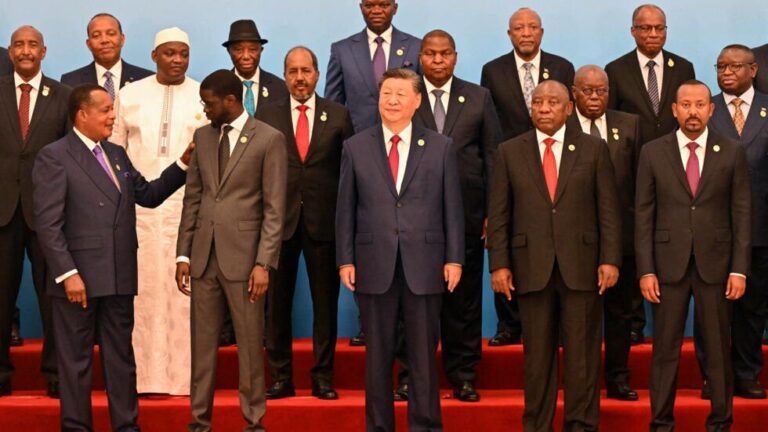

Xi Jinping proposes enhanced China-Africa cooperation at FOCAC Summit

0

At the opening ceremony of the Beijing Summit of the Forum on China-Africa Cooperation (FOCAC), Chinese President Xi Jinping delivered a keynote address emphasizing the need for strengthened partnerships between China and African nations. The summit, attended by heads of state and government from various African countries, marks a significant milestone in the ongoing collaboration aimed at fostering economic growth and development across the continent.

In his address, President Xi highlighted the historical ties between China and Africa, stating, “The friendship between China and Africa transcends time and space, surmounts mountains and oceans, and passes down through generations.” He noted that the founding of FOCAC in 2000 has been instrumental in advancing China-Africa relations, particularly in the face of global challenges.

Xi proposed elevating bilateral relations with African countries to the level of strategic partnerships, aiming to create an “all-weather China-Africa community with a shared future for the new era.” He emphasized that modernization is a fundamental right for all countries and expressed China’s commitment to supporting African nations in their development goals, particularly in the context of the African Union’s Agenda 2063.

The Chinese leader outlined ten partnership actions aimed at deepening cooperation, including:

Mutual Learning among Civilizations: Establishing a platform for governance experience sharing and a knowledge network for development.

Trade Prosperity: Offering zero-tariff treatment for all least developed countries (LDCs) with diplomatic ties to China, expanding market access for African agricultural products.

Industrial Chain Cooperation: Promoting industry cooperation and launching programs to empower small and medium enterprises (SMEs) in Africa.

Connectivity: Implementing infrastructure connectivity projects to enhance trade and development across the continent.

Development Cooperation: Supporting Africa in hosting significant events like the 2026 Youth Olympic Games and implementing livelihood projects.

Health Initiatives: Establishing a hospitals alliance and sending medical personnel to Africa to bolster healthcare systems.

Agriculture and Livelihoods: Providing emergency food assistance and promoting agricultural innovation.

People-to-People Exchanges: Enhancing vocational education and cultural cooperation to strengthen ties between China and Africa.

Green Development: Launching clean energy projects and collaborating on environmental conservation.

Common Security: Building partnerships to enhance peace and security across the continent.

President Xi announced that the Chinese government would provide $50 billion in financial support over the next three years to implement these initiatives. This funding is expected to play a crucial role in advancing development and cooperation between China and African nations.

As the summit progresses, leaders from across Africa are expected to engage in discussions on various topics, including trade, infrastructure development, and climate change, further solidifying the framework for future collaboration.

The FOCAC summit underscores the growing importance of China-Africa relations in the global landscape, with both sides committed to working together to address shared challenges and promote sustainable development for the benefit of their peoples.

Hon. Okello Addresses 2nd Indonesia-Africa Forum 2024 in Bali

0

Minister of State for International Cooperation Hon. Henry Oryem Okello represented HE the President at the Second Indonesia-Africa Forum (IAF) II in Nusa Dua, Badung, Bali from 1-3 September 2024. In his statement delivered on behalf of H.E. President Yoweri Museveni, as Chair of the Non-Aligned Movement (NAM), Hon. Okello recalled the 1955 Bandung conference that laid the foundation of the 10 Bandung principles which have been the cornerstone of the NAM. He said that despite the tremendous strides made by NAM in foreseeing a more peaceful world, there is an even greater challenge of fostering economic prosperity for all and achieving the SDGs.

Hon. Okello hailed the strong bilateral relations between Indonesia and Uganda and also the wider continent of Africa. Underlining the need to harness the potential of the youth in the global economy through digitalization to accelerate growth he said it was also important to expand production in critical sectors like Agriculture through mechanization and irrigation. While stressing the importance of collective efforts in addressing the challenges emanating from climate change, the Minister reiterated the importance of fulfilling commitments made towards mitigation but not at the expense of economic progress for the developing countries. Okello also underscored the importance of empowering SMEs transition to industrialization and the huge potential for tourism where Indonesia has made tremendous strides that can be emulated. In addition to delivering the President’s statement, Hon. Okello delivered remarks during Panel Discussion I of the Indonesia Africa, on Monday 2 nd September, 2024. The pane discussion session was themed “Outlook from the Region Update and Prospect for Cooperation.

Distributed by APO Group on behalf of The Republic of Uganda – Ministry of Foreign Affairs.

United States (U.S.) Strengthens Commitment to Flood Relief and Disaster Preparedness in Nigeria Amid Rising Climate Risks

0

The United States, through the U.S. Agency for International Development (USAID), is providing more than $6.5 million to the International Organization for Migration (IOM) to address flood-related humanitarian needs across Nigeria. This funding is part of USAID’s Fiscal Year 2024 support and will enable local partners to respond to flooding and other disasters. IOM is allocating $3 million to address flood-related humanitarian needs across the country.

Flooding has affected over 619,000 people in 29 Nigerian states since mid-August, according to Nigeria’s National Emergency Management Agency. The floods have claimed 210 lives, displaced nearly 228,700 people, and damaged more than 84,800 homes.

This response is part of a larger humanitarian assistance effort. In Fiscal Year 2024, USAID has provided nearly $100 million in previously announced funding to Nigeria to respond to the urgent needs of those impacted by disasters, including floods.

“The United States remains committed to supporting the people of Nigeria as they face the challenges posed by climate change and increasingly frequent natural disasters. Our enduring partnership is rooted in a long history of delivering humanitarian aid across the nation,” said USAID Mission Director Melissa Jones.

Distributed by APO Group on behalf of U.S. Embassy and Consulate in Nigeria.