Sunday, April 5, 2026
Home Blog Page 981

NBE completes licensing process for Forex Bureaus

0

The National Bank of Ethiopia (NBE) has announced the successful completion of the licensing process for Independent Forex Bureaus, expanding the landscape of foreign exchange operations in the country. This significant move allows more individuals and companies to engage legally in the foreign exchange market, a sector that was previously dominated solely by banks.

In July, the NBE introduced Foreign Exchange Directive No. FXD/01/2024, which outlines the requirements for businesses wishing to operate as forex bureaus. According to the directive, eligible entities must be legally established, owned by Ethiopian nationals, non-resident Ethiopians, or foreign citizens of Ethiopian origin. Additionally, they must meet a minimum capital requirement of 15 million birr and provide a security deposit of 30 million birr, which will be held in a blocked account at any bank.

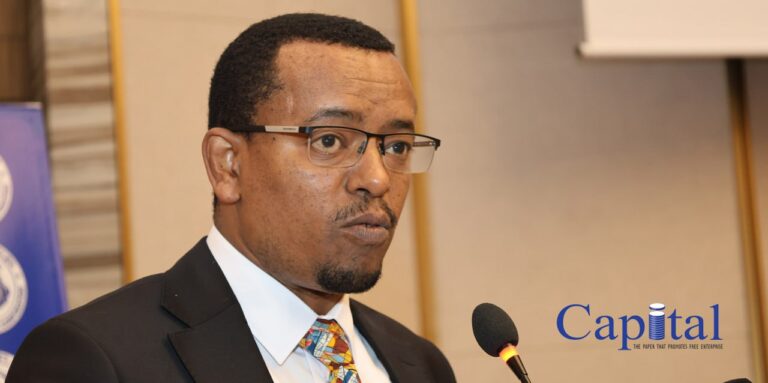
Abebayehu Dufera, the NBE’s Deputy Director of Foreign Exchange Monitoring and Reserve Management, expressed enthusiasm about the new opportunities for forex bureau operations. “We have welcomed those who have expressed interest in opening a forex bureau, and once we resolve the issue with the Minister of Commerce, we will start issuing licenses immediately,” he stated during a panel discussion in Addis Ababa titled “The Significance of the New Foreign Exchange System Change for the National Economy.”

The introduction of forex bureaus comes as Ethiopia seeks to liberalize its foreign exchange market, which has faced challenges due to restrictions on capital flows and imports. Mesenbet Shenkute, President of the Addis Chamber, highlighted that access to loans and foreign exchange reserves remains a pressing concern for the private sector.

The NBE’s decision follows a broader restructuring of the foreign currency system, which includes lifting the ban on 38 imported commodities. This move aims to enhance the flow of capital into the foreign exchange market, allowing for increased exports and improved economic performance.

As Ethiopia navigates this transition, the establishment of forex bureaus is expected to provide more accessible foreign exchange services, thereby supporting the country’s economic growth and stability. The NBE’s commitment to expanding the forex market reflects its ongoing efforts to create a more competitive and efficient financial environment in Ethiopia.
EIC to address security challenges in new fiscal year

0

The Ethiopian Insurance Corporation (EIC) has announced plans to tackle the country’s security challenges as it aims to achieve its objectives in the current fiscal year. The state-owned insurer revealed that security issues in various parts of the country have hindered its ability to implement planned initiatives in the previous fiscal year.

In its 37th annual management report, the EIC acknowledged that while it had a successful financial year, numerous difficulties prevented it from reaching its full potential in certain sectors. “The results show that we have had a successful fiscal year, but we faced many challenges that limited our reach,” the report stated.

The EIC attributed some of its operational difficulties to ongoing socioeconomic and political instability, particularly in its branches located in northern and western Ethiopia. This instability has significantly impacted the corporation’s ability to operate effectively in these regions.

Despite these challenges, the EIC reported a total premium revenue of 8.6 billion birr for the last fiscal year, achieving 92.4% of its target. This figure represents a growth of 24.3% or 1.7 billion birr compared to the previous fiscal year. Of the total premiums recorded, 8.3 billion birr, or 96.4%, came from the general insurance sector, while the remaining 306.5 million birr, or 3.6%, was from long-term insurance.

The corporation plans to collect 85% of the premiums recorded in the current fiscal year, but it has already achieved 89.7% of that target, marking a performance of 105.5% compared to the previous year. The EIC also reported a total payout of 2.8 billion birr for claims related to accidents involving customers’ property and lives, which represents an 18.2% decrease from the previous year.

The EIC’s management has emphasized the need for a robust strategy to address the security challenges that have affected its operations. The corporation is committed to enhancing its services and expanding its reach, particularly in areas that have been severely impacted by instability.

As the EIC moves forward, it aims to implement measures that will not only stabilize its operations but also contribute to the overall recovery and growth of the insurance sector in Ethiopia. The organization is hopeful that by addressing these security challenges, it can better serve its customers and achieve its financial objectives in the coming year.

Ecobank Uganda Partners with Ria Money Transfer to Enhance Remittance Services

0

Ecobank Uganda Limited (www.EcoBank.com) has formed a strategic partnership with Ria Money Transfer, a renowned global leader in cross-border remittance services. This partnership will significantly improve remittance options across Uganda, allowing customers to receive funds directly into their Ecobank accounts. Both account holders and non-account holders will also have the option to collect cash transfers promptly at any Ecobank branch or through the bank’s wide sub-agent network across the country.  

Commenting on the partnership, Ms. Grace Muliisa, Managing Director of Ecobank Uganda, emphasized its importance for Ugandans at home and those in the diaspora, particularly in the United Kingdom, the United States, and the Middle East. She noted that this collaboration makes it easier for Ugandans abroad to send money to their loved ones in Uganda. “There is a growing need to provide seamless financial solutions to Africans in the diaspora. We are excited to collaborate with Ria Money Transfer to enhance the security and efficiency of remittance services for all Ugandans,” Ms. Muliisa said. She also highlighted how this partnership aligns with Ecobank’s mission to offer unmatched convenience in global funds transfer services and strengthen its position as a trusted partner for the Ugandan diaspora. 

Mr. El Hadj Malick Seck, Managing Director of Ria Money Transfer – Africa, echoed these sentiments, highlighting that this collaboration is a valuable addition to Ria’s network, which spans over 580,000 physical locations in almost 200 countries. He noted the importance of East Africa, particularly Uganda, in Ria’s operations and emphasized how this partnership would provide even greater convenience to Ugandans sending money to their families back home. 

Distributed by APO Group on behalf of Ecobank Transnational Incorporated.

Ecobank Uganda Limited
Plot 8A, Kafu Road, P. O. Box 7368, Kampala, Uganda
Tel. +254 312354100                                                        
Website: www.EcoBank.com 

For more details, please contact 
Sarah Komugisha  
Brand and Communications Manager 
Ecobank Uganda Limited-  
Contact: +256757080023/+25678230736 
Email:  skomugisha@ecobank.com   

Maria Adriana Colella 
Global Comms&PR Manager, Ria Money Transfer 
Email: comms@riamoneytransfer.com 

About Ecobank Uganda Limited:  
Ecobank Uganda is a subsidiary of Ecobank Transnational Incorporated (ETI), the parent company of Ecobank Group headquartered in Lomé, Togo. Ecobank Group operates in 33 countries in Africa in addition to local representative offices in Addis Ababa, Ethiopia and Johannesburg, South Africa. Ecobank Group also has a banking license in France and international offices in Beijing, China; London, UK; and Dubai, the United Arab Emirates. Ecobank began its operations in Uganda in 2019 and has 10 branches located in Kampala, Entebbe, Mbarara&Jinja and two service centres in Kireka and Nakasero. As part of its digital strategy, the Bank has 27 ATMs across the country with over 170 personnel and over 400 Xpress Point (agency banking points) serving customers through its Consumer, Commercial and banking, SME and treasury business divisions. 

Ecobank Uganda is supervised and regulated by Bank of Uganda (BOU). All its customer deposits are protected by the Deposit Protection Fund of Uganda.  

About Ria Money Transfer: 
Ria Money Transfer (https://apo-opa.co/3TBaW99), a business segment of Euronet (NASDAQ: EEFT), delivers innovative financial services, including fast, secure, and affordable global money transfers. With the world’s largest cross-border real-time money movement network, Ria moves money where it matters. 

Bridging the gap between digital and physical spaces, Ria’s omnichannel products and services provide unprecedented consumer choice, including real-time payments, mobile wallets, currency exchange, home delivery, and cardless ATM payouts. Ria’s global infrastructure, powered by the Dandelion (https://apo-opa.co/3AOCQrD) real-time, cross-border payments network, facilitates financial access to customers, agents and partners alike. By creating new market opportunities and promoting economic growth around the world, Ria opens ways for a better everyday life. 

ECSOC demands protection for humanitarian workers amid rising attacks

0

The Ethiopian Civil Society Organizations Council (ECSOC) has issued a strong statement calling for urgent action to protect humanitarian workers in conflict-affected regions, following the tragic death of Yared Melese, a humanitarian worker with the NGO Action for Social Development and Environmental Protection Organization (ASDEPO). Yared was kidnapped for ransom and later killed by an unidentified armed group in Dawunt Woreda, North Wello Zone, Amhara Region.

Yared’s death marks the eighth humanitarian worker killed in Ethiopia in 2024, six of whom were in the Amhara Region. The incident has sparked widespread condemnation and grief within the humanitarian community. Dr. Ramiz Alakbarov, the Humanitarian Coordinator in Ethiopia, expressed his deepest condolences to Yared’s family and colleagues, stating, “We condemn in the strongest terms the kidnapping for ransom and subsequent killing of our colleague, Yared Melese, by criminals, whilst he was serving in the line of duty. Yared was a brave and dedicated humanitarian worker who was ready to assist civilians in need under extremely challenging circumstances.”

The ECSOC, echoing the sentiments of the humanitarian community, voiced grave concerns over the increasing violence against aid workers in Ethiopia. The Council detailed a troubling rise in violent incidents, including killings, assaults, kidnappings, vehicle seizures, and the looting of humanitarian supplies, particularly in the Amhara and Oromia regions. These attacks have severely disrupted relief operations and hindered the delivery of critical services to vulnerable populations.

In its statement, the ECSOC condemned these “abhorrent” and “despicable” attacks, labeling them as a “flagrant violation of International Humanitarian Law.” The Council emphasized that humanitarian workers, who risk their lives to provide life-saving assistance, must be protected at all costs and should never be subjected to such targeting. 

The ECSOC is now demanding an immediate cessation of these “unconscionable attacks” and is calling on community elders, religious leaders, local governments, armed groups, and community organizations in the affected areas to denounce these “heinous acts” and fulfill their moral obligation to safeguard the safety and security of humanitarian personnel.

Dr. Alakbarov also stressed the broader impact of these attacks on humanitarian operations, stating, “When humanitarian workers are targeted, our ability to deliver assistance to the people in need in affected areas is seriously compromised. We have engaged with respective Government institutions regarding the speedy investigation and the necessary process to bring perpetrators of this and previously committed crimes to justice.”

Despite the immense challenges, the ECSOC urged humanitarian workers and organizations to persevere in their life-saving work, particularly for women, children, and marginalized groups. The Council reiterated, “Their selfless efforts to alleviate suffering must be respected and protected. There can be no justification for impeding this critical humanitarian work.”

As the humanitarian community in Ethiopia mourns the loss of Yared Melese, the ECSOC’s call for action serves as a powerful reminder of the urgent need to protect those who dedicate their lives to helping others in some of the most dangerous environments.