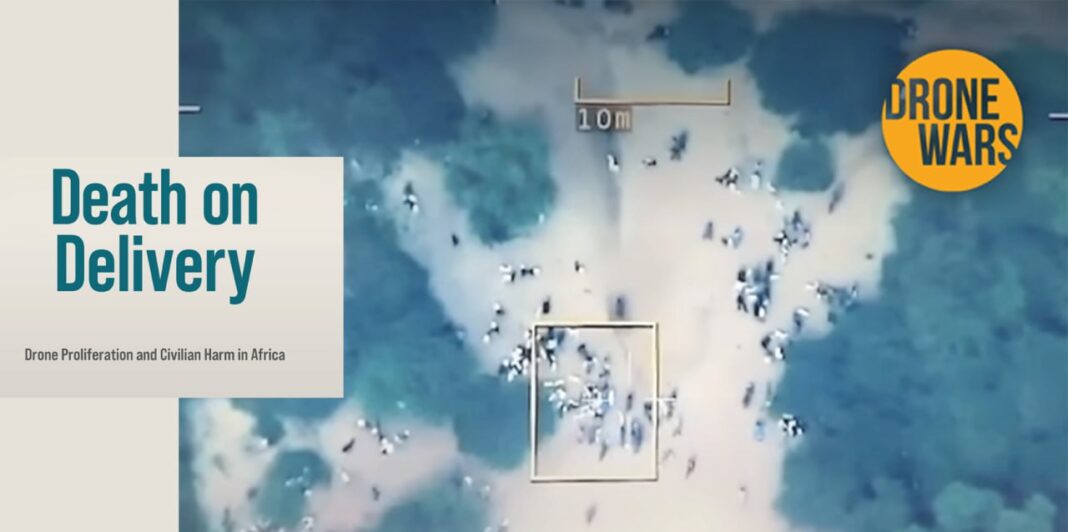
A new report published by Drone Wars UK in March 2025 highlights the growing use of armed drones across Africa, revealing alarming civilian casualties and the urgent need for international regulation. The report, titled “Death on Delivery,” examines the proliferation of Medium Altitude, Long Endurance (MALE) drones—such as the MQ-9 Reaper and Bayraktar TB-2—and their impact on armed conflicts in several African nations.
The report documents 50 incidents between November 2021 and November 2024, resulting in at least 943 civilian deaths. These incidents span conflicts in Ethiopia, Burkina Faso, Mali, Sudan, Somalia, and Nigeria. In one case study from Burkina Faso, a drone strike at Bouro’s cattle market caused significant civilian harm, underscoring the devastating consequences of drone warfare.
While operators of MALE drones often claim precision targeting capabilities to minimize civilian harm, evidence from journalists and human rights organizations suggests otherwise. The long loiter times and high-resolution video feeds intended to ensure accuracy have not prevented tragic errors and collateral damage.
The report identifies China and Turkey as major exporters of armed drones to African states. China’s Wing Loong series and Turkey’s Bayraktar TB-2 have been widely deployed in African conflicts. While these systems are praised for their affordability and operational capabilities, their proliferation has raised concerns about misuse and inexperienced operators contributing to civilian casualties.
Turkey has emerged as a leading exporter of armed drones, overtaking China in recent years. Its drones have been used extensively across Africa, with little restriction on which countries they are sold to. This lack of oversight has contributed to the widespread use of drones in conflict zones.
Drone Wars UK emphasizes the urgent need for international controls to curb the proliferation of armed drones. Previous efforts by the Obama administration to establish regulations faltered due to political changes and limited global participation. The current lack of effective controls has allowed armed drones to spread unchecked, exacerbating civilian harm.
The report calls on the international community to develop a new control regime focused on preventing further harm from drone use. Without decisive action, the report warns that more innocent civilians will fall victim to drone strikes in conflict zones.