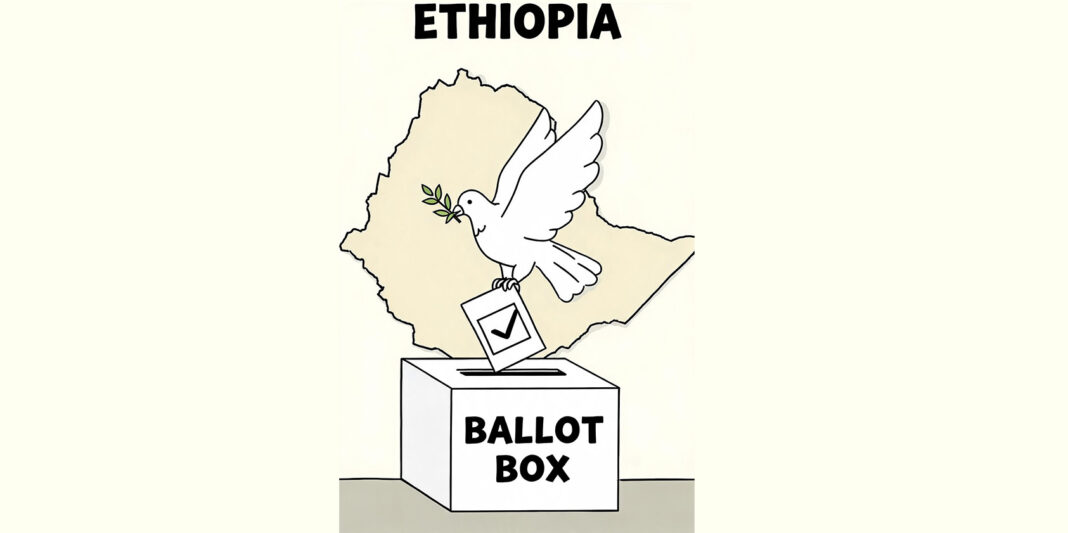
As Ethiopia concludes its national election cycle this weekend, the domestic business community is closely analyzing the implications for the country’s economic trajectory. In an environment where the ruling Prosperity Party maintains a dominant political presence, the primary takeaway for corporate strategists, financial institutions, and foreign direct investors is a strong expectation of macro-policy predictability.
For the private sector, the Monday’s vote is viewed less through a political lens and more as an indicator of administrative stability. The expected electoral outcome ensures that the sweeping economic reforms initiated under Prime Minister Abiy Ahmed’s administration will continue without disruption.
Policy predictability and liberalization
The current administration has committed to a sweeping economic modernization agenda. By prioritizing the liberalization of telecommunications, opening up the banking sector to foreign competition, floating the Birr, and advancing negotiations for World Trade Organization (WTO) accession, the government has established a clear roadmap for private sector-led growth.
According to regional economic forecasts, Ethiopia’s GDP growth is projected to remain highly competitive, driven by major state-backed infrastructure projects and newly attracted industrial investments. A definitive mandate for the Prosperity Party ensures that these foundational policies—including long-term investment frameworks and public-private partnerships—will proceed on their current schedule, minimizing the risk of regulatory gridlock or sudden legislative shifts.
Operational realities and structural headwinds
While policy continuity provides a reliable framework for corporate planning, businesses must continue to navigate existing structural and regional challenges. Achieving sustained long-term economic expansion will depend on addressing several key operational factors.
Logistics and Supply Chain Continuity: Ongoing security adjustments in parts of the Amhara, Oromia, and Tigray regions continue to impact transportation corridors. Businesses operating outside the capital remain focused on restoring full logistical efficiency and supply chain predictability.
Fiscal Management and Debt Servicing: The government’s ongoing efforts to restructure external debt and manage fiscal balances remain a focal point for macro-analysts. Stabilizing domestic inflation, which currently affects consumer purchasing power, is a shared priority for both public policy and private retail sectors.
Domestic Production: Revitalizing the manufacturing and agricultural sectors remains essential to rebalancing the economy, reducing import dependence, and creating employment for a rapidly growing population.
The strategic outlook
Ultimately, the corporate sector interprets this election cycle as a confirmation of the current economic status quo. The preservation of the existing governance framework provides international markets and domestic enterprises with the institutional certainty required to execute multi-year investment plans.
Moving forward, the primary objective for both policymakers and the business community will be ensuring that this period of policy stability translates into broader macroeconomic resilience, secure trade networks, and inclusive economic growth across all regions of the country.