|Austria, Vienna
Ethiopia is moving rapidly to construct its first nuclear power plant and expand cancer treatment facilities. At the same time, a former senior official of the International Atomic Energy Agency (IAEA) has warned that corrupt foreign contractors are targeting Africa’s weak regulatory systems by disguising deadly radioactive waste as ordinary cargo.
The IAEA has urged African countries to significantly strengthen their regulatory systems so that foreign waste-disposal companies cannot exploit governance gaps to deceive them. The warning comes at a critical time, as countries such as Ethiopia, Kenya and Liberia are expanding peaceful nuclear programs in the medical, agricultural and power generation sectors.
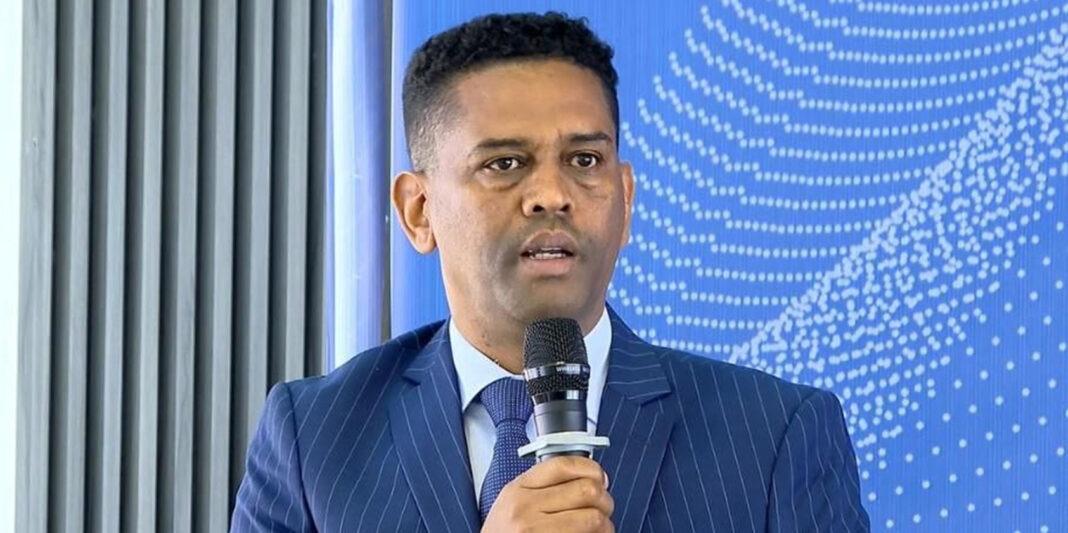
Tariq Rauf, former Head of Verification and Security Policy at the IAEA, current Director of Atomic Reporters and a senior consultant on global nuclear affairs, told Capital that contractors from developed nations bribe local officials to pass off dangerous nuclear materials as harmless commercial cargo.
“Corrupt foreign contractors exploit weak infrastructure and governance gaps in developing countries to transport hazardous radioactive waste by disguising it as ordinary commercial cargo,” Tariq said. He emphasized that because developed countries have enacted strict environmental laws, it is far cheaper for waste-disposal companies to ship hazardous materials to Africa than to dispose of them in their own countries. “No country should import waste from another country, period,” he added.
The strategy, he said, is highly insidious. Contractors allegedly collude with corrupt officials to alter customs declarations and manifests, allowing radioactive materials to pass through ports undetected.
This practice has already led several African countries to accept illegal shipments unwittingly, creating long-term environmental and public health crises that future generations will have to bear. Ethiopia is seen as a critical case study in this broader tension between nuclear ambition and regulatory vulnerability. Although the country is moving to expand nuclear science across several sectors, experts are urging the establishment of a robust legal framework.
In 2025, the agency facilitated the donation of a state-of-the-art linear accelerator (LINAC), supplied by Varian, to Black Lion Hospital in Addis Ababa. In addition, five more radiotherapy centers are planned or under construction in Gondar, Hawassa, Harar and Mekelle.
The IAEA has publicly praised Ethiopia’s commitment to establishing a new nuclear commission, describing it as a crucial step that provides a legal framework for the sector and helps put nuclear energy into practice for peaceful purposes.
The agency has also said nuclear power is a reliable energy source with low greenhouse-gas emissions and is vital to accelerating social and economic growth. It has reaffirmed its readiness to help Ethiopia achieve its nuclear energy goals.
However, Tariq Rauf warns that countries new to the sector face unique vulnerabilities. Speaking to Capital, he said, “For countries like Ethiopia that wish to build nuclear capacity, establishing an unshakeable regulatory framework is not just a bureaucratic prerequisite; it is a matter of national security.”
Rauf highlighted three critical regulatory red lines that governments must address to ensure safety standards are never compromised for short-term gains. These include enacting clear nuclear laws that strictly limit permissible radiation exposure for both professionals and the public; ensuring that regulatory bodies have robust enforcement powers to inspect facilities, issue licenses and monitor the full lifecycle of radioactive materials; and establishing national and regional training institutions to build a domestic workforce capable of safely managing complex technical systems.
“The country that produced the waste must dispose of it itself,” Rauf said, stressing that strict laws in developed countries make shipping waste to Africa cheaper for waste companies and that no country should import waste from another.
Beyond illegal waste imports, he said, one of the biggest internal challenges in developing countries is the failure to properly track medical or industrial radioactive materials that have reached the end of their service life.
Without a strong regulatory system, such spent materials could be discarded without proper disposal or enter the regular scrap-metal market, posing a severe radiation risk to the local population.
Ethiopia is currently studying its long-term energy options, balancing water, gas, solar and nuclear power for its rapidly growing population of more than 130 million people.
At the Second Nuclear Energy Summit in Paris on March 10, 2026, Ethiopia’s Minister of Irrigation and Lowlands, Abraham Belay, set out the country’s position on behalf of Prime Minister Abiy Ahmed.
“Ethiopia has made a sovereign choice to use the atom for the peaceful development of our country’s energy and the peaceful growth of our people,” he said.
Abraham acknowledged the country’s energy vulnerability. “Our hydropower fluctuates with the climate, and we cannot rely solely on rain. Soon, our demand will exceed our supply,” he warned. Explaining that Ethiopia’s ambition is purely civilian, he added, “Our demand is for kilowatts, not nuclear weapons.”
The country has already taken tangible steps toward that goal. In January 2026, the Ethiopian Nuclear Energy Commission, in collaboration with the Ethiopian Academy of Sciences, organized a workshop in Addis Ababa to review the initial report on the site study for the nuclear power plant. The workshop examined methodologies for assessing seismic hazards, hydrology and environmental impacts, and explicitly benchmarked the process against IAEA Safety Standards Series No. SSG-35.
This is especially important because Ethiopia lies within the East African Rift Valley, a geologically active region. A strong seismic hazard analysis is essential to ensure that any nuclear facility can withstand earthquake risks. Technical teams are using Geographic Information Systems (GIS) together with Multi-Criteria Decision Analysis to classify potential sites.
While nuclear power plant construction remains a long-term goal, the immediate use of peaceful nuclear technology is already generating investment returns across Ethiopia’s health, agriculture and industrial sectors.
In agriculture, nuclear techniques are being used to develop drought-resistant crops and pest-control methods. Studies are also under way to use radiation-induced mutation breeding to develop improved seed varieties that require minimal moisture — an innovation considered critical in regions facing increasingly unpredictable rainfall patterns.
The IAEA laboratory in Austria also plays a critical role in calibrating equipment and determining precise radiation doses. As Tariq Rauf noted, if radiation is not properly managed during cancer treatment, it can harm patients. “The dose must be absolutely precise to kill the cancer and prevent further damage to healthy cells,” he said.