The Djibouti Ports and Free Zones Authority (DPFZA) has announced that it is awaiting Ethiopia’s participation in the upcoming budget year to begin construction of an oil depot at the new Damerjog Liquid Bulk Port (DLBP), located in the southeastern part of the country near the border with Somaliland.
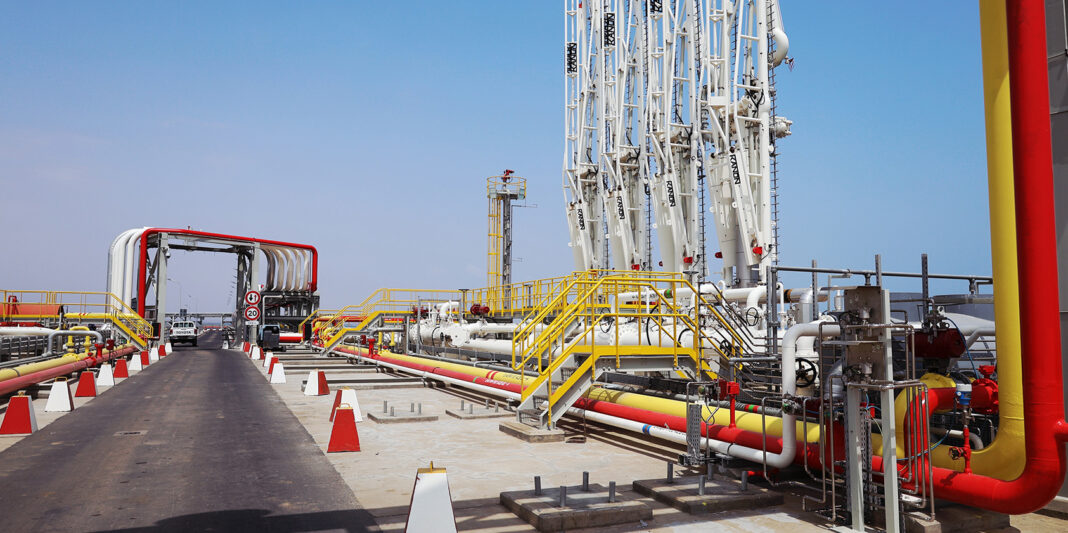
The facility, whose ultramodern jetty is currently in the final stages of completion, is awaiting construction of the large-scale depot before it can begin operations in the near future.
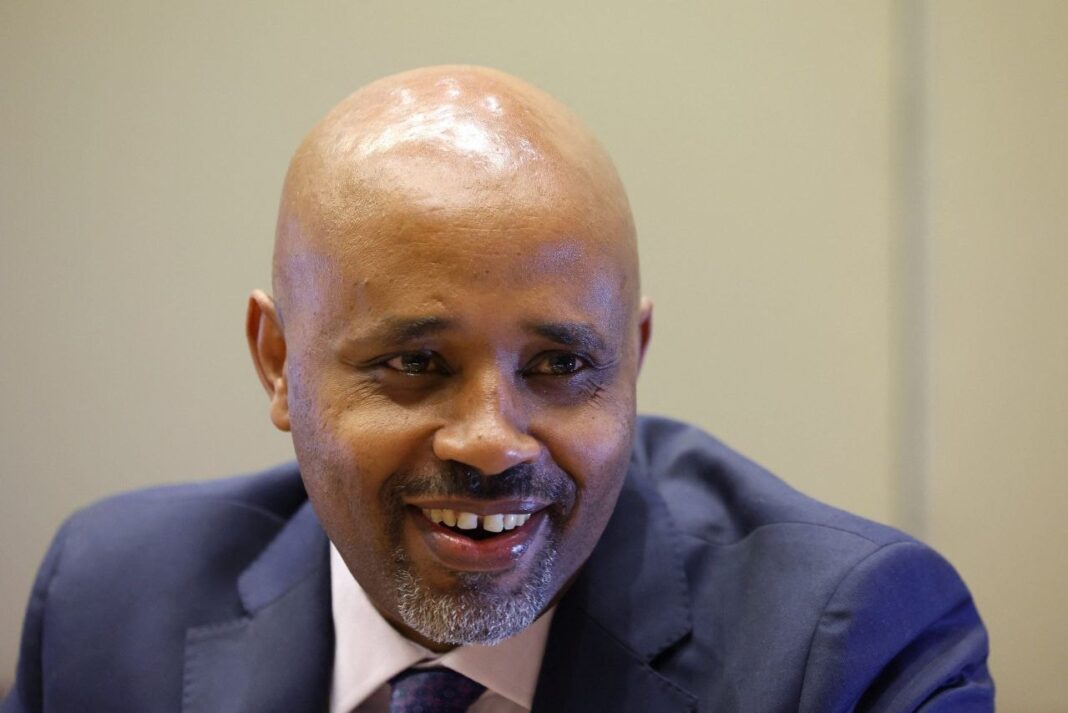
Aboubaker Hadi Omar, chairman of the DPFZA, recently told Capital at his office in Djibouti City that the authority is expecting the Ethiopian government to provide the necessary financing for the intake terminal, which is situated about 13 kilometers from the Ethio-Djibouti railway network.
“We are discussing with the Ethiopian government’s investment arm, Ethiopian Investment Holdings (EIH) — one of the continent’s leading sovereign wealth funds (SWF),” the chairman said. He added that EIH intends to invest in a storage farm. “So we are discussing with them,” Hadi noted, expressing hope that the SWF would secure funding by the start of the budget year on July 8.
When asked about the inauguration of the new jetty, which will serve as an alternative to the existing oil terminal at Doraleh, west of Djibouti, the chairman replied, “We have to build the storage first. The Ethiopian side is expected to come forward with that in the near future.”
In late 2022, it was reported that the investment holding company would acquire a stake through EPSE, one of EIH’s major public companies under the SWF’s ownership.
A memorandum of understanding (MoU) was signed in May of that year between the then-CEO of EIH, Mamo Esmelalem Mihretu, and the chairman of the DPFZA, which oversees Great Horn Investment Holding, to explore potential opportunities in oil storage facilities.
However, the project remained stalled until the chairman recently revealed that the Ethiopian government would construct and operate the terminal on the jetty’s onshore section, which was installed by Moroccan industry expert SOMAGEC.
Ethiopia currently relies almost exclusively on Dubai Emirates National Oil Company’s Horizon Djibouti Terminal (HDTL), located near Doraleh, for its energy imports. That facility replaced the older terminal in downtown Djibouti City and was established in 2003 before commencing operations in 2005.
With an annual capacity of 4.5 million tons, the terminal is widely considered insufficient to meet Ethiopia’s rapidly growing demand. According to the Djibouti Ports Authority, the DLBP oil jetty will have an annual capacity of 25 million tons and support up to 12 vessel rotations.
The port will serve multiple storage terminals with a combined static storage capacity of about two million cubic meters, providing the scale needed to support Ethiopia’s expanding energy logistics. The jetty is located about three kilometers from land and is connected by a causeway that provides vehicle access and pipeline services.
Both governments have demonstrated strong political commitment to operationalizing the oil terminal at the new southeastern port facility.

During the most recent meeting of the Ethio-Djibouti Joint Railway Commission (JRC) — a ministerial platform established under the 2016 bilateral railway agreement — the two sides discussed the Djibouti Damerjog Industrial Development (DDID) project, a major port and industrial complex located about 20 kilometers southeast of Djibouti City near the Somaliland border.
The meeting, held in Djibouti in February, acknowledged that Djibouti is finalizing construction of the DLBP jetty, which Ethiopian officials view as critical to meeting the country’s growing fuel demand.
As part of the rail expansion, the Ethio-Djibouti Railway (EDR) plans to build a 17-kilometer line connecting the Damerjog oil terminal to Nagad Railway Station in Djibouti, enabling direct fuel transport to Ethiopia. A feasibility study conducted by Great Horn Investment Holding, a subsidiary of DPFZA, estimates the project’s capital expenditure at $90 million, or about $5 million per kilometer.
Recent sources told Capital that EDR, which is jointly owned by the Ethiopian and Djiboutian governments, has also expressed interest in acquiring a 49% stake in the Damerjog fuel storage project — including infrastructure for jet fuel handling — signaling its ambition to expand its role beyond rail operations.
Earlier in January, Prime Minister Abiy Ahmed toured both HDTL and the Doraleh Multipurpose Port during his visit to Djibouti. During the visit, the Prime Minister underscored his government’s urgent interest in transporting strategic commodities by rail, emphasizing that the two ports should be connected to the Ethio-Djibouti railway system as soon as possible.
This priority was also reflected in the February JRC meeting. It is worth recalling that EIH CEO Brook Taye met with Djibouti President Ismail Omar Guelleh last week in Djibouti to discuss the pipeline project, which Ethiopia intends to modernize its energy transportation through.
The plan envisions implementation in strategic partnership with Dangote Group, an industrial conglomerate. The first phase involves installing a pipeline for refined petroleum products from the port of Djibouti to Daweleh, a border town in Ethiopia.
The second phase will involve establishing a gas pipeline and an oil pipeline to export Ethiopian natural gas and crude oil from oil and gas fields in Ethiopia’s Somali region to external markets via the Djibouti corridor.
Capital’s efforts to obtain further information about the Damerjog depot project from EIH were unsuccessful.