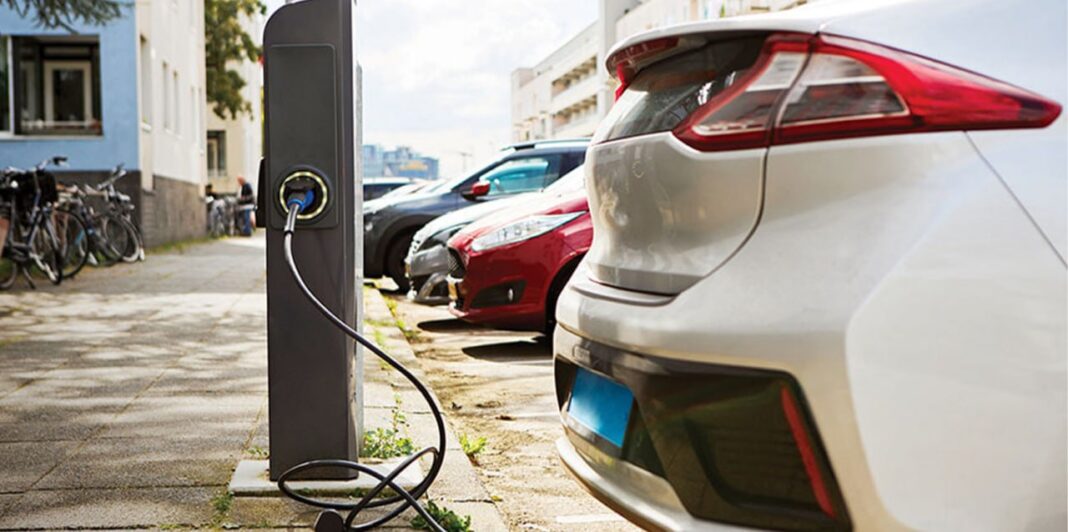
The Ethiopian government intends to improve the country’s electric vehicle (EV) charging infrastructure with plans to install new charging stations every 50 to 120 km in the near future. Currently, the country only has fifty charging stations, and these are all in urban areas. In rural Ethiopia, EV adoption has lagged dramatically — largely due to the high cost of charging station installation, as well as unreliable or non-existent electricity connections. However, carbon credits hold promise to incentivize investment in new charging infrastructure, while solar charging eliminates reliance on the existing electricity grid altogether. On top of this, tax breaks on the EVs themselves also makes them more affordable for locals. This promising combination of strategies could finally bring EVs to the country’s rural areas.
Carbon credits incentivize EV charging investments
Installing a comprehensive EV charging network across sub saharan Africa, including rural Ethiopia, is set to cost between $3.5-$8.9 billion in total, a recent report from the Shell Foundation reveals. Needless to say, significant financing is required to cover this staggering cost — which is where carbon credits can help bridge at least some of this gap. Carbon credits essentially work as a financial incentive that makes EV charging infrastructure a more attractive option for operators and investors.
The way they work is pretty straightforward: charging station operators that reduce their emissions earn credits, with one credit equating to one metric ton of CO2. The operators can then sell their excess credits and make a profit. This system has been implemented around the world with success, and there’s no reason why rural Ethiopia can’t follow suit. For example, in California, station operators can earn $2,000 annually from a Level 2 charger, and that increases to $14,000 for ultra-fast chargers.
Keeping EV ownership and charging costs down
Another major hurdle to EV adoption in rural areas is the high upfront cost, which the government intends to fix with tax breaks. In fact, last year, Ethiopia’s Ministry of Finance waived VAT, surtax, and excise tax from all EVs, which now makes them more accessible to Ethiopians. More can also be done to educate residents on the lower costs of EV ownership in the long run. Since EVs require less servicing and maintenance than petrol or diesel cars, the associated costs are 40% lower overall. This is because they have fewer parts that can break down. Thanks to these lower lifetime costs, even high-end electric models are an affordable option. It also, of course, helps that Ethiopia has some of the cheapest electricity in the continent, which means charging is quite affordable. For households that use 50 kWh or less of electricity per month, the price works out to around $0.02 per kWh. In comparison, petrol costs around $2 per liter, so EV owners can save a lot on fuel.
Solar charging: the solution to charging infrastructure limitations
Inadequate or non-existent infrastructure can also prevent people in rural locations from accessing the electricity they need to charge their EVs. Notably, only around 12% of residents in Ethiopia’s rural areas are connected to the electricity grid, compared to roughly 96% in urban areas. Even in connected areas, power blackouts are increasingly commonplace, and these last for 46 hours on average. A potential solution? Solar chargers that don’t rely on the power grid. Instead, these chargers tap into solar energy to generate power. For example, SolCharge has developed a stand-alone solar charging station (SASCS) for EVs — specifically to help rural farming communities in places like Bishoftu. The SASCS can charge EVs from any location and at any time without the need for a grid connection. This is a fantastic development since around 66% of the country’s rural farmers don’t have electricity, according to SolCharge. However, the company also says more funding is needed to make it possible to roll out these chargers en-masse.
Charging challenges have long stalled EV adoption in rural areas across Ethiopia, but there are ways to overcome them. Solutions like carbon credits, EV tax breaks, and solar charging are promising initiatives with the potential to finally make EV ownership and charging accessible to rural Ethiopia.